
St. Louis Marathon
St. Louis's marathon begins beneath the Gateway Arch and ends with the Arch back in view. Between those two moments the route runs through Forest Park and out into the suburbs, and the next edition…
By Global Marathon Routes editorial team · Last reviewed 27 October 2026
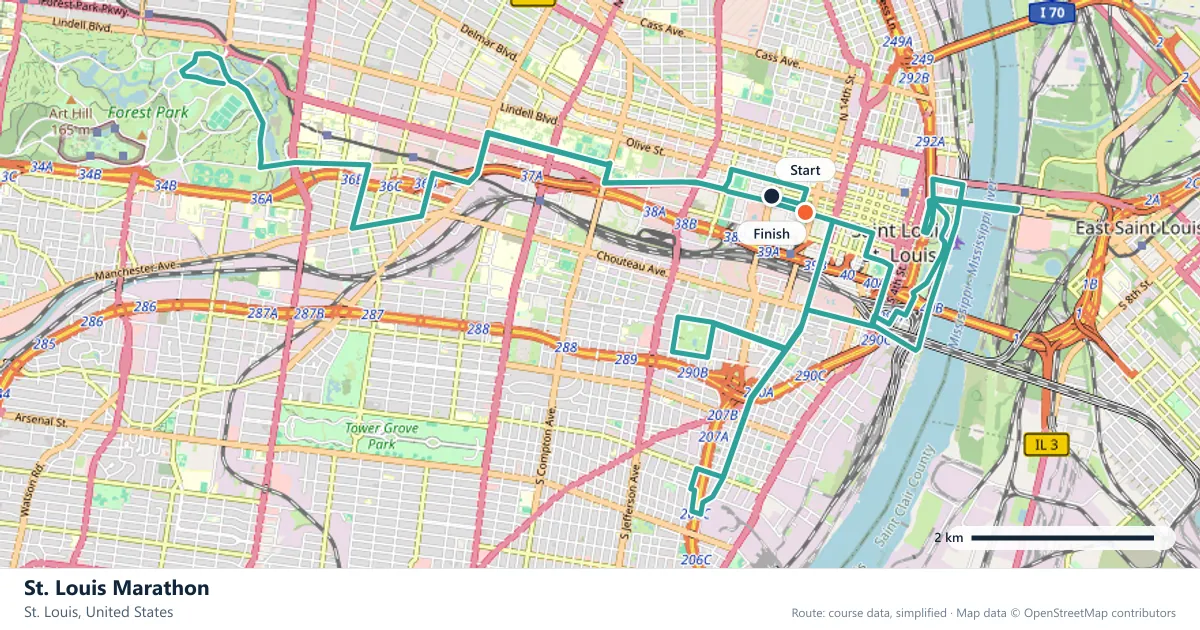
Where does the St. Louis Marathon run?
Interactive map
The trace follows the organizer's published course, simplified for the screen: the orange dot is the start, the dark dot the finish. Scroll to zoom, drag to pan.
What is the St. Louis Marathon course like?
An April marathon from the Gateway Arch through Forest Park and out into the suburbs. Hillier than its Midwest neighbours, with the Arch as the finish-line backdrop.
- Next edition
- 03 April 2027
- Elevation gain
- 259 m
- Profile
- Hilly
- First run
- —
Course guide
St. Louis's marathon begins beneath the Gateway Arch and ends with the Arch back in view. Between those two moments the route runs through Forest Park and out into the suburbs, and the next edition is on Saturday 03 April 2027.
The course is hilly, with about 259 metres of climbing, and it is hillier than its Midwest neighbours. The climbs are not concentrated in one famous hill; they come in repeated sections as the route moves between the park, the city and the outer districts.
That shape makes it a solid first marathon for someone who has trained on rolling terrain, and a race whose identity is tied to a single landmark. The Arch is the start, the finish backdrop and the image that stays with you.
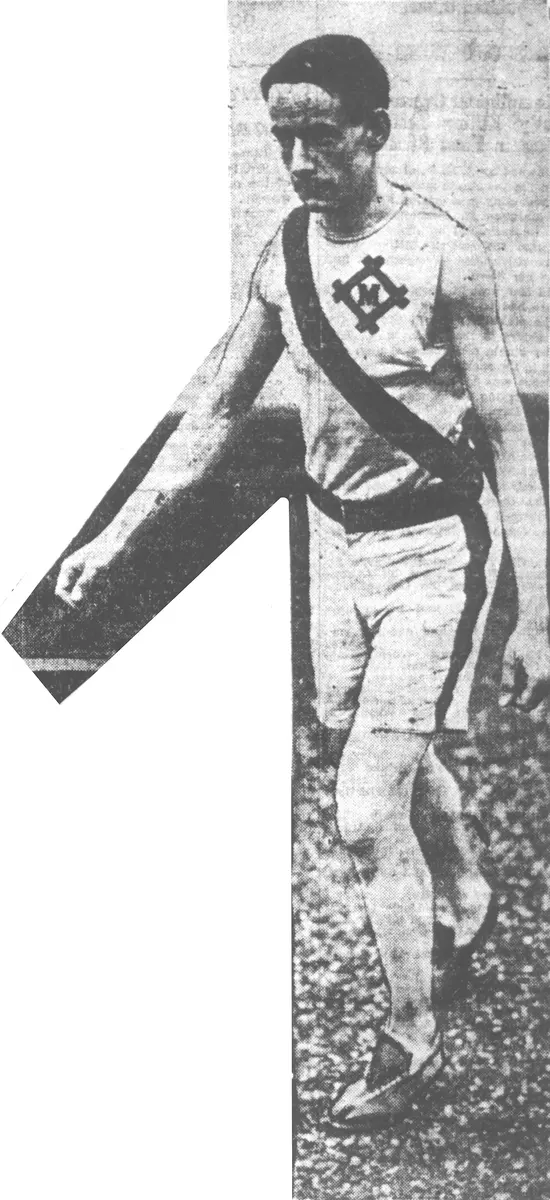
Joseph Forshaw at the start of the St. Louis Marathon (St. Louis Post-Dispatch, May 7, 1905). Photo: Unknown photographer / Wikimedia Commons, Public domain.
The course
The race begins at the Gateway Arch and works through Forest Park before continuing into the suburbs. The route gains about 259 metres, with hills that come in repeated sections rather than a single long climb. The finish returns to the Arch, which serves as the backdrop for the closing stretch.
St. Louis spreads west from the Mississippi, and the course uses that breadth. The opening belongs to the riverfront and the park, while the later miles push into quieter residential districts. It is not a tight city-centre loop, so the race has a sense of travelling through different versions of the same city.
The Gateway Arch
The Arch is more than a starting point. It gives the race a clear identity and a strong image for the closing miles, and its curve dominates the riverfront skyline. Starting beneath it puts the race immediately in the shadow of the city's most recognisable structure.
The Arch also marks the historic gateway to the West, a piece of the city's self-image that fits a marathon's sense of journey. Runners who notice it at the start will appreciate seeing it again at the finish, this time as a destination rather than a departure point.
Forest Park and the middle miles
Forest Park gives the race a green, rolling interlude between the riverfront and the suburbs. The park is one of St. Louis's great public spaces, with museums, lakes and long roads that make it well suited to a marathon. Its gentle hills are part of the course's climbing total, but they arrive in a setting that feels more like a park run than a city street.
The park's roads are wide, and its lakes and museums give the middle miles landmarks to aim at rather than a blur of turns. This is also where the race begins to feel like a marathon rather than a tour of the city; the opening excitement has settled, and the day's real work starts.
The middle miles are where the race settles. The excitement of the Arch is behind you, the suburbs are still ahead, and the park provides a rhythm. Use that section to hold an even effort rather than to make up time; the hills in the later districts are the ones that decide the day.
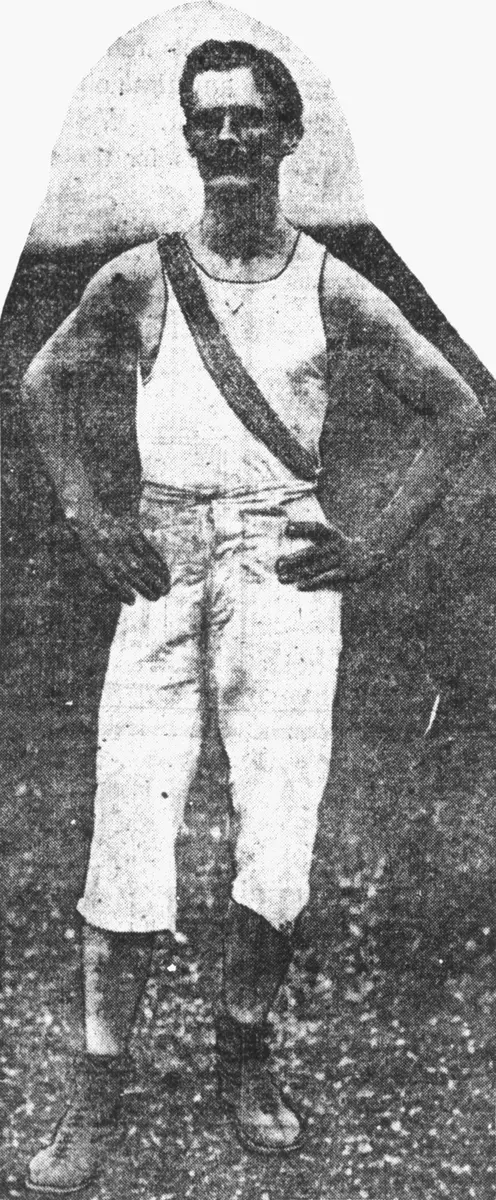
Félix Carvajal at the St. Louis Marathon, May 6, 1905. Photo: Unknown photographer / Wikimedia Commons, Public domain.
A hillier Midwest
St. Louis sits on bluffs above the Mississippi, and its western districts roll rather than flatten out. That makes the race harder than the stereotypical Midwest marathon, where the main challenge is often wind and repetition rather than elevation. Here the climbing is real, even if no single hill is dramatic.
The repeated rises reward runners who pace by effort. A flat-course approach, holding exact splits through every change of grade, will leave you empty before the finish. Shorten the stride on the climbs, stay relaxed on the descents and let the terrain set the rhythm.
The run home
The finish returns to the Arch, and the final miles are shaped by that target. After the residential suburbs, the route comes back towards the riverfront and the landmark that started the day. The closing stretch is a strong motivator, but it is not a flat victory lap; the hills continue to the end.
Save something for the return. The last few kilometres are where the race's climbing total is finally understood, and runners who have spent everything in the suburbs will meet the Arch without the legs to enjoy it.
Frequently asked questions
Answers to the questions runners ask before entering, drawn from this race's course guide and the directory's own data — the sources behind them are listed below.
When is the St. Louis Marathon?
The next edition is on Saturday 03 April 2027, an April race from the Gateway Arch through Forest Park and into the suburbs.
Is the St. Louis Marathon a hilly course?
Yes. It climbs about 259 metres and is hillier than many Midwest marathons. The route rolls through Forest Park and the outer districts rather than staying level.
Is the St. Louis Marathon suitable for a first marathon?
The race is a solid debut for runners who have prepared on rolling terrain. The Arch gives the day a clear start and finish, but the hills are a real test, so include some climbing in training.
What role does the Gateway Arch play in the St. Louis Marathon?
The race sets out from the Gateway Arch, and the Arch is the backdrop for the finish. It gives the course a clear identity and a landmark for the closing miles.
Why does the course go through Forest Park?
Forest Park provides a green, rolling middle section between the riverfront and the suburbs. Its roads and gentle hills are part of the course's character and one of the more enjoyable stretches of the race.
Is the St. Louis Marathon a personal-best course?
The rolling profile and the climbing total make even pacing harder than on a flat course, so it is not the obvious place for a personal best. The hills reward patience more than speed.
More marathons in United States
More marathons in Americas
Sources for this page
What each source below is used for on this page, and where to check this race yourself.
- World Athletics — the label calendar and the road-race regulations. Used to check whether the race holds a World Athletics label, and its elite competition details.
- AIMS — the international course-measurement standard behind the 42.195 km distance, and the AIMS race calendar.
- The organizer's own publications — course maps, race handbooks and published results. The date, course character and climbing on this page are compiled from them and re-checked each season.
Where do these facts come from?
Dates, course type, climbing and time limits are compiled from the organizer's publications and re-checked each season; elevation is an estimate of total climbing rather than a survey figure. Always confirm race-day details with the organizer before making plans.
Last reviewed 27 October 2026