
Mexico City Marathon
Mexico City asks runners to breathe before it asks them to climb. The marathon is run at about 2,200 metres above sea level, along the Reforma and through the historic centre, and the altitude is the…
By Global Marathon Routes editorial team · Last reviewed 27 October 2026
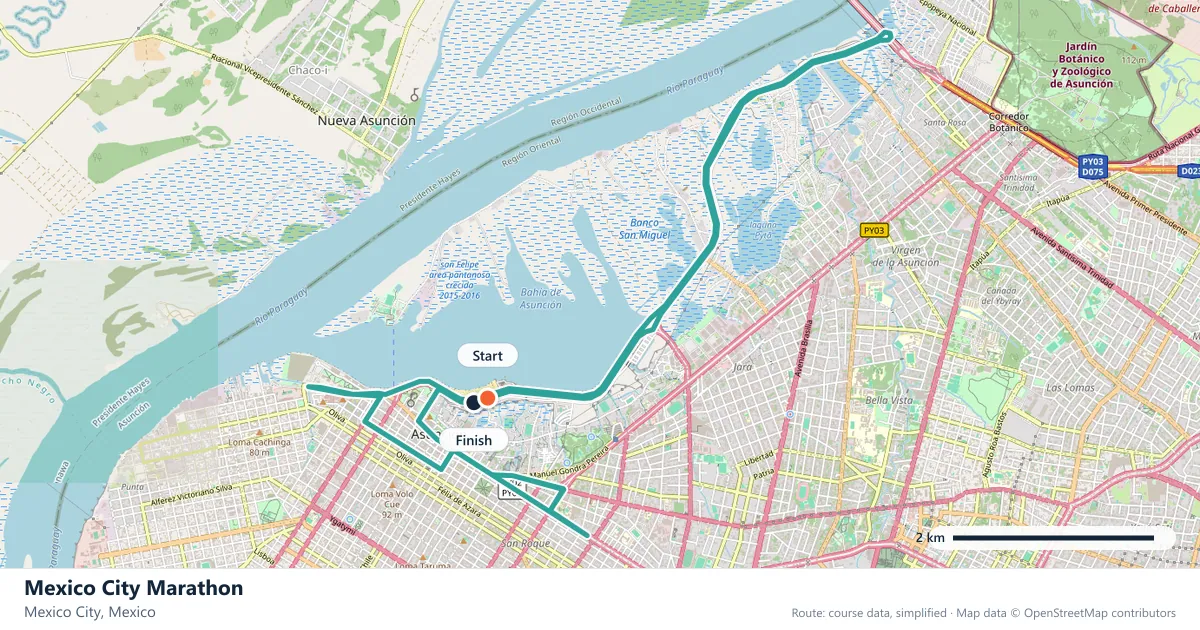
Where does the Mexico City Marathon run?
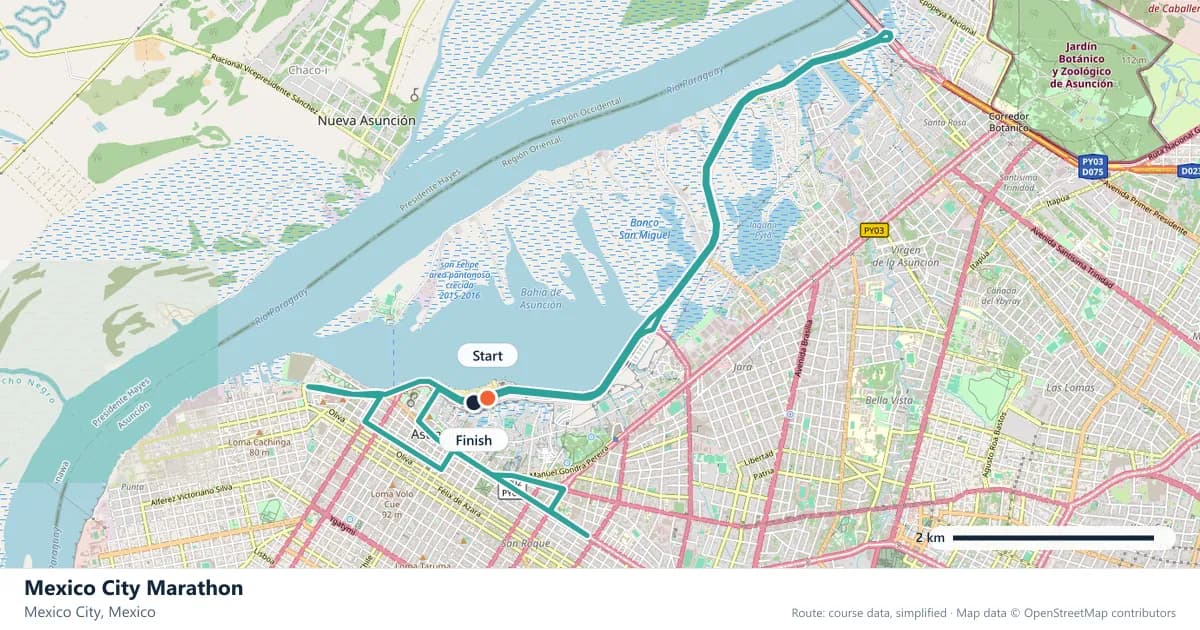
Interactive map
The trace follows the organizer's published course, simplified for the screen: the orange dot is the start, the dark dot the finish. Scroll to zoom, drag to pan.
What is the Mexico City Marathon course like?
Run at 2,200 metres above sea level along the Reforma and through the historic centre, with the altitude the real challenge. Huge crowds, and August weather that can turn wet.
- Next edition
- 29 August 2027
- Elevation gain
- 116 m
- Profile
- Undulating
- First run
- —
Course guide
Mexico City asks runners to breathe before it asks them to climb. The marathon is run at about 2,200 metres above sea level, along the Reforma and through the historic centre, and the altitude is the challenge that defines the day. The 2027 edition is scheduled for 29 August.
The profile is undulating, with about 116 metres of climbing, which sounds mild for a capital-city marathon. At this height it is not. The air is thin enough that a flat kilometre costs more than it would at sea level, and the course's gentle rises become real work in the second half.
The race holds a World Athletics Gold Label and is backed by huge crowds. It is a sprawling urban event with a historic setting, and the combination of altitude, August weather and dense city streets makes it a marathon that rewards experience and humility.
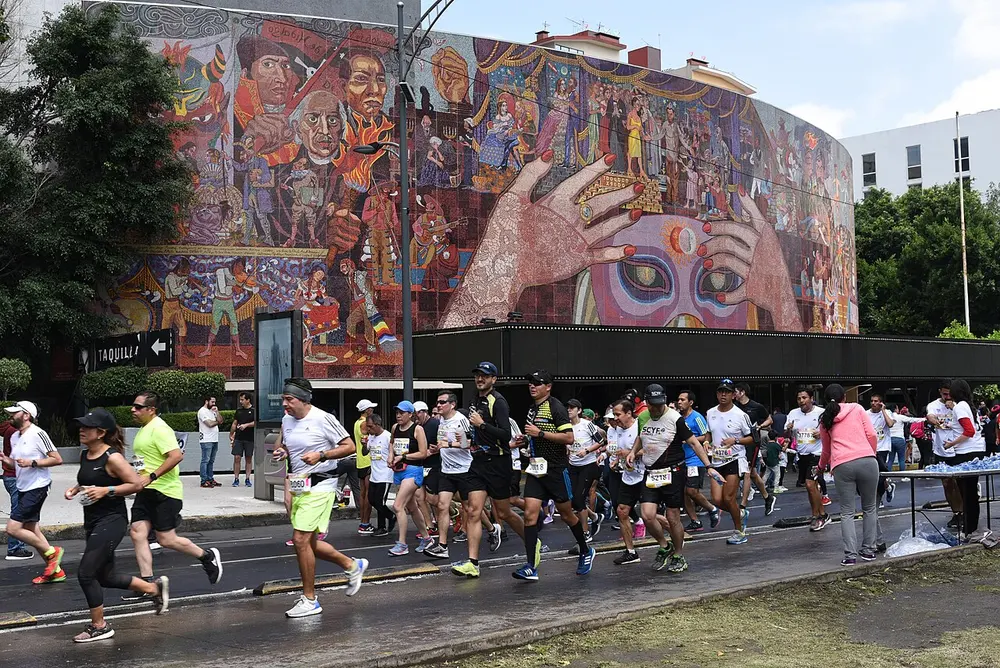
Mexico City Marathon 2018. Photo: Cocu15 / Wikimedia Commons, CC BY-SA 4.0.
The course
The route follows the Reforma and passes through the historic centre, using the city's grand avenues and colonial-era streets. The elevation change is modest at about 116 metres, but at 2,200 metres the flat sections are not truly flat in terms of effort. The course is undulating enough to break the rhythm without providing a serious climb.
The historic centre is the race's visual centrepiece, and the Reforma gives the route its long, ceremonial axis. Wide avenues and dense street-level crowds make the marathon feel like a procession at times, particularly in the central sections.
The Reforma and the historic centre
The Paseo de la Reforma is Mexico City's grand boulevard, a long diagonal lined with monuments, hotels and office towers. The Angel of Independence stands on its axis, and the avenue leads towards the historic centre, where the Zócalo, the Metropolitan Cathedral and the Palacio Nacional form the heart of the old city.
The marathon uses that geography. The Reforma provides the long, straight kilometres; the historic centre provides the density and the crowds. The contrast between the two is one of the pleasures of the course, even when the altitude makes it hard to enjoy.
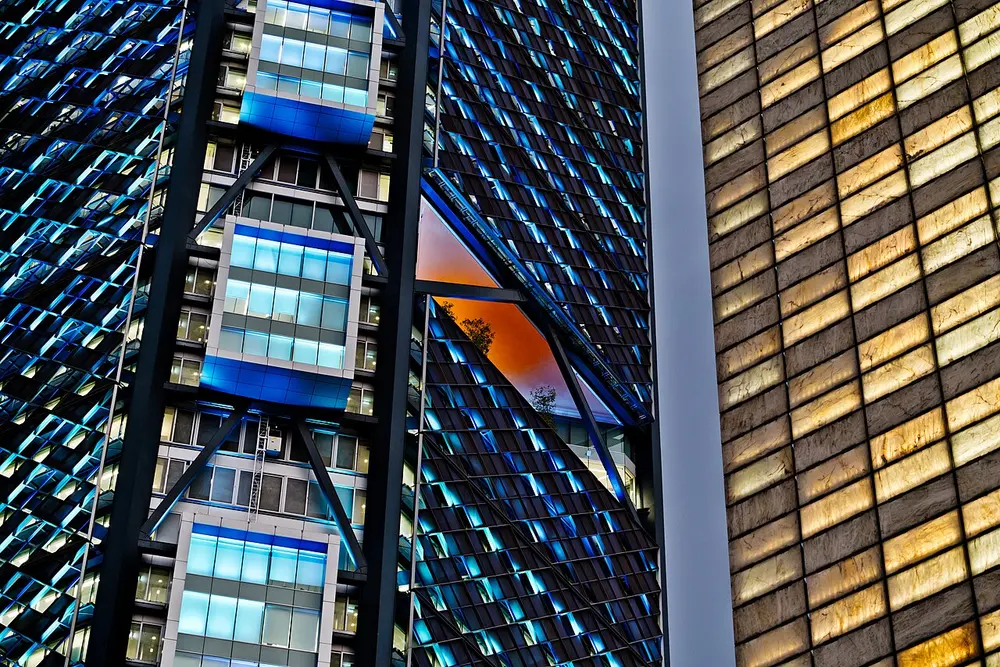
Mexico City Skyline. Photo: Nan Palmero from San Antonio, TX, USA / Wikimedia Commons, CC BY 2.0.
Thin air at 2,200 metres
At 2,200 metres, the oxygen pressure is lower than at sea level, and the body has to work harder to deliver oxygen to the muscles. The effect is felt on every kilometre, including the descents, and it is strongest when the pace rises. Runners who arrive expecting sea-level splits will be disappointed.
Acclimatisation helps, but it does not make the altitude disappear. Arriving early, sleeping well and keeping the first half conservative are the practical responses. The marathon is not the place to test a new pace target or a new fuelling strategy.
August rain
August can be wet in Mexico City, and the race may be affected by rain. Wet roads change the footing, the crowds thin in exposed sections, and the combination of rain and altitude makes the day harder to pace. Runners should be ready for changing conditions rather than assuming a dry morning.
Rain also changes the practical details. The historic centre's stone and the painted markings on the avenues become slippery, and the city looks different from the photographs. A light layer that can be discarded is more useful than a heavy jacket.
Crowds and the Gold Label
The Gold Label reflects the race's place among the world's leading road events, and the crowds reflect its place in the city. Mexico City turns out in force for the marathon, with support that can feel overwhelming in the historic centre and along the Reforma.
That support is a boost on a hard day, but it can also pull runners along too quickly. The noise, the altitude and the early pace can combine to produce a fast start that the second half cannot sustain. Discipline matters more than atmosphere.
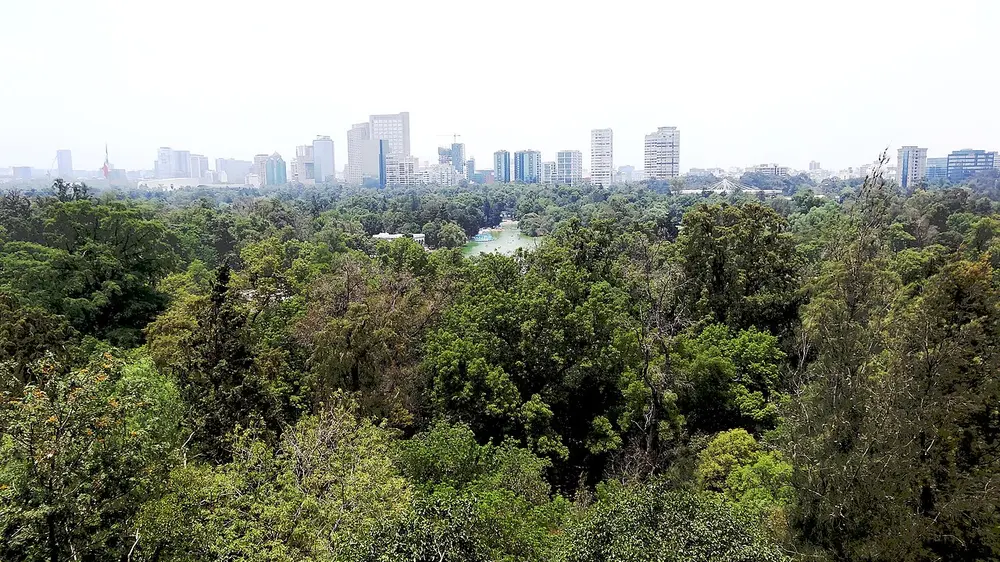
Mexico - DF 2013 - panoramio (102). Photo: randreu / Wikimedia Commons, CC BY 3.0.
What the day demands
The race asks for a conservative plan. Start slower than a sea-level goal, let the effort guide the pace and be prepared to adjust when the altitude bites. Hydration matters, and so does protection from the sun if the morning turns bright.
It is not a course that hands out easy times. The altitude, the weather and the crowds make it a demanding marathon, and the finish is earned rather than coasted. What it offers instead is a tour of one of the Americas' great capitals, with the Reforma, the historic centre and the crowds providing the backdrop.
Frequently asked questions
Answers to the questions runners ask before entering, drawn from this race's course guide and the directory's own data — the sources behind them are listed below.
When is the Mexico City Marathon?
The next edition is scheduled for 29 August 2027.
How high is the Mexico City Marathon?
It is run at about 2,200 metres above sea level. The altitude is the main reason the race feels harder than its modest climbing profile suggests.
Is the Mexico City Marathon flat or hilly?
It is undulating, with about 116 metres of climbing. The profile is not severe, but the altitude makes every rise and every flat kilometre more demanding.
Does the Mexico City Marathon hold a World Athletics label?
Yes, it holds a World Athletics Gold Label.
Is Mexico City a good first marathon or personal-best course?
It is not the obvious choice for either. The altitude and the possibility of August rain make it a tough debut, and the thin air works against fast times. Runners with marathon experience are better placed to enjoy it.
What is the weather like in August?
August can turn wet, and rain is a real possibility on race day. The weather, combined with the altitude, makes the race harder to pace than a dry sea-level marathon.
Where is the Mexico City Marathon run?
It runs along the Reforma and through the historic centre of Mexico City, at about 2,200 metres above sea level.
More marathons in Americas
Sources for this page
What each source below is used for on this page, and where to check this race yourself.
- World Athletics — the label calendar and the road-race regulations. Used to check whether the race holds a World Athletics label, and its elite competition details.
- AIMS — the international course-measurement standard behind the 42.195 km distance, and the AIMS race calendar.
- The organizer's own publications — course maps, race handbooks and published results. The date, course character and climbing on this page are compiled from them and re-checked each season.
“A World Athletics Label denotes a full application of the Competition and Technical Rules in, at a minimum, the elite component of the competition. Labels also denote superior standards in event organisation, safety and runner experience, support from public authorities to the event and a financial commitment to anti-doping.”
Where do these facts come from?
Dates, course type, climbing and time limits are compiled from the organizer's publications and re-checked each season; elevation is an estimate of total climbing rather than a survey figure. Always confirm race-day details with the organizer before making plans.
Last reviewed 27 October 2026