
São Paulo International Marathon
São Paulo does not do small. Brazil's largest city stages Brazil's largest marathon, and the course loops through its avenues and parks with the city's hills as a constant companion.
By Global Marathon Routes editorial team · Last reviewed 27 October 2026
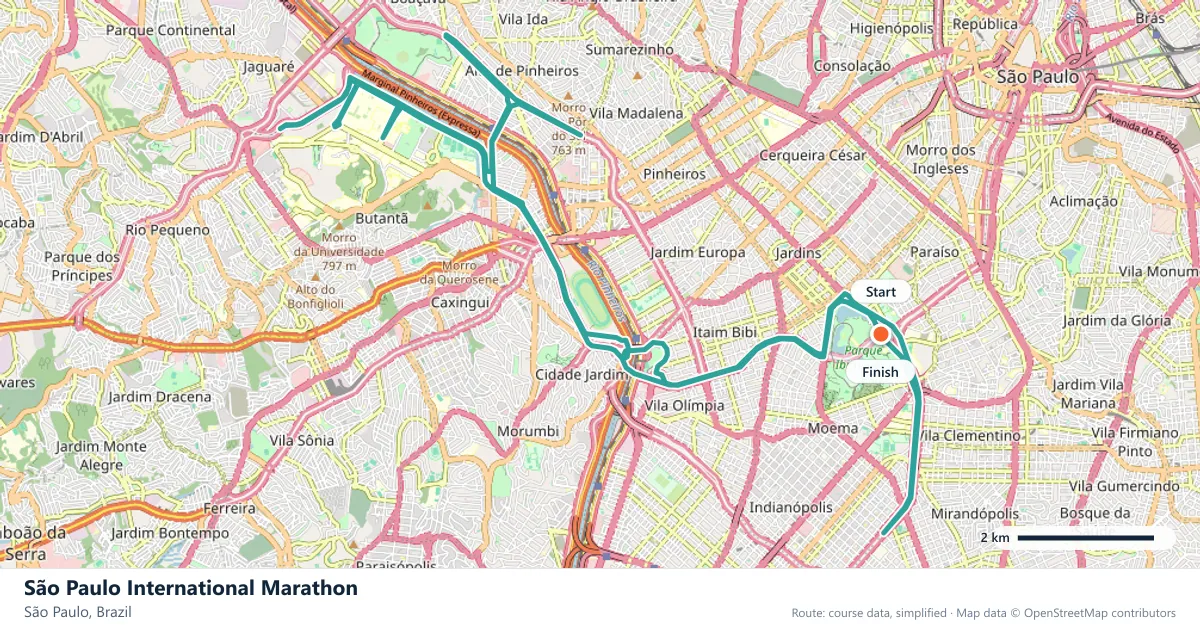
Where does the São Paulo International Marathon run?
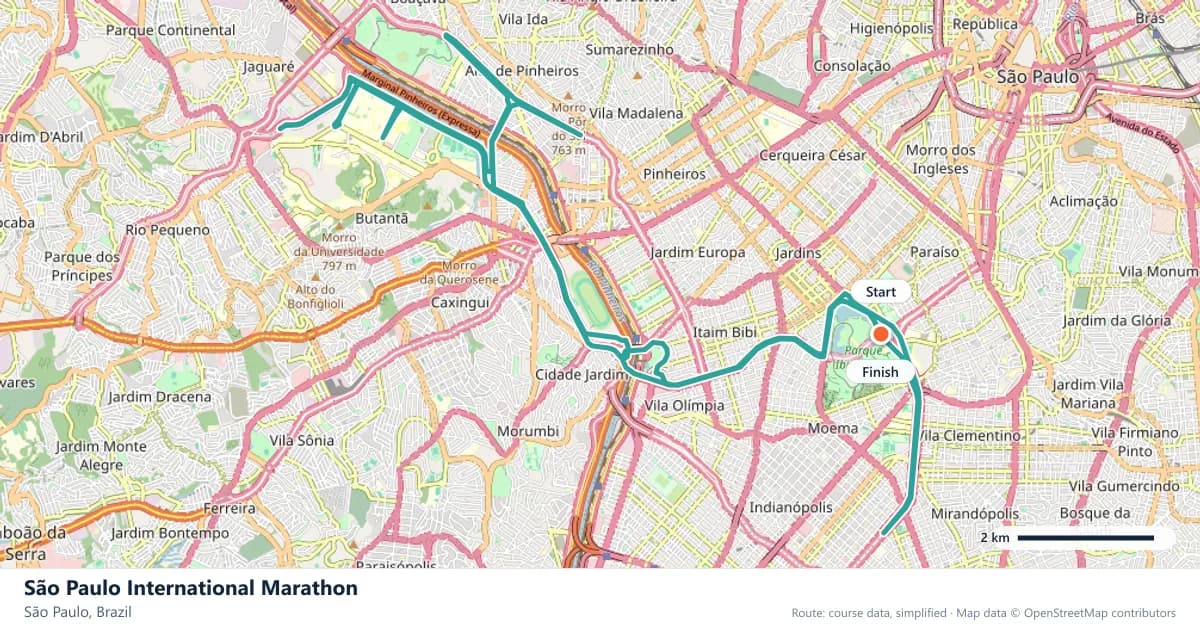
Interactive map
The trace follows the organizer's published course, simplified for the screen: the orange dot is the start, the dark dot the finish. Scroll to zoom, drag to pan.
What is the São Paulo International Marathon course like?
Brazil's largest marathon, looping through São Paulo's avenues and parks with the city's hills to contend with. Warm, humid and deep in elite South American fields.
- Next edition
- April 2027 (expected)
- Elevation gain
- 226 m
- Profile
- Undulating
- First run
- —
Course guide
São Paulo does not do small. Brazil's largest city stages Brazil's largest marathon, and the course loops through its avenues and parks with the city's hills as a constant companion. The 2027 edition is expected in April.
The profile is undulating, with about 226 metres of climbing, and the conditions are warm and humid. This is not a gentle coastal race: it is a big-city marathon across a plateau of ridges and traffic arteries, and the terrain keeps the effort honest even when the roads are wide.
The race holds a World Athletics Label, and it attracts deep elite South American fields. For a first marathon it is a formidable but rewarding choice; for anyone hoping to run fast, the hills and humidity make it a much harder proposition.
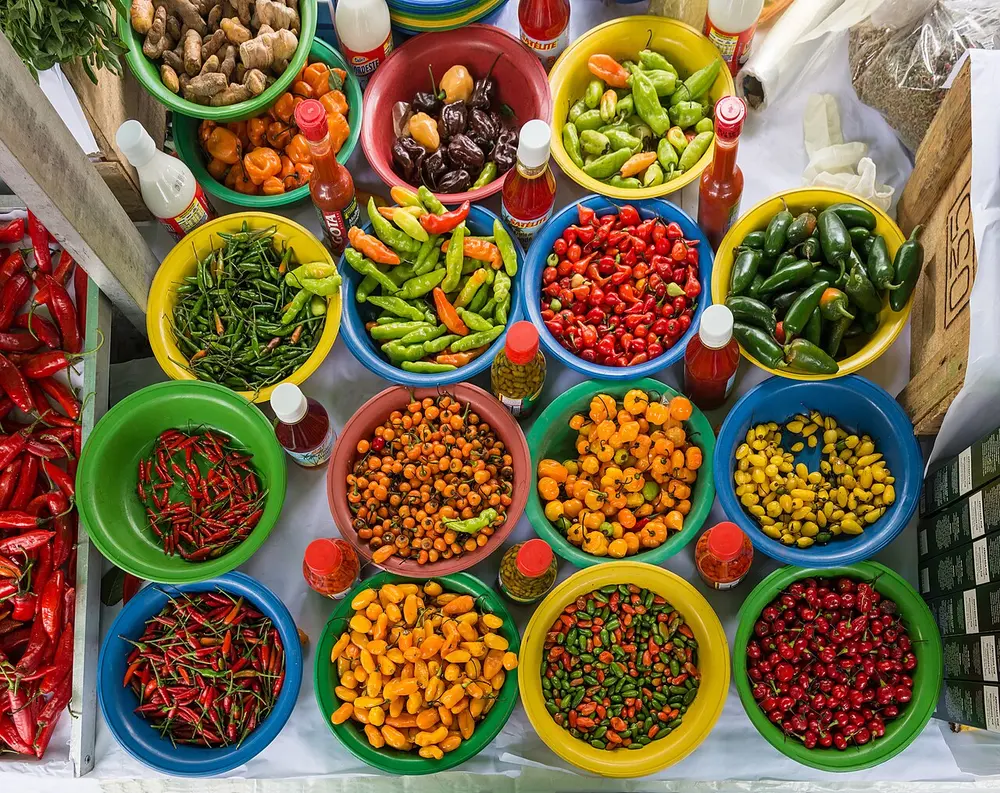
Capsicum baccatum in Saúde flea market, São Paulo, Brazil. Photo: Wilfredor / Wikimedia Commons, CC BY-SA 4.0.
The course
The loop uses São Paulo's avenues and parks, gaining about 226 metres over the full distance. The climbing is spread through the route in rolling sections rather than one long ascent. The city's hills are a constant theme, and the undulating ground makes even pacing the central skill.
The scale of the event is part of its character. This is a route designed around the city rather than a single scenic loop, and the changes between open avenues and greener park sections give the race a varied texture. The parks are brief respites; the avenues and hills dominate the day.
A city built on ridges
São Paulo spreads across a plateau cut by river valleys, and its neighbourhoods sit at different heights. That topography is why the marathon climbs even when it looks flat on a map: the roads rise and fall across the city's ridges, and the route accumulates 226 metres without ever pointing at a mountain.
The result is a course that never quite settles. Runners who are used to flat city races will find the constant changes of grade demanding, especially in the second half. Those who train on rolling roads will recognise the rhythm and settle into it sooner.
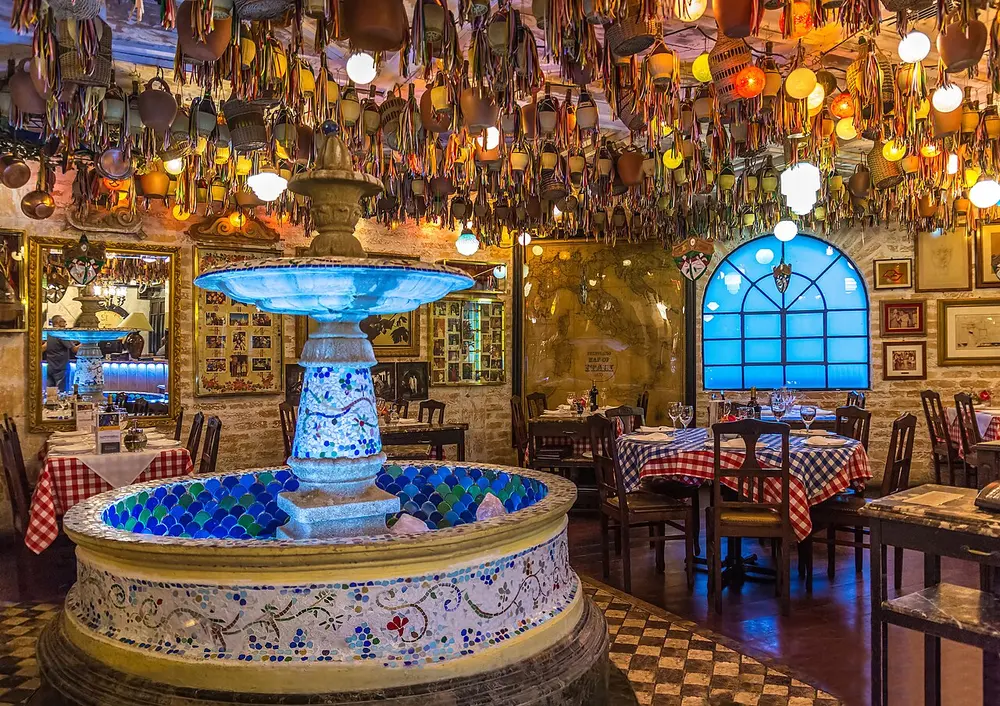
Famiglia Mancini, São Paulo, Brazil. Photo: Wilfredor / Wikimedia Commons, CC BY-SA 4.0.
The label and the elite field
The World Athletics Label places the race on the international calendar, and the elite fields reflect Brazil's depth at the marathon distance. South American runners use São Paulo as a competitive stage, and the presence of a serious front pack gives the race a championship atmosphere.
For the rest of the field, that quality is felt in the organisation rather than the pace. A label race has standards to meet, and the event's scale means the course, the crowds and the city support are all part of a much bigger production than a small local marathon.
Running in the humidity
Warm, humid conditions are the race's second challenge. The body struggles to cool itself when the air is heavy, and the same pace requires a higher heart rate. Add 226 metres of rolling climbing and the day becomes a test of fuelling, hydration and restraint.
The practical advice is to start slower than a sea-level plan and to drink early. Do not wait until thirst arrives; in humidity, the deficit builds quietly. Runners who wear too much clothing at the start will regret it within the first hour.
The first-timer's big city
The race is suited to a first marathon, but it is a big-city debut rather than an easy one. The distance is the same, yet the hills, the humidity and the sheer scale of São Paulo make the day more demanding than a flat loop in a smaller city. Preparation matters.
The reward is an authentic Brazilian marathon. The course moves through the city's avenues and parks, the crowds are large, and the elite presence gives the event a sense of occasion. It is a race to finish with respect for the city rather than a time to take for granted.
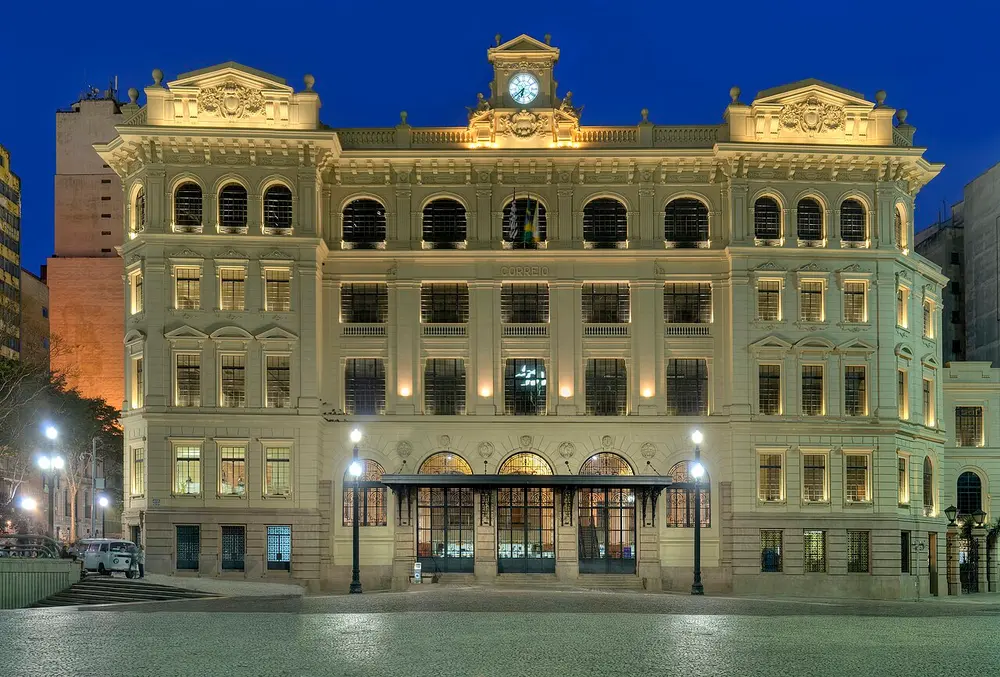
Correios Building, São Paulo, Brazil. Photo: Wilfredor / Wikimedia Commons, CC BY-SA 4.0.
Frequently asked questions
Answers to the questions runners ask before entering, drawn from this race's course guide and the directory's own data — the sources behind them are listed below.
When is the São Paulo International Marathon?
The 2027 edition is expected in April. The exact date has not been confirmed, so check the organiser's final announcement before booking travel.
Is the São Paulo International Marathon flat?
No. It is undulating, with about 226 metres of climbing. The course rolls across the city's ridges and never settles into a truly flat rhythm.
Can I run São Paulo as my first marathon?
Yes, the race is suited to a first marathon, but it is a demanding debut. The warm, humid conditions and the rolling course require a conservative start and a proper hydration plan.
Is the São Paulo International Marathon a fast course?
The race is not set up as a personal-best course. The 226 metres of climbing and the warm, humid weather work against an even, fast effort, even though the fields are deep and competitive.
Does the São Paulo International Marathon hold a World Athletics label?
Yes, it holds a World Athletics Label and attracts deep elite South American fields.
Where is the São Paulo International Marathon run?
It loops through São Paulo, Brazil, using the city's avenues and parks, with the city's hills shaping the profile.
Why is the race so humid?
São Paulo sits on a plateau in southeastern Brazil, and April conditions are warm and humid. The heavy air makes cooling harder and raises the effort required for any given pace.
More marathons in Brazil
More marathons in Americas
Sources for this page
What each source below is used for on this page, and where to check this race yourself.
- World Athletics — the label calendar and the road-race regulations. Used to check whether the race holds a World Athletics label, and its elite competition details.
- AIMS — the international course-measurement standard behind the 42.195 km distance, and the AIMS race calendar.
- The organizer's own publications — course maps, race handbooks and published results. The date, course character and climbing on this page are compiled from them and re-checked each season.
“A World Athletics Label denotes a full application of the Competition and Technical Rules in, at a minimum, the elite component of the competition. Labels also denote superior standards in event organisation, safety and runner experience, support from public authorities to the event and a financial commitment to anti-doping.”
Where do these facts come from?
Dates, course type, climbing and time limits are compiled from the organizer's publications and re-checked each season; elevation is an estimate of total climbing rather than a survey figure. Always confirm race-day details with the organizer before making plans.
Last reviewed 27 October 2026