
Brasilia Marathon
Brasilia was drawn before it was built, and the marathon makes the most of that fact. The course loops through the planned capital's monument axis and along Lake Paranoá, using roads wide enough to…
By Global Marathon Routes editorial team · Last reviewed 27 October 2026
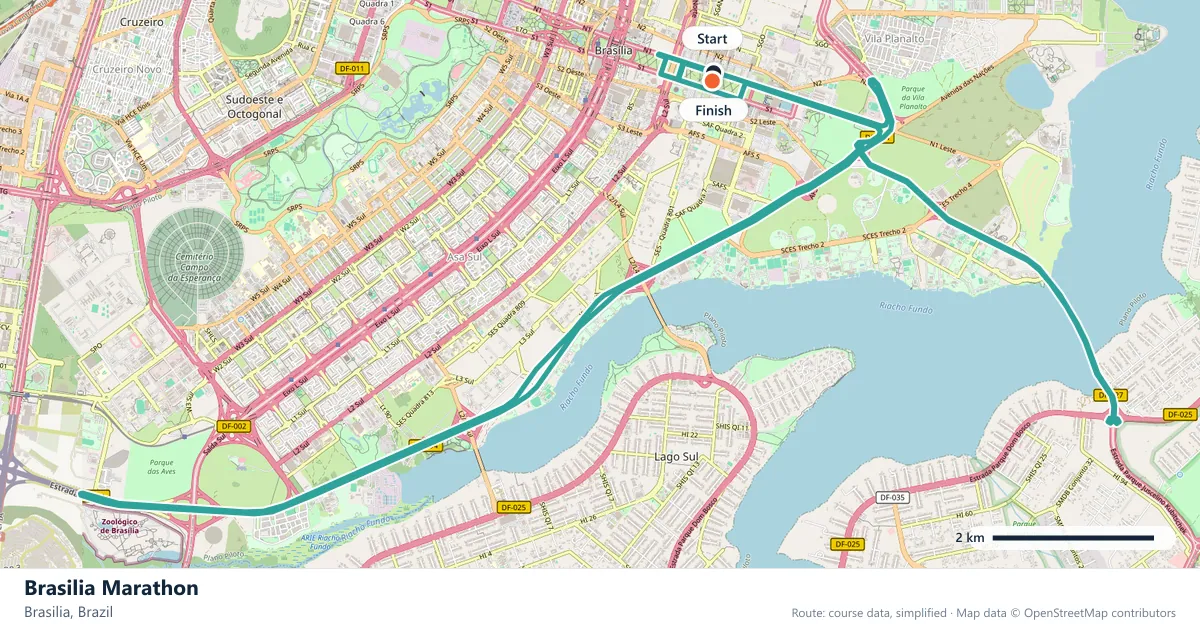
Where does the Brasilia Marathon run?
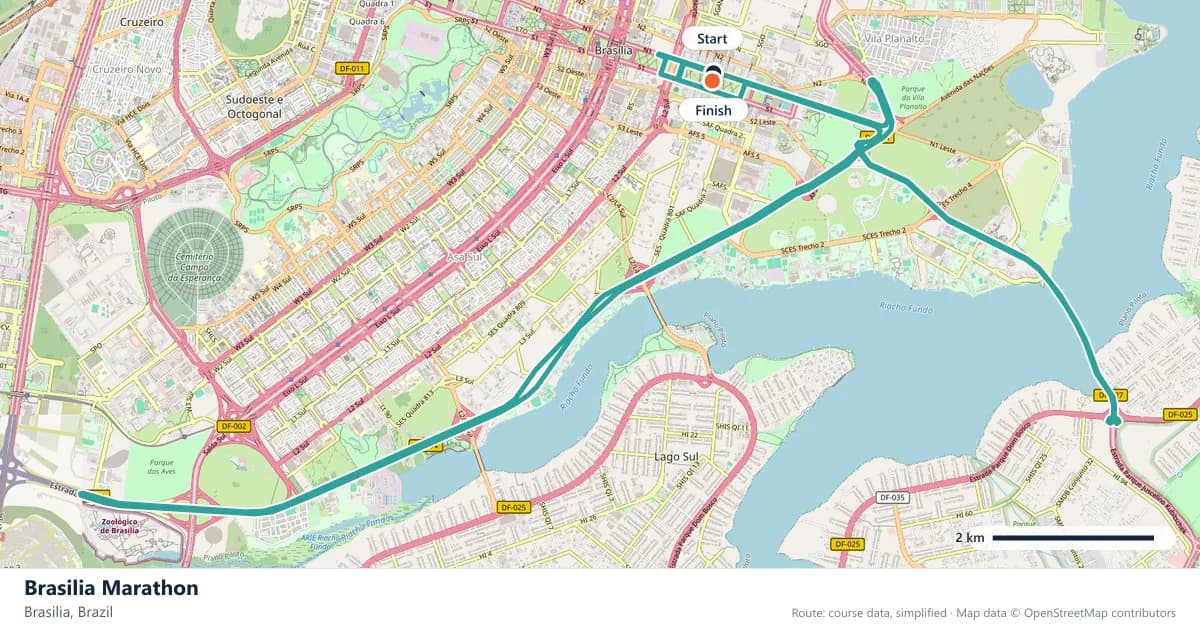
Interactive map
The trace follows the organizer's published course, simplified for the screen: the orange dot is the start, the dark dot the finish. Scroll to zoom, drag to pan.
What is the Brasilia Marathon course like?
A loop through the planned capital's monument axis and along Lake Paranoá, on a course hillier than its modernist setting suggests. Wide roads and dry winter air.
- Next edition
- April 2027 (expected)
- Elevation gain
- 256 m
- Profile
- Hilly
- First run
- —
Course guide
Brasilia was drawn before it was built, and the marathon makes the most of that fact. The course loops through the planned capital's monument axis and along Lake Paranoá, using roads wide enough to swallow a field of runners without a bottleneck. The 2027 edition is expected in April.
The profile is hilly, with about 256 metres of climbing, which is more than the city's spacious avenues suggest at first glance. The gain arrives in steady rises rather than one dramatic ascent, and the wide roads give runners room to choose a line and hold it. The setting is unmistakably Brasilia: modernist monuments, open sky and a lake at the edge of the plan.
That combination makes the race a curiosity. It is a capital-city marathon with room to run, a course that can be quick for a strong runner, and a landscape that looks simpler than it is.
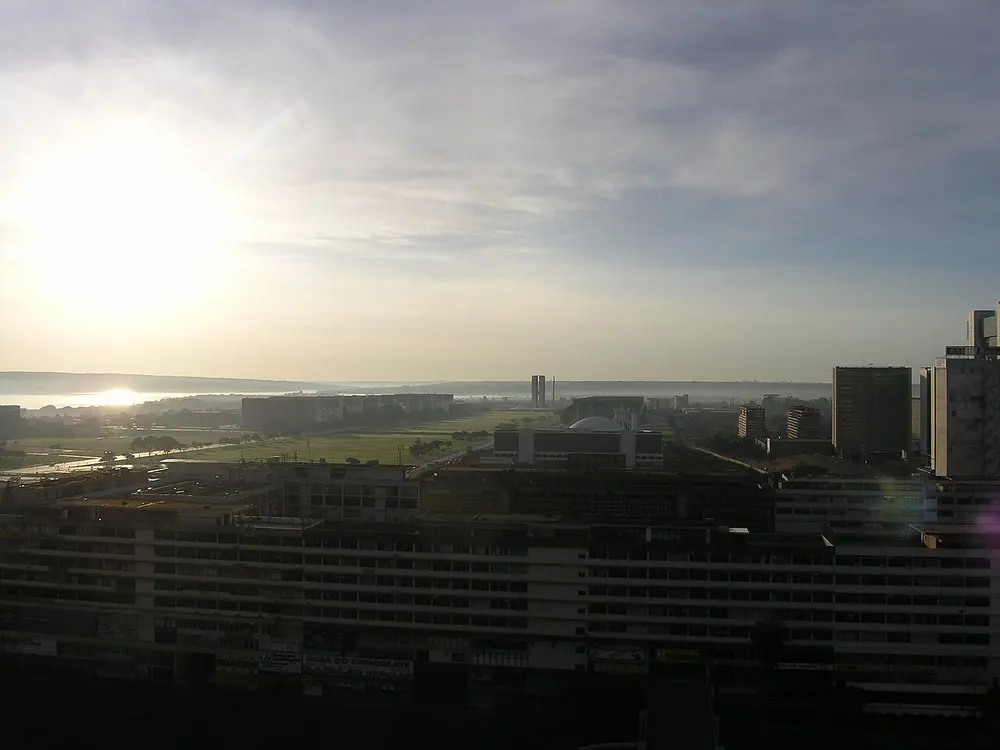
Brasilia Skyline. Photo: seier+seier+seier / Wikimedia Commons, CC BY 2.0.
The course
The race is a loop that takes in the monument axis and the shore of Lake Paranoá before returning towards the start. The axis provides the ceremonial kilometres, with the city's public buildings arranged along a single grand line. The lake section changes the scale, replacing monuments with water and open horizons.
About 256 metres of climbing is spread through the loop. None of it is steep enough to break the race, but it arrives often enough to interrupt a rhythm, particularly in the second half. The wide roads are a gift for pacing: there is space to run your own speed rather than being carried by the field.
MK03345 CSAV Brasilia in Seattle. Photo: Martin Kraft / Wikimedia Commons, CC BY-SA 3.0.
A capital on the drawing board
Brasilia is the product of a single plan, laid out across the cerrado by Lúcio Costa and filled with Oscar Niemeyer's buildings. The result is a city with a beginning and an axis, rather than the layered, accidental centre of Rio or São Paulo. The Monumental Axis runs through the middle, with the National Congress and the ministries arranged along it, and Niemeyer's cathedral close by.
For a marathon, that clarity is useful. Landmarks are large and far apart, and the route feels legible in a way that older cities rarely allow. The flip side is scale: the distances between buildings are long, and the open sky can make the course feel exposed.
The lake and the dry air
Lake Paranoá gives the route its second landscape. The lake was created as part of the city's plan and now forms a long blue edge to the capital, with the presidential residence and embassies on its shores. The marathon uses that edge, and the water provides a visual break from the avenues.
The central plateau is dry, and the race is run in clear, low-humidity air. That makes for good running conditions but also for a dry throat. Runners should take hydration seriously even when the morning feels comfortable, because the humidity is low and the sun is strong.
The hills behind the avenues
The 256 metres are easy to underestimate. Brasilia's avenues look flat from a car, and the modern architecture gives the impression of a city engineered for speed. On foot, the repeated rises are more apparent, especially once the legs have absorbed the first half.
A personal best is a fair target here, but it needs a disciplined start. The wide roads and dry air can make the opening kilometres feel effortless, and the climbs then take their toll in the final third. Settle into pace early, use the open stretches to recover, and save energy for the return.
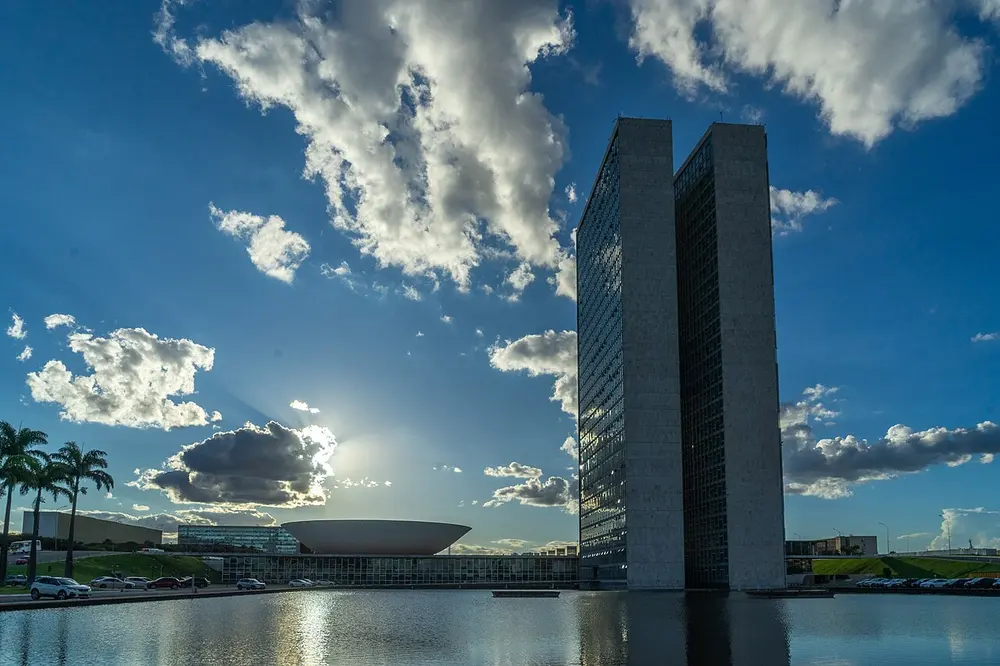
O Senado e o Céu de Brasília. Photo: Bruno Tamm Rabello / Wikimedia Commons, CC BY-SA 4.0.
What the capital asks
Brasilia is not a course that punishes runners with a single obstacle. It asks for consistency instead: an even effort, a sensible pace on the rises and enough fluid to cope with the dry air. The city's scale can be demoralising when a landmark seems not to get closer, so it helps to race by kilometre rather than by sight.
The reward is a marathon that feels like a tour of a manifesto. The monuments, the lake and the empty horizon are unlike any other capital course, and the quiet roads give the race a calm that big-city marathons rarely have.
Frequently asked questions
Answers to the questions runners ask before entering, drawn from this race's course guide and the directory's own data — the sources behind them are listed below.
When is the Brasilia Marathon?
The 2027 edition is expected in April. The exact date has not been confirmed, so check the organiser's announcement before booking travel.
Is the Brasilia Marathon flat or hilly?
It is hilly, with about 256 metres of climbing. The wide avenues and planned layout make the course look flatter than it is, but the rises are spread throughout the loop.
Is the Brasilia Marathon good for a personal best?
It is suited to fast times, particularly for runners who can hold an even effort. The 256 metres of climbing are moderate, and the broad roads make it easier to run your own pace. A personal best is possible, not guaranteed.
Can I run Brasilia as my first marathon?
The race is not presented as a debut course, and the rolling profile plus the dry air make it a day that rewards specific preparation. It is not the simplest place to run a first 42.195 km.
Where is the Brasilia Marathon run?
It is a loop through the Brazilian capital, taking in the monument axis and the shore of Lake Paranoá before returning towards the start.
Why does the course feel so open?
Brasilia was planned as a single city on the cerrado, with broad avenues and monuments set far apart. The roads are wide and the sky is large, which gives the race a spacious feel and plenty of room to run.
More marathons in Brazil
More marathons in Americas
Sources for this page
What each source below is used for on this page, and where to check this race yourself.
- World Athletics — the label calendar and the road-race regulations. Used to check whether the race holds a World Athletics label, and its elite competition details.
- AIMS — the international course-measurement standard behind the 42.195 km distance, and the AIMS race calendar.
- The organizer's own publications — course maps, race handbooks and published results. The date, course character and climbing on this page are compiled from them and re-checked each season.
Where do these facts come from?
Dates, course type, climbing and time limits are compiled from the organizer's publications and re-checked each season; elevation is an estimate of total climbing rather than a survey figure. Always confirm race-day details with the organizer before making plans.
Last reviewed 27 October 2026