
Rio de Janeiro Marathon
Rio de Janeiro's marathon begins with the postcard. The route runs along Copacabana and Ipanema, the two beaches that define the city's image, before turning west along the coast.
By Global Marathon Routes editorial team · Last reviewed 27 October 2026
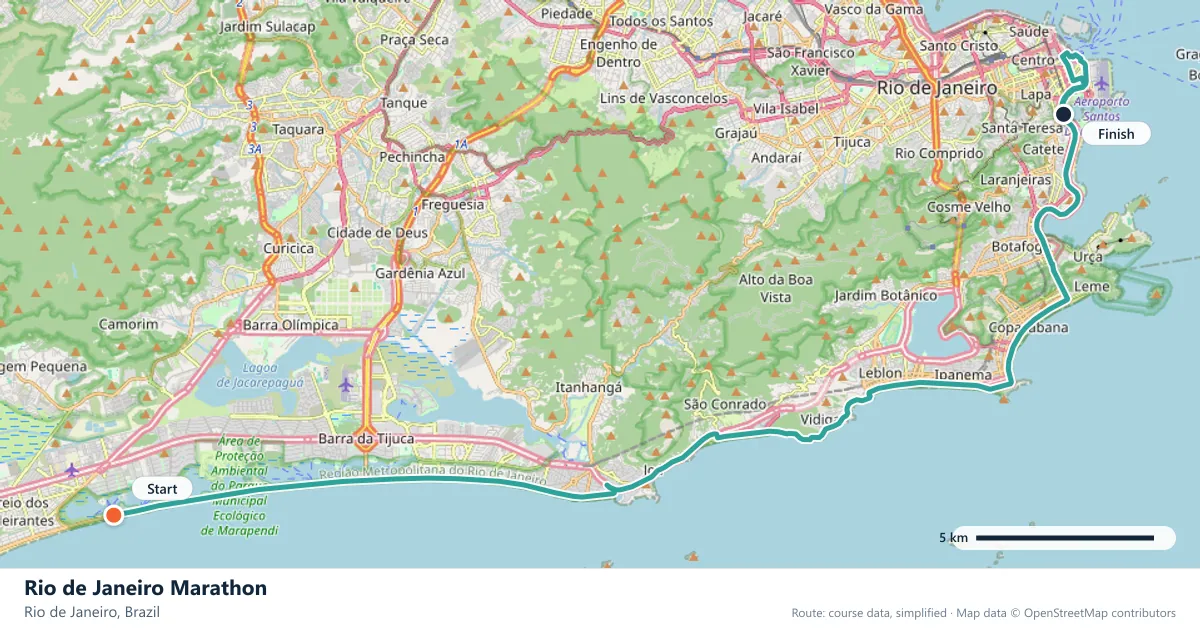
Where does the Rio de Janeiro Marathon run?
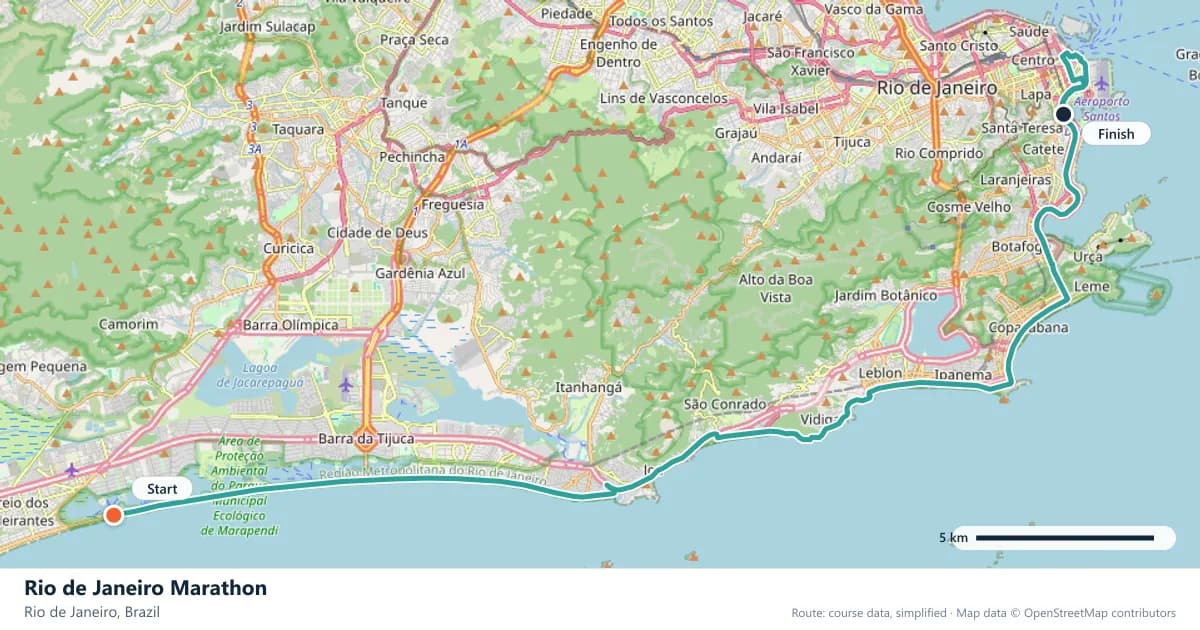
Interactive map
The trace follows the organizer's published course, simplified for the screen: the orange dot is the start, the dark dot the finish. Scroll to zoom, drag to pan.
What is the Rio de Janeiro Marathon course like?
Runs the beaches of Copacabana and Ipanema before turning west along the coast, with Sugarloaf and the mountains framing the course. Flat on the seafront, rolling inland.
- Next edition
- 30 May 2027
- Elevation gain
- 138 m
- Profile
- Undulating
- First run
- —
Course guide
Rio de Janeiro's marathon begins with the postcard. The route runs along Copacabana and Ipanema, the two beaches that define the city's image, before turning west along the coast. Sugarloaf and the granite mountains stay in view, and the 2027 edition is scheduled for 30 May.
The profile is undulating, with about 138 metres of climbing, but its character is split. The seafront is flat and fast; the inland sections roll, and that is where the race changes. Rio holds a World Athletics Label, and the course is one of the few marathons where the scenery is genuinely part of the challenge: it is hard to hold a rhythm when the view keeps asking for attention.
The race also works as a first marathon, thanks to the flat beachfront and the modest climbing total. The caveat is the same one that applies to any beautiful course: the early kilometres are so easy and so distracting that the second half can arrive as a surprise.
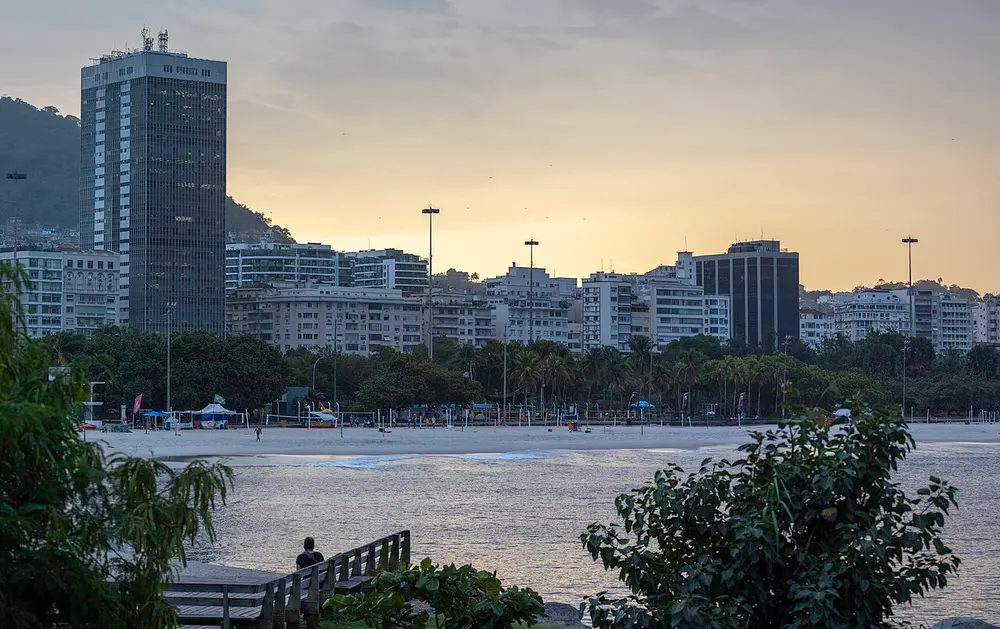
Botafogo Beach and skyline at dusk, Rio de Janeiro, Brazil. Photo: Wilfredor / Wikimedia Commons, CC0.
The course
The route follows Copacabana and Ipanema before heading west along the coast. The beachfront sections are flat and open, with the Atlantic on one side and the city on the other. Then the course turns inland, and the short rises begin.
About 138 metres of climbing is spread across the full distance. The seafront is where the pace settles; the inland rolls are where it has to be adjusted. There is no single climb to prepare for, but the repeated changes of grade keep the legs honest.
Copacabana, Ipanema and the Atlantic edge
Copacabana and Ipanema are not just beaches; they are neighbourhoods with their own rhythms, backed by apartment blocks and fronted by a wide promenade. The course uses that edge, and the famous wave-pattern pavement of Copacabana runs alongside the route rather than being just a photograph.
The beachfront is the fastest part of the race. It is flat, broad and lined with the kind of views that make a marathon feel like a holiday. Runners who are chasing a time should use it to settle rather than to surge, because the inland sections will demand a different effort soon enough.
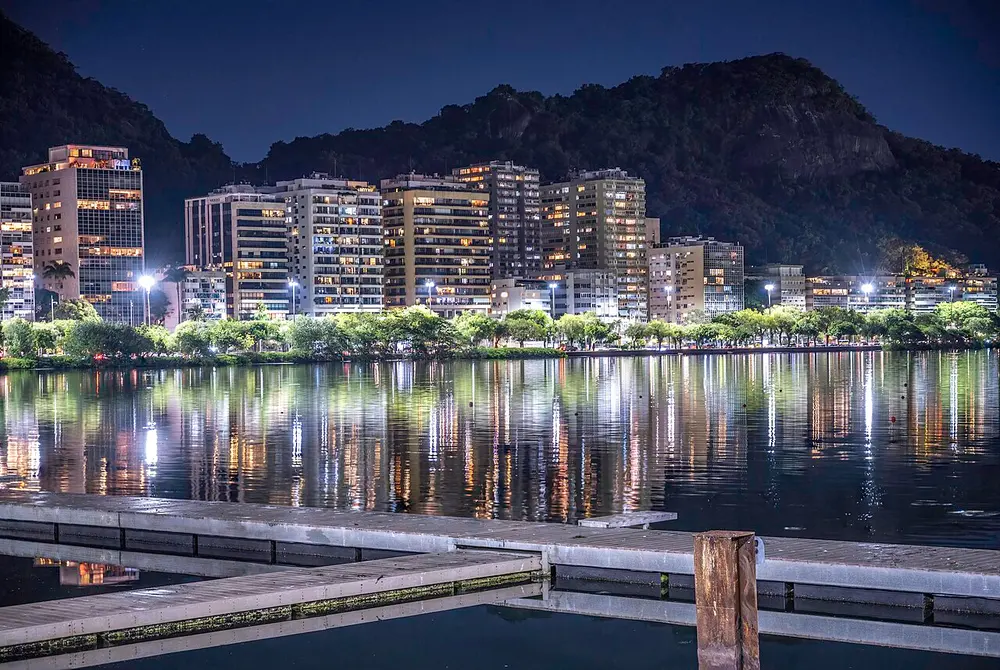
Botafogo waterfront skyline reflected at night, Rio de Janeiro, Brazil. Photo: Wilfredor / Wikimedia Commons, CC0.
Sugarloaf and the mountain frame
Sugarloaf sits at the mouth of Guanabara Bay, a granite peak that has become the city's shorthand. The mountains behind it, including the Two Brothers and the ridges of the Tijuca massif, give Rio its vertical backdrop. The course does not climb them, but they are never far from the skyline.
That frame is part of the race's identity. On the seafront, the mountains appear at the end of the beach; inland, they close the view between buildings. Runners who are struggling can use them as a reminder of where they are, which is more pleasant than watching the kilometre signs.
Pacing the seafront
The flat beachfront is a trap for the ambitious. It feels effortless, the crowd is loud, and the first 10 km can pass at a pace that is far too quick. The inland rolls then expose the debt, and the final kilometres become a negotiation rather than a celebration.
The right approach is to cap the opening. Let the pace feel almost too easy on Copacabana and Ipanema, then allow the effort to rise when the course turns inland. Rio rewards runners who can keep the first half under control and still have something for the rolling second half.

Rio de Janeiro skyline and Sugarloaf Mountain at sunset, Brazil 2. Photo: Wilfredor / Wikimedia Commons, CC0.
The debut and the view
The flat seafront and the modest climbing make Rio approachable for a first marathon. The distance is the same 42.195 km as anywhere else, but the course gives a debutant room to find a rhythm and enjoy the day. The World Athletics Label also signals an event with international standards behind it.
For a personal best, the seafront is the opportunity and the inland rolls are the risk. The course is fast enough to support a quick time, but only if the pacing is disciplined. Rio is not a procession; it is a coastal city race with a split personality, and the second half is where the personality shows.
Frequently asked questions
Answers to the questions runners ask before entering, drawn from this race's course guide and the directory's own data — the sources behind them are listed below.
When is the Rio de Janeiro Marathon?
The next edition is scheduled for 30 May 2027. It is a May race, in Rio's autumn.
Is the Rio de Janeiro Marathon flat or hilly?
It is undulating. The Copacabana and Ipanema seafront is flat, while the inland sections roll. The total climbing is about 138 metres.
Is Rio a good first marathon?
Yes. The flat seafront and modest climbing make it a realistic debut, and the scenery helps the kilometres pass. The main risk is starting too quickly on the beachfront.
Is the Rio de Janeiro Marathon a personal-best course?
The flat coastal stretches support fast running, and the total climbing is modest. A personal best is realistic for runners who pace the first half carefully and save energy for the inland rolls.
Where is the Rio de Janeiro Marathon run?
It runs along Copacabana and Ipanema before turning west along the coast, with Sugarloaf and the mountains framing the route.
Does the Rio de Janeiro Marathon hold a World Athletics label?
Yes, it holds a World Athletics Label, which reflects the event's place on the international road-racing calendar.
What are the highlights of the course?
The Copacabana and Ipanema seafront, the views of Sugarloaf and the coastal mountains, and the change from flat beachfront to rolling inland roads.
More marathons in Brazil
More marathons in Americas
Sources for this page
What each source below is used for on this page, and where to check this race yourself.
- World Athletics — the label calendar and the road-race regulations. Used to check whether the race holds a World Athletics label, and its elite competition details.
- AIMS — the international course-measurement standard behind the 42.195 km distance, and the AIMS race calendar.
- The organizer's own publications — course maps, race handbooks and published results. The date, course character and climbing on this page are compiled from them and re-checked each season.
“A World Athletics Label denotes a full application of the Competition and Technical Rules in, at a minimum, the elite component of the competition. Labels also denote superior standards in event organisation, safety and runner experience, support from public authorities to the event and a financial commitment to anti-doping.”
Where do these facts come from?
Dates, course type, climbing and time limits are compiled from the organizer's publications and re-checked each season; elevation is an estimate of total climbing rather than a survey figure. Always confirm race-day details with the organizer before making plans.
Last reviewed 27 October 2026