
Florianópolis Marathon
The Hercílio Luz bridge is the first thing many visitors see of Florianópolis, and the marathon crosses it.
By Global Marathon Routes editorial team · Last reviewed 27 October 2026
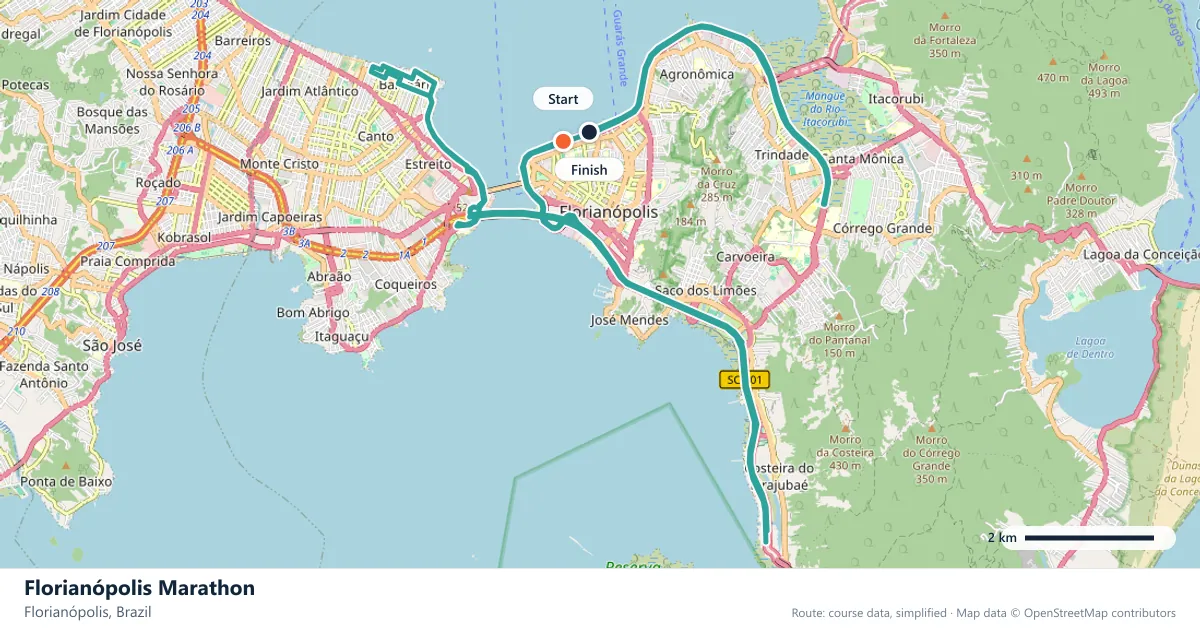
Where does the Florianópolis Marathon run?
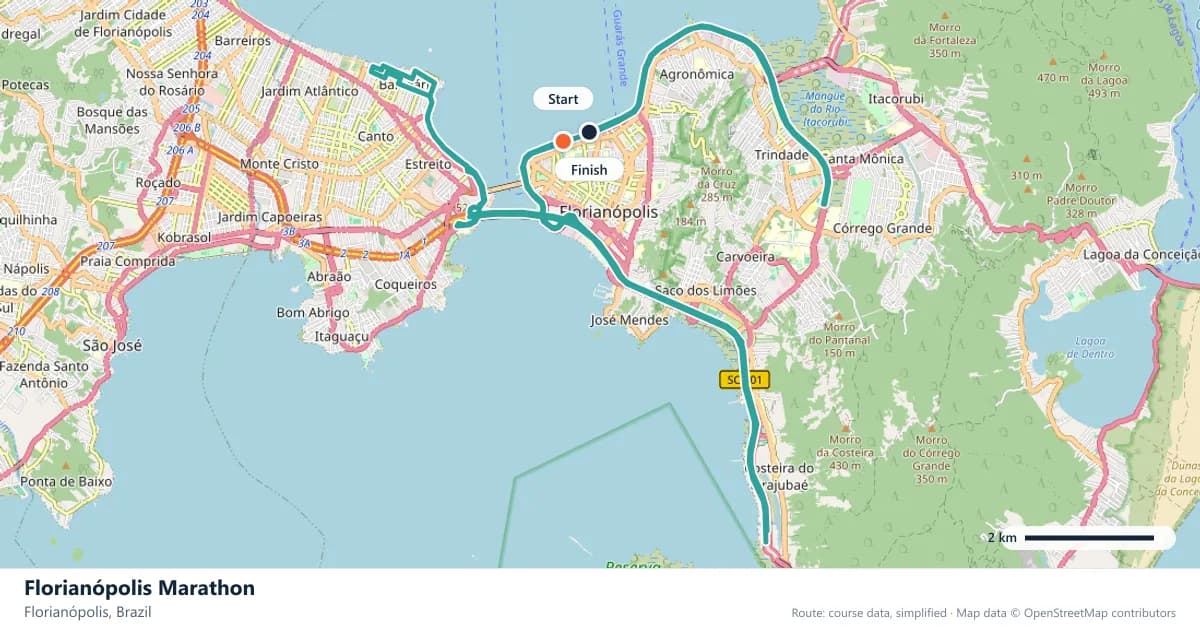
Interactive map
The trace follows the organizer's published course, simplified for the screen: the orange dot is the start, the dark dot the finish. Scroll to zoom, drag to pan.
What is the Florianópolis Marathon course like?
A marathon on the island of Santa Catarina, crossing the Hercílio Luz bridge and passing the lagoons and beaches on the way south. Rolling, and usually windy.
- Next edition
- August 2027 (expected)
- Elevation gain
- 127 m
- Profile
- Undulating
- First run
- —
Course guide
The Hercílio Luz bridge is the first thing many visitors see of Florianópolis, and the marathon crosses it. The race is held on the island of Santa Catarina in southern Brazil, passing lagoons and beaches as it heads south. The 2027 edition is expected in August, in the southern winter.
The course rolls rather than sits flat, and the 127 metres of climbing are enough to keep the legs working. Neither the climbing nor the coastal exposure is extreme, but together they give the race a rhythm that is hard to fake: there are few long, sheltered stretches where pace can simply settle.
Florianópolis is a city of beaches and lagoons, with an island geography that shapes daily life. The marathon uses that geography rather than hiding it, and the result is a race that feels coastal at every turn.
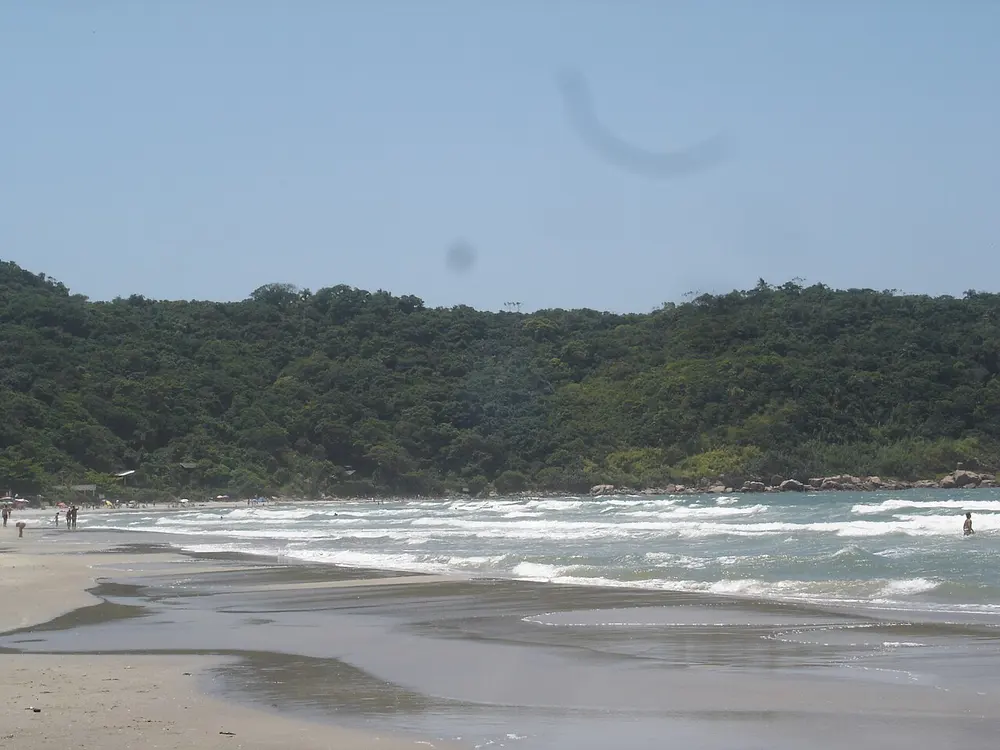
Florianópolis beach ( ). Photo: Unknown photographer / Wikimedia Commons, Public domain.
The course
The route crosses the Hercílio Luz bridge and continues south across the island, passing lagoons and beaches along the way. The bridge is the gateway, and the southern coast provides the scenery: water on one side, hills and vegetation on the other, and the Atlantic never far away.
About 127 metres of climbing is spread across the route. The undulation is modest, but it is constant, and the coastal wind adds resistance on the open sections. Runners should expect to work for an even pace rather than finding it automatically.
The old bridge
The Hercílio Luz bridge is the island's defining landmark, a suspension bridge that links Florianópolis to the mainland and has become the symbol of the city. Crossing it is the race's signature moment, and it is worth noticing: the structure, the water below and the view back towards the island are unlike anything else on the course.
The bridge also marks a change of terrain. After the crossing, the route settles into the island's roads, where the scale becomes smaller and the exposed sections begin. It is a useful psychological marker as much as a scenic one.
Arquivo Histórico Eclesiástico de Santa Catarina - Florianópolis. Photo: Joalpe / Wikimedia Commons, CC BY-SA 4.0.
Lagoons and the southern beaches
The island's interior is dominated by lagoons, and the coast by a chain of beaches that runs south from the city. Lagoa da Conceição is the best known of the lagoons, a body of water around which the island's cafés, trails and wind sports are clustered. The southern beaches are longer and wilder, with the open Atlantic behind them.
The course passes through this landscape, and the changes of scene are part of its appeal. A lagoon section feels enclosed; a beach section feels exposed; a road between the two can feel like neither. Runners who like variety will find it here, though the constant changes make rhythm harder to hold.
The wind off the Atlantic
The wind is the element that shapes the day. Florianópolis sits on the coast, and the island's beaches face the open ocean, so gusts can arrive without warning and stay for kilometres. On an exposed section, the same pace costs noticeably more effort, and a headwind can turn a flat road into a grind.
The right response is to run by effort rather than pace. Let the watch drift when the wind picks up and recover when it drops. Fighting for even splits in a coastal wind is a quick way to empty the legs before the final beaches.
A race that has to be earned
This is not a course that hands out an easy day. The 127 metres of climbing are manageable on their own, but the undulation, the bridge and the wind combine to make the race feel longer than the distance suggests. Every kilometre asks for attention, and the last beaches arrive before the legs are ready for them.
The same qualities make the race memorable. Florianópolis offers lagoons, beaches and a historic bridge in a single morning, and the weather is part of the experience. Runners who accept the wind and pace by feel will enjoy it far more than those chasing a number.
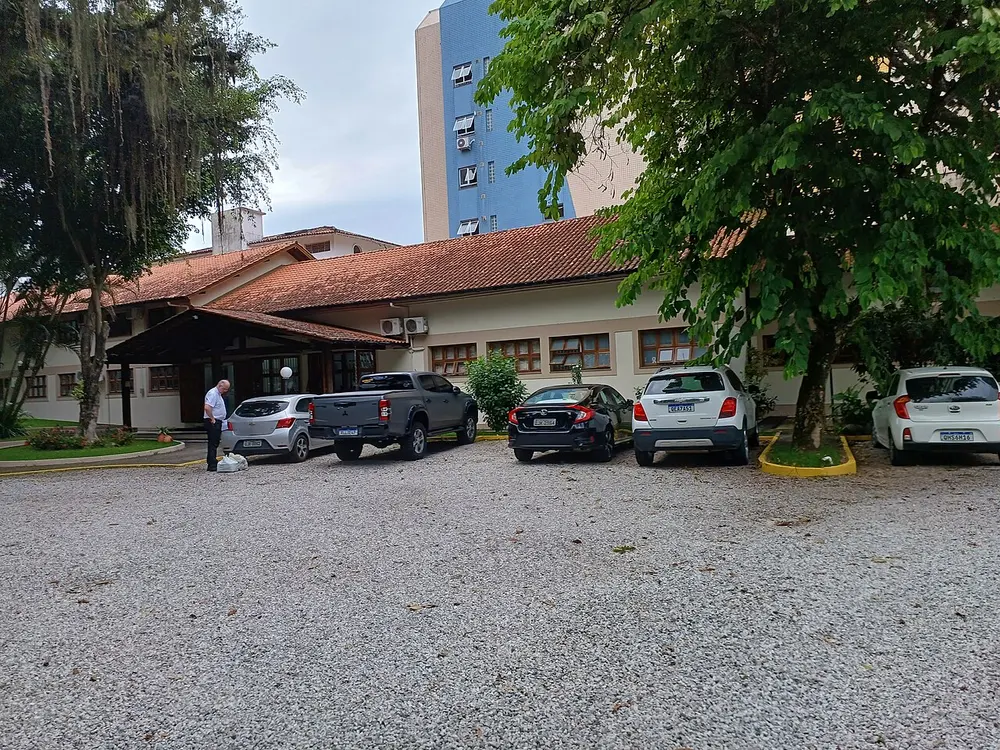
Arquivo Histórico Eclesiástico de Santa Catarina - Florianópolis (photo 2). Photo: Joalpe / Wikimedia Commons, CC BY-SA 4.0.
Frequently asked questions
Answers to the questions runners ask before entering, drawn from this race's course guide and the directory's own data — the sources behind them are listed below.
When is the Florianópolis Marathon?
The 2027 edition is expected in August, in the southern winter. The exact date has not been confirmed, so treat the month as a planning target.
Does the Florianópolis Marathon cross the Hercílio Luz bridge?
Yes. The course crosses the Hercílio Luz bridge before continuing south across the island.
Is the Florianópolis Marathon flat?
No. It is undulating, with about 127 metres of climbing spread across the route, and the coastal wind can make flat-looking sections feel harder than the profile suggests.
Is the Florianópolis Marathon windy?
It is usually windy. The island's beaches face the open Atlantic, and exposed sections can be significantly harder when the wind is up.
Is Florianópolis a good first marathon or personal-best course?
The race is not built around either goal. The climbing is modest, but the constant undulation and the wind make even pacing difficult, and the course demands preparation rather than offering an easy day.
Where is the Florianópolis Marathon run?
It is run on the island of Santa Catarina in southern Brazil, crossing the Hercílio Luz bridge and continuing south past the island's lagoons and beaches.
What is the scenery like?
The route moves between lagoons, beaches and the roads that connect them, with the Atlantic and the island's hills never far away. The Hercílio Luz bridge is the defining landmark.
More marathons in Brazil
More marathons in Americas
Sources for this page
What each source below is used for on this page, and where to check this race yourself.
- World Athletics — the label calendar and the road-race regulations. Used to check whether the race holds a World Athletics label, and its elite competition details.
- AIMS — the international course-measurement standard behind the 42.195 km distance, and the AIMS race calendar.
- The organizer's own publications — course maps, race handbooks and published results. The date, course character and climbing on this page are compiled from them and re-checked each season.
Where do these facts come from?
Dates, course type, climbing and time limits are compiled from the organizer's publications and re-checked each season; elevation is an estimate of total climbing rather than a survey figure. Always confirm race-day details with the organizer before making plans.
Last reviewed 27 October 2026