
Seattle Marathon
Seattle saves its hardest running for late November. The marathon crosses bridges and works through the hills around Lake Washington before finishing downtown, and the next edition is on Sunday 29…
By Global Marathon Routes editorial team · Last reviewed 27 October 2026
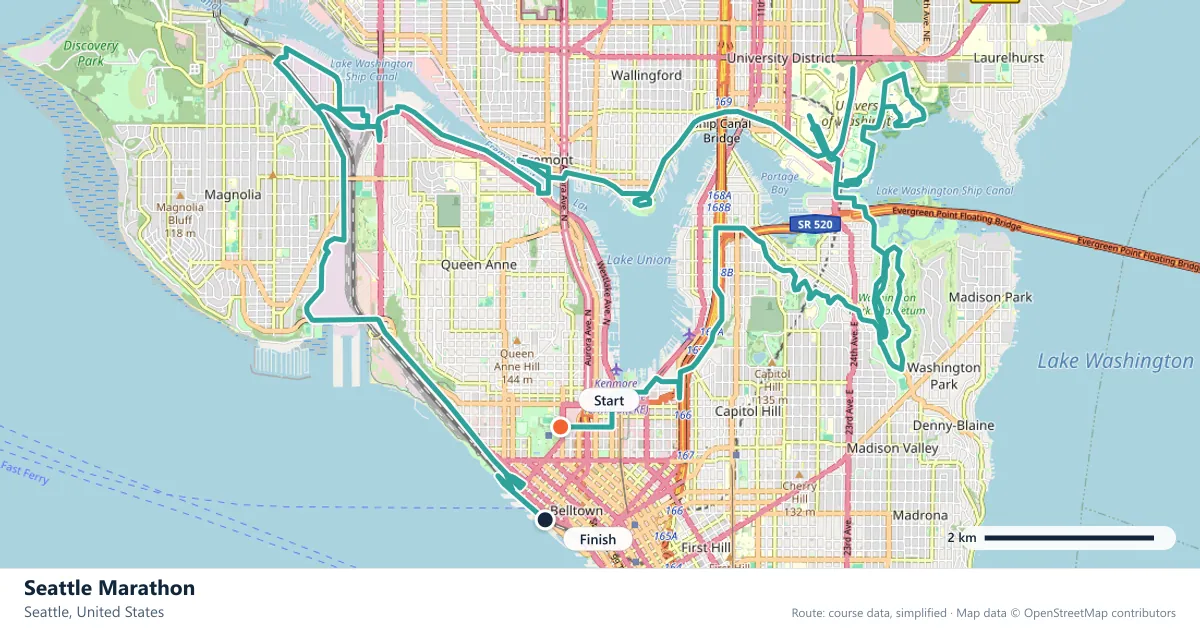
Where does the Seattle Marathon run?
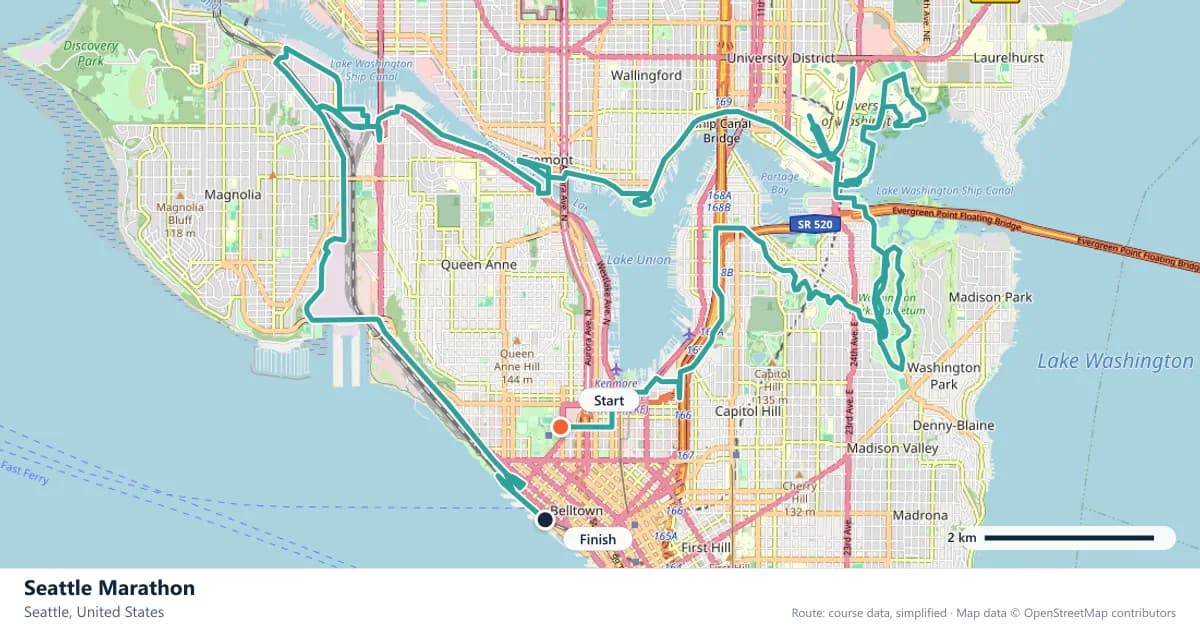
Interactive map
The trace follows the organizer's published course, simplified for the screen: the orange dot is the start, the dark dot the finish. Scroll to zoom, drag to pan.
What is the Seattle Marathon course like?
A late-November race over the bridges and hills around Lake Washington, finishing downtown. Wet, hilly and a genuine Pacific Northwest test.
- Next edition
- 29 November 2026
- Elevation gain
- 270 m
- Profile
- Hilly
- First run
- —
Course guide
Seattle saves its hardest running for late November. The marathon crosses bridges and works through the hills around Lake Washington before finishing downtown, and the next edition is on Sunday 29 November 2026.
About 270 metres of climbing makes it a hilly race, but the bigger test may be the weather. This is a wet, late-autumn event in the Pacific Northwest, and the bridges and exposed stretches put runners in direct contact with whatever the day brings. The course does not hide from the climate; it runs through it.
The race is a first-marathon option for runners who train on rolling ground and are comfortable being wet for several hours. The downtown finish gives the day a clear destination, and the lake and bridges give it a distinctly Seattle identity.
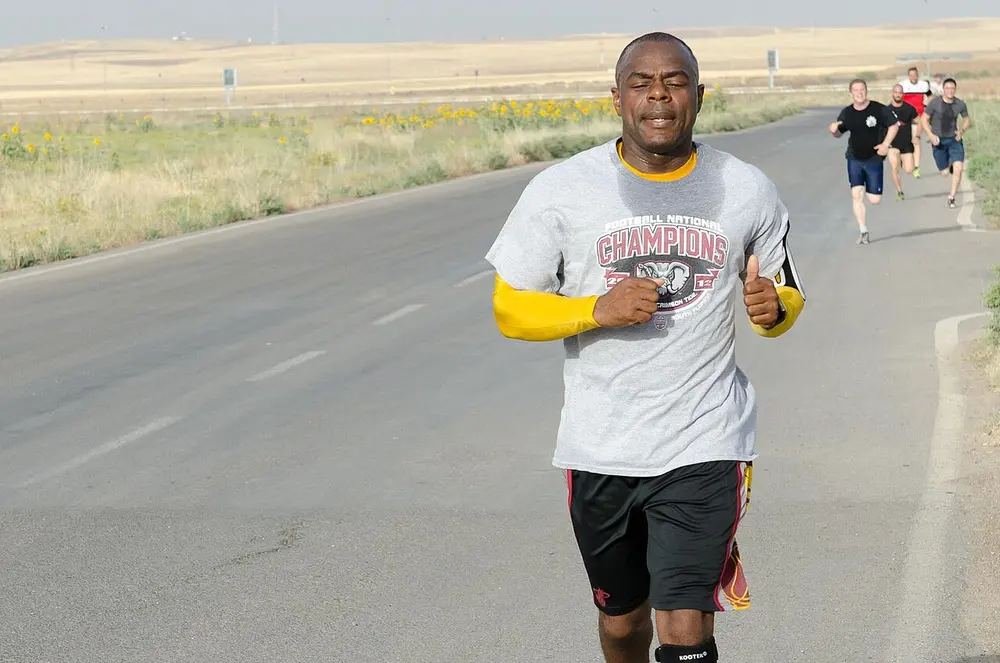
Seattle Half Marathon Shadow Run 160618-A-JW984. Photo: Staff Sgt. Peter Berardi / Wikimedia Commons, Public domain.
The course
The race crosses bridges and rolls through the hills around Lake Washington. About 270 metres of climbing is spread over the route, with the hills arriving in repeated sections rather than one long ascent. The downtown finish provides a strong closing target after the quieter miles around the water.
Seattle's topography is the key to the course. The city is built on hills between Puget Sound and Lake Washington, and the marathon uses that in-between ground to create a route that is always changing direction and elevation. There are flatter stretches near the water, but they do not last long.
Bridges and the lake
Lake Washington is the race's inland sea, a long freshwater body separating Seattle from the Eastside. The course uses the bridges that cross it, and those crossings become landmarks in their own right: exposed, open and impossible to ignore. They break the rhythm of the surrounding neighbourhoods and give the race a sense of scale.
Bridge running is different from road running. The approach often climbs, the deck is exposed, and the far side can feel farther away than it looked. Hold form across each crossing, resist the urge to surge and use the experience as a chance to reset before the next hill.
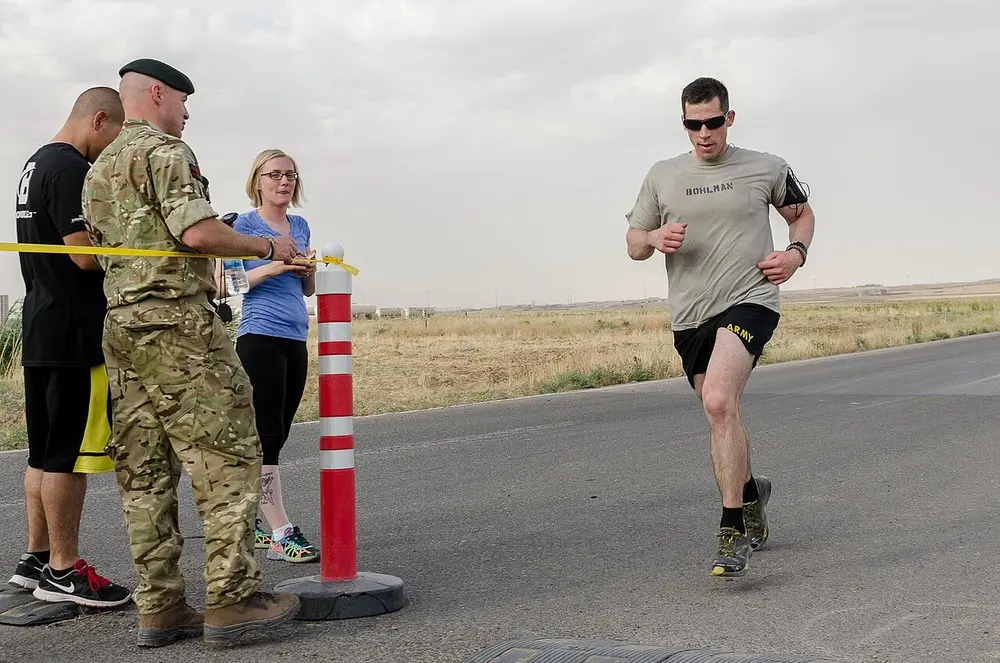
Seattle Half Marathon Shadow Run 160618-A-JW984 (photo 2). Photo: Staff Sgt. Peter Berardi / Wikimedia Commons, Public domain.
Dressing for the wet
Late November in Seattle is often wet, and the race is built around that possibility rather than pretending otherwise. The right kit is less about staying completely dry and more about staying warm once you are wet. A light waterproof layer, a cap with a brim and shoes that grip on slick surfaces will do more than a heavy jacket that traps heat.
Prepare for the finish as carefully as the start. A dry bag with warm clothes matters more than an extra layer on the course, and chafing becomes a serious issue when everything is damp. Test your wet-weather kit on a long run before race day; a rainy marathon is not the place to discover that a seam rubs.
The downtown finish
The final miles head downtown, giving the race a clear endpoint and a change of scenery from the lake. After the bridges and the residential hills, the city centre provides a different kind of energy and a stronger sense of arrival.
The approach is still rolling, so do not expect a long descent into the finish. Save enough for the last few kilometres and use the downtown streets to lift your rhythm. The change from lake to city is also a change in noise and density: after the water and the residential hills, the streets tighten and the finish draws closer. The finish is the reward for a morning spent in the weather, and it is worth running towards rather than merely surviving.
Why 270 metres feels like more
On paper, 270 metres is a moderate climbing total. In practice, Seattle's hills are repeated, the surface is often wet and the bridges add exposed interruptions that prevent a steady rhythm. The course asks for strength over the whole distance rather than speed on one climb.
That is why hill training matters. Long runs on rolling routes will prepare the legs, and practice on wet days will prepare the mind. Wet ground also changes how the hills feel: the climbs are manageable, but the descents demand shorter steps and more attention. The runners who enjoy Seattle most are those who accept the conditions early and settle into an even, patient effort.
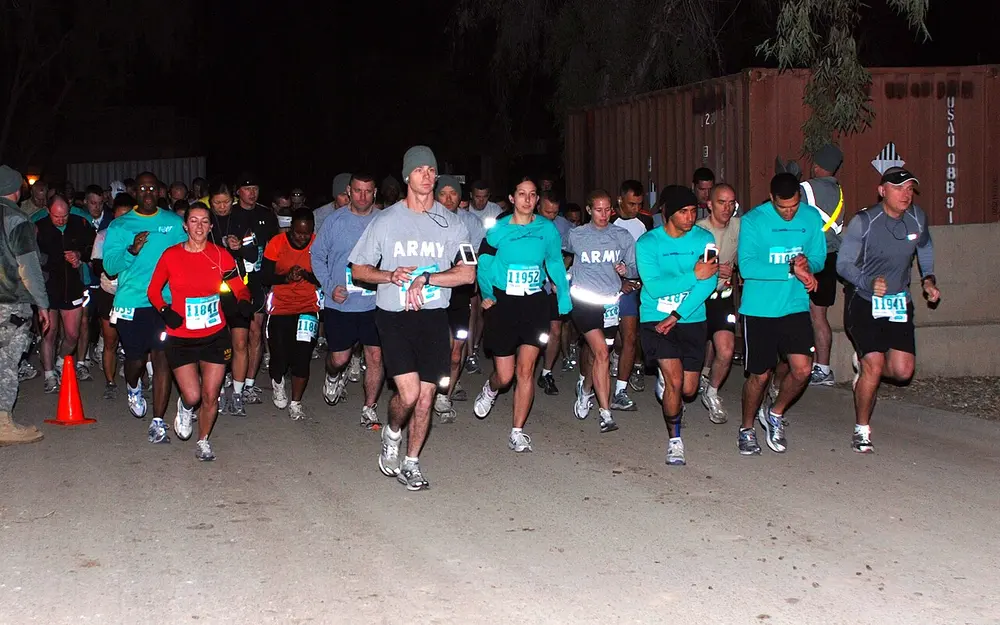
Seattle Shadow Marathon and Seattle Shadow Half Marathon DVIDS227583. Photo: Spc. Karin Leach / Wikimedia Commons, Public domain.
Frequently asked questions
Answers to the questions runners ask before entering, drawn from this race's course guide and the directory's own data — the sources behind them are listed below.
When is the Seattle Marathon?
The next edition is on Sunday 29 November 2026, a late-November race around Lake Washington that finishes downtown.
Is the Seattle Marathon a hilly course?
Yes. It climbs about 270 metres, with repeated rises through the hills around Lake Washington. The bridge crossings add their own changes of grade and exposure.
Is the Seattle Marathon suitable for a first marathon?
It can work as a debut for runners who are prepared for hills and wet weather. The downtown finish and the support along the route help, but the conditions make it a tougher first marathon than a flat city course.
What is the weather like for the Seattle Marathon?
The race is held in wet, late-autumn conditions, and rain is part of its character. Plan for cool, damp weather and prepare kit that stays warm when it gets wet.
Why does the course cross bridges?
The marathon works around Lake Washington, using the bridges that connect the city with the Eastside. The crossings are a defining part of the route and one of its most memorable features.
Is the Seattle Marathon a personal-best course?
The hilly route and wet late-November conditions are not ideal for an even, fast effort. The course is better suited to patience than to chasing a time.
More marathons in United States
More marathons in Americas
Sources for this page
What each source below is used for on this page, and where to check this race yourself.
- World Athletics — the label calendar and the road-race regulations. Used to check whether the race holds a World Athletics label, and its elite competition details.
- AIMS — the international course-measurement standard behind the 42.195 km distance, and the AIMS race calendar.
- The organizer's own publications — course maps, race handbooks and published results. The date, course character and climbing on this page are compiled from them and re-checked each season.
Where do these facts come from?
Dates, course type, climbing and time limits are compiled from the organizer's publications and re-checked each season; elevation is an estimate of total climbing rather than a survey figure. Always confirm race-day details with the organizer before making plans.
Last reviewed 27 October 2026