
San Antonio Marathon
San Antonio's marathon puts the city's two best-known places at the front of the race. The route passes the Alamo and follows the River Walk before turning north towards the hill country, and the…
By Global Marathon Routes editorial team · Last reviewed 27 October 2026
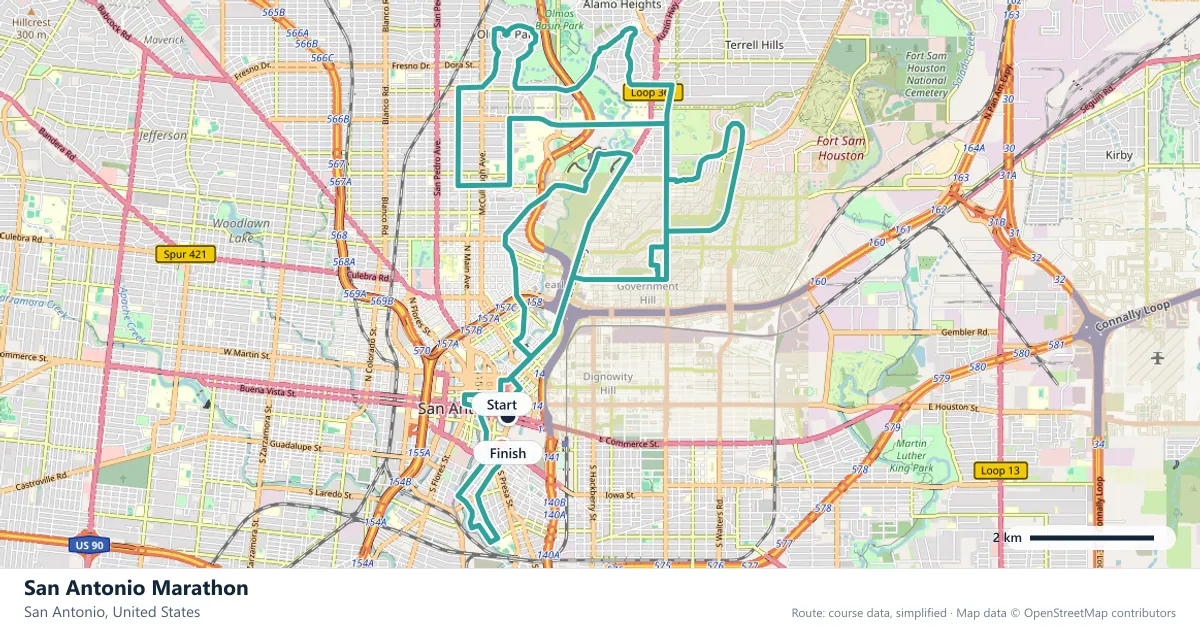
Where does the San Antonio Marathon run?
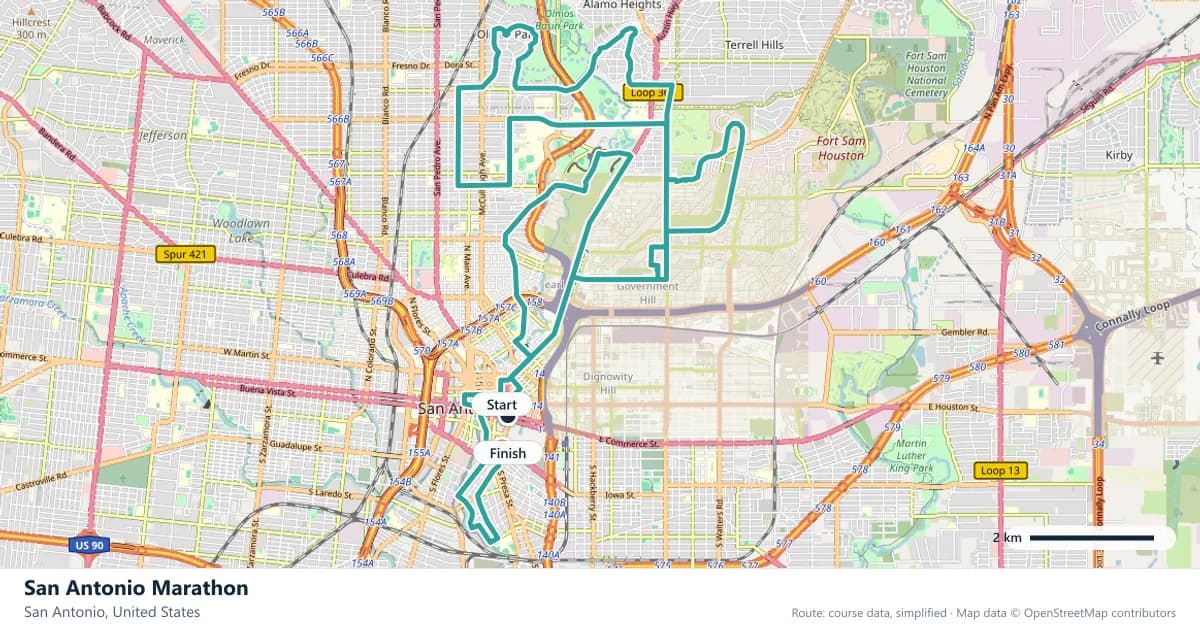
Interactive map
The trace follows the organizer's published course, simplified for the screen: the orange dot is the start, the dark dot the finish. Scroll to zoom, drag to pan.
What is the San Antonio Marathon course like?
A December race through San Antonio past the Alamo and along the River Walk, with the hill country at the northern end of the course. Mild weather, rolling profile.
- Next edition
- 06 December 2026
- Elevation gain
- 270 m
- Profile
- Hilly
- First run
- —
Course guide
San Antonio's marathon puts the city's two best-known places at the front of the race. The route passes the Alamo and follows the River Walk before turning north towards the hill country, and the next edition is on Sunday 06 December 2026.
The profile is hilly, with about 270 metres of climbing, but it is a rolling kind of hilly: short rises and descents rather than one long ascent. December in South Texas is usually mild, which makes the date part of the appeal. The heat of summer is gone, but the city has not yet settled into deep winter.
The race is a fair debut, as the climbs are spread and the weather is gentle. It is not a flat course, and the northern end carries real climbing, so a first marathon here should be built on rolling training routes rather than all-flat ones.
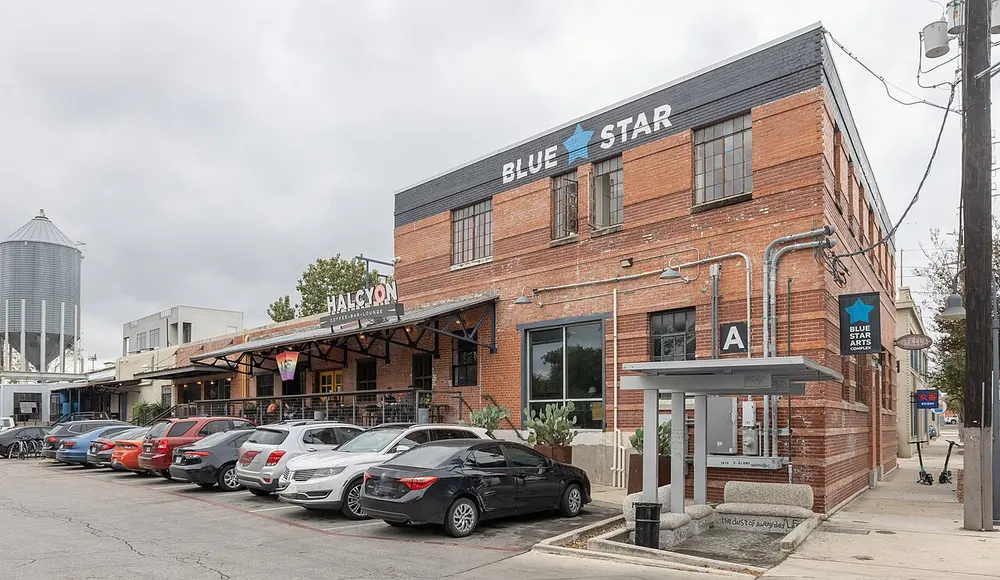
Blue Star District San Antonio. Photo: Renegomezphotography / Wikimedia Commons, CC BY-SA 4.0.
The course
The race works through the city centre past the Alamo and along the River Walk, then heads north into the hill country. The climbing totals about 270 metres, which is enough to make the course hilly without turning it into a mountain race. The ground rises and falls in rolling sections rather than committing to one sustained climb.
That shape matters for how the race feels. The opening miles are urban and comparatively gentle, with the landmarks doing the work of keeping you entertained. The northern end is where the course changes character, and the legs discover whether the early pace was sensible.
The Alamo and the River Walk
The Alamo is the image most visitors carry into the race, and the route makes it part of the opening rather than a distant detour. The old mission and its grounds sit in the middle of downtown, surrounded by hotels and offices, so the race passes through a piece of history on its way out of the city.
The River Walk adds a different kind of landmark. Its stone walkways, bridges and cypress trees give downtown San Antonio a shaded, intimate scale, and the race uses that corridor early. It is a place to keep the effort controlled rather than to weave through the sightseers; the morning is still long.
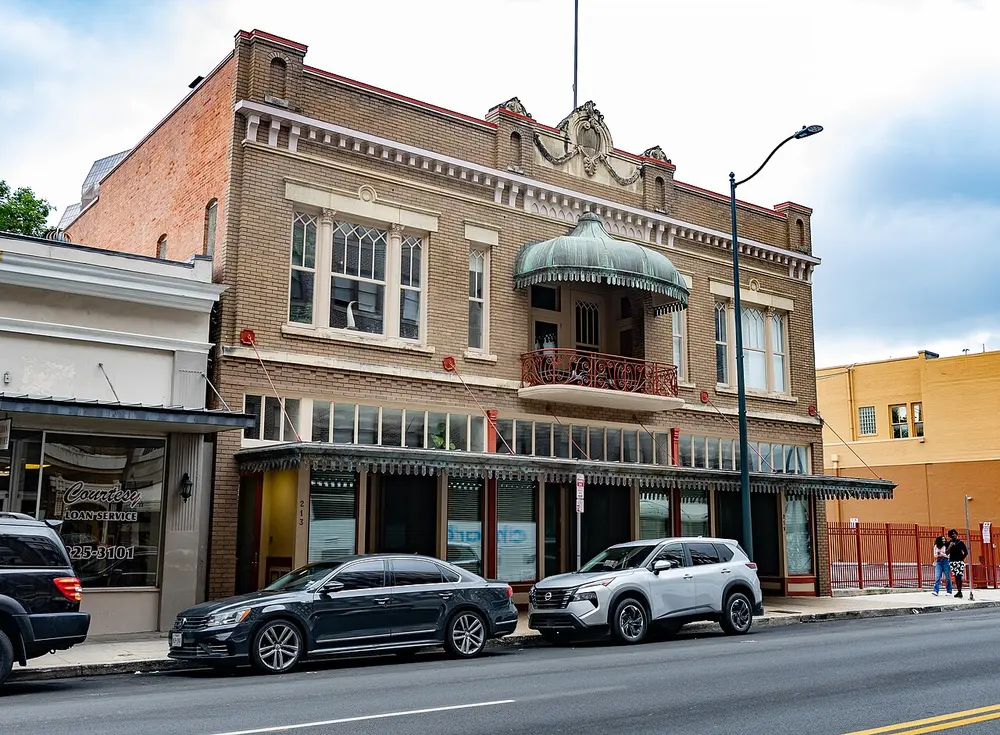
Barr Building in San Antonio. Photo: Renegomezphotography / Wikimedia Commons, CC BY-SA 4.0.
Into the hill country
The northern end of the course is where the hill country begins to show itself. The climbs are not alpine, but they arrive in sequence, and the cumulative effect is greater than the 270 metres suggests. Limestone rises, live oaks and the edge of the Edwards Plateau replace the downtown streets, and the profile stops being a formality.
This is the section to run by effort. A pace that felt comfortable beside the River Walk may feel optimistic on the third or fourth rise, and the descents between them are not long enough to recover completely. Shorten the stride on the way up, stay relaxed on the way down, and save the fastest running for the return.
A mild December start
December in San Antonio usually offers mild racing weather, but a mild day still starts cool. Plan a layer you can discard once the race warms up, and do not assume that a South Texas winter means tropical conditions at the start. Overdressing is as easy as underestimating the sun later in the morning.
The date also shapes the training block. A December marathon means the hardest weeks fall in autumn, when the Texas summer has finally broken. That is a kindness for local runners, and a reason visitors should arrive ready for conditions that can be warmer than their home training base in the same month.
San Antonio's winter is short, and December sits at the edge of it rather than in the middle. That makes the date a sensible one for a marathon in a city where summer heat is the usual obstacle, and it gives visitors a reason to choose the race over a spring event elsewhere in Texas.
Pacing the rolls
San Antonio rewards even effort more than fast splits. The course does not have a single climb that defines it, so there is no obvious place to make up time; instead, the rolling ground steadily taxes anyone who runs the first half too hard. Use the flat city miles to establish rhythm, take the northern hills conservatively and treat the final return as the place to spend whatever is left.
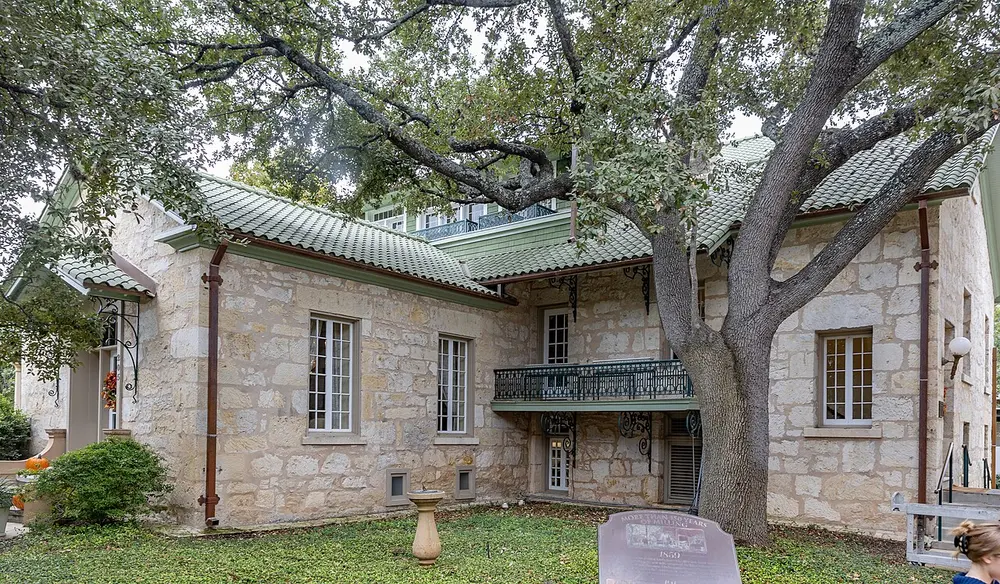
Guenther House in San Antonio. Photo: Renegomezphotography / Wikimedia Commons, CC BY-SA 4.0.
Frequently asked questions
Answers to the questions runners ask before entering, drawn from this race's course guide and the directory's own data — the sources behind them are listed below.
When is the San Antonio Marathon?
The next edition is on Sunday 06 December 2026, a December race through downtown San Antonio and the northern hill country.
Is the San Antonio Marathon a hilly course?
Yes. It climbs about 270 metres, with the hill country at the northern end of the course. The rest of the route rolls rather than staying flat, so the climbing is spread through the day.
Is the San Antonio Marathon suitable for a first marathon?
The course can carry a first marathon, helped by mild December weather and a rolling rather than brutal profile. Include some hills in training, start conservatively and treat the northern climbs as the decisive part of the race.
What landmarks does the San Antonio Marathon pass?
The route passes the Alamo and follows the River Walk in the city centre before heading north into the hill country. Those downtown landmarks give the opening miles a strong sense of place.
Is the San Antonio Marathon a personal-best course?
The rolling profile and the northern hills make even pacing harder than on a flat route, so it is not the obvious place to chase a time. The course rewards patience more than speed.
How should you pace the San Antonio Marathon?
Run the downtown miles comfortably, then let effort rather than pace guide you through the northern hills. The repeated rises are the part that decides the race, and the final miles reward runners who have something left.
More marathons in United States
More marathons in Americas
Sources for this page
What each source below is used for on this page, and where to check this race yourself.
- World Athletics — the label calendar and the road-race regulations. Used to check whether the race holds a World Athletics label, and its elite competition details.
- AIMS — the international course-measurement standard behind the 42.195 km distance, and the AIMS race calendar.
- The organizer's own publications — course maps, race handbooks and published results. The date, course character and climbing on this page are compiled from them and re-checked each season.
Where do these facts come from?
Dates, course type, climbing and time limits are compiled from the organizer's publications and re-checked each season; elevation is an estimate of total climbing rather than a survey figure. Always confirm race-day details with the organizer before making plans.
Last reviewed 27 October 2026