
Philadelphia Marathon
Philadelphia's marathon is a race of two geographies. It begins near the art museum, follows the Schuylkill out through Fairmount Park, then returns to the city for a long final stretch to the…
By Global Marathon Routes editorial team · Last reviewed 27 October 2026
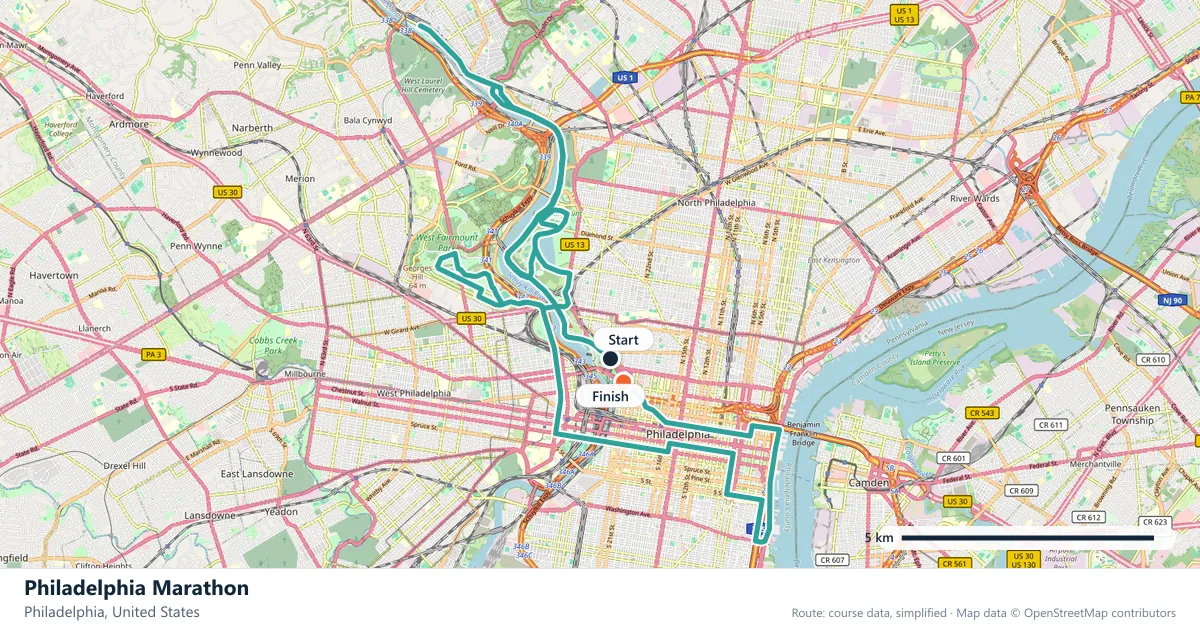
Where does the Philadelphia Marathon run?
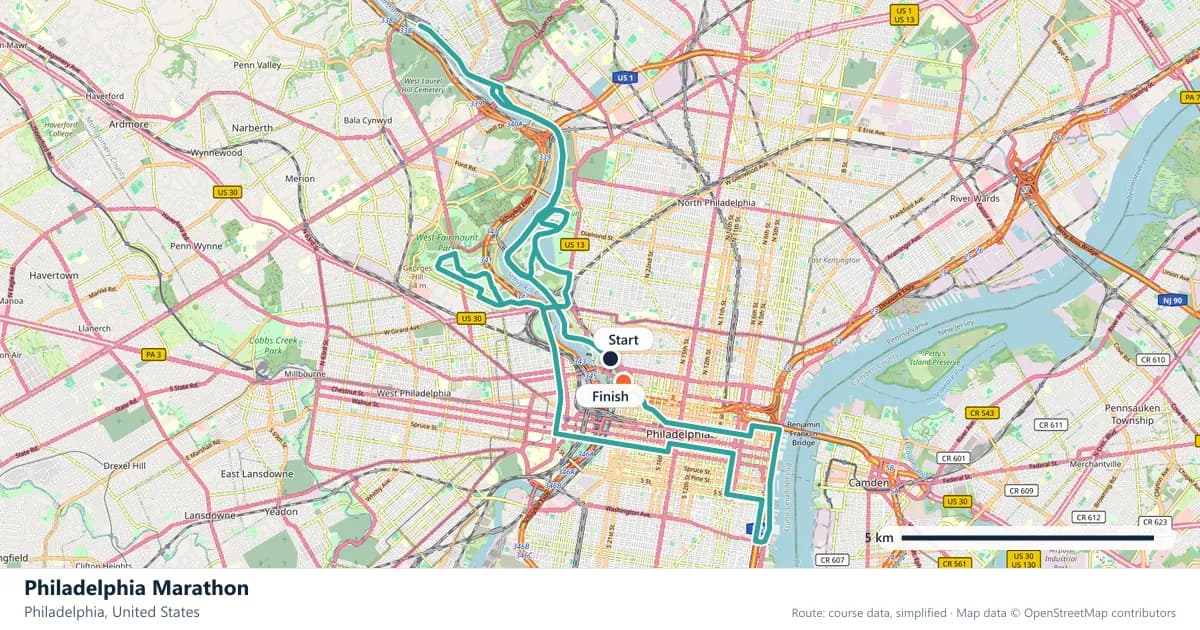
Interactive map
The trace follows the organizer's published course, simplified for the screen: the orange dot is the start, the dark dot the finish. Scroll to zoom, drag to pan.
What is the Philadelphia Marathon course like?
A late-November race from the art museum along the Schuylkill and out through Fairmount Park. Cold-weather fast when the wind stays down, with a long city stretch to the finish.
- Next edition
- 22 November 2026
- Elevation gain
- 193 m
- Profile
- Undulating
- First run
- —
Course guide
Philadelphia's marathon is a race of two geographies. It begins near the art museum, follows the Schuylkill out through Fairmount Park, then returns to the city for a long final stretch to the finish. The 22 November 2026 date puts the race at the end of autumn, and the course rolls through about 193 metres of climbing without ever producing a single dominant hill.
That combination gives Philadelphia a split personality. The park miles are green, quiet and river-side; the closing miles are urban, straight and exposed to whatever the weather is doing. Runners who manage the transition well can run fast here. Those who spend the park miles racing the scenery often find the city stretch much longer than expected.
The rolling profile is manageable for a first marathon, and the flat river sections give personal-best chasers something to work with. The wind decides which version of the day you get.
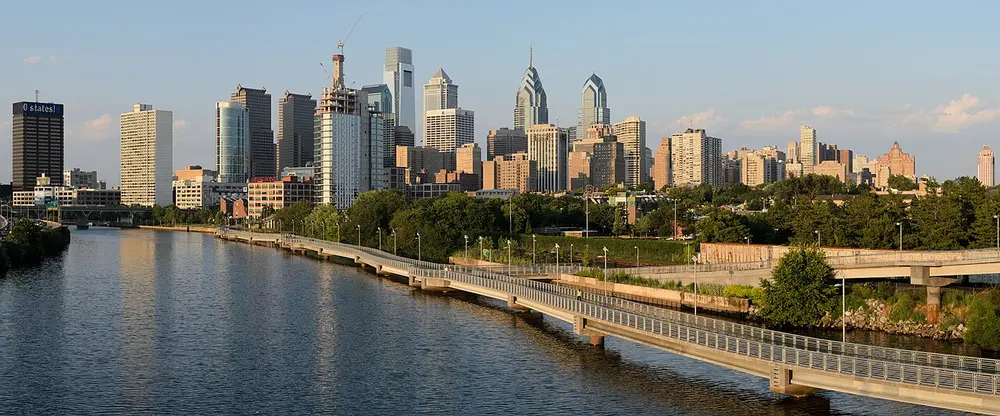
Philadelphia from South Street Bridge July 2016 panorama 1. Photo: King of Hearts / Wikimedia Commons, CC BY-SA 3.0.
The course
The opening miles run from the art museum along the Schuylkill. The river is the course's organising feature: it gives the race a flat, continuous line, and it keeps the route oriented even when the city streets turn away from it. The art museum and its famous steps are among the most recognisable landmarks in American sport.
Fairmount Park provides the middle of the race. The park is large and wooded, with the river running through it, and the course uses its roads to escape the density of the city centre. The climbs here are short and frequent rather than long, and the shade and quiet make the park feel like a different race from the one that started on the museum forecourt.
The return to the city is the defining challenge. The long final stretch is urban and direct, with fewer distractions and more exposure. It is where the race is decided, and it is where the wind can do the most damage.
Along the Schuylkill
The Schuylkill is Philadelphia's working river. It runs along the western edge of Center City, lined by boathouses, trails and parkland, and it gives the marathon a flat corridor that is unusual for a city of this size. The river miles are the fastest part of the course, and they are also the most rhythmic.
The river also concentrates the race. With the water on one side and the park on the other, the course has a clear direction, and runners can settle into a pace without navigating a complicated street grid. That simplicity is an advantage in the first half, when the temptation to surge is strongest.
Fairmount Park
Fairmount Park is one of the largest urban parks in the country, and its scale makes the course distinctive. The park stretches along both sides of the Schuylkill, with wooded hills, historic houses and open lawns, and the marathon uses it to add variety and a few short climbs.
The park is also where the race becomes quieter. The city noise fades, and the course asks runners to manage their own effort. That can be a welcome break or a warning sign.
The long way home
The final stretch back through the city is the part of the course that decides the day. It is long, urban and often into the wind, and it offers fewer landmarks than the park. The key is to keep the rhythm that worked on the river rather than trying to make up time with a surge.
This is also where the November date matters. Cold weather helps, but a headwind on an exposed city street can undo the advantage. Tuck in behind other runners when you can, keep the cadence efficient and accept that the final miles may be slower than the river miles. The finish is close enough that the effort is worth spending.
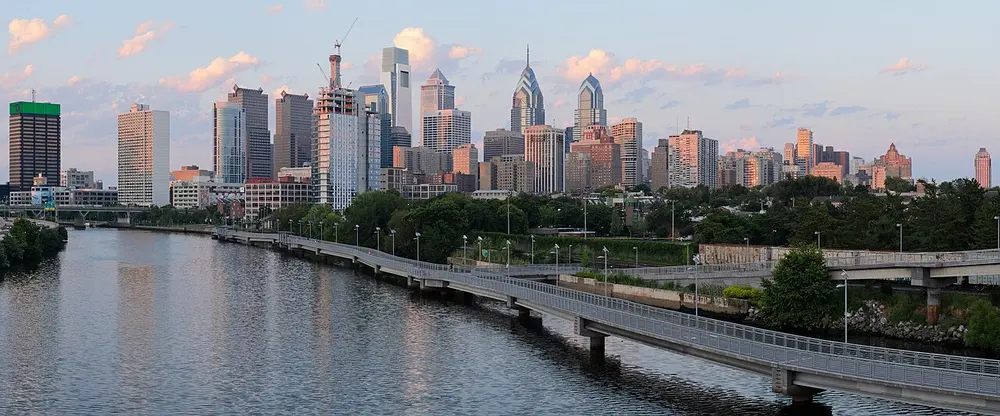
Philadelphia from South Street Bridge July 2016 panorama 2. Photo: King of Hearts / Wikimedia Commons, CC BY-SA 3.0.
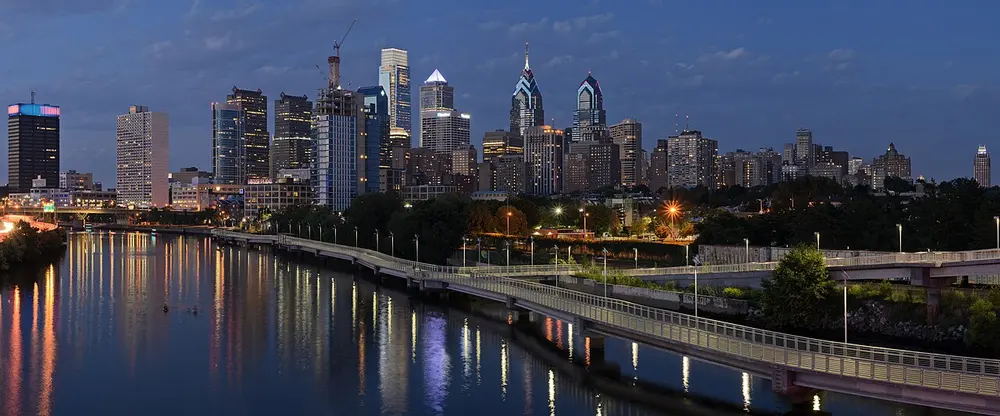
Philadelphia from South Street Bridge July 2016 panorama 3. Photo: King of Hearts / Wikimedia Commons, CC BY-SA 3.0.
November speed
Late November in Philadelphia can produce the kind of morning marathon runners hope for: cold enough to keep the body cool, still enough to make the river miles feel effortless. When the wind stays down, the course is quick. The flat Schuylkill section and the modest 193 metres of climbing give runners a chance to hold a strong pace.
When the wind is up, the same course becomes much harder. The river and the city streets offer little shelter, and the long return can turn into a grind. The forecast matters more here than on a hilly course, because there is no terrain to hide behind.
The practical approach is to prepare for both. A windproof layer, a pace that can survive a headwind and a fuelling plan that does not depend on perfect conditions will do more for your time than chasing a fast opening kilometre.
Frequently asked questions
Answers to the questions runners ask before entering, drawn from this race's course guide and the directory's own data — the sources behind them are listed below.
When is the Philadelphia Marathon in 2026?
The next edition is on 22 November 2026. It is a late-November race that starts near the art museum and follows the Schuylkill through Fairmount Park.
Is the Philadelphia Marathon flat or hilly?
It is undulating, with about 193 metres of climbing. The river sections are flat, while the park and city streets roll in short rises. There is no sustained climb.
Is Philadelphia good for a personal best?
It can be. The flat river miles and the cool November date give runners a chance, provided the wind stays down and the first half is paced sensibly. A headwind on the return can make a fast time much harder.
Is Philadelphia a good first marathon?
Yes. The rolling profile is manageable, the course is easy to follow and the park provides a calm middle section. The long city finish is the main test, so a conservative first half matters.
Where does the Philadelphia Marathon run?
The course runs from the art museum along the Schuylkill and through Fairmount Park before returning to the city for a long final stretch.
What makes the course fast or slow?
The wind. The course has only about 193 metres of climbing and long flat stretches beside the river, so a still, cold morning can produce quick times. A windy day turns the exposed return into a much harder race.
More marathons in United States
More marathons in Americas
Sources for this page
What each source below is used for on this page, and where to check this race yourself.
- World Athletics — the label calendar and the road-race regulations. Used to check whether the race holds a World Athletics label, and its elite competition details.
- AIMS — the international course-measurement standard behind the 42.195 km distance, and the AIMS race calendar.
- The organizer's own publications — course maps, race handbooks and published results. The date, course character and climbing on this page are compiled from them and re-checked each season.
Where do these facts come from?
Dates, course type, climbing and time limits are compiled from the organizer's publications and re-checked each season; elevation is an estimate of total climbing rather than a survey figure. Always confirm race-day details with the organizer before making plans.
Last reviewed 27 October 2026