
Oklahoma City Memorial Marathon
The Oklahoma City Memorial Marathon begins with silence. Before the start, 168 seconds pass without a word, one for each person killed in the 1995 bombing of the Alfred P. Murrah Federal Building.
By Global Marathon Routes editorial team · Last reviewed 27 October 2026
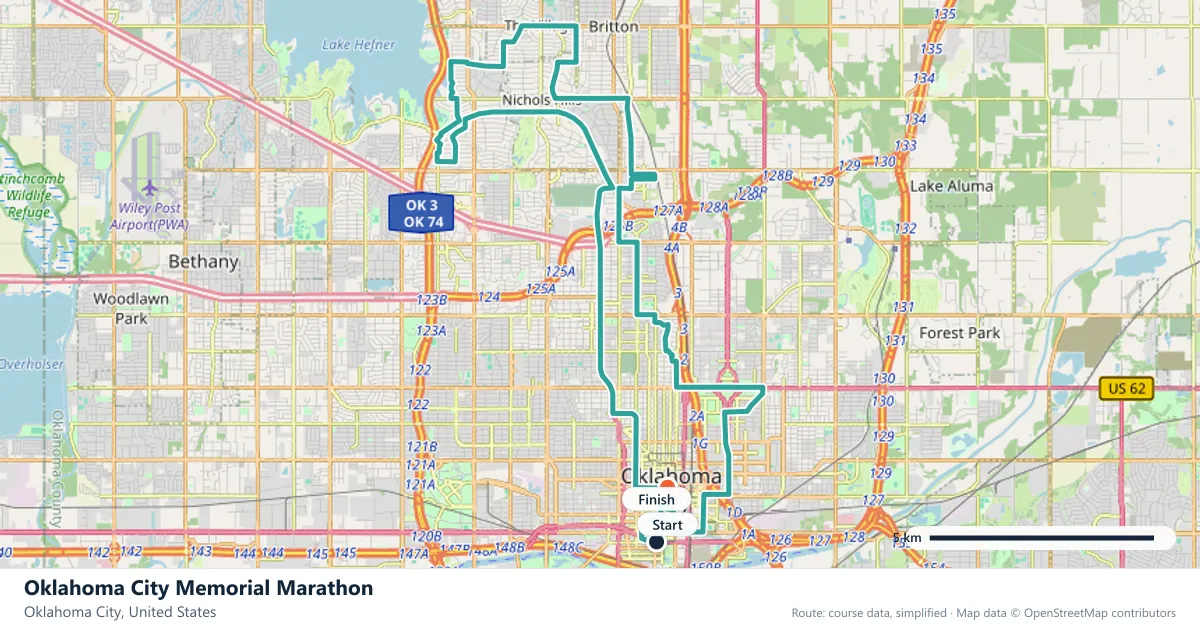
Where does the Oklahoma City Memorial Marathon run?
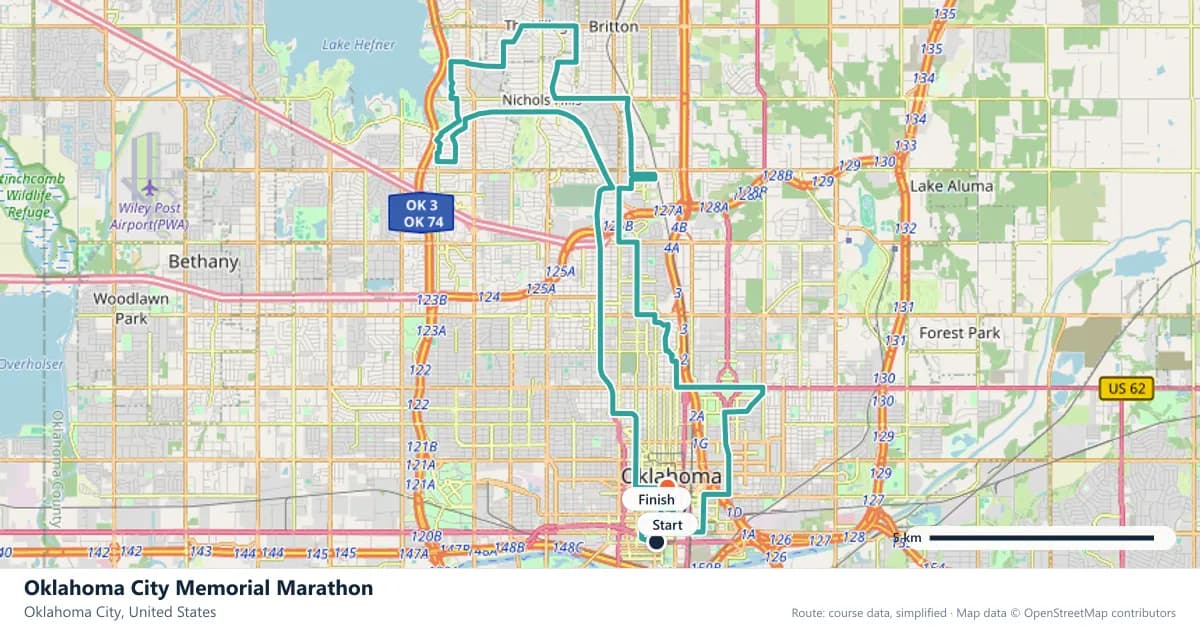
Interactive map
The trace follows the organizer's published course, simplified for the screen: the orange dot is the start, the dark dot the finish. Scroll to zoom, drag to pan.
What is the Oklahoma City Memorial Marathon course like?
A April marathon that loops through Oklahoma City past the memorial and out along the river. Rolling and windy, with 168 seconds of silence observed before the start.
- Next edition
- 25 April 2027
- Elevation gain
- 204 m
- Profile
- Undulating
- First run
- —
Course guide
The Oklahoma City Memorial Marathon begins with silence. Before the start, 168 seconds pass without a word, one for each person killed in the 1995 bombing of the Alfred P. Murrah Federal Building. Then the race sets off on a loop through the city, past the memorial and out along the river, with about 204 metres of rolling climbing and a reputation for wind.
That opening is not a ceremonial footnote. It sets the tone for a marathon that is both a civic event and a serious race, and it explains why the course keeps returning to the memorial as a reference point. The 2027 edition is on 25 April, and the route stays within Oklahoma City rather than heading into open country.
The profile is undulating, with short rises rather than a single climb, and the wind is the variable that shapes the day. The race is a workable first marathon, but it rewards runners who arrive prepared for rolling terrain and a breeze that can change the effort without changing the scenery.
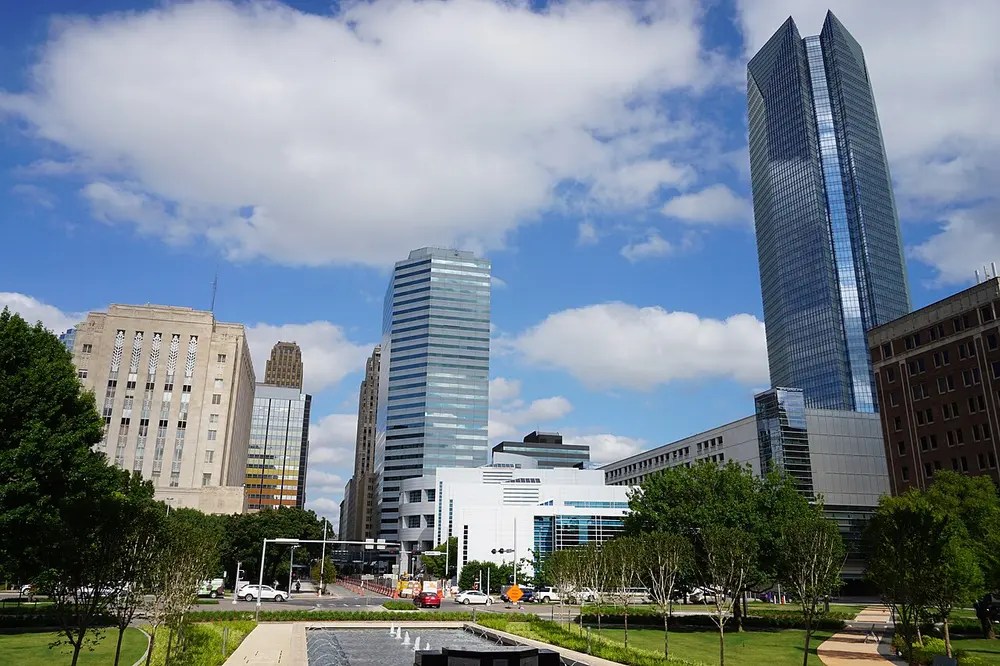
Oklahoma City May 2016 36 (skyline). Photo: Michael Barera / Wikimedia Commons, CC BY-SA 4.0.
The course
The race is a loop, so it stays within the city rather than heading into open country. The route works through the urban grid before heading towards the river, and the two halves have different characters: the city streets are tighter and more sheltered, while the river corridor is open and exposed.
The 204 metres of climbing are spread across the route in short rises. There is no sustained ascent, but the repeated changes of grade keep the legs working, and the wind adds a second layer of effort on the flat sections. Runners who expect a prairie-flat course are usually surprised by how much the day asks of them.
The loop gives the race a natural centre and keeps the route contained.
The memorial and the silence
The Oklahoma City National Memorial stands on the site of the Murrah Building, and the race passes it as part of the route. The memorial's field of empty chairs, one for each victim, is one of the most affecting civic spaces in the United States. Runners who have time to look will find it a sobering counterpoint to the noise of a marathon.
The 168-second silence before the start is the race's most distinctive ritual. It asks runners to stand still and remember before they run, and it gives the event a gravity that most city marathons do not have. Runners should be in position early enough to take part; arriving at the last minute means missing the moment that defines the day.
Wind on the southern plains
Oklahoma City is exposed to the weather, and the marathon is known for wind. The wind does not have to be severe to matter: a steady breeze on a flat, open stretch can add minutes over 42 kilometres, and a headwind on the return leg can turn a comfortable pace into a grind.
The response is to run by effort and use other runners when possible. Sitting behind a group on an exposed section saves energy, and the difference is large enough to justify adjusting your position rather than holding a fixed line. On the sheltered city streets, the wind matters less; on the river, it can be the main story.
The river stretch
The river section is the course's open half. The Oklahoma River runs through the southern part of the city, and the route follows it for a stretch that feels removed from downtown. The water, the sky and the long views give the race a different scale, and the wind has more room to reach the runners.
It is also where pacing discipline pays. The flat river miles can feel easier than the city streets, but they are exposed and the effort can creep up. Use the stretch to settle into a rhythm, not to make up time. The return to the city will ask for whatever you have left.
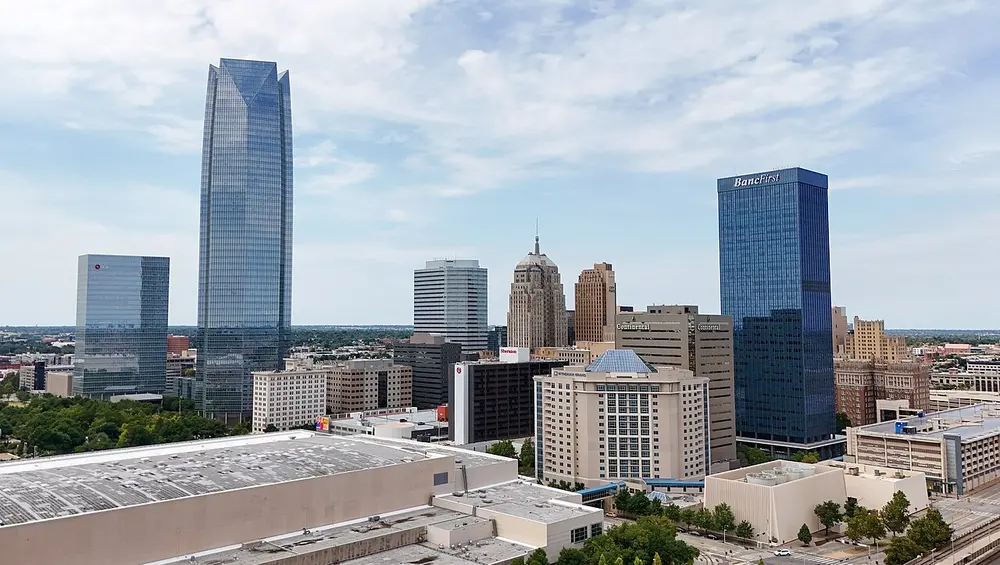
Oklahoma City skyline from drone. Photo: Quintin Soloviev / Wikimedia Commons, CC BY 4.0.
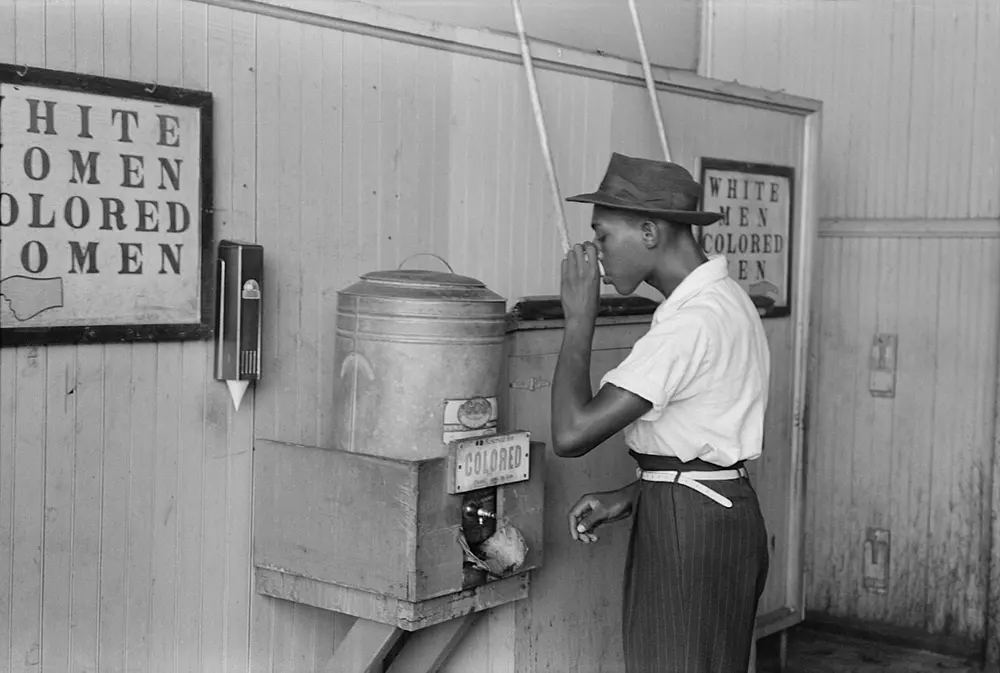
Negro drinking at "Colored" water cooler in streetcar terminal, Oklahoma City, Oklahoma by Russell L. Photo: Russell Lee / Adam Cuerden / Wikimedia Commons, Public domain.
A loop with a purpose
The loop format suits the memorial marathon. The course stays within the city, and the memorial remains part of the route rather than a distant landmark. That continuity is part of the event's identity: it is not a tour of distant suburbs but a circuit through the place where the story happened.
The course reflects the city's spread, using the downtown grid and the river corridor rather than confining the race to a single park.
Frequently asked questions
Answers to the questions runners ask before entering, drawn from this race's course guide and the directory's own data — the sources behind them are listed below.
When is the Oklahoma City Memorial Marathon in 2027?
The next edition is on 25 April 2027. It is an April race on a loop through Oklahoma City, past the memorial and along the river.
Is the Oklahoma City Memorial Marathon flat or hilly?
It is undulating, with about 204 metres of climbing. The rises are short rather than steep, but they are repeated, and the wind can make the flat sections feel harder than the profile suggests.
Is Oklahoma City a good first marathon?
Yes, with the right preparation. The loop is easy to follow and the rolling profile is manageable, but the wind and the repeated rises reward conservative pacing. Runners who train on rolling terrain will be better prepared.
Where does the Oklahoma City Memorial Marathon run?
The route loops through Oklahoma City, passing the memorial and heading out along the Oklahoma River before returning to the city centre. The course stays within the urban area.
What is the 168-second silence?
It is a silence observed before the start, lasting 168 seconds in memory of the 168 people killed in the 1995 bombing. It is the race's defining ritual and a reminder of why the event exists.
How much does the wind affect the race?
The wind can be a significant factor, especially on the exposed river sections. A steady breeze adds effort over the full distance, and a headwind late in the race can change the outcome. Run by effort and use groups for shelter when you can.
More marathons in United States
More marathons in Americas
Sources for this page
What each source below is used for on this page, and where to check this race yourself.
- World Athletics — the label calendar and the road-race regulations. Used to check whether the race holds a World Athletics label, and its elite competition details.
- AIMS — the international course-measurement standard behind the 42.195 km distance, and the AIMS race calendar.
- The organizer's own publications — course maps, race handbooks and published results. The date, course character and climbing on this page are compiled from them and re-checked each season.
Where do these facts come from?
Dates, course type, climbing and time limits are compiled from the organizer's publications and re-checked each season; elevation is an estimate of total climbing rather than a survey figure. Always confirm race-day details with the organizer before making plans.
Last reviewed 27 October 2026