
Oakland Marathon
Oakland is a city of layers, and its marathon uses most of them. The race on 21 March 2027 starts in the downtown grid, works around Lake Merritt, climbs into the hills and finishes on the…
By Global Marathon Routes editorial team · Last reviewed 27 October 2026
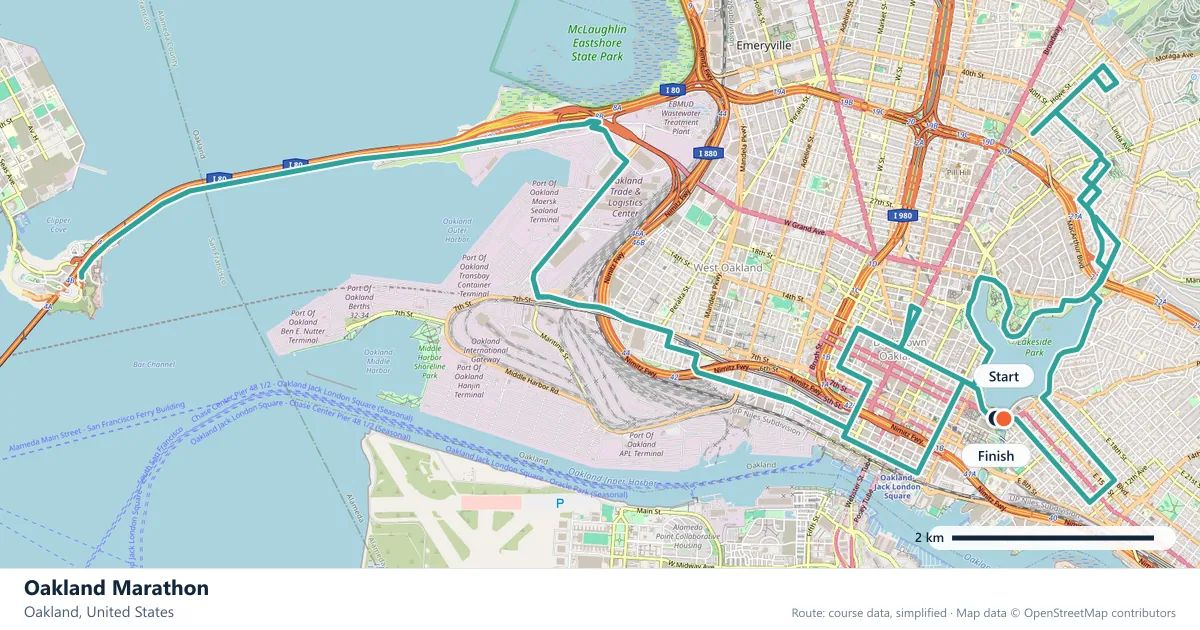
Where does the Oakland Marathon run?
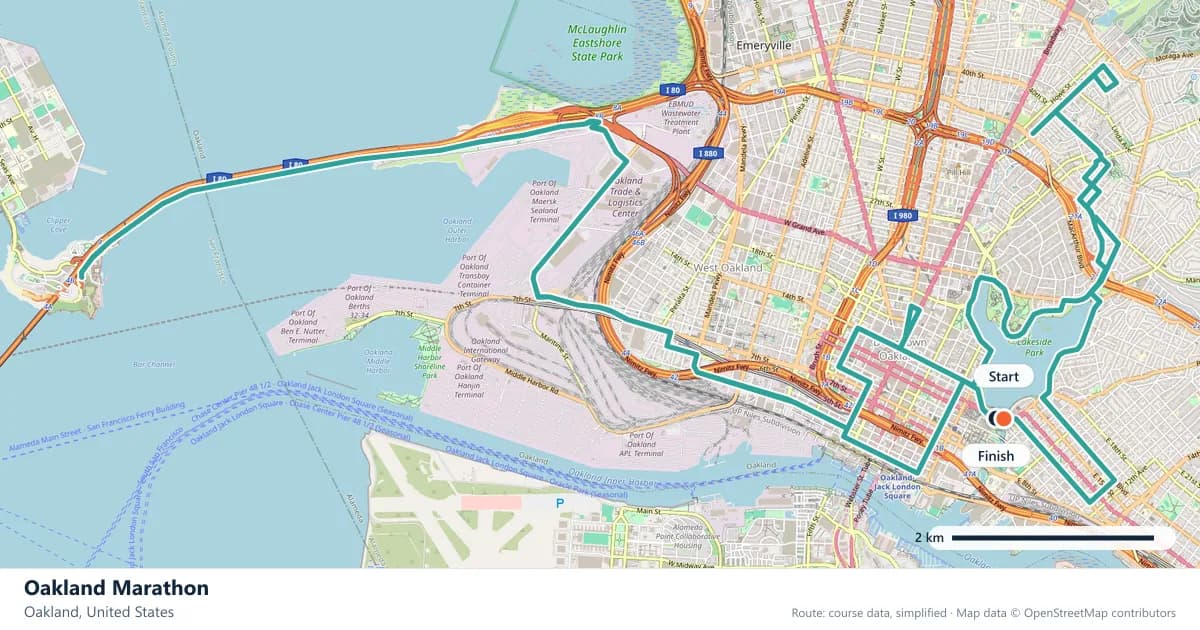
Interactive map
The trace follows the organizer's published course, simplified for the screen: the orange dot is the start, the dark dot the finish. Scroll to zoom, drag to pan.
What is the Oakland Marathon course like?
A spring marathon through Oakland's downtown, the lake and the hills, with a finish on the waterfront. Rolling, with views across the bay to San Francisco.
- Next edition
- 21 March 2027
- Elevation gain
- 240 m
- Profile
- Undulating
- First run
- —
Course guide
Oakland is a city of layers, and its marathon uses most of them. The race on 21 March 2027 starts in the downtown grid, works around Lake Merritt, climbs into the hills and finishes on the waterfront, with San Francisco visible across the bay. The profile is undulating, with about 240 metres of climbing, and the course is a debut-friendly tour of a city that is often reduced to a footnote beside its neighbour.
The appeal is the variety. This is not a single boulevard or a waterfront out-and-back; the route changes neighbourhood, gradient and mood several times. Downtown is dense and urban, the lake is open and social, the hills are quiet and residential, and the finish returns to the water. That sequence gives the race a shape.
It also makes the marathon harder than the elevation total implies. The climbs are short, but they arrive in the middle of the race, and the descents that follow can tempt runners into a pace they cannot hold. The course rewards patience and a willingness to run by feel.
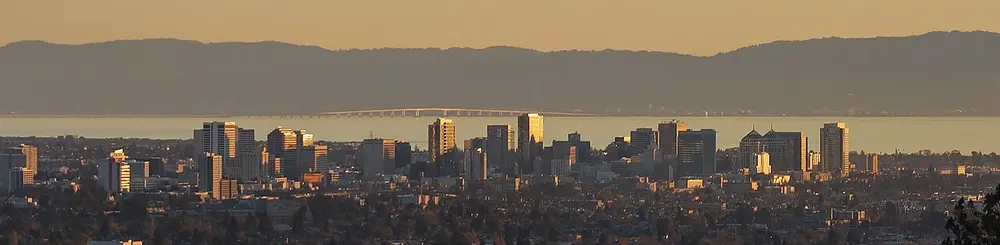
Oakland, CA skyline banner (2025). Photo: Ligocsicnarf89 / Wikimedia Commons, CC BY 4.0.
The course
The opening miles are downtown. Oakland's street grid is compact and walkable, with a mix of older commercial buildings and newer towers, and the race uses the city centre before heading towards the lake. The early pace is easy to misjudge here: the streets are flat enough to feel fast.
Lake Merritt changes the rhythm. The lake sits at the edge of downtown, a tidal lagoon ringed by parkland and paths, and the course uses it to open up the race after the tighter streets. The view across the water towards the hills is the first hint of what is coming. It is also one of the most pleasant stretches of the day, which makes it a good place to settle rather than surge.
Then the route climbs. Oakland's hills rise steeply behind the lake and downtown, and the marathon uses them to add the bulk of its 240 metres. The climbs are short and repeated, with descents in between, and the neighbourhoods become quieter and more residential. The final miles drop back to the waterfront, where the bay and the skyline provide the finish.
Downtown and Lake Merritt
Lake Merritt is the civic living room of Oakland. The lake is ringed by parks, gardens and a path that is busy with runners and walkers on most days, and its presence gives the race an accessible, local feel. The course's lake section is flat and open, with the downtown towers on one side and the hills on the other.
The lake also marks the transition between the two halves of the race. Before it, the course is urban and flat; after it, the climbing begins. Runners who use the lake miles to recover from the downtown start and prepare for the hills will be in better shape than those who race the loop.
Into the hills
The Oakland Hills are the race's real test. The climbing is not a single pass but a series of short rises through residential streets, and the grade can be steep enough to force a change of stride. The 240 metres of gain are modest in absolute terms, but they are concentrated in the middle of the course, where fatigue starts to matter.
The descents are just as important. Running downhill quickly feels easy, but it loads the legs and can leave them flat for the later climbs. Keep the stride controlled and let gravity do the work without sprinting. The aim is to reach the waterfront with something left, not to win the descent.
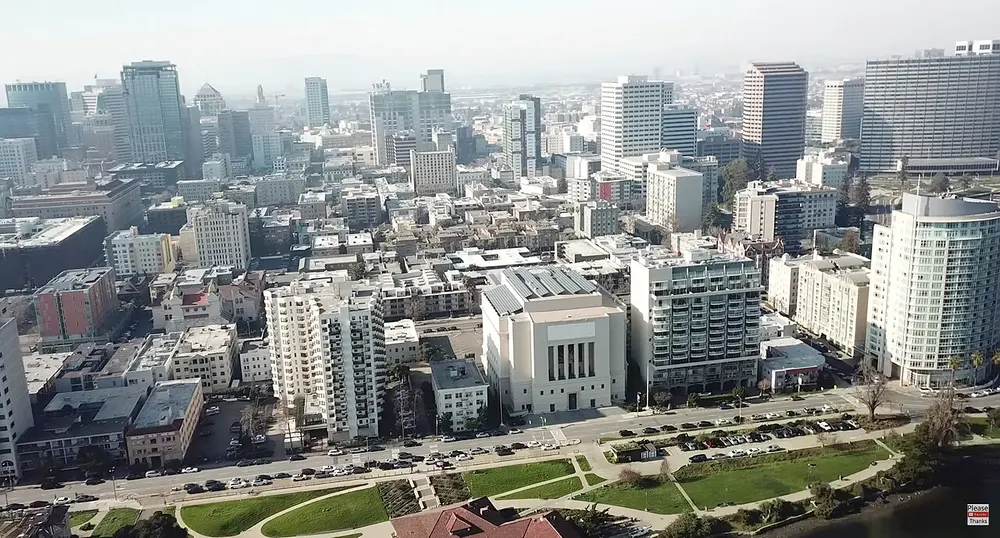
Oakland California. Photo: James BeBop / Wikimedia Commons, CC BY-SA 4.0.
The waterfront finish
The finish on the waterfront is the reward for the hills. After the residential climbs, the course drops towards the bay and opens up again, with the water and the skyline providing the final scenery. San Francisco is visible across the bay, close enough to be a landmark and far enough to remind you that this is Oakland's race.
The waterfront also gives the finish a natural gathering point. It is open, accessible and photogenic, and it makes the post-race scene feel like part of the city rather than an afterthought. Runners who have paced the hills well can enjoy the final kilometres rather than counting them down.
A March build
A March marathon means training through winter, and the race falls at the start of spring. That makes it a good target for runners who want an early-season marathon without waiting for summer.
The training should include hills, not just distance. Oakland's course rewards runners who have practised short, repeated climbs and controlled descents. A few sessions on rolling terrain will do more for race day than extra flat miles.
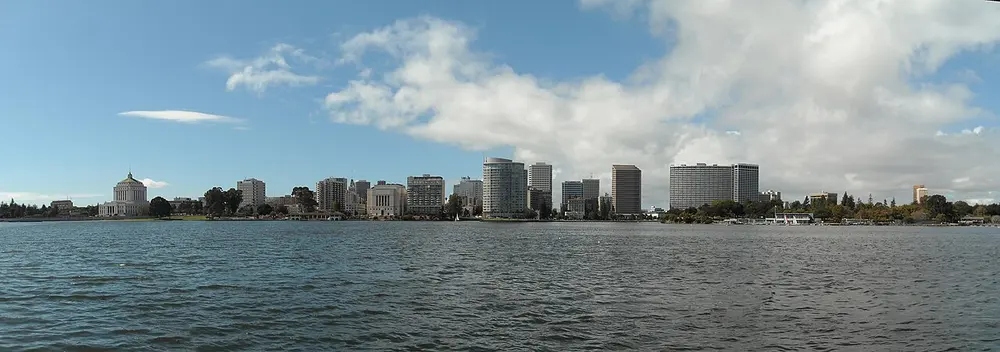
Oakland Skyline - Lake Merritt. Photo: Daniel Ramirez / Wikimedia Commons, CC BY 2.0.
Frequently asked questions
Answers to the questions runners ask before entering, drawn from this race's course guide and the directory's own data — the sources behind them are listed below.
When is the Oakland Marathon in 2027?
The next edition is on 21 March 2027. It is a spring race through downtown Oakland, around Lake Merritt, over the hills and down to the waterfront.
Is the Oakland Marathon flat or hilly?
It is undulating, with about 240 metres of climbing. The downtown and lake sections are flat, while the middle of the course climbs through residential hills. It is not a mountain race, but the short climbs are enough to shape the pacing.
Is Oakland a good first marathon?
Yes, if the build includes some hill work. The course is varied and the distance is manageable, but the hills in the middle punish an over-fast start. Runners who train on rolling terrain will find it a rewarding debut.
Where does the Oakland Marathon run?
The route starts downtown, passes Lake Merritt, climbs into the Oakland Hills and finishes on the waterfront. The course opens views across the bay to San Francisco, especially near the waterfront.
What is the hardest part of the course?
The hill section after Lake Merritt. The climbs are short but repeated, and they arrive when the legs are already working. The descents are not a free recovery; they load the legs for the next rise.
Does the course really have bay views?
Yes. The waterfront finish looks across the bay to San Francisco, and the higher parts of the course open up views over the city and the water. The bay is a reference point, especially near the waterfront.
More marathons in United States
More marathons in Americas
Sources for this page
What each source below is used for on this page, and where to check this race yourself.
- World Athletics — the label calendar and the road-race regulations. Used to check whether the race holds a World Athletics label, and its elite competition details.
- AIMS — the international course-measurement standard behind the 42.195 km distance, and the AIMS race calendar.
- The organizer's own publications — course maps, race handbooks and published results. The date, course character and climbing on this page are compiled from them and re-checked each season.
Where do these facts come from?
Dates, course type, climbing and time limits are compiled from the organizer's publications and re-checked each season; elevation is an estimate of total climbing rather than a survey figure. Always confirm race-day details with the organizer before making plans.
Last reviewed 27 October 2026