
Rock 'n' Roll Nashville Marathon
Nashville's marathon has a soundtrack, but the music is not the reason the race is hard. The Rock 'n' Roll Nashville Marathon on 24 April 2027 runs through downtown, past the honky-tonks and out…
By Global Marathon Routes editorial team · Last reviewed 27 October 2026
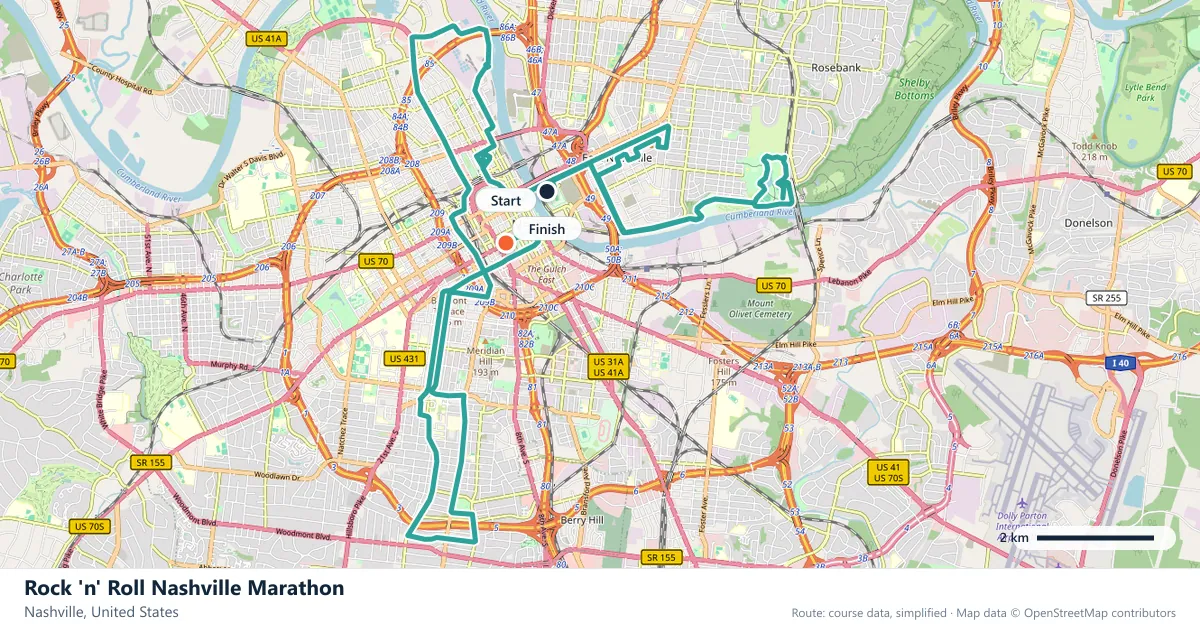
Where does the Rock 'n' Roll Nashville Marathon run?
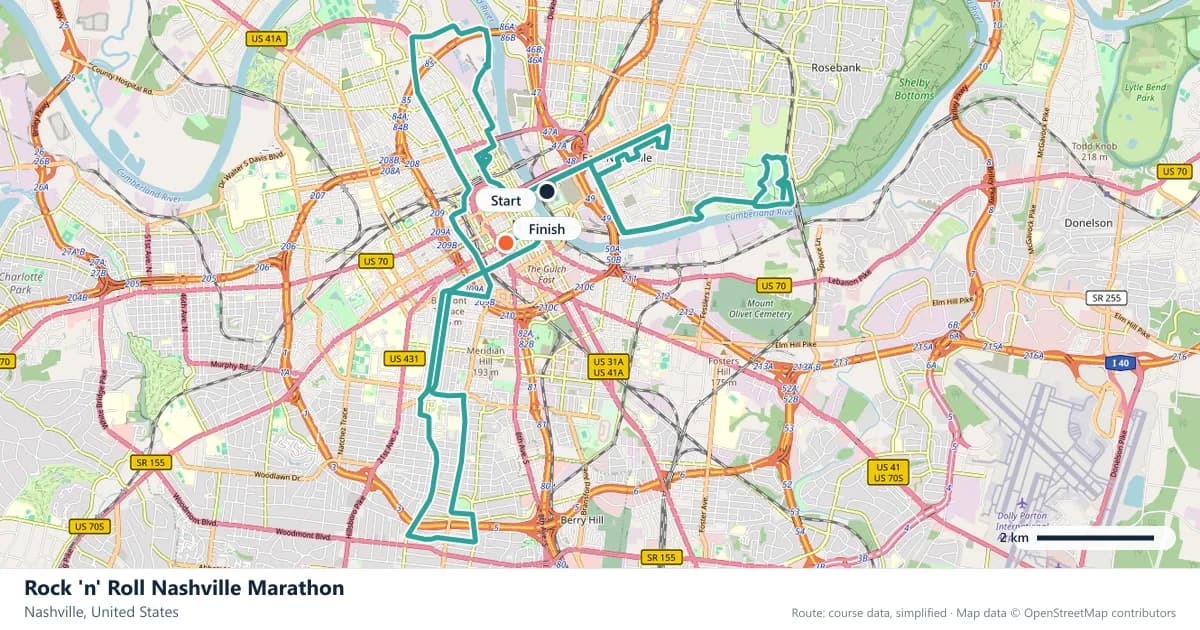
Interactive map
The trace follows the organizer's published course, simplified for the screen: the orange dot is the start, the dark dot the finish. Scroll to zoom, drag to pan.
What is the Rock 'n' Roll Nashville Marathon course like?
A late-April race through Music City, past the honky-tonks and out towards the Opry. Hilly in the middle, with live music for the whole distance.
- Next edition
- 24 April 2027
- Elevation gain
- 363 m
- Profile
- Hilly
- First run
- —
Course guide
Nashville's marathon has a soundtrack, but the music is not the reason the race is hard. The Rock 'n' Roll Nashville Marathon on 24 April 2027 runs through downtown, past the honky-tonks and out towards the Opry, with a hilly middle section that asks more of the legs than the party atmosphere suggests. The course climbs about 363 metres in total.
That combination is the race's character: a city that sells itself on entertainment, hosting a marathon that punishes anyone who treats the early miles as a parade. The live music runs for the whole distance, and it is genuinely useful in the second half. It is also easy to let a good band pull you into a pace you cannot sustain.
Nashville is a strong choice for a first marathon if the training has included hills. The route is varied, the crowds are there when you need them, and the city gives the weekend a natural centre. The climbs are the caveat, and they deserve to be taken seriously.
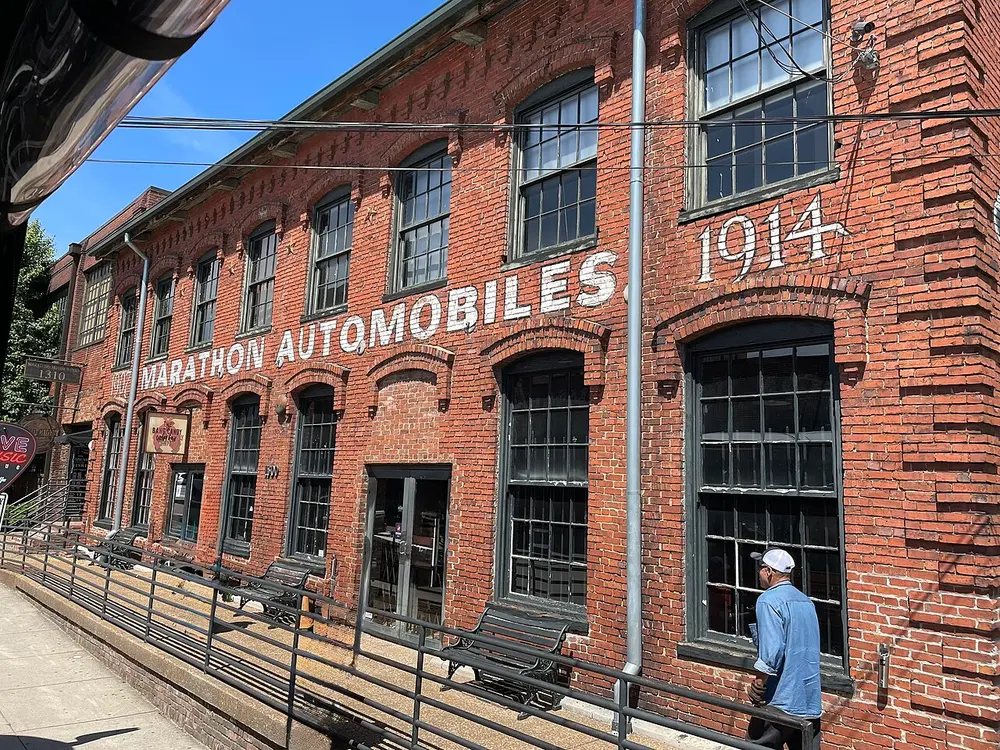
Marathon Automobile Company Nashville Tennessee. Photo: Ceeb47 / Wikimedia Commons, CC BY-SA 4.0.
The course
The race opens in downtown Nashville, where the honky-tonks and the neon of Broadway give the first miles a distinctly Music City feel. The streets are busy, the crowds are close, and the landmarks come quickly. It is the sort of opening that makes the race feel shorter than it is, which is both a gift and a risk.
Then the route turns outward, heading east towards the Opry. The cityscape changes, the climbs begin, and the course settles into the rolling middle section that defines the day. The 363 metres of gain are not concentrated in one climb; they are spread across a series of rises that keep interrupting the rhythm. Runners who arrive expecting a flat city marathon will find the middle much harder than the opening.
The later miles are where the music matters most. The atmosphere that carried the opening kilometres comes back when the legs need it, and the city remains part of the race to the end.
Downtown and the honky-tonks
Broadway is the symbolic heart of the race. The honky-tonks, the signs and the crowds give the opening kilometres an energy that is hard to manufacture, and the route uses that energy deliberately. It is a very different start from a quiet suburban marathon: louder, denser and more distracting.
The downtown setting also means the course is never short of landmarks. Nashville's skyline and the older commercial streets sit close together, and the race moves through them before the climbing begins. That concentration of city detail is one reason the race feels bigger than the distance alone would suggest.
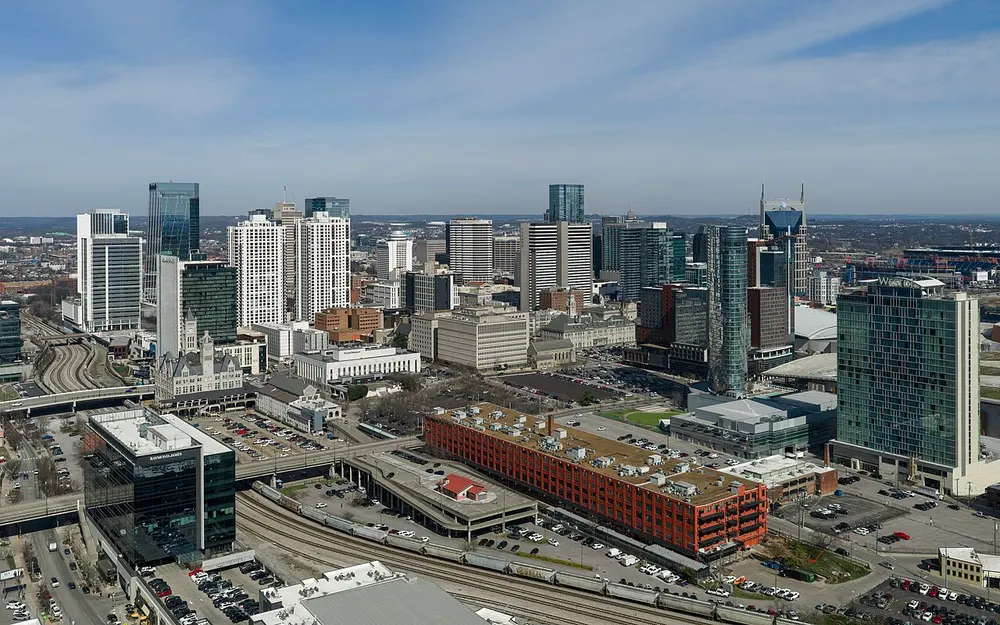
Nashville, TN skyline. Photo: Quintin Soloviev / Wikimedia Commons, CC BY 4.0.
The climb through the middle
The middle of the race is where Nashville earns its reputation. The climbing is not alpine, but 363 metres is a serious total for a city marathon, and the rises come when the early adrenaline has worn off. The course does not offer a single defining ascent; it offers a sequence of shorter climbs that accumulate.
The right approach is to run by effort and accept that the pace will fluctuate. Attacking a rise to hold a split costs more than the few seconds it saves. Keep the cadence short and quick on the way up, relax the shoulders, and use the descents to recover rather than to chase lost time. Runners who do this arrive at the final third with something left.
Music as a pacing tool
The live music is one of the race's best features, but it works best as background rather than as a series of cues to surge. A band at the top of a climb can give you a lift; sprinting past it can wreck the next kilometre. Use the music to reset your mood, not your pace.
There is also a practical benefit to the noise. On a hilly course, the crowd and the bands break the race into smaller pieces, which makes the climbs feel less endless. The key is to enjoy the atmosphere without letting it dictate the effort.
A hilly debut
A first marathon in Nashville is realistic, provided the build includes regular hill work. The distance is the same as anywhere else, but the accumulated climbing makes the second half less forgiving than a flat city course. Long runs on rolling terrain are better preparation than flat miles alone.
The other debut lesson is to start slowly. Downtown Nashville is designed to make you feel good: the music, the crowds and the landmarks all push the pace up. The race rewards the runner who holds back through the first 10 kilometres and lets the hills decide the rest.

Nashville, Tennessee. Photo: Quintin Soloviev / Wikimedia Commons, CC BY 4.0.
Frequently asked questions
Answers to the questions runners ask before entering, drawn from this race's course guide and the directory's own data — the sources behind them are listed below.
When is the Rock 'n' Roll Nashville Marathon in 2027?
The next edition is on 24 April 2027. It is a late-April race through downtown Nashville, past the honky-tonks and out towards the Opry.
Is the Nashville Marathon hilly?
Yes. The course climbs about 363 metres, with the main climbing in the middle section. It is not a mountain race, but the repeated rises are enough to make hill training part of the preparation.
Is Nashville a good first marathon?
It can be, if the build includes hills and the first half is paced conservatively. The atmosphere helps, but the middle climbs punish an over-fast start. Runners who train on rolling terrain will find the course manageable.
Where does the Nashville Marathon run?
The route starts downtown, passes the honky-tonks and heads out towards the Opry. The course mixes urban streets with a hillier middle section and live music throughout.
What is the atmosphere like on race day?
Live music runs for the whole distance, so the course has a soundtrack from start to finish. The downtown honky-tonks and the route towards the Opry reinforce the Music City identity. It is a lively race rather than a quiet time trial.
Why is the course considered tough despite the music?
The 363 metres of climbing arrive in the middle, when the early energy has gone. The music can distract from the effort, but it cannot remove the hills. Runners who pace by effort rather than by the atmosphere handle it best.
More marathons in United States
More marathons in Americas
Sources for this page
What each source below is used for on this page, and where to check this race yourself.
- World Athletics — the label calendar and the road-race regulations. Used to check whether the race holds a World Athletics label, and its elite competition details.
- AIMS — the international course-measurement standard behind the 42.195 km distance, and the AIMS race calendar.
- The organizer's own publications — course maps, race handbooks and published results. The date, course character and climbing on this page are compiled from them and re-checked each season.
Where do these facts come from?
Dates, course type, climbing and time limits are compiled from the organizer's publications and re-checked each season; elevation is an estimate of total climbing rather than a survey figure. Always confirm race-day details with the organizer before making plans.
Last reviewed 27 October 2026