
Mesa Marathon
The Mesa Marathon sells a simple idea: a desert road, a mountain view and a course that gives back more than it takes.
By Global Marathon Routes editorial team · Last reviewed 27 October 2026
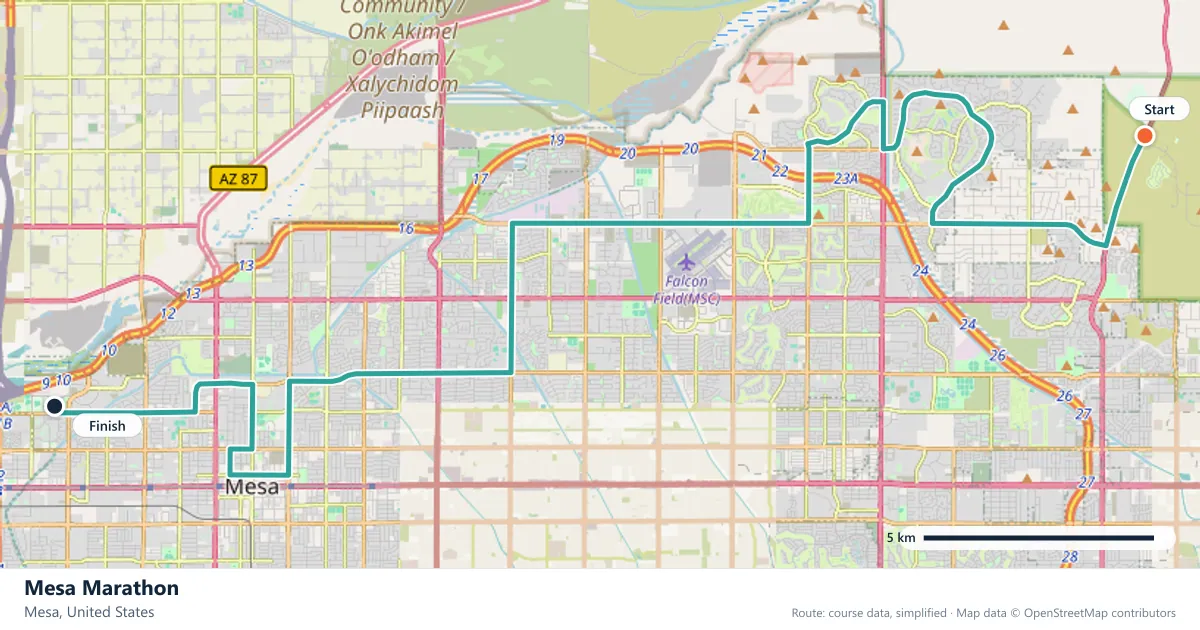
Where does the Mesa Marathon run?
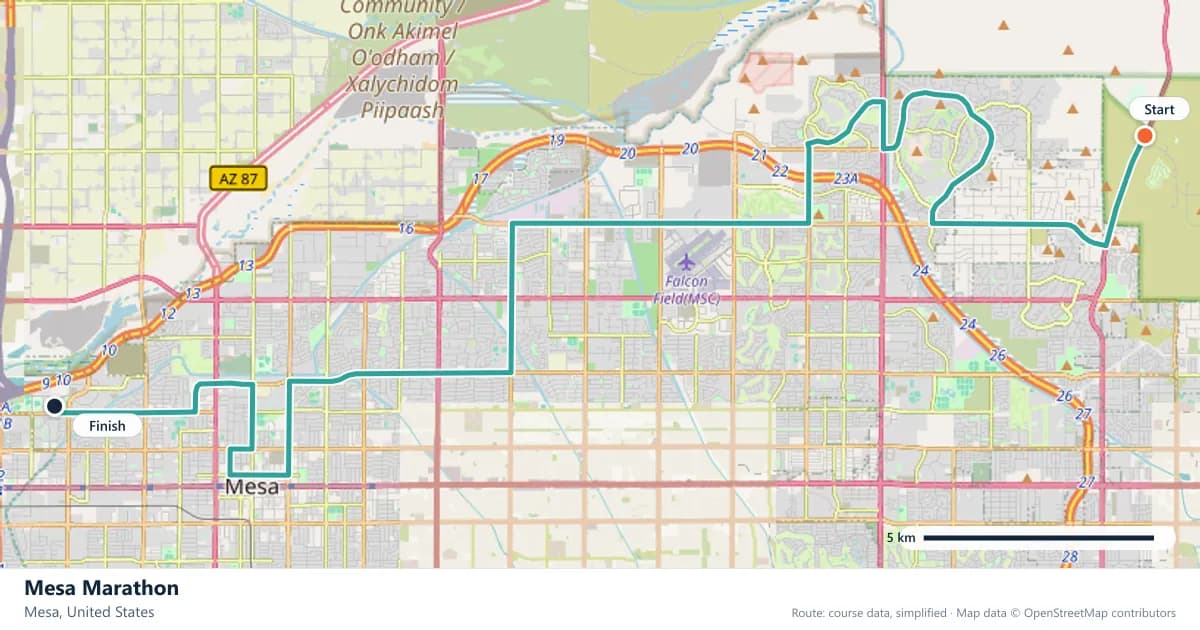
Interactive map
The trace follows the organizer's published course, simplified for the screen: the orange dot is the start, the dark dot the finish. Scroll to zoom, drag to pan.
What is the Mesa Marathon course like?
A February race in the Arizona desert east of Phoenix, run largely on the Usery Pass road with the Superstition Mountains in view. Flat out, downhill back, and fast.
- Next edition
- 13 February 2027
- Elevation gain
- 72 m
- Profile
- Flat
- First run
- —
Course guide
The Mesa Marathon sells a simple idea: a desert road, a mountain view and a course that gives back more than it takes. The next edition is on 13 February 2027, east of Phoenix in Arizona, with most of the running on Usery Pass road and the Superstition Mountains filling the horizon. The profile is flat, the total climb is about 72 metres, and the return leg runs downhill towards town.
That shape is why Mesa has a reputation as a fast race. The outbound half is level enough to settle into a rhythm, and the homeward half tips gently in the runner's favour. It is a winter marathon for people chasing a time, but the desert setting and the low-key atmosphere make it work for a first marathon too.
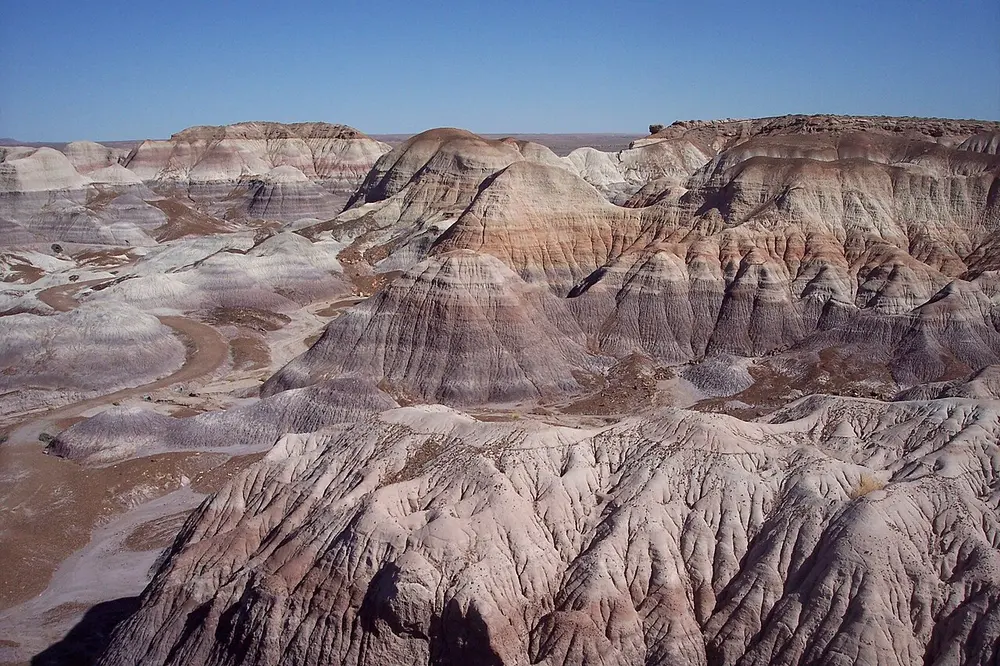
Blue Mesa Painted Desert. Photo: Adbar / Wikimedia Commons, CC BY-SA 3.0.
The course
The route leaves Mesa and heads into the desert on Usery Pass road. The opening miles are the flattest, and they set up the day: a steady outbound effort with the city falling away and the mountains becoming more prominent. There is very little climbing to break the rhythm, so the first task is to avoid treating the easy grade as a licence to run faster than planned.
The return is where the course changes. The road loses height back towards Mesa, and the descent is spread over enough distance to be runnable rather than steep. That is the fast part of the race, but it is also where tired legs are most exposed. Downhill running late in a marathon asks the quadriceps to absorb force with every stride, and a pace that felt effortless at 30 kilometres can become a struggle by 38.
The course is not a tight city loop. It is a desert road race, with long views and a small footprint, and the landscape does most of the talking. Runners who like space, quiet and a clear sense of direction will find it suits them.
Usery Pass and the Superstitions
Usery Pass road runs through the desert northeast of Mesa, below the Usery Mountains and within sight of the Superstition range. The Superstitions are the more dramatic skyline: a ridge of volcanic rock and desert peaks that has a way of looking different in every direction. On race morning they give the race a backdrop that most city marathons cannot offer.
The desert also imposes its own discipline. There is little to distract you between the road and the mountains, so the race becomes a long conversation with your own pacing. That can be a strength. Without crowds and corners to break the effort, it is easier to hold a rhythm and harder to hide from a bad decision.
Why the profile runs fast
A marathon with 72 metres of climbing is flat by any reasonable definition. Mesa adds to that a downhill return, which means the second half is quicker than the first if it is run well. It rewards patience early and then lets the terrain help.
The trap is the opening. A flat outbound leg with fresh legs and a mountain view can produce kilometres that feel easier than they are. The correct effort on the way out is conservative, almost annoyingly so. The descent will not rescue a first half run at personal-best pace; it will only make the consequence arrive faster.
Desert race, self-paced discipline
Mesa is a race for runners who can manage themselves. The course runs through open desert rather than city streets, so there is little shelter and fewer changes of rhythm. Settle into a sustainable effort, use the long sightlines to stay relaxed, and treat the turnaround as the start of the real race.
Fuelling deserves the same discipline. Practise taking fluids at your planned rhythm in training and stick to it on the day rather than waiting until you feel thirsty. The sun is a factor on the exposed road, so practise with a cap and sunscreen.
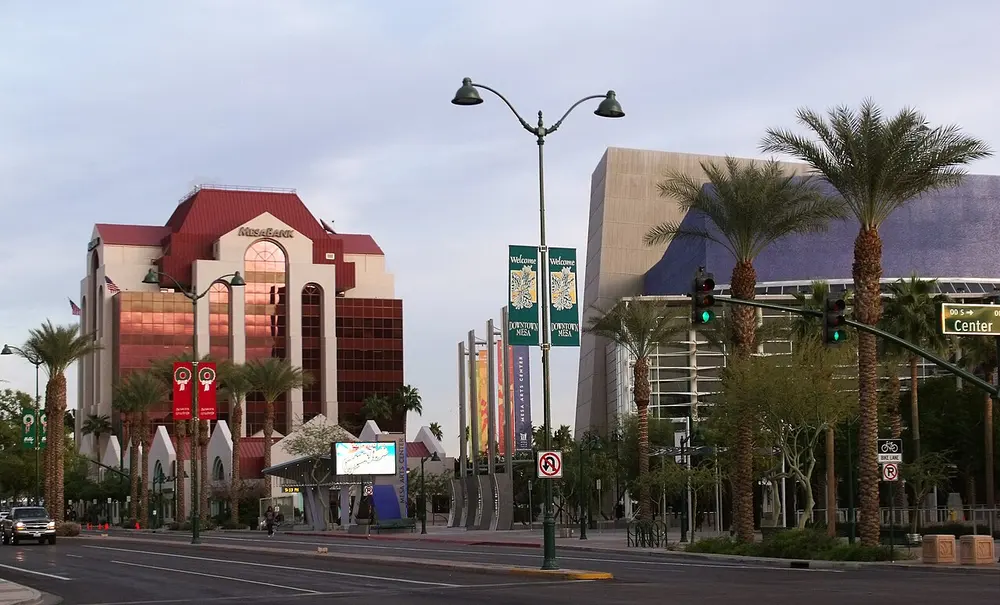
Downtown Mesa Arizona. Photo: Ixnayonthetimmay / Wikimedia Commons, CC BY 3.0.
Getting to the start
Mesa sits east of Phoenix in the Salt River Valley, and the course runs beyond the city edge into the desert. That means race morning involves a drive rather than a walk from a downtown hotel. Check the organiser's instructions for access, parking and any transport arrangements, and build in more time than the map suggests.
The reward for the journey out is a course that feels removed from the city even though it begins at its edge. Downtown Mesa is close enough to return to after the race, but the marathon itself belongs to the open road.
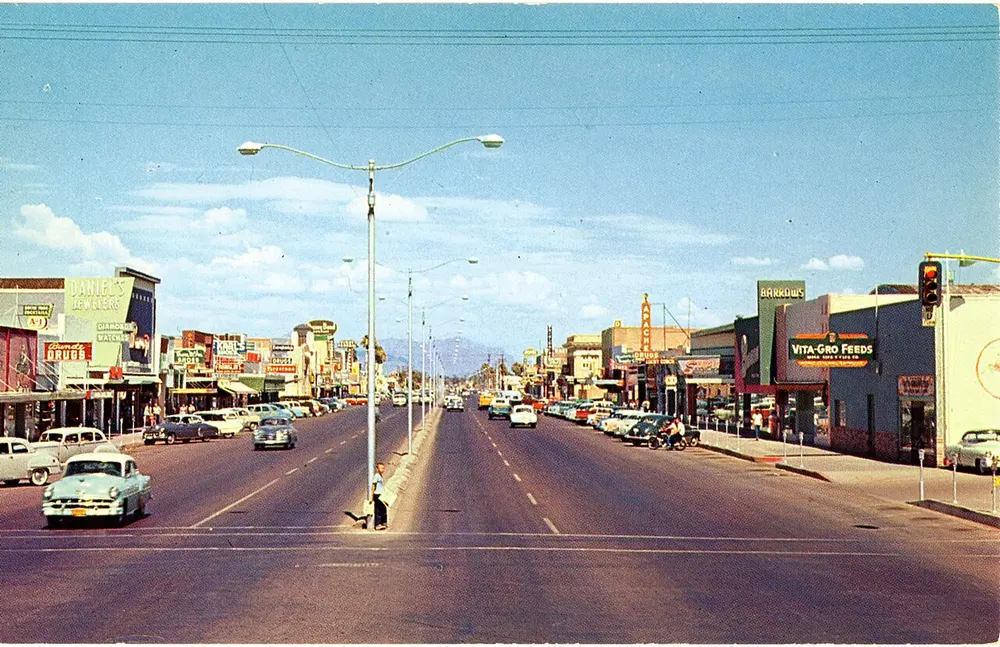
Mesa, AZ. Photo: Ethan from Scottsdale / Wikimedia Commons, CC BY 2.0.
Frequently asked questions
Answers to the questions runners ask before entering, drawn from this race's course guide and the directory's own data — the sources behind them are listed below.
When is the Mesa Marathon in 2027?
The next edition is on 13 February 2027. It is a winter desert race east of Phoenix, run largely on Usery Pass road.
Is the Mesa Marathon flat?
Yes. The course has about 72 metres of climbing, with a flat outbound leg and a downhill return. It is a flat marathon course, and the descent makes the second half quicker if it is paced sensibly.
Is Mesa good for a personal best?
The course is suited to fast times: little climbing and a downhill return. A personal best still depends on a disciplined first half, because the flat outbound road invites an early pace that the descent cannot fix.
Is Mesa a good first marathon?
It can be. The gentle profile makes the distance manageable, and the February date fits a winter build. The caveat is the remote setting: the course offers fewer distractions and less external support than a city marathon, so pacing discipline matters.
Where does the Mesa Marathon run?
It runs east of Phoenix on Usery Pass road, with the Superstition Mountains in view, before turning back downhill towards Mesa. The course is a desert road route rather than a city loop.
Why is the Superstition Mountains view important?
The range gives the race its scale and its identity. For much of the course it is the dominant feature on the horizon, and it turns a straightforward road marathon into a landscape experience without adding difficult terrain.
More marathons in United States
More marathons in Americas
Sources for this page
What each source below is used for on this page, and where to check this race yourself.
- World Athletics — the label calendar and the road-race regulations. Used to check whether the race holds a World Athletics label, and its elite competition details.
- AIMS — the international course-measurement standard behind the 42.195 km distance, and the AIMS race calendar.
- The organizer's own publications — course maps, race handbooks and published results. The date, course character and climbing on this page are compiled from them and re-checked each season.
Where do these facts come from?
Dates, course type, climbing and time limits are compiled from the organizer's publications and re-checked each season; elevation is an estimate of total climbing rather than a survey figure. Always confirm race-day details with the organizer before making plans.
Last reviewed 27 October 2026