
Long Beach Marathon
Long Beach is a harbour city, and its marathon makes the most of the water. The course heads out to the Queen Mary, the retired ocean liner berthed in the harbour, and returns through the beachfront,…
By Global Marathon Routes editorial team · Last reviewed 27 October 2026
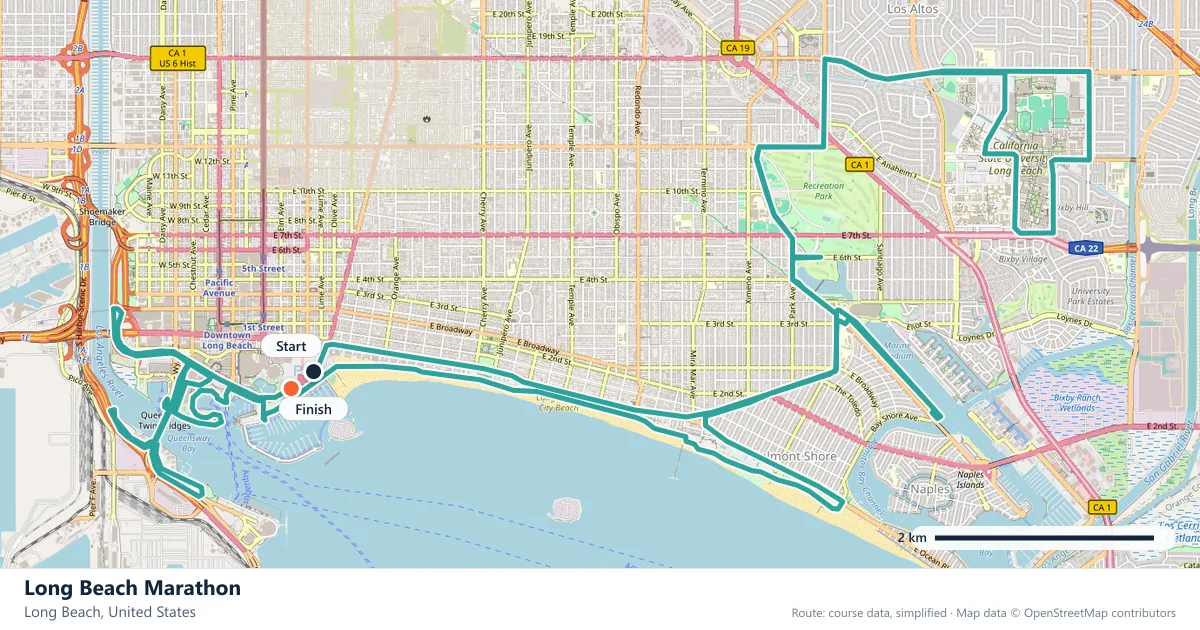
Where does the Long Beach Marathon run?
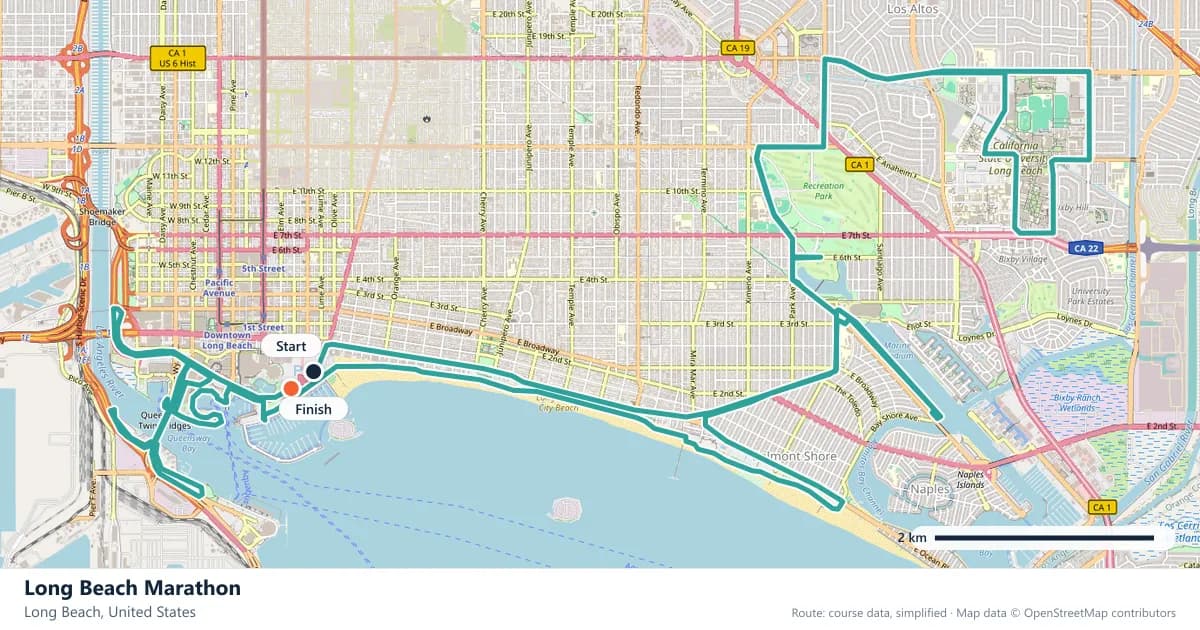
Interactive map
The trace follows the organizer's published course, simplified for the screen: the orange dot is the start, the dark dot the finish. Scroll to zoom, drag to pan.
What is the Long Beach Marathon course like?
An October race along the Southern California coast, out to the Queen Mary and back through the beachfront. Flat and sea-level, with an ocean breeze in the second half.
- Next edition
- October 2027 (expected)
- Elevation gain
- 132 m
- Profile
- Undulating
- First run
- —
Course guide
Long Beach is a harbour city, and its marathon makes the most of the water. The course heads out to the Queen Mary, the retired ocean liner berthed in the harbour, and returns through the beachfront, with the Pacific as a constant and the city skyline as a backdrop. The 2026 edition was held on Sunday 11 October.
The course rolls, but only gently: about 132 metres of climbing across the 42.195 kilometres. The race sits at sea level, so there is no altitude to contend with, and the changes of grade are small enough to pass almost unnoticed. That makes Long Beach a course for fast times and for first marathons, with the ocean breeze as the main variable.
The beachfront setting gives the race a holiday feel. It is not a low-key trail run or a major-city spectacle; it is a coastal marathon with a relaxed atmosphere, a flat-ish course and a landmark that gives the day a clear shape.
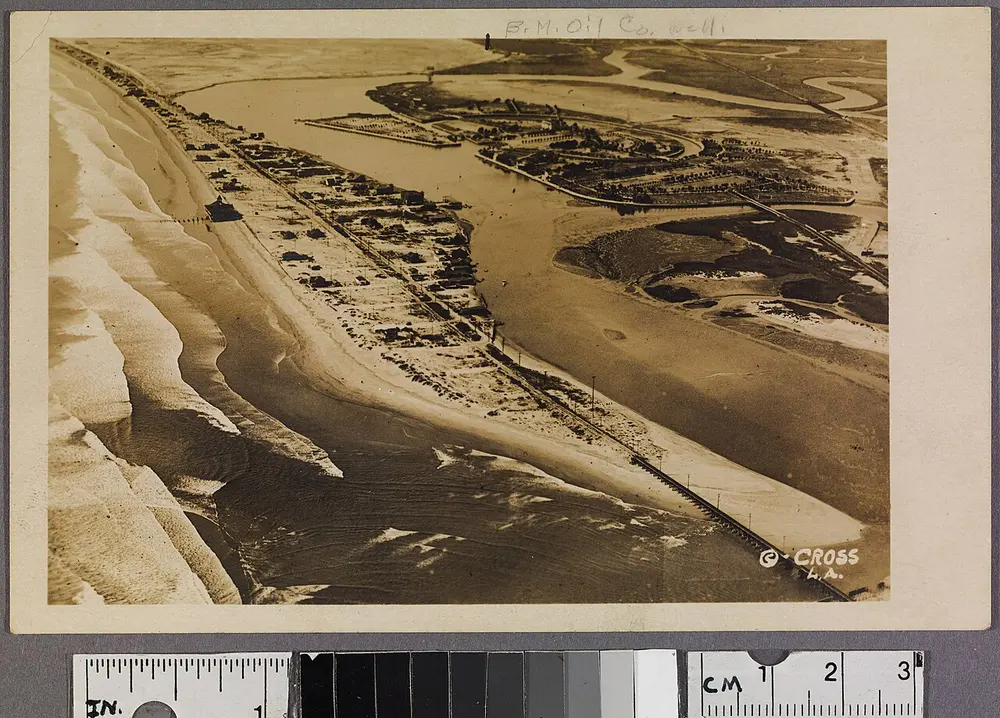
1920s aerial view of Peninsula, Long Beach, California. Photo: Henry P. Barbour / Wikimedia Commons, Public domain.
The course
The route heads out toward the Queen Mary and then returns through the beachfront. The outbound section gives the race its landmark and its destination, while the return brings the ocean into view and turns the course toward home. The two halves have different characters, even though the terrain stays gentle.
The 132 metres of climbing are spread across the route as short, soft rises. There is no sustained climb and no point where the course changes from flat to hilly. Runners who are used to flat city races will feel at home; runners who want a hill course will find Long Beach too gentle.
The sea-level setting is a quiet advantage. There is no altitude to slow the pace, and the air is dense enough to feel supportive on a cool morning. The course is not perfectly flat, but it is flat enough that the pace can settle early and stay steady.
The Queen Mary and the beachfront
The Queen Mary is the race's most recognisable landmark. The ocean liner has been permanently berthed in Long Beach for decades, and the course's outbound leg uses it as a destination. It is the kind of landmark that gives a marathon a mental anchor: reach the ship, then turn for home.
The beachfront is the other half of the race's identity. The return leg runs beside the water, with the beach, the palm trees and the Pacific giving the final miles a distinctly Southern California feel. The setting is relaxed and the course follows the beachfront.
The beachfront also exposes runners to the wind. The coast is open, and the breeze that feels pleasant at the start can become a headwind on the return. The course does not offer much shelter, so runners should be prepared to work through the exposed sections rather than expecting the ocean to carry them home.

Beach and Sun Pavilion, Long Beach, California. Photo: Edward H. Mitchell / Wikimedia Commons, Public domain.
Sea-level racing
Sea level is one of Long Beach's least obvious advantages. The course sits at the edge of the Pacific, with no altitude to thin the air and no mountain pass to climb. For runners travelling from higher ground, the difference is subtle but real: the same pace can feel a little easier, especially in the final miles.
The flat-ish profile and the sea-level setting make the race a good personal-best opportunity. The course does not ask for hill strength, and the gentle undulation is not enough to break a rhythm. The limiting factors are the weather, the wind and the runner's own pacing.
For first-timers, the course is forgiving. The coastal setting is motivating, the terrain is gentle and the distance is the main challenge. The risk is going out too fast on the outbound leg, when the landmark is ahead and the legs are fresh.
The breeze on the way back
The ocean breeze is the race's defining variable. It tends to arrive in the second half, which means the return through the beachfront can feel harder than the outward leg. The wind can be constant enough to make a difference over 20 kilometres.
The tactical response is to run conservatively before the turn. The outbound leg can feel easy, especially with the Queen Mary ahead and the field still fresh, but the return is where the race is decided. Runners who hold something back will be able to use the beachfront rather than survive it.
The breeze also affects hydration and effort. A headwind makes the pace feel harder, so runners should run by effort rather than by watch and adjust their targets accordingly. The course rewards patience more than aggression.
Jordan High School Long Beach California Aerial View. Photo: Darkest tree / Wikimedia Commons, CC BY-SA 3.0.
Frequently asked questions
Answers to the questions runners ask before entering, drawn from this race's course guide and the directory's own data — the sources behind them are listed below.
When is the Long Beach Marathon?
The 2026 edition was held on Sunday 11 October 2026. The race is held in October, in the middle of Southern California's autumn.
Is the Long Beach Marathon flat?
It is close to flat. The course gains about 132 metres in gentle undulation, so there is no sustained climb. The sea-level setting and small changes of grade make it a fast course despite not being perfectly level.
Is Long Beach good for a first marathon or a personal best?
The flat, sea-level course makes it a good personal-best option, and the coastal setting and gentle grades make it a manageable first marathon. The second-half breeze is the main caveat.
Where does the Long Beach Marathon run?
It is run in Long Beach, on the Southern California coast. The course goes out to the Queen Mary and returns through the beachfront.
How does the ocean breeze affect the race?
The breeze tends to arrive in the second half, so the return through the beachfront can feel harder than the outward leg. Run conservatively before the turn and expect the coastal kilometres to demand more.
More marathons in United States
More marathons in Americas
Sources for this page
What each source below is used for on this page, and where to check this race yourself.
- World Athletics — the label calendar and the road-race regulations. Used to check whether the race holds a World Athletics label, and its elite competition details.
- AIMS — the international course-measurement standard behind the 42.195 km distance, and the AIMS race calendar.
- The organizer's own publications — course maps, race handbooks and published results. The date, course character and climbing on this page are compiled from them and re-checked each season.
Where do these facts come from?
Dates, course type, climbing and time limits are compiled from the organizer's publications and re-checked each season; elevation is an estimate of total climbing rather than a survey figure. Always confirm race-day details with the organizer before making plans.
Last reviewed 27 October 2026