
Kansas City Marathon
Kansas City's marathon belongs to the boulevards. The race starts downtown and works through the Country Club Plaza, using the wide, tree-lined streets that give the city its distinctive shape.
By Global Marathon Routes editorial team · Last reviewed 27 October 2026
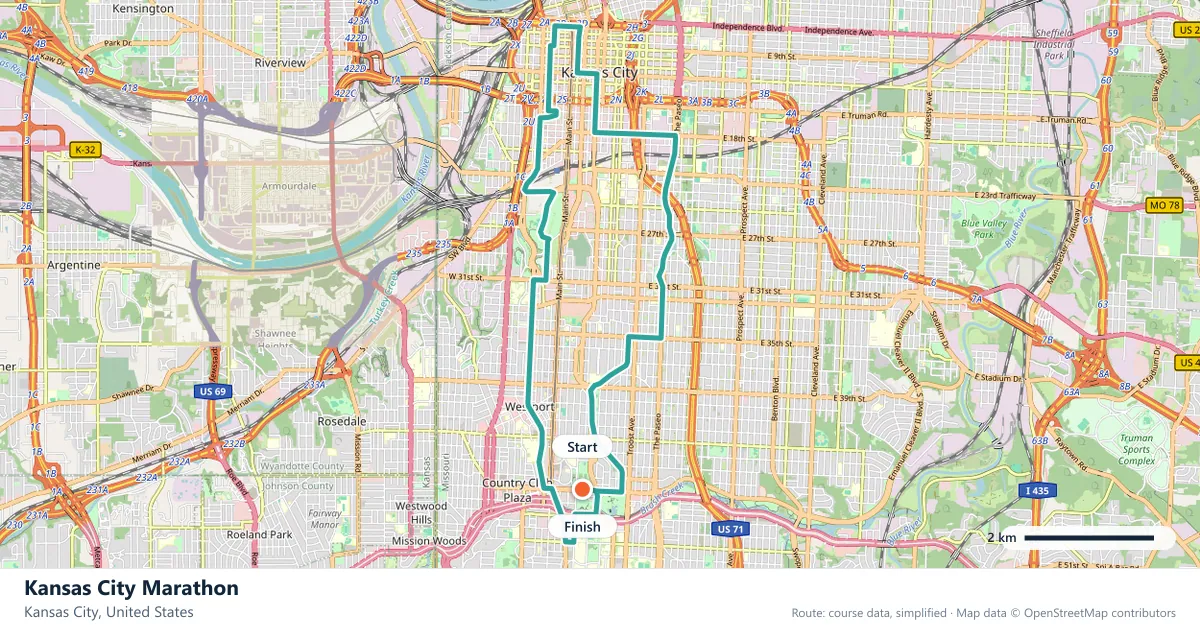
Where does the Kansas City Marathon run?
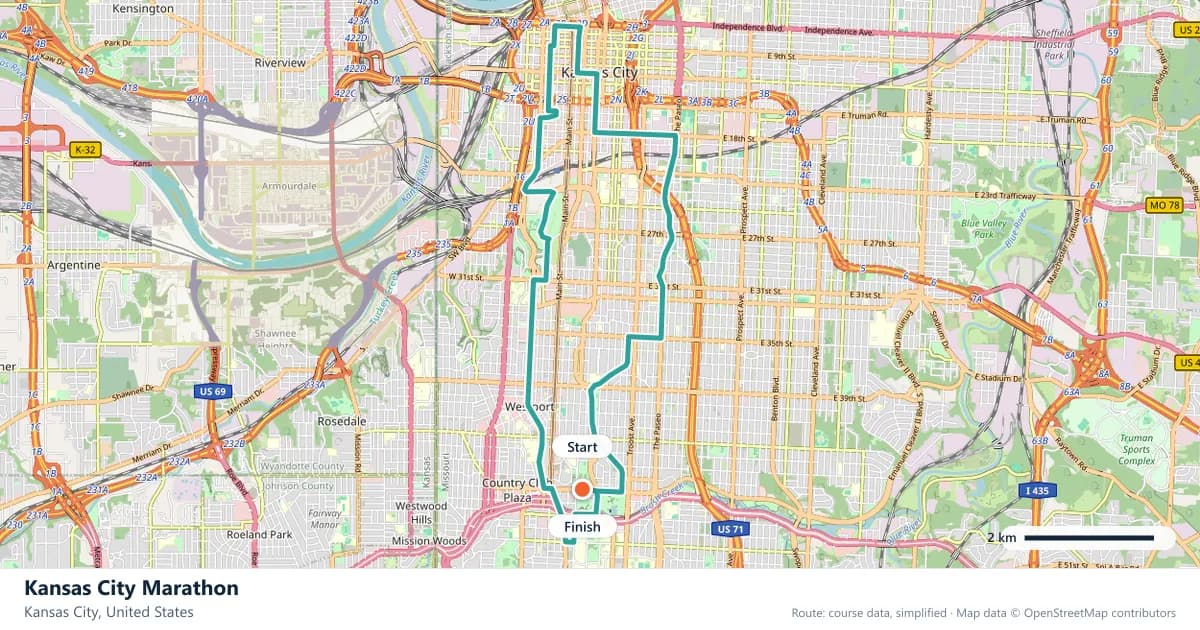
Interactive map
The trace follows the organizer's published course, simplified for the screen: the orange dot is the start, the dark dot the finish. Scroll to zoom, drag to pan.
What is the Kansas City Marathon course like?
An autumn race from downtown Kansas City through the Plaza and the city's boulevards. Rolling rather than flat, with the leaves at their best in mid-October.
- Next edition
- October 2027 (expected)
- Elevation gain
- 227 m
- Profile
- Undulating
- First run
- —
Course guide
Kansas City's marathon belongs to the boulevards. The race starts downtown and works through the Country Club Plaza, using the wide, tree-lined streets that give the city its distinctive shape. The edition covered here is dated 17 October 2026, when the leaves are usually at their best and the city is at its most comfortable for running.
The course rolls, and the total climb is about 227 metres. It is not a mountain marathon, but the pace does not take care of itself either. The climbing comes in steady doses — short rises and longer drags — and the accumulated effort is the real story.
That makes Kansas City a race for runners who can run by effort. The downtown opening and the approach to the Plaza can feel comfortable, but the later boulevards ask for patience. It is a first-marathon option with a warning attached: respect the rolling ground, and do not let the autumn atmosphere persuade you into a fast first half.
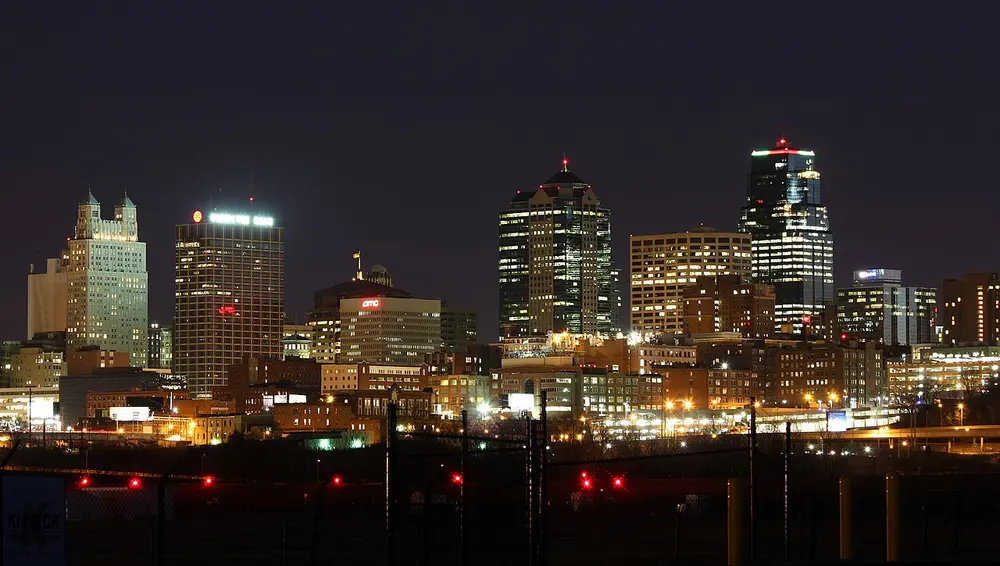
Kansas City, MO skyline at night. Photo: Lasse Fuss / Wikimedia Commons, CC BY-SA 3.0.
The course
The race begins in downtown Kansas City and uses the city grid before reaching the Plaza and the broad boulevards that define the middle of the course. The opening miles are urban and relatively dense, with the field still together and the pace still settling, before the route opens out into the more residential streets around the Plaza.
The 227 metres of climbing are constant rather than dramatic. There is no single climb to fear, but the course rarely allows a long, flat rhythm: a short rise is followed by a descent, then another rise, and the pattern repeats. The total is significant enough that runners who ignore it will feel the cost late in the race.
The boulevards are the course's signature. Wide, straight and lined with trees, they give the race a sense of scale. They are also where the rolling profile is most exposed: the long views make the next rise visible well before you reach it.
The Plaza and the boulevards
The Country Club Plaza is the most distinctive section of the race. The district is known for its Spanish-inspired architecture, its fountains and its shopping streets, and the marathon uses it as the centrepiece of the middle miles. It is a place where the course feels embedded in the city rather than routed around it.
The Plaza is the most atmospheric section of the race. The streets are narrower than the boulevards, the turns are more frequent and the atmosphere is more concentrated, which gives the race a burst of energy in the middle. Runners should enjoy it without letting it push the pace; the hardest part of the course may still be ahead.
Beyond the Plaza, the boulevards carry the race onward. Kansas City is a city that takes its boulevards seriously, and the marathon uses them to connect neighbourhoods rather than to showcase a single landmark.
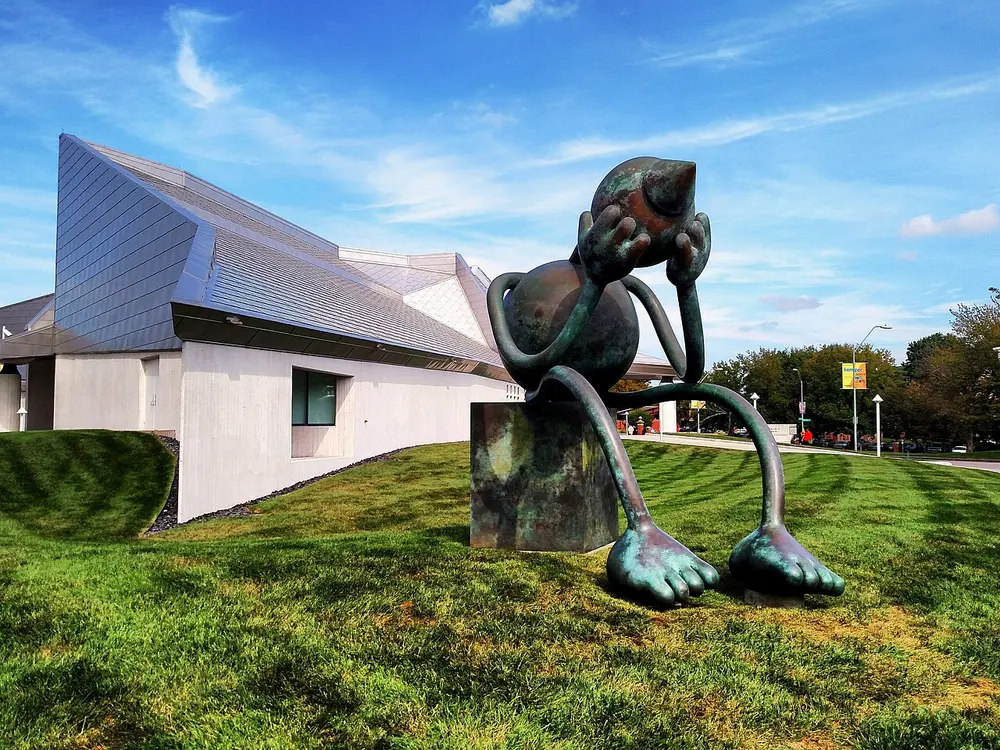
Crying Giant, Kansas City, Missouri, U.S.A. Photo: GPA Photo Archive / Thad Zajdowicz / Wikimedia Commons, CC0.
An autumn race
October is the right season for Kansas City. The summer heat has gone, the city's trees are turning and the race falls at a time when the training block can be completed in reasonable conditions. It is a classic autumn marathon, with the added appeal of a course that uses the city's most attractive streets.
The date also means the race sits late in the year. The longest runs fall in September, and the final weeks overlap with the shortening days. Runners should plan the build around that rhythm rather than trying to add volume in October.
Autumn weather can be changeable, and a mid-October morning can range from cool to unseasonably warm. Check the forecast in race week and prepare for a range of conditions rather than assuming a perfect day.
Reading the rolling profile
The most useful way to run Kansas City is by effort rather than pace. The 227 metres are not concentrated in one climb, so a pace that feels comfortable on the flat will feel harder on the rises, and a pace that feels hard on the rises will feel impossible by the end. Let the watch drift on the hills and trust the effort.
The later boulevards are where the race is decided. The downtown opening and the Plaza can carry you along on atmosphere, but the final miles are quieter and more exposed, and the accumulated climbing becomes apparent. Runners who have kept something in reserve will pass people who treated the first half as a flat race.
Hill training helps, but specificity matters less than pacing. The climbs are short, so a few sessions on rolling roads and a commitment to even effort will prepare you better than a block of long mountain climbs. Kansas City rewards the runner who reads the terrain.
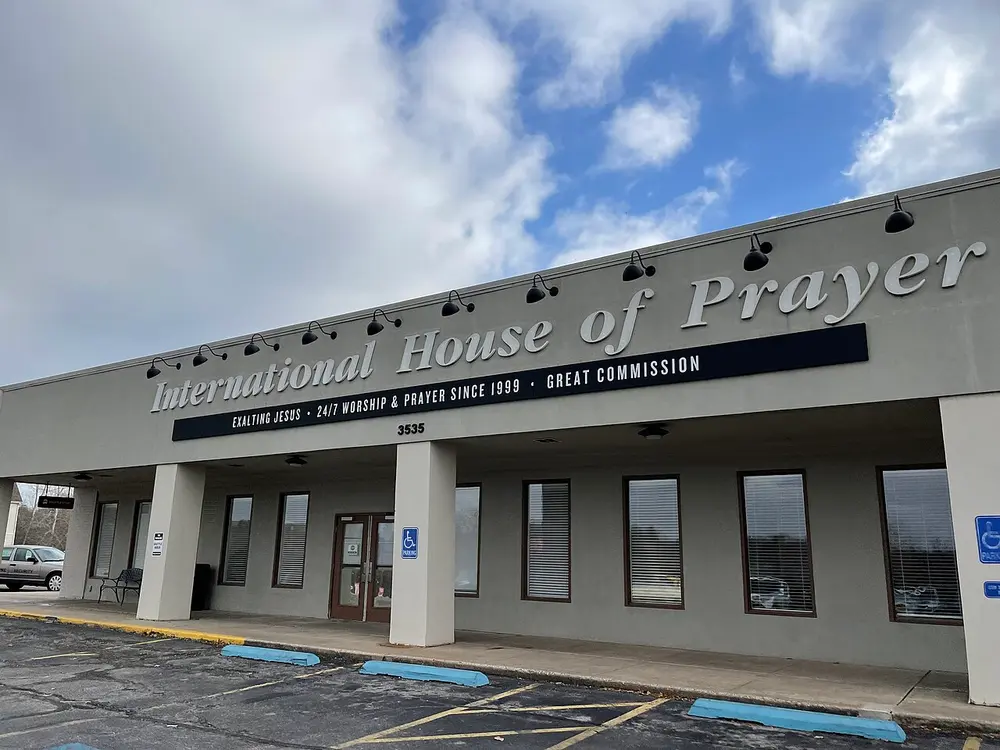
International House of Prayer in Kansas City. Photo: SunDawn / Wikimedia Commons, CC BY-SA 4.0.
Frequently asked questions
Answers to the questions runners ask before entering, drawn from this race's course guide and the directory's own data — the sources behind them are listed below.
When is the Kansas City Marathon?
The edition covered here is dated 17 October 2026. The race is held in mid-October, when the city's trees are usually at their autumn best.
Is the Kansas City Marathon flat or hilly?
It is undulating. The course climbs about 227 metres, mostly as short rises and longer drags through the Plaza and along the boulevards. There is no single sustained climb, but the rolling profile makes even pacing difficult.
Is Kansas City good for a first marathon?
It can be. The course is not extreme, and the city setting is manageable, but the 227 metres of climbing make it more demanding than a flat first-marathon course. Conservative pacing and some hill practice are essential.
Is Kansas City a good course for a personal best?
It is not the obvious place to chase a personal best. The rolling course makes it harder to hold a target pace than a flat route, and the accumulated climbing costs time in the later miles.
Where does the Kansas City Marathon run?
The race starts downtown and passes through the Country Club Plaza and the city's boulevards. It stays within Kansas City.
How should I train for the rolling course?
Include some hill repetitions and practise running by effort rather than a fixed pace. The climbs are short, so strength and pacing matter more than endurance for long ascents. A few sessions on rolling roads will help.
More marathons in United States
More marathons in Americas
Sources for this page
What each source below is used for on this page, and where to check this race yourself.
- World Athletics — the label calendar and the road-race regulations. Used to check whether the race holds a World Athletics label, and its elite competition details.
- AIMS — the international course-measurement standard behind the 42.195 km distance, and the AIMS race calendar.
- The organizer's own publications — course maps, race handbooks and published results. The date, course character and climbing on this page are compiled from them and re-checked each season.
Where do these facts come from?
Dates, course type, climbing and time limits are compiled from the organizer's publications and re-checked each season; elevation is an estimate of total climbing rather than a survey figure. Always confirm race-day details with the organizer before making plans.
Last reviewed 27 October 2026