
Eugene Marathon
Eugene's marathon begins and ends at Hayward Field, which is a little like starting a road race inside a cathedral.
By Global Marathon Routes editorial team · Last reviewed 27 October 2026
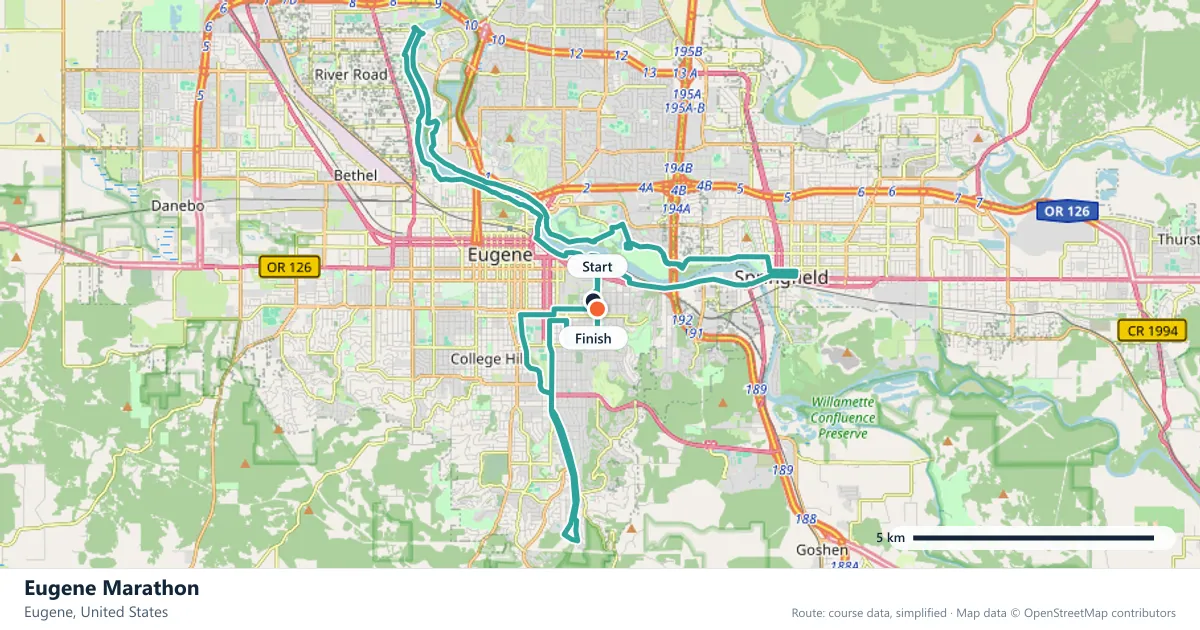
Where does the Eugene Marathon run?
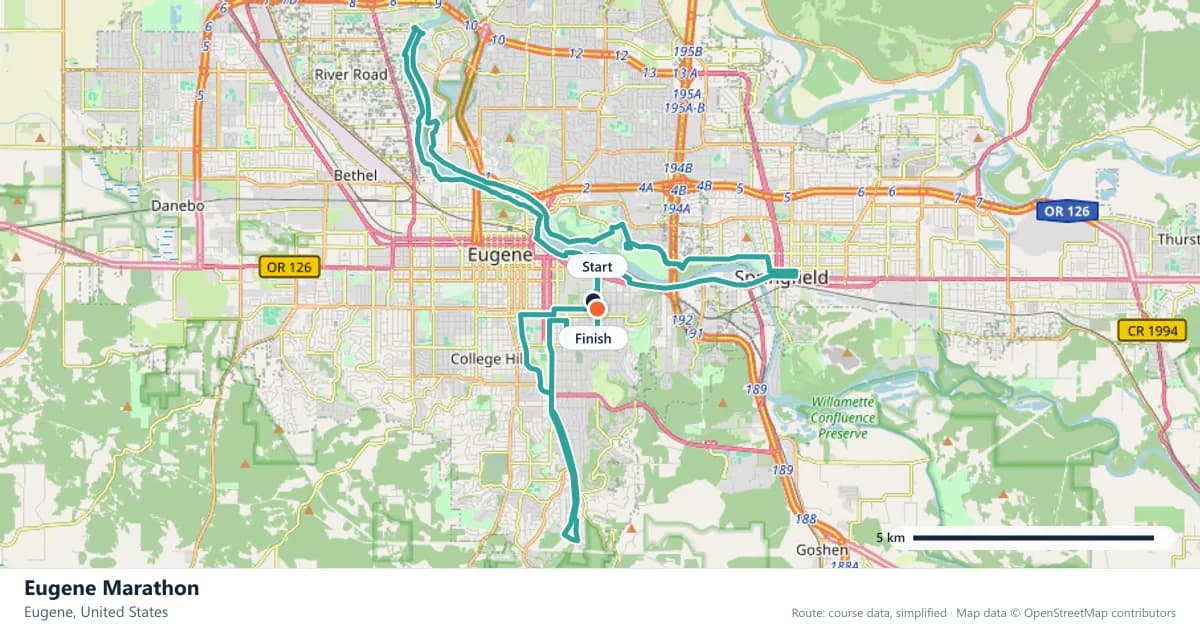
Interactive map
The trace follows the organizer's published course, simplified for the screen: the orange dot is the start, the dark dot the finish. Scroll to zoom, drag to pan.
What is the Eugene Marathon course like?
Starts and finishes at Hayward Field, the home of American track, and runs out along the Willamette river paths. Flat, fast and steeped in running history.
- Next edition
- 25 April 2027
- Elevation gain
- 127 m
- Profile
- Undulating
- First run
- —
Course guide
Eugene's marathon begins and ends at Hayward Field, which is a little like starting a road race inside a cathedral. The stadium is the home of American track, a place whose history reaches from Bill Bowerman and Steve Prefontaine to the World Athletics Championships. Runners gather on that ground, then head out to the Willamette River paths and the streets beyond.
Race day is Sunday 25 April 2027. The course climbs about 127 metres, with the gentle undulation of a river-valley city rather than a true hill route. It is flat and fast in character, and it is steeped in running history in a way that few American marathons can match.
That combination makes Eugene easy to recommend. A personal best is a realistic target on the modest profile, and a first marathon is manageable because the start and finish are in the same place and the river paths keep the middle of the race calm. The challenge is not the terrain; it is resisting the stadium atmosphere in the first mile.
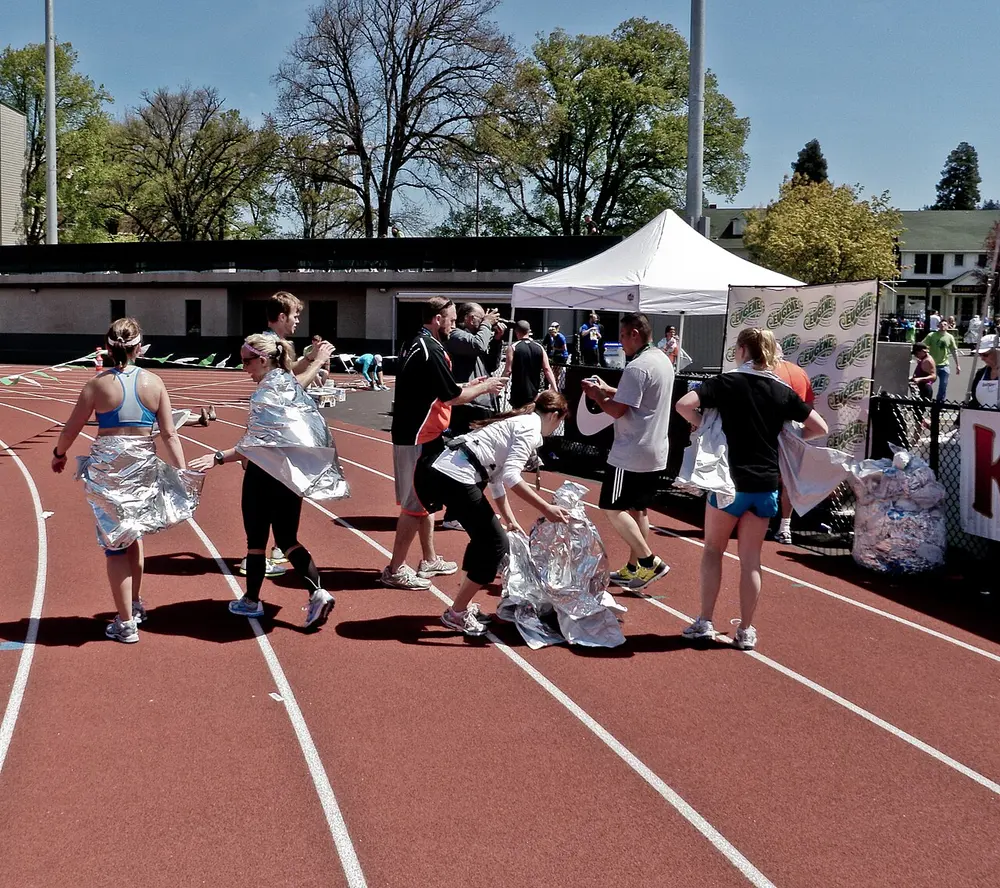
Finish Line - 2011 Eugene Marathon. Photo: ex_magician / Wikimedia Commons, CC BY 2.0.
The course
The route starts at Hayward Field and quickly leaves the stadium behind, heading for the Willamette River and its path network. The opening kilometres are the busiest, with the field still dense and the stadium excitement still in the legs, so establish a rhythm rather than chase the pace.
The river paths carry much of the race. They are flatter and quieter than the city streets, and they keep the course close to the water. The paths are narrower than roads in places, so the field can bunch; patience is more useful than forcing a pass. The 127 metres of climbing are spread across the route in short, gentle rises, none of which lasts long enough to count as a climb.
The return to Hayward Field is the race's final act. The stadium gives the closing kilometres a clear target, and the finish is a rare pleasure for a road marathon. The last mile is not the place to discover that the first half was too fast, though; the course is quick enough that the bill for an over-ambitious start arrives well before the stadium.
Hayward Field
Hayward Field is the reason Eugene is called TrackTown, USA. The stadium sits on the University of Oregon campus, and its history is woven into American distance running: Bowerman's teams, Prefontaine's era, Olympic Trials and the World Athletics Championships. The marathon borrows that aura at the start and gives it back at the finish.
For runners, the practical effect is a big-event feeling at the beginning of a small-city race. The grandstand and the crowd make the start feel faster than it is, and the same atmosphere waits at the end. It is worth arriving early to take it in, and worth remembering that the race is decided on the river paths, not in the stadium.
The stadium also simplifies the day. Start and finish are in the same place, so bags, supporters and the journey home are easier than at a point-to-point race. That is a genuine advantage for first-timers, who have enough to think about without adding a shuttle bus.
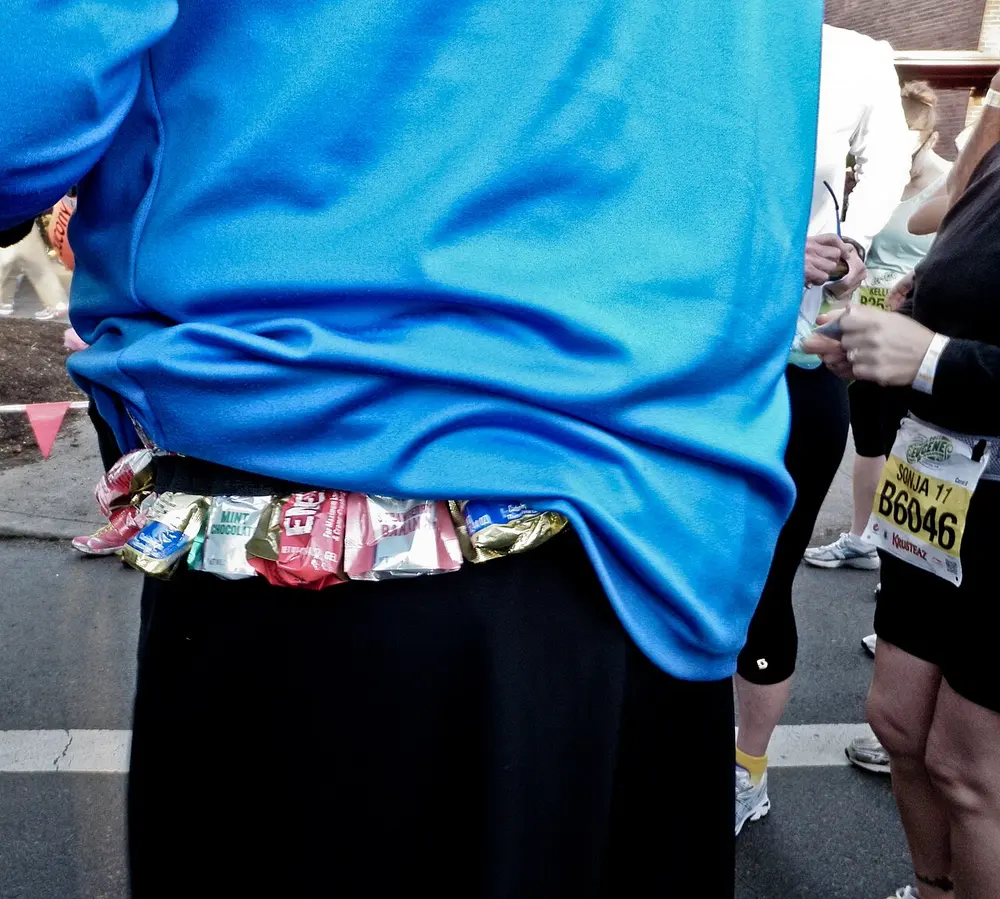
Energy - Starting Line - 2011 Eugene Marathon. Photo: ex_magician / Wikimedia Commons, CC BY 2.0.
The Willamette paths
The Willamette River is Eugene's other running landmark. The paths along its banks are part of the city's everyday running culture, and on race day they give the marathon a softer, greener middle than a downtown loop would. The water is close, the trees provide some shelter and the noise of the city falls away.
The paths are not a wilderness. They are shared infrastructure, with bridges, underpasses and the occasional tight turn, and the course uses them selectively rather than following the river for the entire race. Runners should expect changes of direction and surface, and should not treat the river section as a place to switch off.
The flatness is the point. With so little climbing, the river miles are where a good time is built, and where an impatient runner can ruin one. Hold back through the first half and let the path carry you; the stadium will still be there at the end.
TrackTown on race weekend
Eugene's identity as a running city is not a marketing invention. The university, the clubs, the trails and the stadium have produced a culture in which a marathon feels like a natural part of the calendar. Race weekend brings that culture to the surface, with runners from across the region and a city that knows how to host a track event.
April in the Willamette Valley can be changeable, so runners should be ready for a range of conditions rather than a guaranteed warm day. The tree cover and river paths offer some shelter, but the open sections are exposed. Check the forecast and dress in layers.
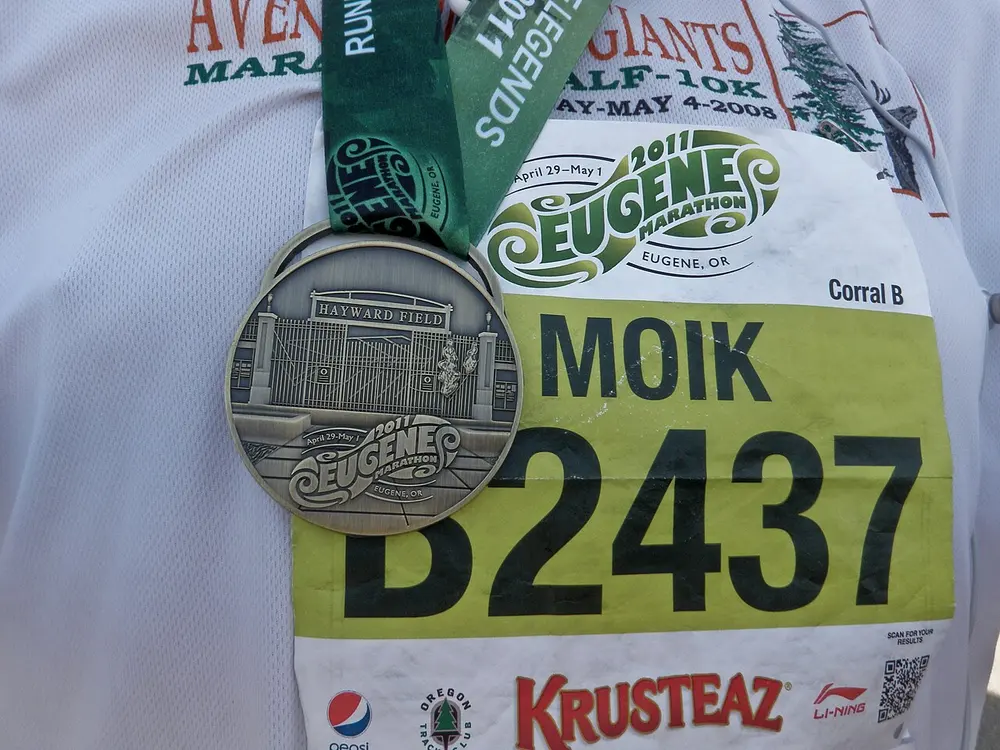
Eugene Marathon - "Running In The Footsteps Of Legends" May 1, 2011. Photo: ex_magician / Wikimedia Commons, CC BY 2.0.
Frequently asked questions
Answers to the questions runners ask before entering, drawn from this race's course guide and the directory's own data — the sources behind them are listed below.
When is the Eugene Marathon in 2027?
The race is on Sunday 25 April 2027, starting and finishing at Hayward Field.
Is the Eugene Marathon flat?
It is close to flat. The course climbs about 127 metres in gentle undulation, with no sustained ascent. The river paths are the flattest part, and the short rises elsewhere are mild.
Is the Eugene Marathon good for a personal best?
The course is suited to fast times. The modest climbing, river-path miles and spring date all support quick running. A personal best still depends on conditions and pacing, but the course is not the obstacle.
Is the Eugene Marathon suitable for a first marathon?
Yes. The profile is gentle, the start and finish are both at Hayward Field, and the river paths are forgiving. First-timers should stay conservative early, when the stadium atmosphere can produce an unsustainable pace.
Where does the Eugene Marathon start and finish?
Both the start and the finish are at Hayward Field in Eugene, Oregon. The route uses the city's streets and the Willamette River paths in between.
What is the hardest part of the Eugene Marathon?
The opening miles, where the stadium atmosphere and the dense field encourage a fast start. The river paths are gentle, but they are narrow in places and can bunch the field.
More marathons in United States
More marathons in Americas
Sources for this page
What each source below is used for on this page, and where to check this race yourself.
- World Athletics — the label calendar and the road-race regulations. Used to check whether the race holds a World Athletics label, and its elite competition details.
- AIMS — the international course-measurement standard behind the 42.195 km distance, and the AIMS race calendar.
- The organizer's own publications — course maps, race handbooks and published results. The date, course character and climbing on this page are compiled from them and re-checked each season.
Where do these facts come from?
Dates, course type, climbing and time limits are compiled from the organizer's publications and re-checked each season; elevation is an estimate of total climbing rather than a survey figure. Always confirm race-day details with the organizer before making plans.
Last reviewed 27 October 2026