
Detroit Marathon
Detroit's marathon is defined by a piece of geography no other race can copy. The course leaves the United States over the Ambassador Bridge, drops into Windsor, Ontario, and returns through the…
By Global Marathon Routes editorial team · Last reviewed 27 October 2026
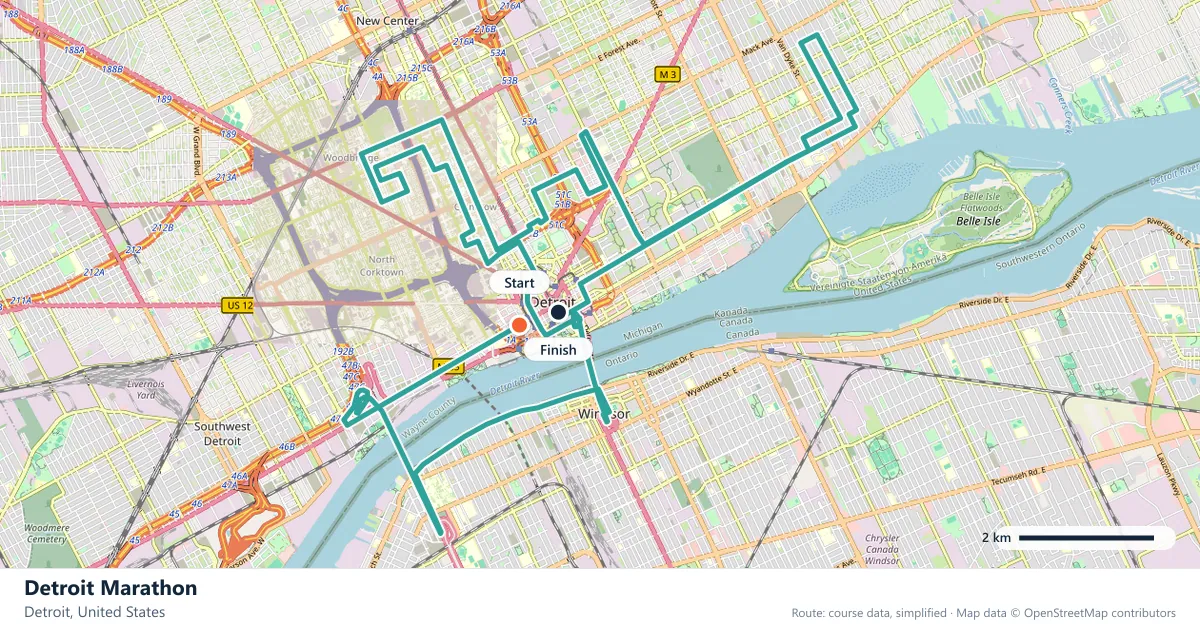
Where does the Detroit Marathon run?
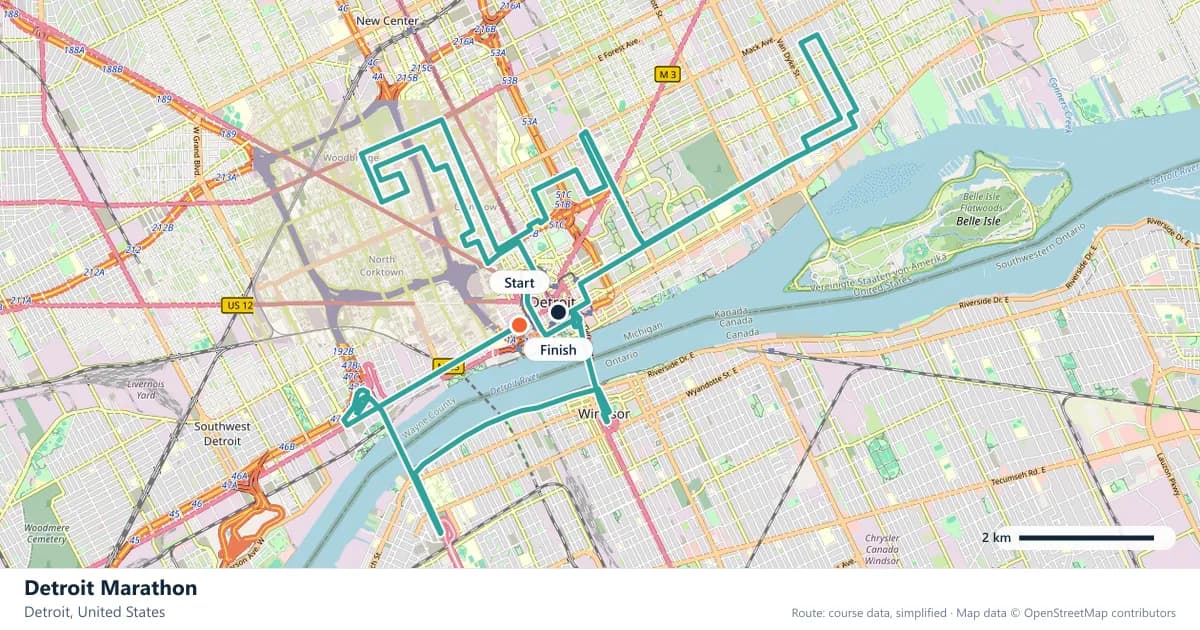
Interactive map
The trace follows the organizer's published course, simplified for the screen: the orange dot is the start, the dark dot the finish. Scroll to zoom, drag to pan.
What is the Detroit Marathon course like?
The only marathon that crosses an international border mid-race: over the Ambassador Bridge into Windsor, back through the tunnel into Detroit. Flat, fast and unlike anything else.
- Next edition
- October 2027 (expected)
- Elevation gain
- 95 m
- Profile
- Flat
- First run
- —
Course guide
Detroit's marathon is defined by a piece of geography no other race can copy. The course leaves the United States over the Ambassador Bridge, drops into Windsor, Ontario, and returns through the tunnel under the river. It is the only marathon that crosses an international border mid-race, and the crossing shapes the whole day.
The 2026 race is on Sunday 18 October. There is very little climbing — about 95 metres in total — and the Ambassador Bridge provides the only real ascent. That makes Detroit a fast course, and it is equally usable as a first marathon, provided you are ready for a morning that involves two countries.
Detroit's skyline frames the opening miles, and the return through the tunnel brings the race back into the city. The border is the headline; the flat streets make the times.
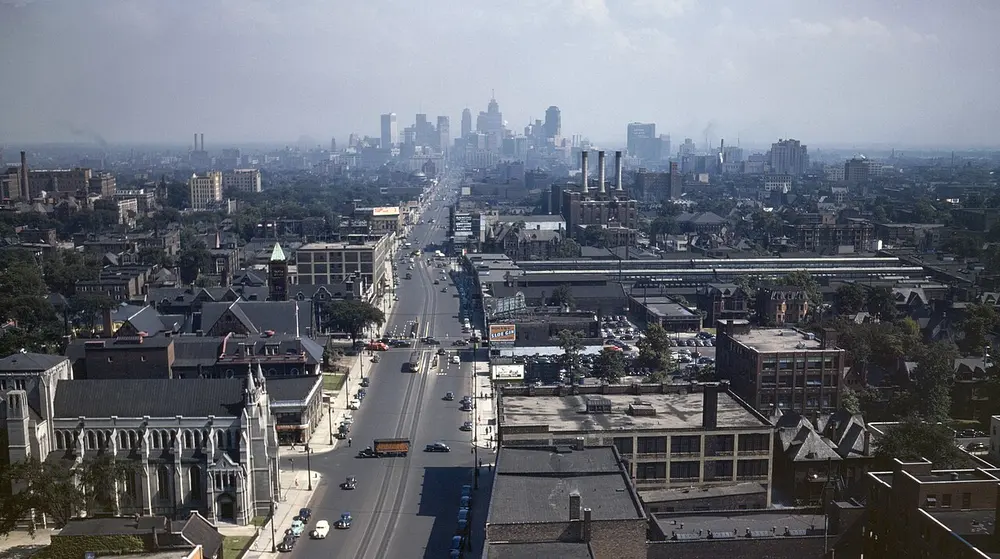
Detroit Skyline 1942d. Photo: Arthur S. Siegel / Wikimedia Commons, Public domain.
The course
The race begins in Detroit and heads for the Ambassador Bridge. The approach is the one sustained climb of the day: the road rises to the bridge deck, the river opens up below, and the skyline shifts behind you. It is not a long climb, but it arrives early, when the field is still dense, and it is steep enough to remind you that the flat profile is an average rather than a promise.
Windsor is the middle act. The course crosses the border and runs through the Canadian city before turning back toward the river and the tunnel. The tunnel is enclosed and dark, and it can feel disorienting after the open bridge. Hold your rhythm and use the exit as a reset rather than a place to surge.
The final miles are pure Detroit street running. With the border behind you, the course settles back into the flat grid and the finish comes without another significant rise. The bridge is the only place where the climbing changes how you run.

Skyline of Detroit, Michigan from S 2014-12. Photo: Crisco 1492 / Wikimedia Commons, CC BY-SA 4.0.
Bridge, tunnel, border
The Ambassador Bridge is the race's signature climb and its signature view. The deck sits high above the Detroit River, and the crossing is more exposed than the rest of the course. If it is windy, the bridge is where you will feel it; if it is clear, it is where the race will look its best. Keep the effort controlled. The descent into Windsor is not a free recovery.
The tunnel is the opposite experience: dark, enclosed and oddly quiet after the bridge. It compresses the field, so do not try to make up time in there. Treat it as a corridor between two halves of the race.
The border itself makes Detroit unique. The crossing is managed as part of the event, and runners should follow the organiser's instructions rather than improvising. Read them before you travel.
Flat miles and a fast clock
A marathon with 95 metres of climbing is a marathon with very little to interrupt the pace. The bridge provides a short, sharp effort, but the rest of the route is flat city street, and flat city street is where fast times are made. The course does not punish an ambitious start with a hill; it waits until the last 10 kilometres and then asks whether the pace was honest.
That is the central tactical problem in Detroit. The opening miles can feel effortless, the bridge adds a spike of effort that passes quickly, and the return through Windsor and the tunnel can lull you into thinking the race is already won. The final flat miles are where the bill arrives. Run the first half at a pace you could hold without the bridge.
The course adds to the temptation. Fast courses attract fast runners, and the early kilometres can become a procession. Ignore the company and run your own race. The course will give you a chance at a quick time; it will not give you a second chance at pacing.
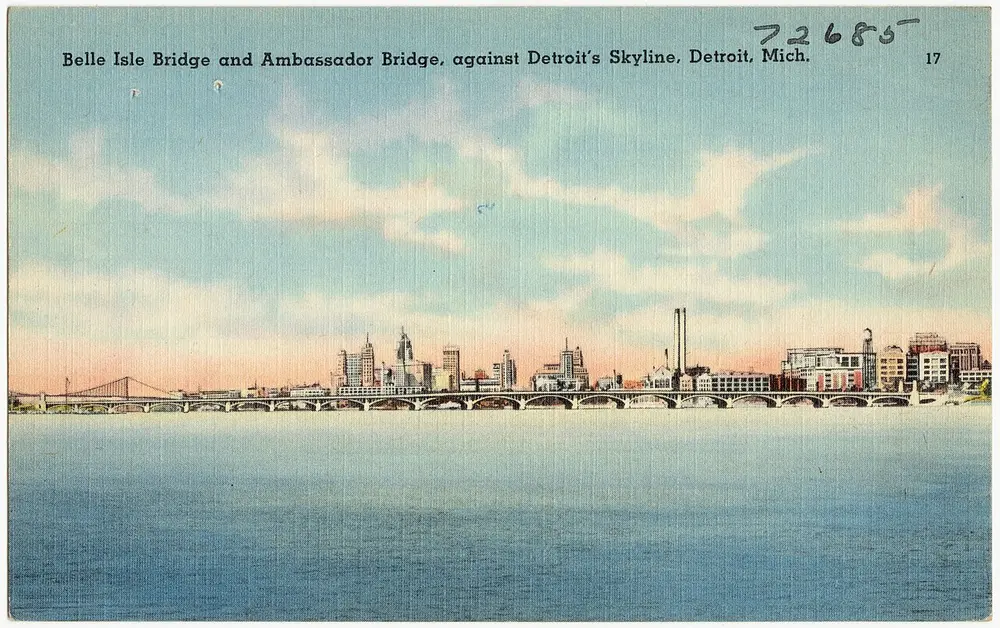
Belle Isle Bridge and Ambassador Bridge, against Detroit's Skyline, Detroit, Mich (72685). Photo: Tichnor Brothers, Publisher / Wikimedia Commons, Public domain.
Planning the crossing
A border race needs more planning than a normal marathon. The start and finish are in Detroit, but the middle of the day is in Canada, and the event's crossing arrangements are not optional. Read the organiser's instructions, allow more time than usual in the morning, and treat the border as part of the race.
The upside of that complexity is a course that feels like an event. Detroit and Windsor share a river and a history, and the marathon uses both. The bridge gives the race a skyline moment, the tunnel a strange, enclosed interlude, and the return to Detroit a finish that feels earned.
For runners chasing a time, the course is quick enough to justify the trip; the border is simply part of the cost. First-timers get a flat route, but they should sort out travel and the crossing plan before race week.
Frequently asked questions
Answers to the questions runners ask before entering, drawn from this race's course guide and the directory's own data — the sources behind them are listed below.
When is the Detroit Marathon in 2026?
The race is expected in October 2027, with the course crossing into Canada and back.
Is the Detroit Marathon flat?
Yes. The course gains about 95 metres, with the Ambassador Bridge the only real ascent. The rest is flat city street and tunnel, which is why the race is regarded as fast.
Is Detroit good for a personal best?
The course is suited to fast times. The flat profile and limited climbing give runners a fair chance, provided they control the bridge and do not lose rhythm in the tunnel. Conditions and pacing still decide the outcome.
Is the Detroit Marathon suitable for a first marathon?
Yes, with a caveat. The flat course is forgiving, but the international crossing makes the morning more complicated than a standard city race. First-timers should read the organiser's instructions and allow extra time.
Where does the Detroit Marathon cross the border?
The route leaves Detroit over the Ambassador Bridge into Windsor, Ontario, and returns to Detroit through the tunnel. It is the only marathon that crosses an international border mid-race.
What is the hardest part of the Detroit Marathon course?
The bridge approach is the only sustained climb, and the tunnel is the most disorienting section. The final flat miles are where an over-fast start becomes visible.
More marathons in United States
More marathons in Americas
Sources for this page
What each source below is used for on this page, and where to check this race yourself.
- World Athletics — the label calendar and the road-race regulations. Used to check whether the race holds a World Athletics label, and its elite competition details.
- AIMS — the international course-measurement standard behind the 42.195 km distance, and the AIMS race calendar.
- The organizer's own publications — course maps, race handbooks and published results. The date, course character and climbing on this page are compiled from them and re-checked each season.
Where do these facts come from?
Dates, course type, climbing and time limits are compiled from the organizer's publications and re-checked each season; elevation is an estimate of total climbing rather than a survey figure. Always confirm race-day details with the organizer before making plans.
Last reviewed 27 October 2026