
Denver Marathon
The Denver Marathon is a May race run at a mile high, through the city's parks and river trails with the Rockies on the skyline. The next edition is on 16 May 2027.
By Global Marathon Routes editorial team · Last reviewed 27 October 2026
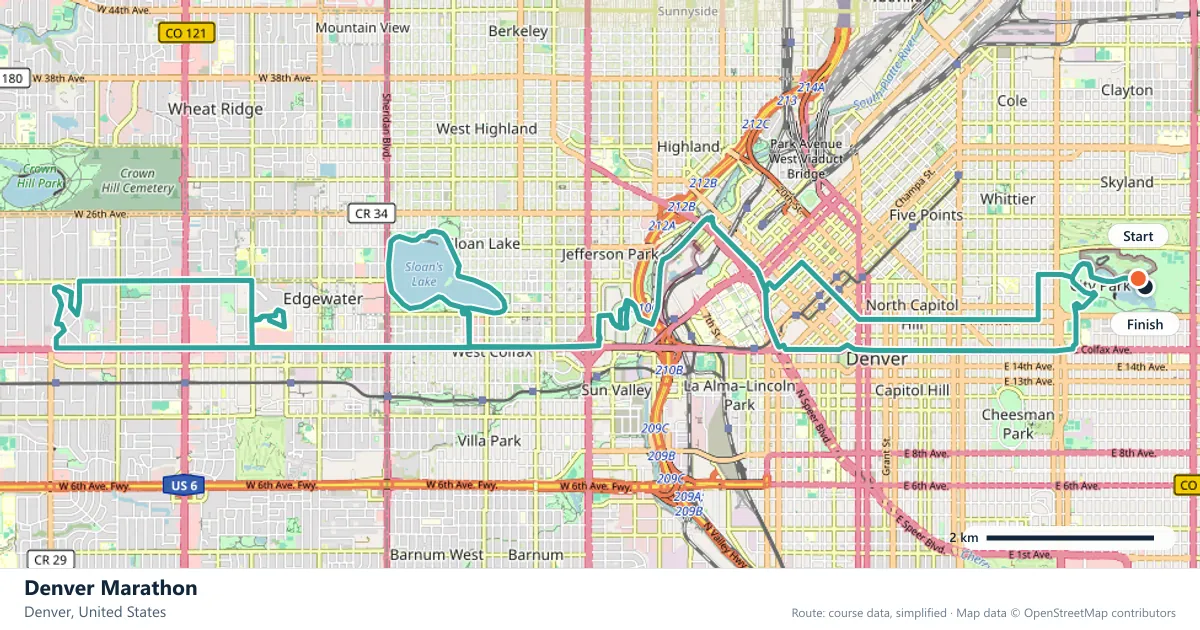
Where does the Denver Marathon run?
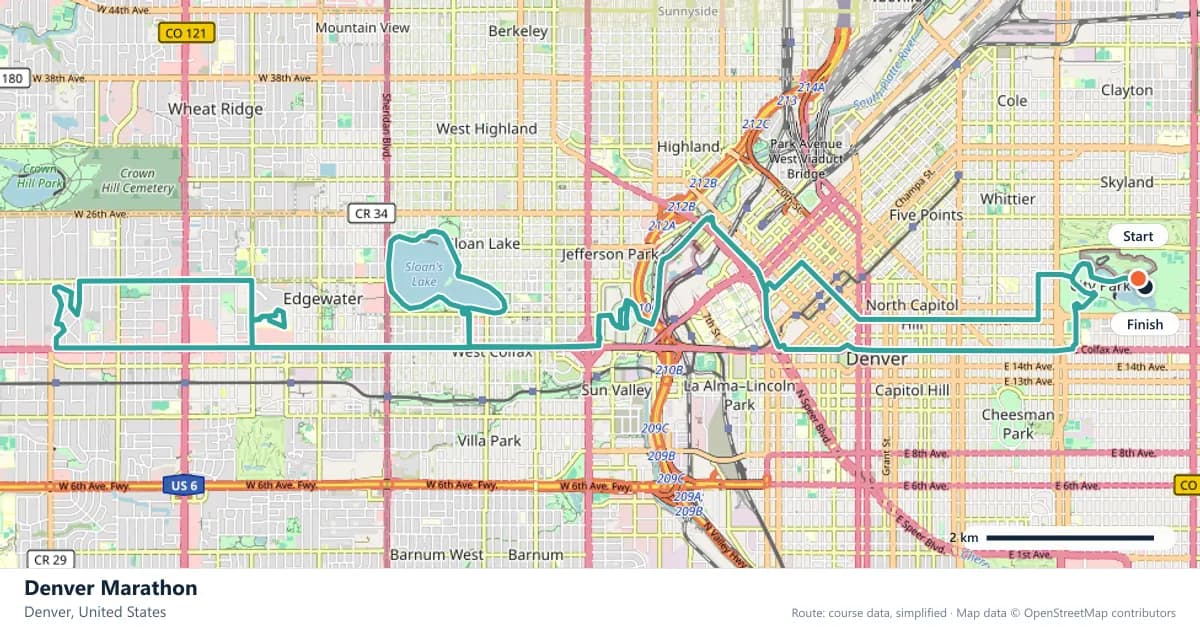
Interactive map
The trace follows the organizer's published course, simplified for the screen: the orange dot is the start, the dark dot the finish. Scroll to zoom, drag to pan.
What is the Denver Marathon course like?
A mile-high marathon through Denver's parks and river trails, with the Rockies on the skyline. The altitude is the main obstacle; the course itself rolls gently.
- Next edition
- 16 May 2027
- Elevation gain
- 215 m
- Profile
- Undulating
- First run
- —
Course guide
The Denver Marathon is a May race run at a mile high, through the city's parks and river trails with the Rockies on the skyline. The next edition is on 16 May 2027. The course itself rolls gently, with about 215 metres of climbing, but the altitude is the defining challenge.
Denver sits at roughly 1,600 metres above sea level, and runners from lower ground should expect effort to feel harder than the pace suggests. The profile is mild enough that the race looks straightforward on paper. The air is what makes it a different proposition in practice.
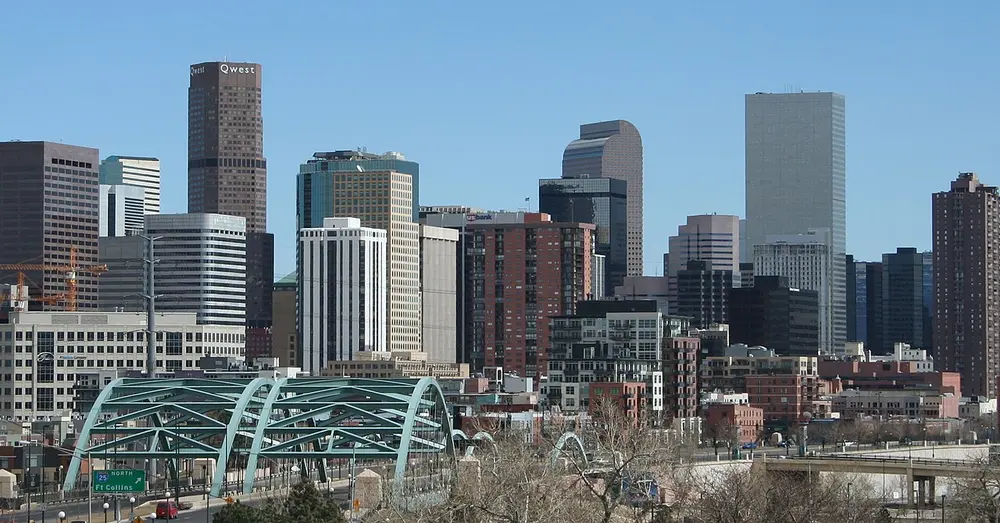
2006-03-26 Denver Skyline I-25 Speer. Photo: No machine-readable author provided. MattWright assumed (based on copyright claims). / Wikimedia Commons, CC BY-SA 2.5.
The course
The route threads through Denver's parks and follows the river trails, using green corridors rather than a single city-centre loop. The ground is mostly gentle, and the short rises are frequent but never sustained.
The climbing totals about 215 metres. What makes the race hard is the mile-high elevation: altitude is the main obstacle, and it is felt throughout the race. Runners who pace by effort rather than target pace cope better than those who try to hold sea-level splits.
The course's green corridors give the race a different feel from a downtown marathon. The city's parks and trails sit close to the centre, and the route moves between them without leaving the urban area. It is a race that shows Denver's outdoor culture as well as its skyline.
A mile above sea level
Denver's mile-high setting is not a marketing phrase; it is a measurable difference in the air. At this altitude the body takes in less oxygen with each breath, and the heart works harder to deliver the same amount of fuel. A pace that feels comfortable on arrival can feel demanding a few miles later.
The practical response is to arrive early if possible, start conservatively and accept that the first half may feel harder than the numbers suggest. Hydration matters too, because the air is dry and the effort is high. Runners should not wait until they are thirsty to drink.
Altitude affects everyone differently. Some runners adapt quickly; others feel the difference for the whole race. The course does not offer a climb to explain the extra effort, which can be psychologically confusing. Knowing that the thin air is the cause helps.
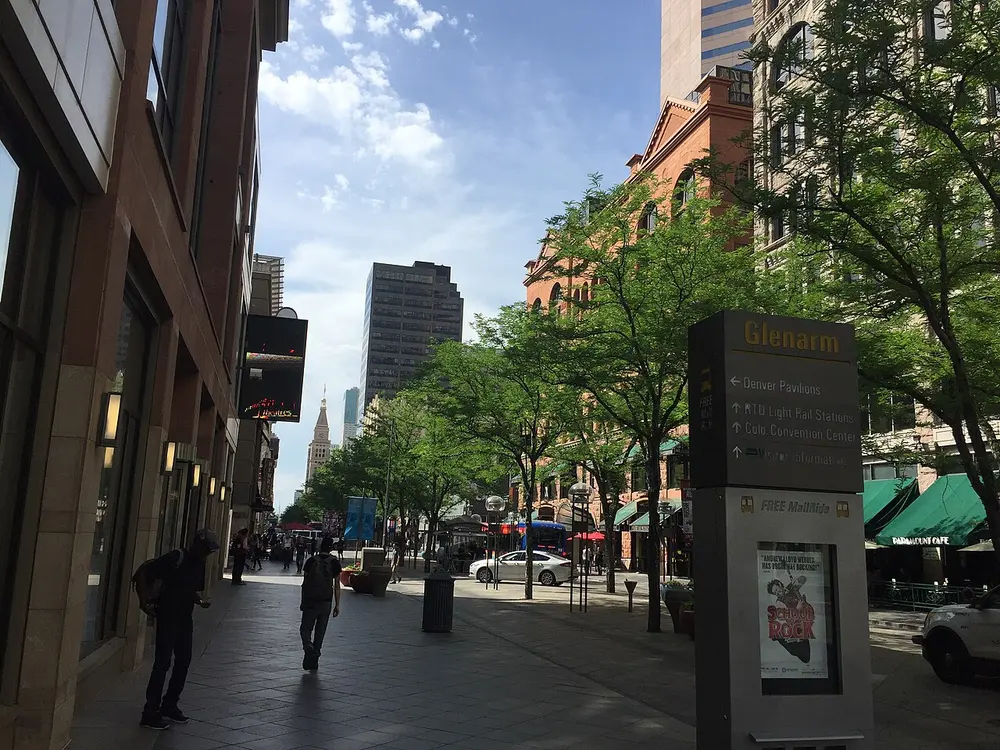
A street in Denver. Photo: Mangosapiens / Wikimedia Commons, CC BY-SA 4.0.
Parks, trails and the skyline
Denver's park system and river trails are central to the city's running life, and the marathon uses them as its route. The South Platte River and Cherry Creek corridors give the course green edges, and the parks provide open space in the middle of the city.
The trails can be narrower than city streets. Runners should be patient early, especially when the route moves from roads onto paths. The change of width is part of the course's character, but it is not a place to fight for position.
The skyline is the other backdrop. Denver's downtown rises in front of the Rockies, and the mountains are visible on clear days. The contrast between the city and the Front Range is part of what makes the race memorable, even when the altitude is making the miles feel long.
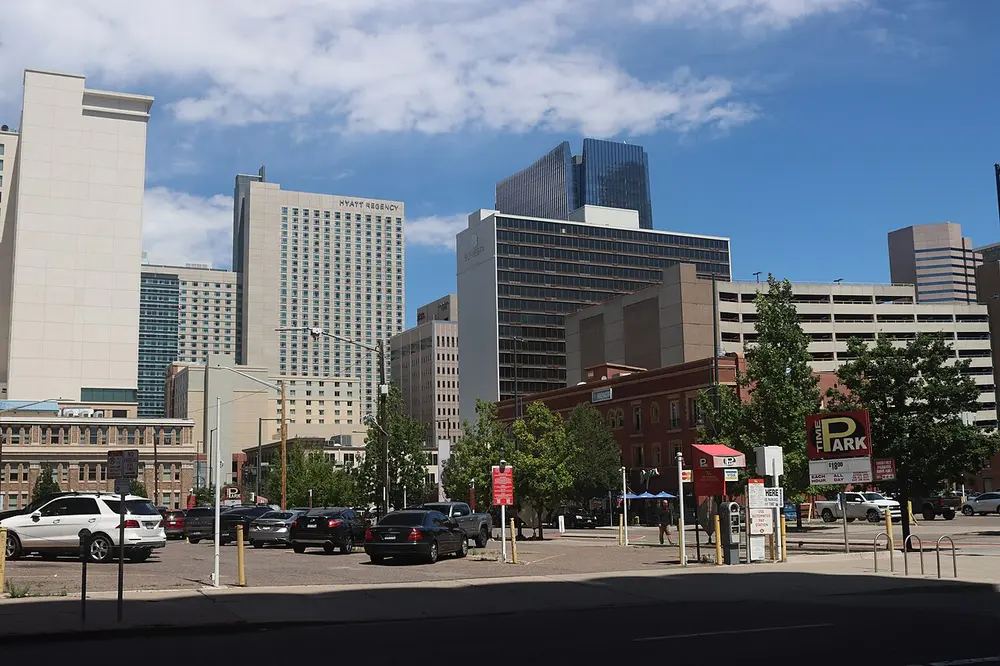
Denver skyline. Photo: thirdsphoto / Wikimedia Commons, CC BY 4.0.
Adjusting to the air
- The altitude. Denver is a mile-high city, and the thinner air is the main obstacle. Start slower than your sea-level instincts suggest.
- The gentle rolling. About 215 metres of climbing is modest, but the short rises are constant. They reward even splits.
- The river trails. Paths beside the water can be narrower than roads and can bunch the field. Be patient early.
- The parks and trails. The route uses green corridors rather than a single city loop, so the scenery changes and the field can spread. Use the calmer sections to hold your rhythm.
Frequently asked questions
Answers to the questions runners ask before entering, drawn from this race's course guide and the directory's own data — the sources behind them are listed below.
When is the Denver Marathon?
The 2027 edition is on 16 May. It is a May race, and the organiser publishes the start arrangements and race-weekend details closer to the event.
Is the Denver Marathon a hilly course?
Not in the usual sense. It climbs about 215 metres in short rises and has no sustained ascent, so the profile is undulating. The altitude is the separate difficulty, and it makes the race feel harder than the elevation total suggests.
Is it suitable for a first marathon?
The course is not a gentle introduction to the distance. The altitude makes it more demanding than a sea-level city marathon, and a first-timer should arrive early enough to adjust and plan a conservative pace. The decision depends on how well you handle altitude.
Is it a good course for a personal best?
The altitude is the reason it is not a personal-best course for most runners from lower elevations. The gentle profile helps, but it does not cancel out the thin air. A time that would be comfortable at sea level may feel much harder here.
Where is the marathon run?
The race is run in Denver, Colorado, through the city's parks and along its river trails, with the Rocky Mountains on the skyline. The route stays within the city rather than climbing into the foothills.
Why is altitude such a factor?
Denver sits at roughly 1,600 metres above sea level. At that height the air is thinner, so each breath delivers less oxygen and the same pace demands more effort. Runners from lower ground usually notice it most in the second half.
More marathons in United States
More marathons in Americas
Sources for this page
What each source below is used for on this page, and where to check this race yourself.
- World Athletics — the label calendar and the road-race regulations. Used to check whether the race holds a World Athletics label, and its elite competition details.
- AIMS — the international course-measurement standard behind the 42.195 km distance, and the AIMS race calendar.
- The organizer's own publications — course maps, race handbooks and published results. The date, course character and climbing on this page are compiled from them and re-checked each season.
Where do these facts come from?
Dates, course type, climbing and time limits are compiled from the organizer's publications and re-checked each season; elevation is an estimate of total climbing rather than a survey figure. Always confirm race-day details with the organizer before making plans.
Last reviewed 27 October 2026