
Charlotte Marathon
Charlotte's marathon is a November tour of uptown and the surrounding neighbourhoods, with a long climb saved for the return into town.
By Global Marathon Routes editorial team · Last reviewed 27 October 2026
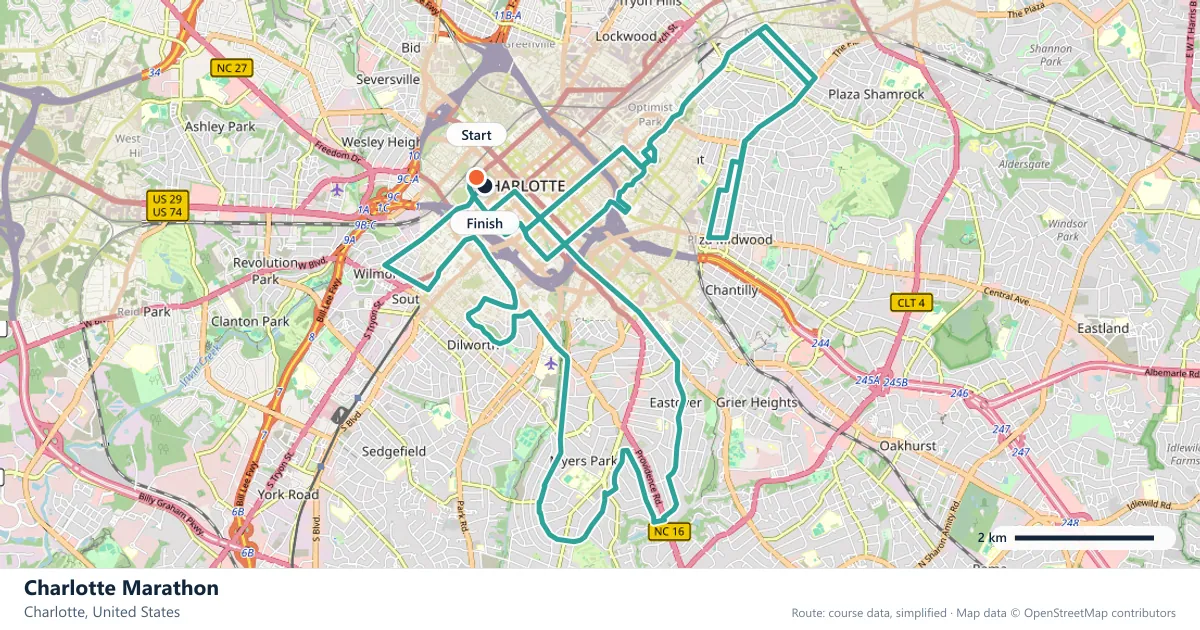
Where does the Charlotte Marathon run?
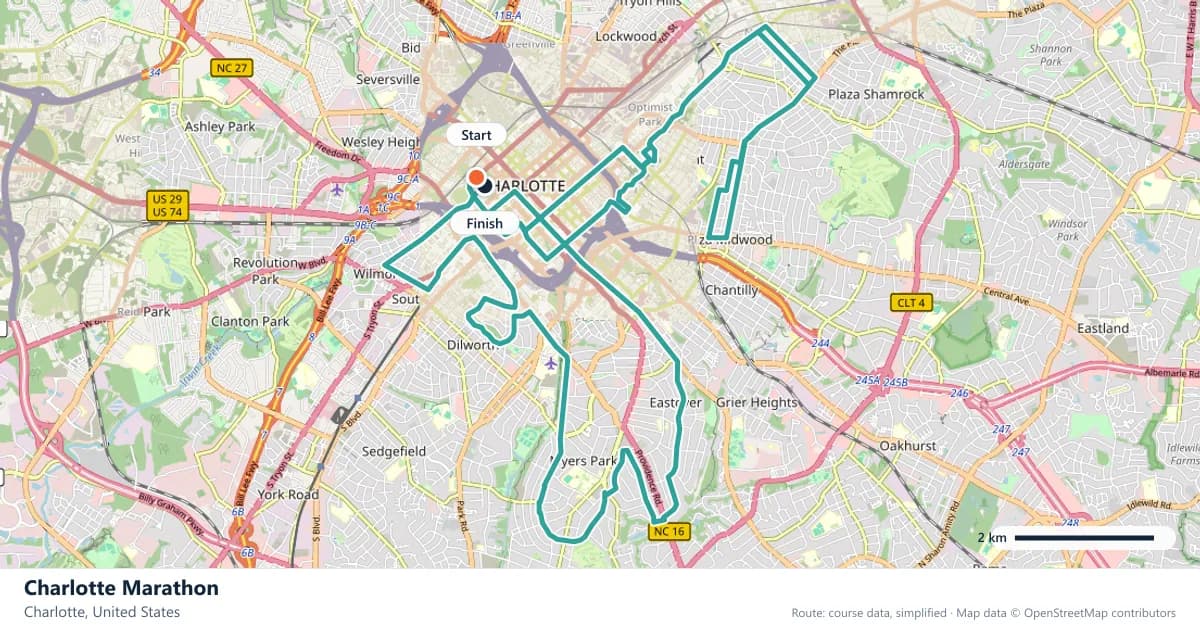
Interactive map
The trace follows the organizer's published course, simplified for the screen: the orange dot is the start, the dark dot the finish. Scroll to zoom, drag to pan.
What is the Charlotte Marathon course like?
A November race through uptown Charlotte and its surrounding neighbourhoods, with a long climb on the way back into town. Rolling the whole way.
- Next edition
- 14 November 2026
- Elevation gain
- 330 m
- Profile
- Hilly
- First run
- —
Course guide
Charlotte's marathon is a November tour of uptown and the surrounding neighbourhoods, with a long climb saved for the return into town. The next edition is on 14 November 2026, and the course rolls the whole way. Around 330 metres of gain makes it a race for steady effort rather than flat-course splits.
Charlotte's course is a city tour with a sting in the tail. The route moves through the centre and out into the surrounding neighbourhoods, then comes back into town on a long ascent. Runners who have trained on rolling roads will handle it better than those whose preparation has been entirely flat.
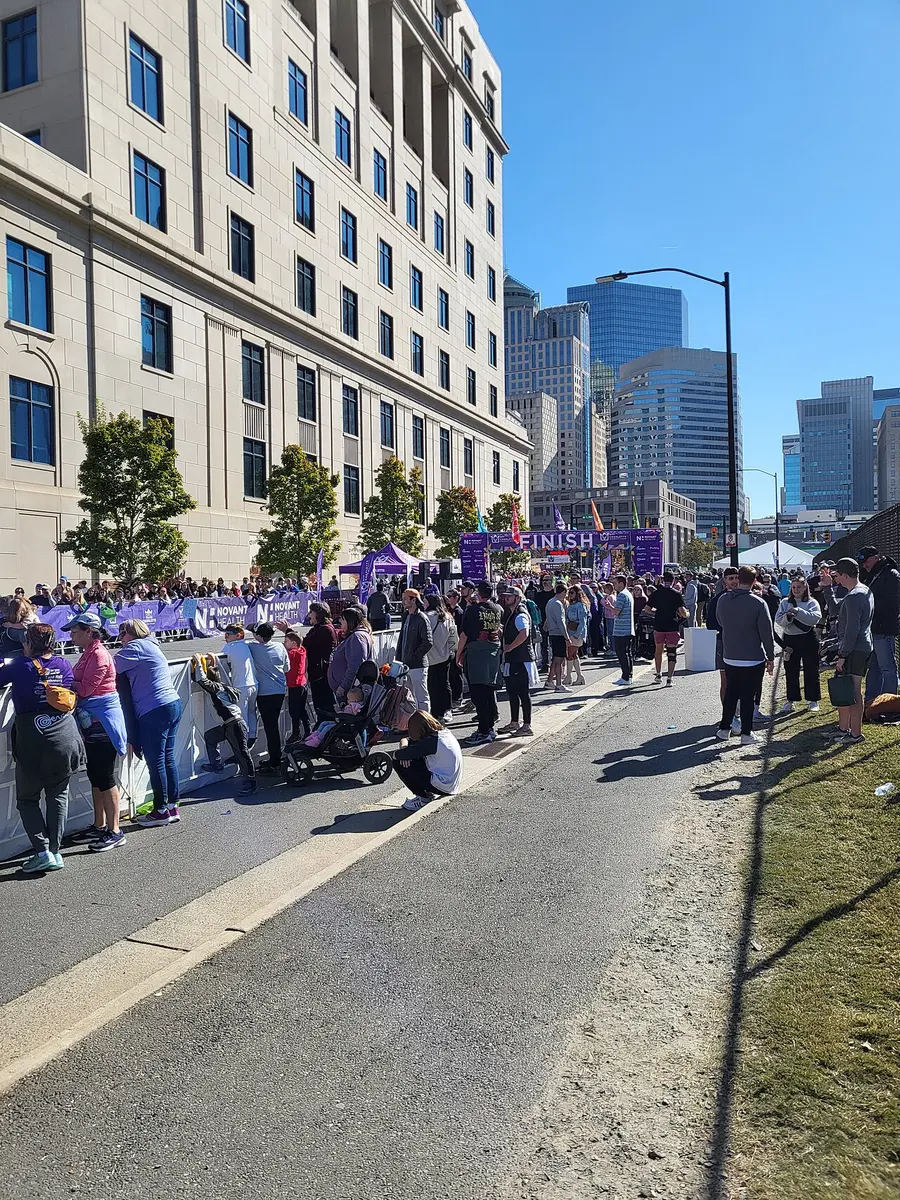
Novant Health Charlotte Marathon Finish November 2023. Photo: City Dweller 2 / Wikimedia Commons, CC BY-SA 4.0.
The course
The race works outward from uptown Charlotte into the surrounding neighbourhoods before returning to the centre. The profile is hilly, with about 330 metres of climbing, and a long climb waits on the way back into town. That final rise is the defining feature: it arrives late, when the legs are least able to absorb it.
The rolling terrain means there is rarely a long stretch of flat running. Short climbs and descents follow one another, and the accumulated effort is greater than the 330 metres suggests. The long climb back into town is the place to spend whatever you have left, not the place to discover you have nothing.
The route's shape also means the race changes character as it goes. The opening miles through the city have the energy of a downtown start; the middle section settles into neighbourhood streets; the return brings the climb and the finish. Runners who pace the first half with the finish in mind will get the most from the course.
Uptown and the surrounding neighbourhoods
Uptown is Charlotte's commercial heart, a cluster of towers and streets that sits at the centre of the route. The race uses the city's grid to move from the centre into the neighbourhoods, and the change of scale is part of the experience. The skyline gives the opening a sense of occasion; the residential streets give the middle of the race its quieter rhythm.
Charlotte's neighbourhoods are not flat suburbs. The city's terrain rolls away from uptown, and the course follows that shape rather than avoiding it. Runners should expect the ground to move under them for most of the morning, even when the change is gentle enough to miss.
The city's growth is visible along the route. Charlotte is one of the faster-growing metro areas in the United States, and the mix of new development and older streets gives the marathon a contemporary feel. It is a course that shows a working city rather than a preserved tourist centre.
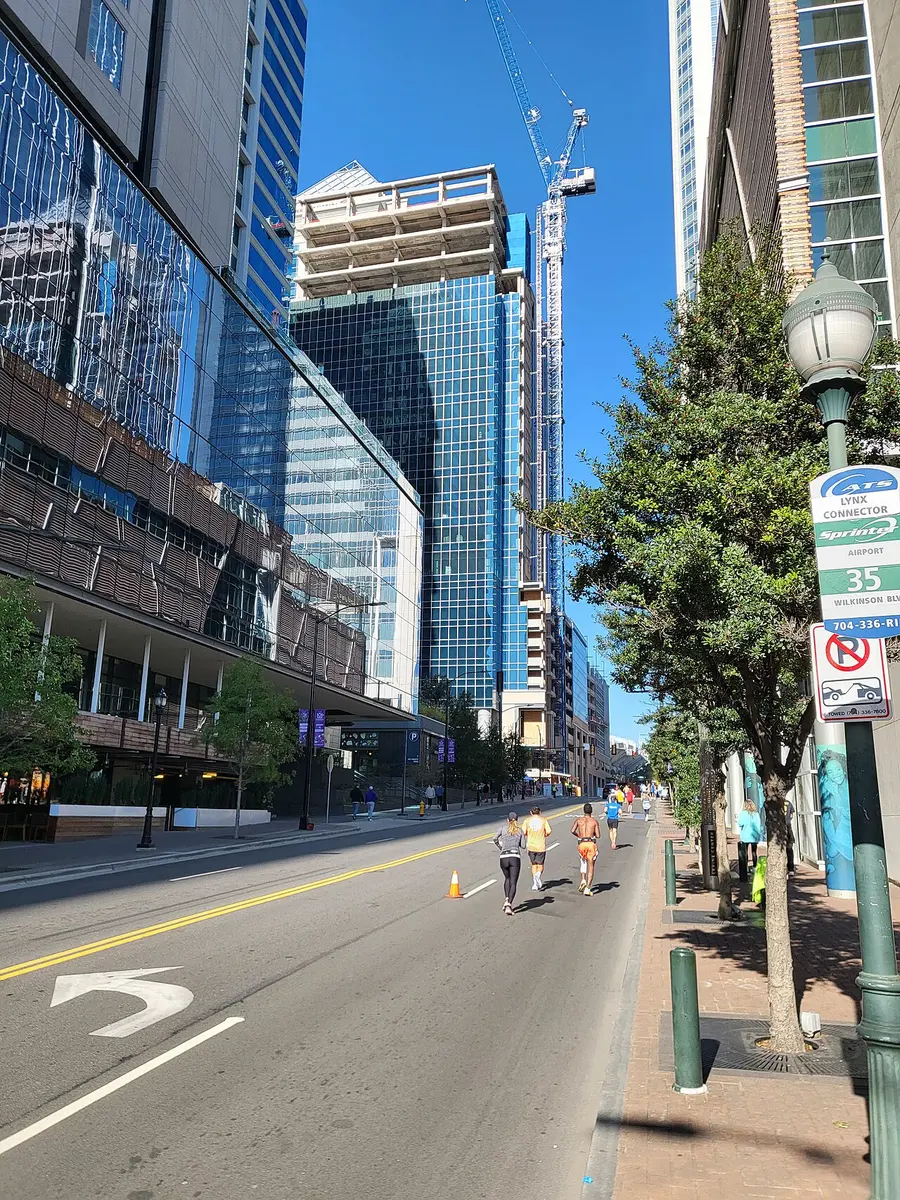
Novant Health Charlotte Marathon along East Brooklyn Village November 2023. Photo: City Dweller 2 / Wikimedia Commons, CC BY-SA 4.0.
The climb home
The long climb back into town is the race's signature. It is not a mountain pass, but it comes at the point where the accumulated miles have already taken something out of the legs. Runners who have been conservative can use it to pass people; runners who have been optimistic often find it is where the day turns.
The climb also changes the psychology of the final miles. Instead of a flat run to the line, there is a sustained effort that asks for focus. Breaking it into smaller sections, using the descents between rises to recover, and keeping the cadence steady are more useful than trying to power up it in one push.
The finish rewards that patience. After the climb, the course returns to the city centre and the atmosphere lifts. It is a finish that feels earned, even if the clock is not what you hoped for at the start.
Managing the return
- The climb back into town. A long ascent late in the race is the course's defining challenge. Keep enough in reserve to climb it strongly.
- Rolling throughout. The 330 metres of gain is spread across the route, with few flat sections to recover on.
- Pacing the first half. Fresh legs make the early rollers feel easier than they are; the second half will collect the debt.
- A realistic target. Set your goal around the terrain. The course rewards a controlled finish more than an ambitious early pace.
Frequently asked questions
Answers to the questions runners ask before entering, drawn from this race's course guide and the directory's own data — the sources behind them are listed below.
When is the Charlotte Marathon?
The 2026 edition is on 14 November. It is a mid-November race in uptown Charlotte, and the organiser publishes the start arrangements and race-weekend details closer to the event.
Is the Charlotte Marathon a flat or hilly course?
It is hilly, with about 330 metres of climbing. The course is rolling the whole way, with a long climb on the return into town. There is little sustained flat running.
Is it suitable for a first marathon?
It can work as a first marathon for a runner who trains on rolling terrain. The course is demanding but not extreme, and the return climb is the main test. Build long runs on hills and start conservatively.
Is it a personal-best course?
The constant rolling and the long climb back into uptown make a personal best difficult. Runners chasing a time should expect the terrain to cost more than the elevation total suggests.
Where is the marathon run?
It is run in Charlotte, North Carolina, through uptown and the surrounding neighbourhoods. The course returns to the centre on a long climb.
What is the toughest part of the course?
The climb back into town, late in the race, is the defining challenge. It arrives after miles of rolling terrain and asks for strength when the legs are tired. Planning the first half around it is the best preparation.
More marathons in United States
More marathons in Americas
Sources for this page
What each source below is used for on this page, and where to check this race yourself.
- World Athletics — the label calendar and the road-race regulations. Used to check whether the race holds a World Athletics label, and its elite competition details.
- AIMS — the international course-measurement standard behind the 42.195 km distance, and the AIMS race calendar.
- The organizer's own publications — course maps, race handbooks and published results. The date, course character and climbing on this page are compiled from them and re-checked each season.
Where do these facts come from?
Dates, course type, climbing and time limits are compiled from the organizer's publications and re-checked each season; elevation is an estimate of total climbing rather than a survey figure. Always confirm race-day details with the organizer before making plans.
Last reviewed 27 October 2026