
Mt. Desert Island Marathon
The Mt. Desert Island Marathon is a small race with a large setting. It is run on Mount Desert Island, beside Acadia National Park, each October, and for parts of the course the Atlantic is visible…
By Global Marathon Routes editorial team · Last reviewed 27 October 2026
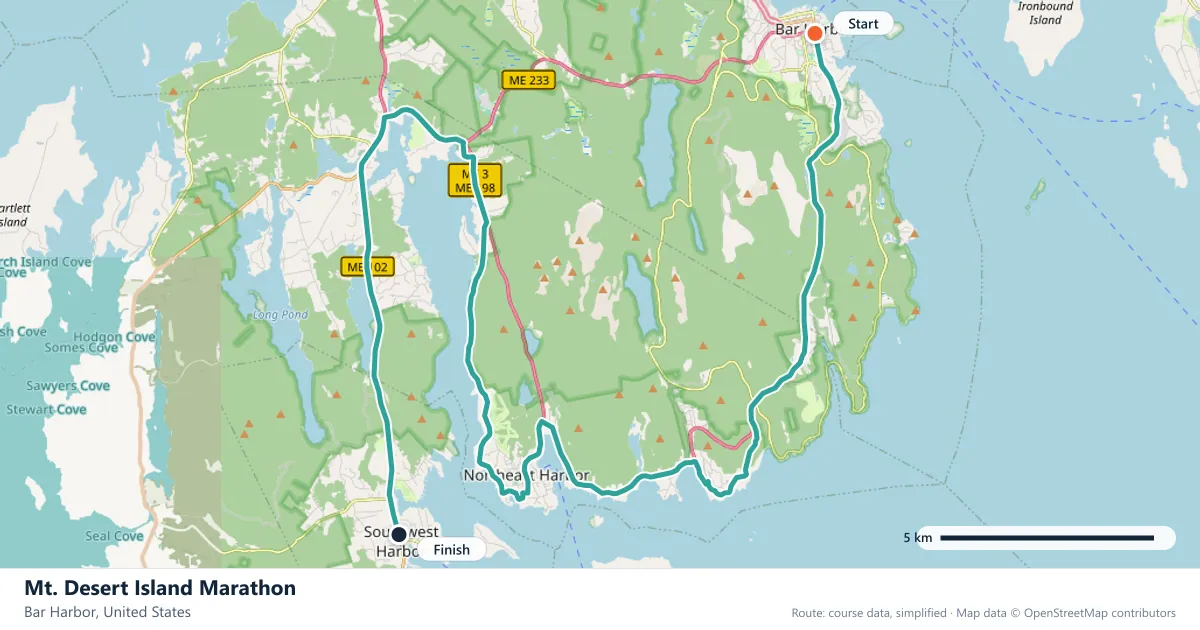
Where does the Mt. Desert Island Marathon run?
Interactive map
The trace follows the organizer's published course, simplified for the screen: the orange dot is the start, the dark dot the finish. Scroll to zoom, drag to pan.
What is the Mt. Desert Island Marathon course like?
A small, hard marathon on Mount Desert Island beside Acadia National Park, with the Atlantic on both sides for parts of the course. Around 560 metres of climbing on quiet coastal roads.
- Next edition
- October 2027 (expected)
- Elevation gain
- 560 m
- Profile
- Hilly
- First run
- —
Course guide
The Mt. Desert Island Marathon is a small race with a large setting. It is run on Mount Desert Island, beside Acadia National Park, each October, and for parts of the course the Atlantic is visible on both sides. About 560 metres of climbing on quiet coastal roads makes it a hard day out.
This is not a city marathon. The field is small, the roads are quiet, and the race is defined by the coast and the climbs rather than by crowds or street-level landmarks. The profile is hilly, with the gain spread across the island, and the Atlantic provides the company. Runners come for the landscape as much as for the time.
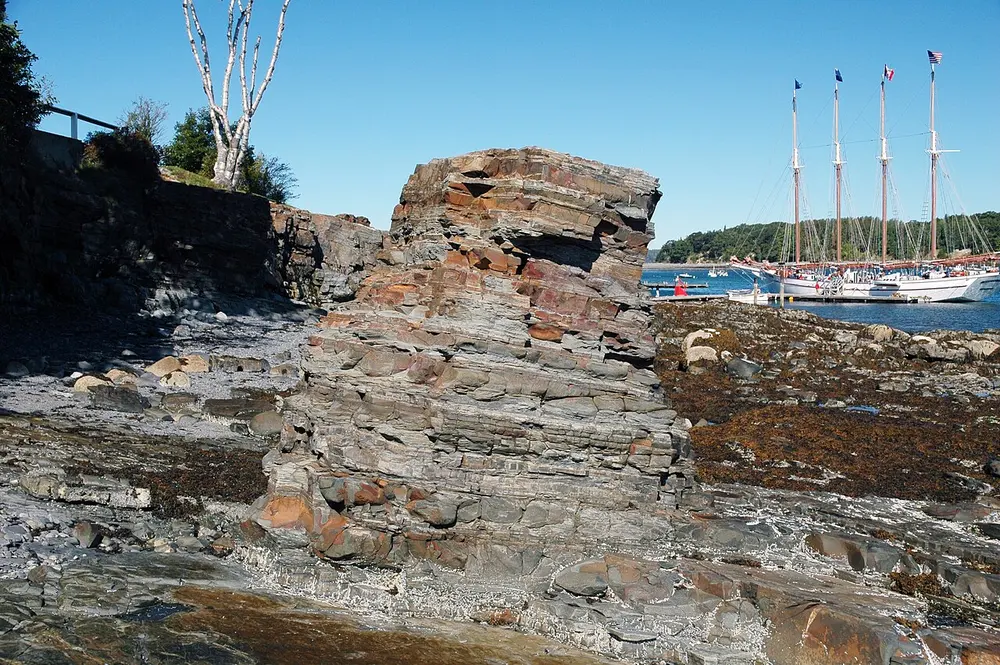
Bar Harbor Formation (Silurian-Devonian; Bar Harbor, Mt. Desert Island, Maine, USA) 12. Photo: James St. John / Wikimedia Commons, CC BY 2.0.
The course
The route stays on Mount Desert Island and uses quiet coastal roads, with the Atlantic close by for stretches of the race. The climbing is continuous rather than concentrated: about 560 metres in total, spread over the island's undulating terrain. There are few flat miles, and the open coastal setting gives the course a constant sense of exposure.
Because the field is small, runners spend much of the race alone or in small groups. That makes pacing discipline more important than at a big-city event, where the pack can carry you along. The reward is a marathon that feels like a long run along the edge of a national park rather than a mass event.
The course is not a loop. The start and finish are roughly 15 km apart, so race day involves more logistics than a city race based around a single square. Runners should read the organiser's instructions for the start, the finish and the transport in between before they book accommodation.
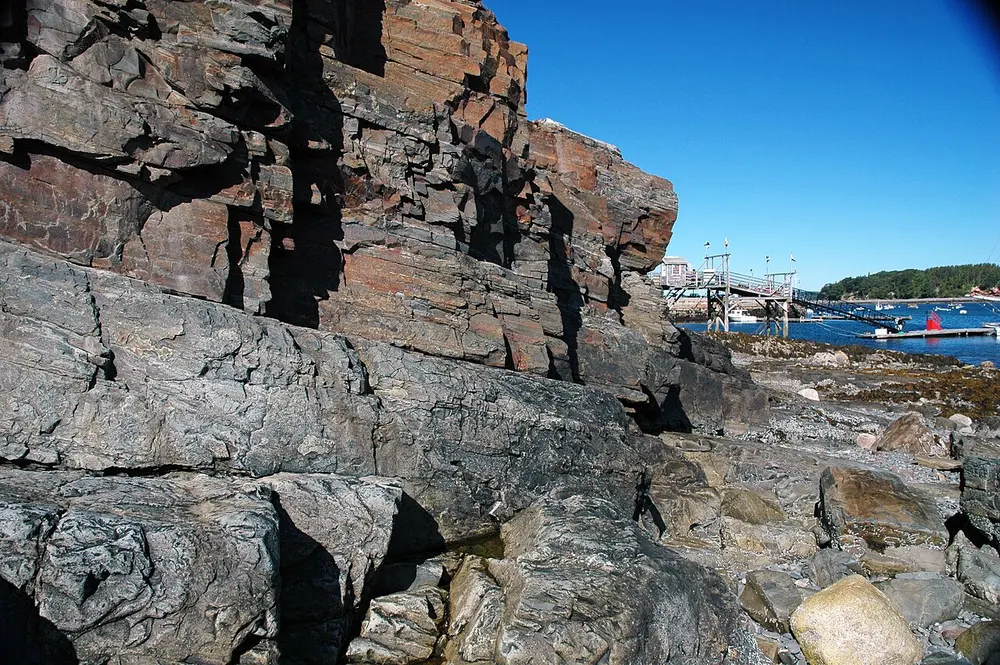
Bar Harbor Formation (Silurian-Devonian; Bar Harbor, Mt. Desert Island, Maine, USA) 9. Photo: James St. John / Wikimedia Commons, CC BY 2.0.
Acadia and the Atlantic
Mount Desert Island is dominated by Acadia National Park, and the park's granite ridges, spruce forest and rocky shoreline shape the whole visit. The marathon does not need to climb Cadillac Mountain to feel connected to that landscape; the coast is enough. On clear stretches, the water on both sides of the island gives the race its most distinctive quality.
The Atlantic is a stern companion. It opens the view and removes the shelter, and the coastal roads can feel exposed even when the weather seems calm in Bar Harbor.
October on the Maine coast is a transitional season. The summer crowds are gone, the light is lower, and the island feels quieter. It also means runners should check the forecast in the final week and bring layers that can be adjusted rather than a single rigid plan.
A small field on quiet roads
The small field changes the experience of racing. There is less jostling at the start, more space on the road and a greater chance of running alone for long stretches. For some runners that is the appeal: the race becomes a personal effort rather than a performance in front of a crowd.
It also means that pacing must come from within. Without a dense pack, it is easy to drift or to misjudge the early climbs. A watch and a clear plan matter more here than at a race where the surrounding runners do the pacing for you.
The low-key atmosphere extends to the finish. Runners who want a hard, beautiful morning with a small field will find exactly that.
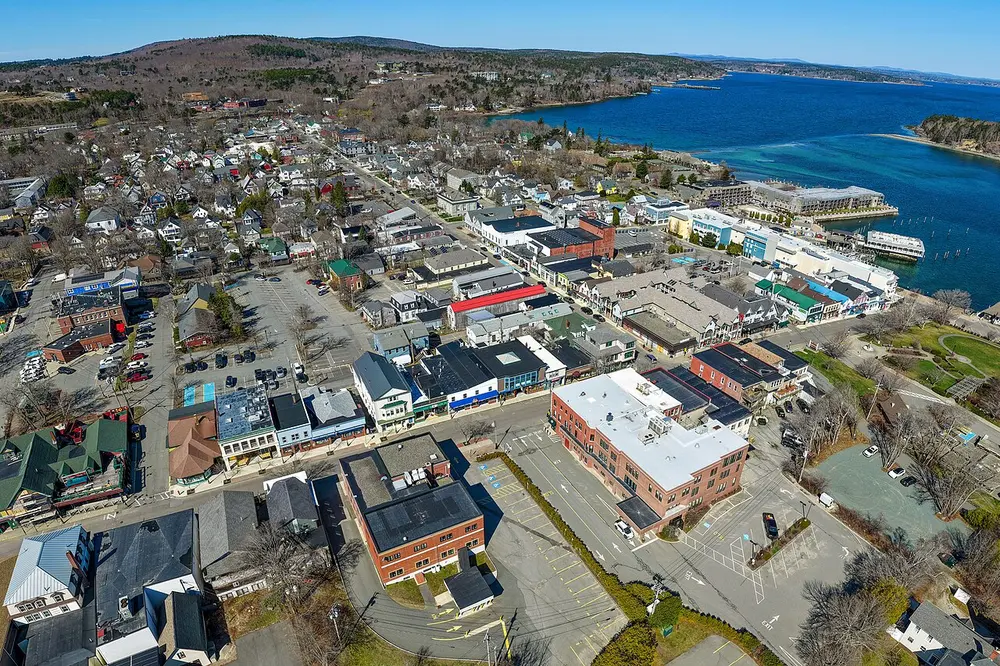
Bar Harbor, ME. Photo: Quintin Soloviev / Wikimedia Commons, CC BY 4.0.
Getting to the island
Mount Desert Island sits off the Maine coast, with Bar Harbor as its main town and the usual gateway to Acadia. Travel to the island takes planning, and the small race does not come with the transport infrastructure of a major marathon. Runners should allow more time than they would for a city event and confirm the race-day arrangements with the organiser.
Accommodation is another reason to plan early. The island is a seasonal destination, and October is still a popular time to visit Acadia. A place to stay near one end of the course simplifies part of the weekend, but not all of it.
The details that matter
- The climbing. At about 560 metres, this is a genuinely hilly marathon rather than a rolling one. Hill-specific training is worth more here than extra speed work.
- Running alone. The small field means long stretches without company. Be self-sufficient with pace and motivation.
- The coastal exposure. The Atlantic opens the view and removes the shelter. Wind can make a hilly course feel harder.
- The two ends. The course is not a loop, so know how you will reach the start and leave the finish before race morning.
Frequently asked questions
Answers to the questions runners ask before entering, drawn from this race's course guide and the directory's own data — the sources behind them are listed below.
When is the Mt. Desert Island Marathon?
The 2026 edition is on 18 October. It is a mid-October race on Mount Desert Island in Maine, and the organiser publishes the start arrangements and race-weekend details closer to the event.
Is the Mt. Desert Island Marathon a flat or hilly course?
It is hilly, with about 560 metres of climbing on quiet coastal roads. The gain is spread across the island rather than concentrated in a single climb, and there are few flat miles.
Where is the marathon run?
It is run on Mount Desert Island, beside Acadia National Park, with Bar Harbor as the host town. The course uses quiet coastal roads, with the Atlantic visible on both sides for parts of the route.
Is the course a loop?
No. The start and finish are roughly 15 km apart, so the race is a point-to-point route across the island. Runners should confirm the official start, finish and transport arrangements with the organiser.
What is the scenery like?
The course runs on quiet coastal roads with the Atlantic close by for much of the race. Acadia National Park lies alongside the island, and the route is defined by the coast rather than by city landmarks. It is the main reason many runners choose the race.
Is it a good race for a fast time?
The 560 metres of climbing and the exposed coastal roads make this a hard course, and the small field offers little help with pacing. It is a race to choose for the landscape and the challenge rather than for a fast time.
More marathons in United States
More marathons in Americas
Sources for this page
What each source below is used for on this page, and where to check this race yourself.
- World Athletics — the label calendar and the road-race regulations. Used to check whether the race holds a World Athletics label, and its elite competition details.
- AIMS — the international course-measurement standard behind the 42.195 km distance, and the AIMS race calendar.
- The organizer's own publications — course maps, race handbooks and published results. The date, course character and climbing on this page are compiled from them and re-checked each season.
Where do these facts come from?
Dates, course type, climbing and time limits are compiled from the organizer's publications and re-checked each season; elevation is an estimate of total climbing rather than a survey figure. Always confirm race-day details with the organizer before making plans.
Last reviewed 27 October 2026