
Austin Marathon
Austin's marathon is decided by how you spend the first half. The 2027 edition is on 14 February, and the route climbs into the hills west of downtown before turning back along the Colorado River.
By Global Marathon Routes editorial team · Last reviewed 27 October 2026
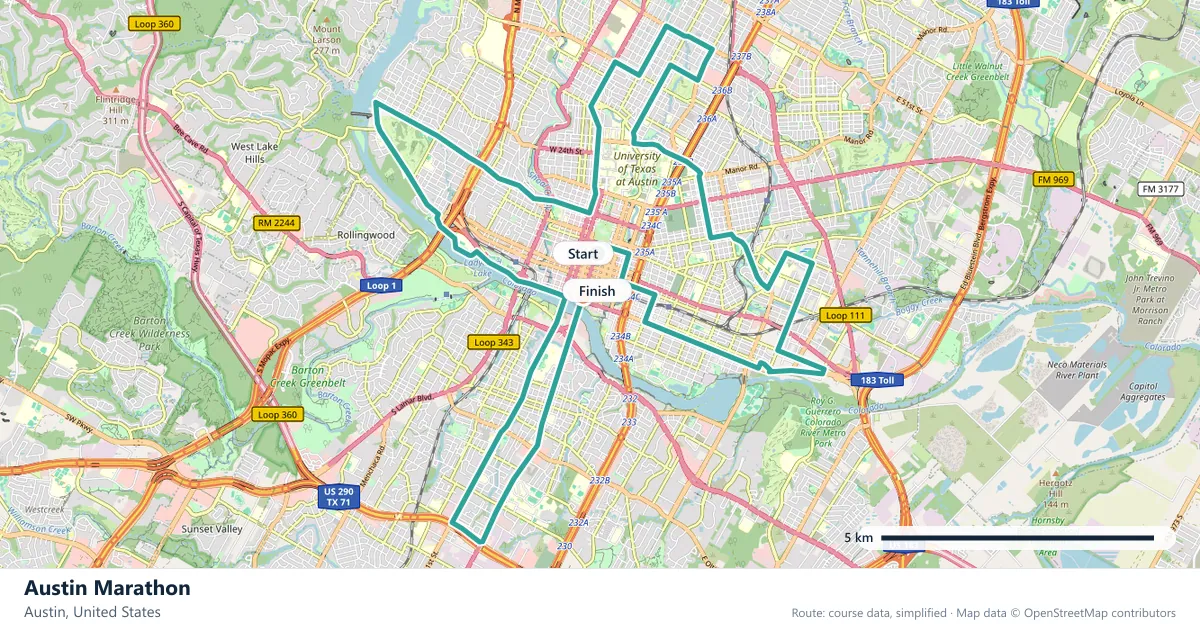
Where does the Austin Marathon run?
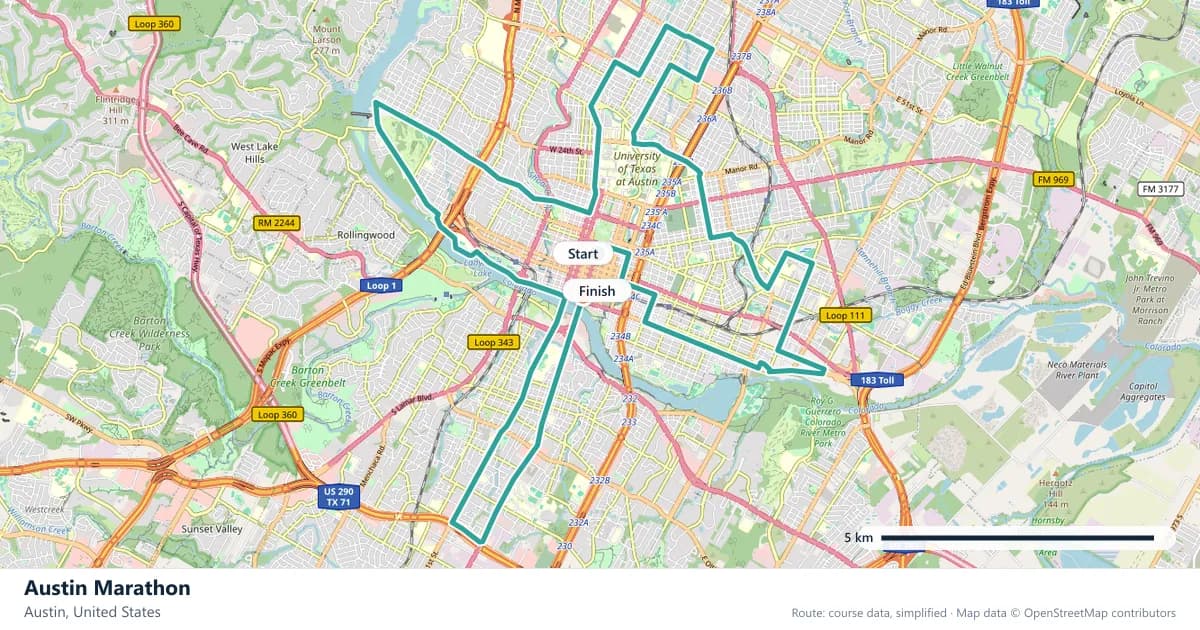
Interactive map
The trace follows the organizer's published course, simplified for the screen: the orange dot is the start, the dark dot the finish. Scroll to zoom, drag to pan.
What is the Austin Marathon course like?
A February race through the Texas capital, climbing through the hills west of downtown before the run back along the river. Hilly for the first half, quick for the second.
- Next edition
- 14 February 2027
- Elevation gain
- 319 m
- Profile
- Hilly
- First run
- —
Course guide
Austin's marathon is decided by how you spend the first half. The 2027 edition is on 14 February, and the route climbs into the hills west of downtown before turning back along the Colorado River. The profile is hilly, with about 319 metres of climbing, but the hard work is front-loaded and the second half gives runners a chance to move.
That shape is unusual for a city marathon. Most hilly courses save their sting for the closing 10 km; Austin asks for patience early, then offers flatter, quicker ground when the legs are already carrying the day's work. Runners who attack the western climbs often find that the river return becomes a damage-limitation exercise rather than a fast finish.
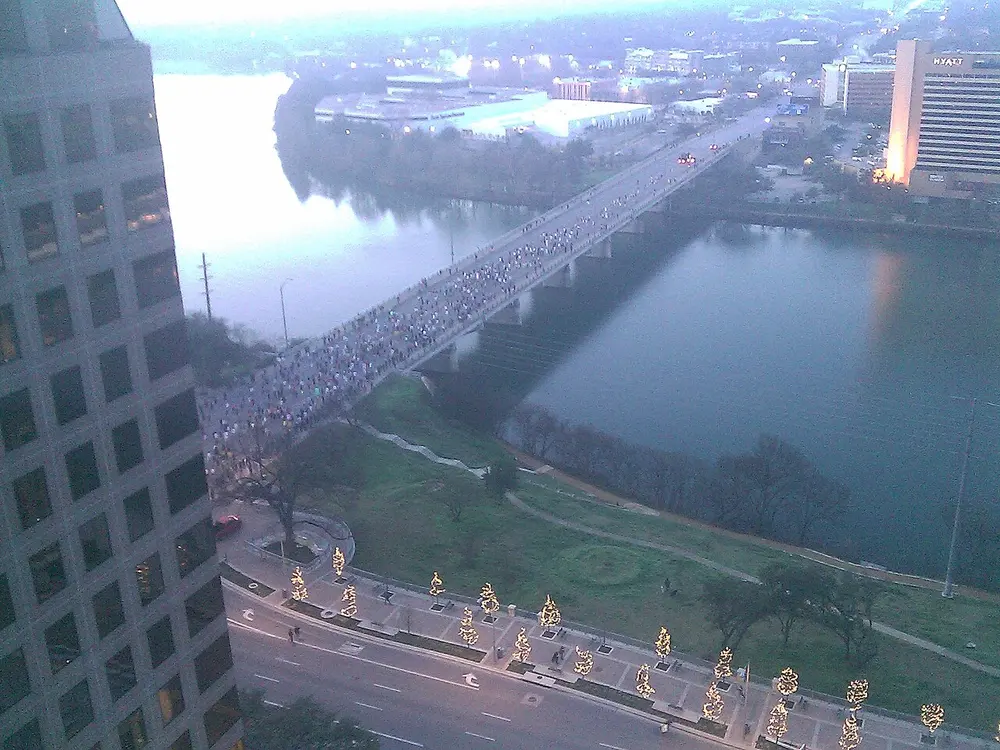
AustinMarathonCongressBridgeStart2010. Photo: Corey M. Smith, Smith Research Solutions LLC Cmsmith81 ( talk ) / Wikimedia Commons, CC BY-SA 3.0.
The course
The route begins in the city and heads west into the hills that rise above the river valley. Those western miles carry most of the 319 metres of gain, so the opening half is where the course does its work. The climbing is not one long ascent; it comes in a series of rises through the hills, and the effort accumulates even when each individual slope feels short.
The second half turns back towards the river and the city centre. The ground is flatter here and the pace can lift, but the return is not a pure descent. It is quick relative to what came before, and that is exactly why it tempts runners into a late surge they cannot sustain.
The course stays within Austin, moving between the hills, the river corridor and the streets of the capital. The result is a race that feels like a tour of the city's geography rather than a loop around a single district.
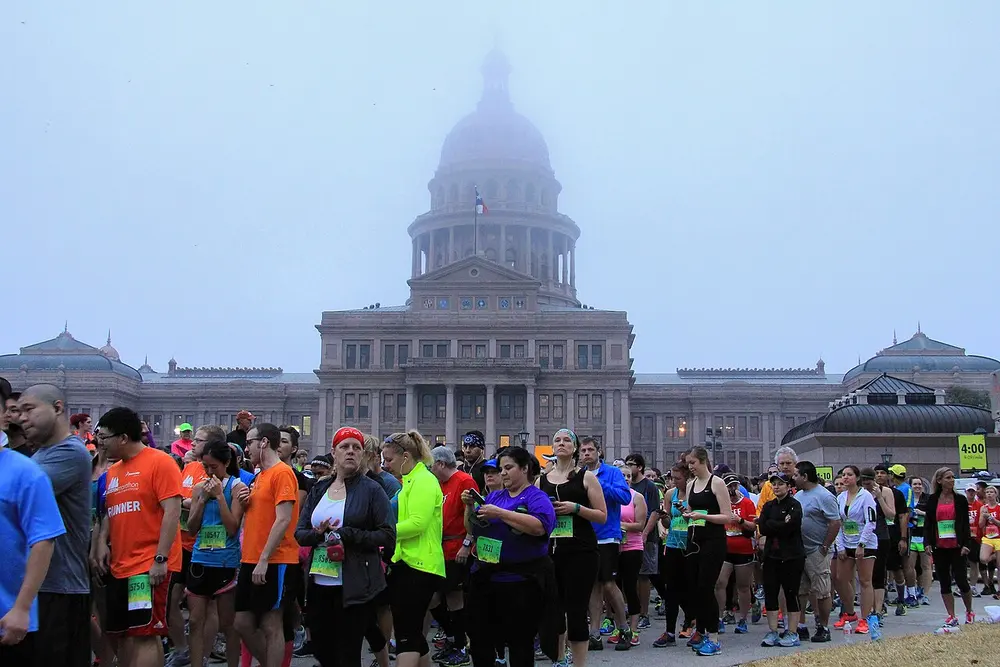
Austin marathon 2014 capitol. Photo: Larry D. Moore / Wikimedia Commons, CC BY 4.0.
The western hills
West Austin is where the city climbs away from the river, and the marathon uses that change in elevation as its first act. The hills are not alpine, but they are persistent enough to reward a runner who has done long runs on rolling roads. Training only on flat ground leaves the legs unprepared for the repeated changes of gradient.
The tactical job here is to keep the effort even. A short climb can be taken too hard without feeling it at the time, and the cost shows up later. On the descents, let the stride open but do not sprint; the course has more climbing to come, and the quads will be needed on the return.
The scenery is part of the compensation. The hills give views back across the city, and the streets feel quieter than the downtown grid. Runners who know Austin will recognise the landscape; visitors get a sense of why the city's west side is so different from the flat land around the river.
The return along the river
The second half follows the river back towards the centre, and the profile becomes friendlier. That does not mean it is easy. The river corridor is exposed in places, and the combination of flatter ground and tired legs can produce a false sense of speed. The best use of this section is to settle into a rhythm and make the pace feel controlled rather than dramatic.
For a first marathon, the shape of the day is manageable if you respect the early hills. The second half gives you a chance to finish strongly, and the flatter return makes the race a better debut than a course that saves all its climbing for the last 10 km. The caveat is that the early climbing can still be underestimated.
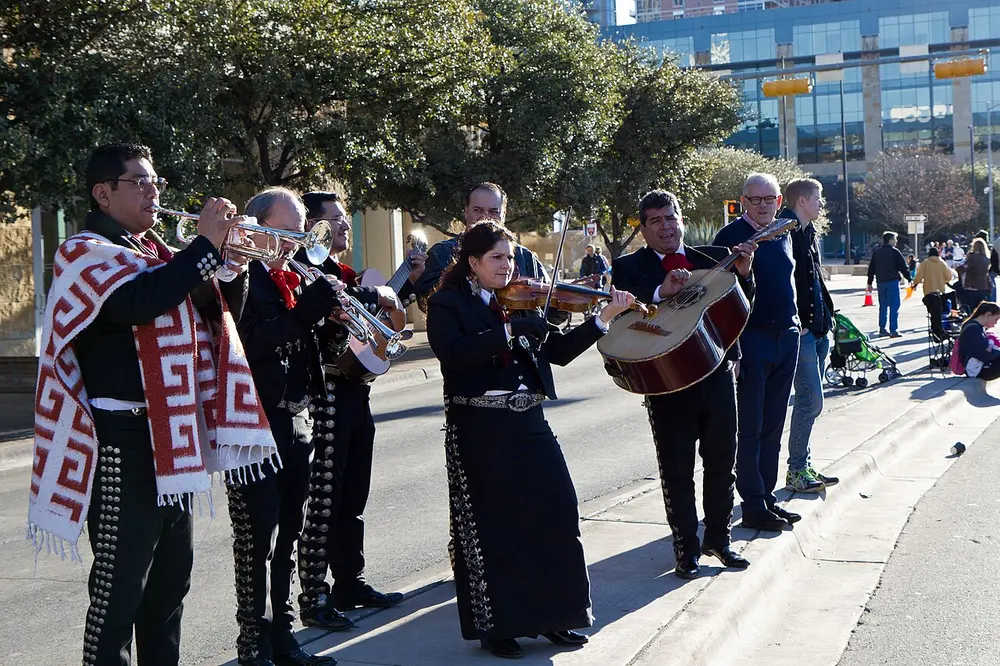
Austin Marathon 2013 Band. Photo: Steve / Wikimedia Commons, CC BY-SA 2.0.
February in Austin
Mid-February places the race in central Texas winter, which is a more forgiving prospect than the city's summer, though conditions can still vary a lot from year to year. The practical approach is to check the forecast in race week and prepare for more than one kind of morning. A disposable layer is more useful than a heavy jacket.
The date also gives the race a different feel from the autumn marathons. Austin in February is still quiet enough to feel local, and the course passes through parts of the city that a summer visitor might rush past. The river, the Capitol and the hills all sit close together here, and the marathon connects them.
Pacing the two halves
- The front-loaded climbing. Most of the 319 metres comes before halfway. Spend your energy carefully in the west and save something for the river.
- The river return. Faster ground is not a licence to sprint. Use it to hold a steady pace, not to recover lost time from the hills.
- The early pace. February cool can mask effort. Run the first climbs by feel rather than by numbers.
- Your goal. The hills make an even-paced personal best difficult. Target a controlled race and a strong finish instead.
Frequently asked questions
Answers to the questions runners ask before entering, drawn from this race's course guide and the directory's own data — the sources behind them are listed below.
When is the Austin Marathon?
The next edition is on 14 February 2027. It is a February race in the Texas capital, and the organiser publishes start times and race-weekend details closer to the event.
Is the Austin Marathon a flat or hilly course?
It is hilly, with about 319 metres of climbing. The course climbs through the hills west of downtown, then returns along the river. The first half carries most of the ascent, while the second half is quicker.
Is the Austin Marathon good for a first marathon?
It can be a good debut for a runner who trains on hills and starts conservatively. The second half is more forgiving than the first, which gives a first-timer a chance to finish strongly. The western climbs still need to be respected.
Is it a personal-best course?
The front-loaded climbing makes an even pace hard and a fast time unlikely. Runners chasing a personal best should look for flatter ground; Austin is better treated as a strength course.
Where is the marathon run?
It is run in Austin, Texas, starting in the city and heading west into the hills before returning along the Colorado River. The course stays within the city.
How should I pace the race?
Run the western hills by effort rather than pace, keeping the first half controlled even when it feels easy. Then use the flatter river return to hold a steady rhythm. Runners who negative-split the course tend to finish strongest.
More marathons in United States
More marathons in Americas
Sources for this page
What each source below is used for on this page, and where to check this race yourself.
- World Athletics — the label calendar and the road-race regulations. Used to check whether the race holds a World Athletics label, and its elite competition details.
- AIMS — the international course-measurement standard behind the 42.195 km distance, and the AIMS race calendar.
- The organizer's own publications — course maps, race handbooks and published results. The date, course character and climbing on this page are compiled from them and re-checked each season.
Where do these facts come from?
Dates, course type, climbing and time limits are compiled from the organizer's publications and re-checked each season; elevation is an estimate of total climbing rather than a survey figure. Always confirm race-day details with the organizer before making plans.
Last reviewed 27 October 2026