
Hokkaido Marathon
Most Japanese marathons are run in winter or early spring, and the reason is obvious. The Hokkaido Marathon goes the other way.
By Global Marathon Routes editorial team · Last reviewed 27 October 2026
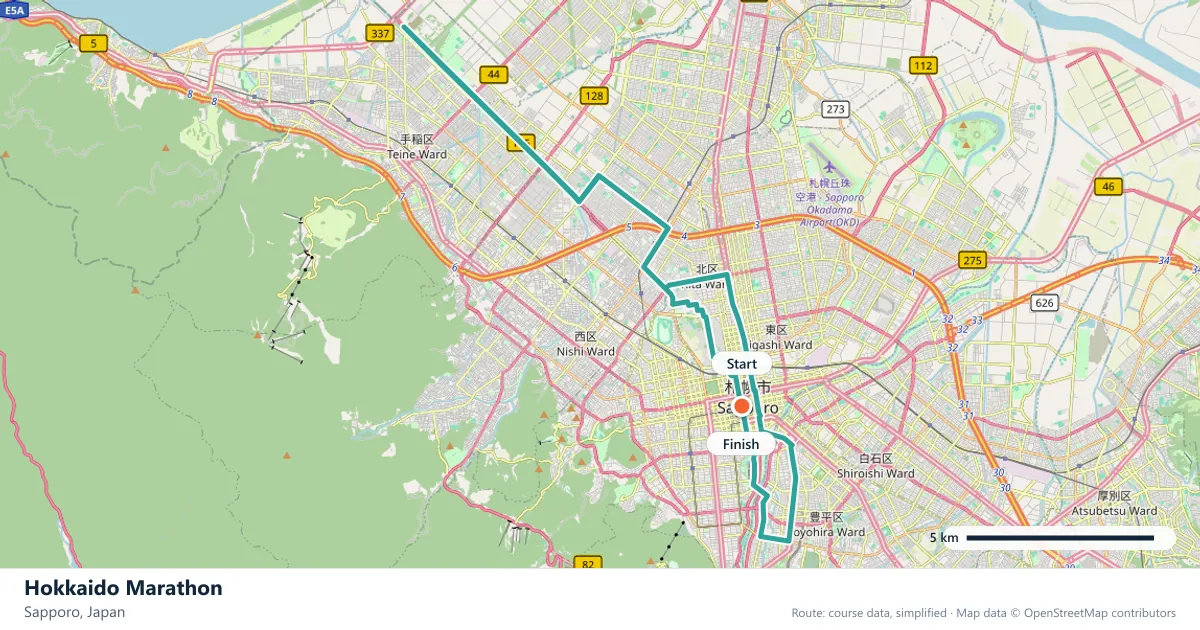
Where does the Hokkaido Marathon run?
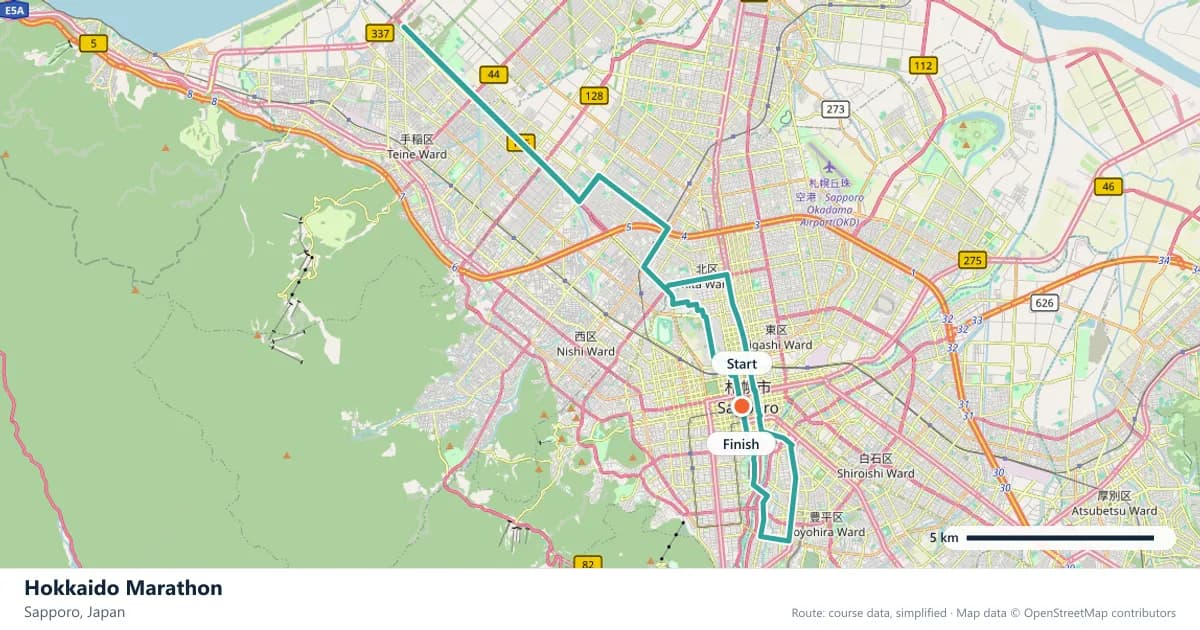
Interactive map
The trace follows the organizer's published course, simplified for the screen: the orange dot is the start, the dark dot the finish. Scroll to zoom, drag to pan.
What is the Hokkaido Marathon course like?
Japan's big summer marathon, run through Sapporo in late August when the rest of the country is at its hottest. Starts in Odori Park and loops out to the hills and back.
- Next edition
- August 2027 (expected)
- Elevation gain
- 121 m
- Profile
- Undulating
- First run
- —
Course guide
Most Japanese marathons are run in winter or early spring, and the reason is obvious. The Hokkaido Marathon goes the other way. It is Japan's big summer marathon, expected next in August 2027, and it uses Sapporo's northern setting to stage a race at the time of year when the rest of the country is at its hottest.
The race starts in Odori Park, the long green spine at the centre of Sapporo, and loops out to the surrounding hills before returning. The profile is undulating, with about 121 metres of climbing, and the course is quick enough to support a fast time. What makes it distinctive is not the elevation but the calendar: a summer marathon that depends on the city's latitude rather than on an early start before dawn.
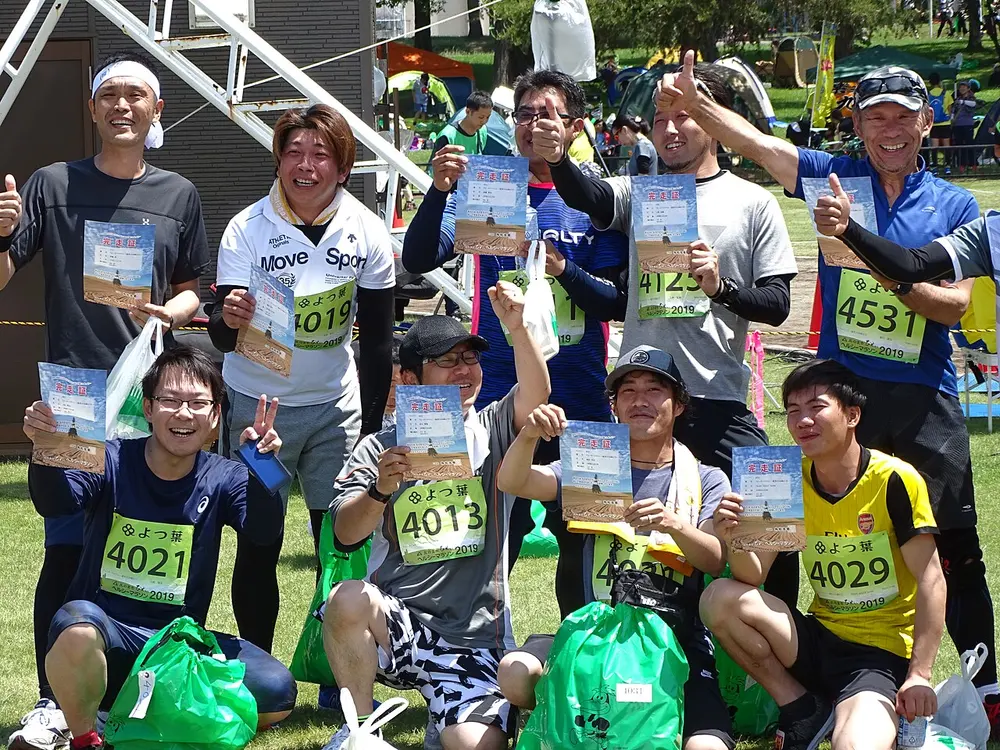
Participants in Marathon - Park in Biei - Hokkaido - Japan. Photo: Adam Jones from Kelowna, BC, Canada / Wikimedia Commons, CC BY-SA 2.0.
The course
The race begins in Odori Park and heads out of the city before turning into the hills. The park start is one of the race's signatures: a central, green space rather than a motorway or an industrial edge, with the city's grid making it easy to reach. From there, the course opens up and the buildings give way to more rolling terrain.
The profile is undulating, with around 121 metres of climbing. The route rolls rather than climbs in one sustained effort, and the hills on the way out arrive while the field is still fresh. The return to Sapporo can feel quicker as a result, but it is also where tired legs have to deal with the last of the undulation.
| Race fact | Detail |
|---|---|
| Date | August 2027 (expected) |
| Profile | Undulating |
| Elevation gain | About 121 m |
| Start | Odori Park, Sapporo |
| Course | A loop out to the surrounding hills and back |
Why August works in Sapporo
Sapporo is the capital of Hokkaido, the northernmost of Japan's main islands. Its summer is shorter and less punishing than the mainland's, which is why a marathon can be held in August without the compromises that a Tokyo or Osaka race would need. The city's parks and wide streets make the date feel natural rather than contrived.
The distinction is relative, not absolute. August is still summer, and a marathon at that time of year asks runners to manage warmth and humidity even if the numbers are milder than further south. Treating it as a cool mountain race would be a mistake. The race is comfortable by Japanese summer standards, not by the standards of an autumn marathon.
Out to the hills
The outward section is where the course shows its shape. The route leaves the grid of central Sapporo and works towards the hills that frame the city, gaining height gradually as the urban edge falls away. The climbs are not long, but they are enough to break the rhythm and to reward runners who have practised rolling terrain.
The return brings its own challenge. After the hills, the course heads back towards Sapporo, and the final kilometres can feel faster and more exposed after the shelter of the outskirts. It is a course that rewards consistent effort rather than a fast opening, and the best pacing plan is one that treats the outward hills as work to be done rather than a race to be won.
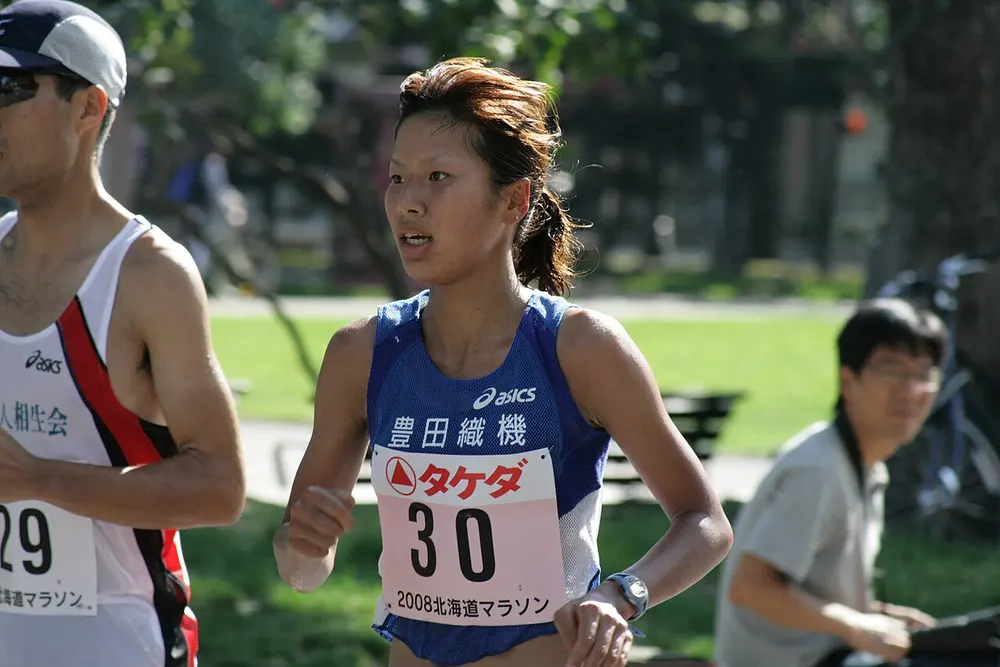
Hitomi Niiya (2008 Hokkaido Marathon). Photo: Marvin Andino / Wikimedia Commons, CC BY-SA 2.0.
Summer on the northern island
The Hokkaido Marathon is a summer event in a country that usually avoids summer marathons. That gives it a different feel from the winter races that dominate the Japanese calendar. The city is awake and outdoors, the parks are green, and the race feels like part of the season rather than an escape from it.
The northern latitude helps, but it does not remove the need for heat management. The course is fast in principle; the weather decides how much of that speed is available on the day.
August race notes
- Summer warmth. The race is held in August. Do not assume a cold mountain morning; plan fluids and sun protection for a warm day.
- The outward hills. About 121 metres of climbing arrives in rolling sections. Keep the rises controlled while the field is still fresh.
- The return to the city. The final kilometres can feel quicker and more exposed. Stay patient rather than chasing the finish.
- A crowded park start. Odori Park is central and easy to reach, but the start area will be busy. Allow extra time.
- Fast-course temptation. The profile is quick enough for a personal best, so an honest opening pace is the main thing standing between you and a good day.
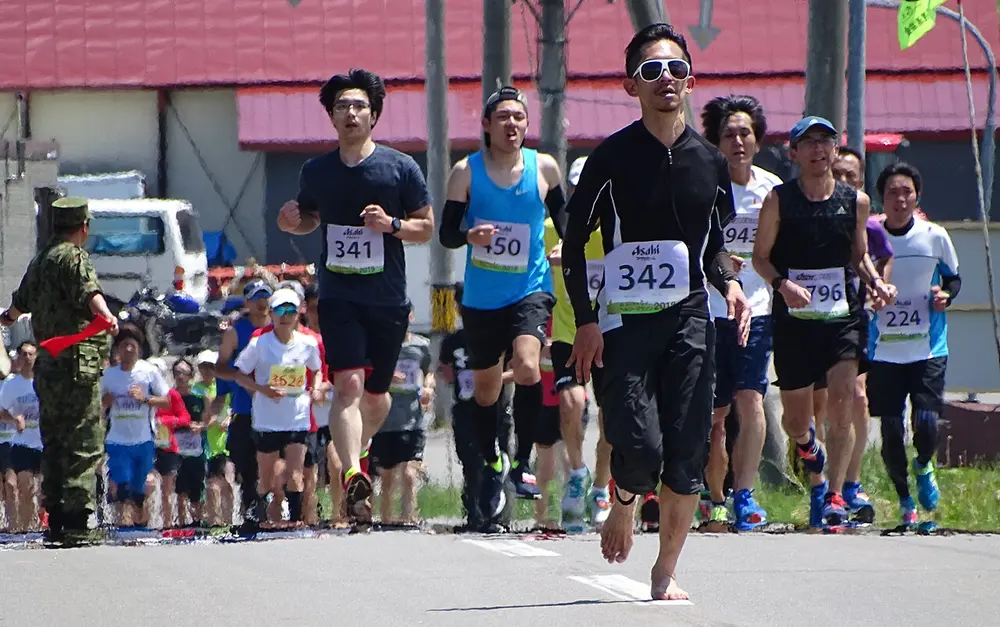
Marathon Runners - Biei - Hokkaido - Japan. Photo: Adam Jones from Kelowna, BC, Canada / Wikimedia Commons, CC BY-SA 2.0.
Frequently asked questions
Answers to the questions runners ask before entering, drawn from this race's course guide and the directory's own data — the sources behind them are listed below.
When is the Hokkaido Marathon in 2027?
The next edition is expected in August 2027. The exact date has not been confirmed, so check the organiser's announcement before booking travel.
Is the Hokkaido Marathon a flat or hilly course?
It is undulating, with about 121 metres of climbing. There is no sustained climb, but the route rolls out to the hills and back, so it is not flat. It is much milder than a mountain marathon.
Is the Hokkaido Marathon good for a personal best?
The course is quick enough to support a fast time. The climbing is modest, the roads are wide and the route has long, rhythm-friendly sections. Summer conditions are the main variable, and a personal best depends on managing them as much as on the profile.
Where does the Hokkaido Marathon start and run?
It starts in Odori Park in central Sapporo, loops out to the surrounding hills and returns towards the city. The park is the race's best-known landmark.
Why is the Hokkaido Marathon held in summer?
It is Japan's big summer marathon, scheduled when the rest of the country is at its hottest. Sapporo's northern latitude makes an August race viable in a way that it would not be further south.
What is the finish area like?
The race returns to Sapporo after the hills, finishing in the city rather than in the mountains. The final kilometres are more urban and more exposed than the outward section, and they can feel quicker than the middle of the race.
More marathons in Japan
More marathons in Asia
Sources for this page
What each source below is used for on this page, and where to check this race yourself.
- World Athletics — the label calendar and the road-race regulations. Used to check whether the race holds a World Athletics label, and its elite competition details.
- AIMS — the international course-measurement standard behind the 42.195 km distance, and the AIMS race calendar.
- The organizer's own publications — course maps, race handbooks and published results. The date, course character and climbing on this page are compiled from them and re-checked each season.
Where do these facts come from?
Dates, course type, climbing and time limits are compiled from the organizer's publications and re-checked each season; elevation is an estimate of total climbing rather than a survey figure. Always confirm race-day details with the organizer before making plans.
Last reviewed 27 October 2026