
Nagano Marathon
Nagano is a mountain city with a quick marathon. The course passes the stadium and the temple district with the Japanese Alps behind the rooftops, and it climbs only about 140 metres.
By Global Marathon Routes editorial team · Last reviewed 27 October 2026
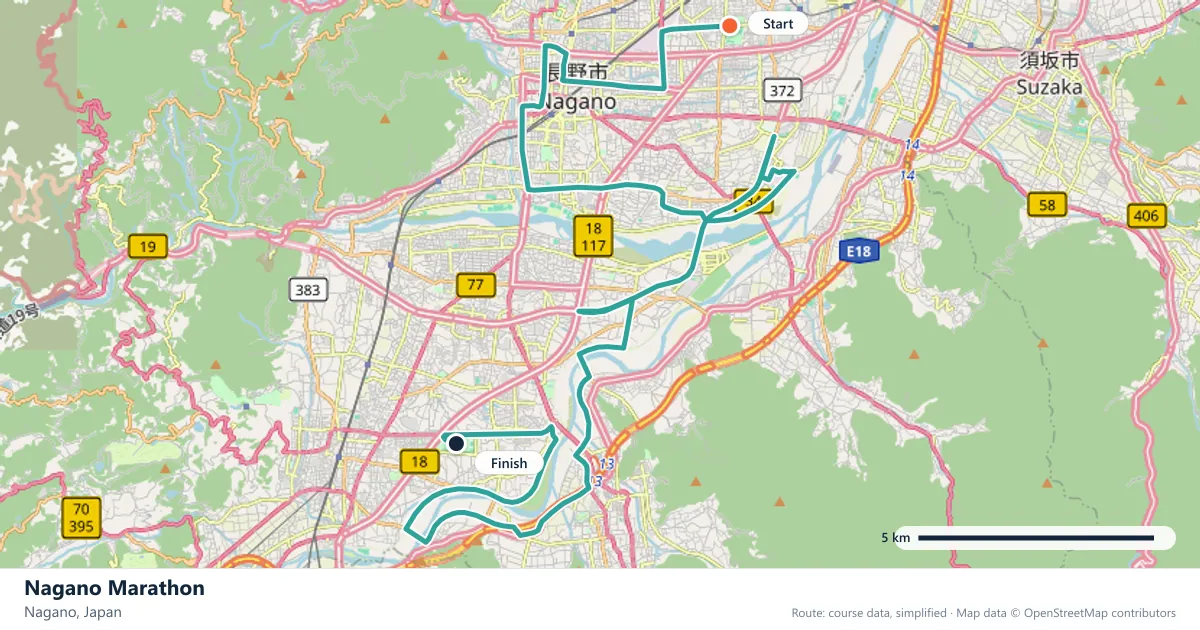
Where does the Nagano Marathon run?
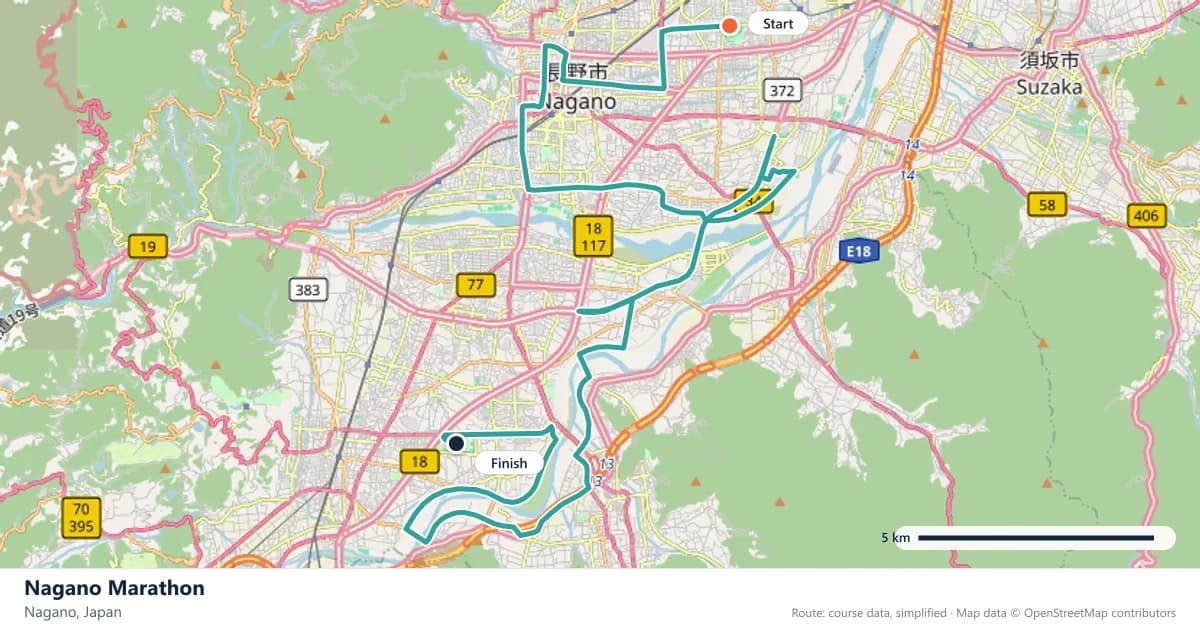
Interactive map
The trace follows the organizer's published course, simplified for the screen: the orange dot is the start, the dark dot the finish. Scroll to zoom, drag to pan.
What is the Nagano Marathon course like?
A spring marathon from the 1998 Winter Olympic city, passing the stadium and the temple district with the Japanese Alps behind. Rolling and quick by mountain-city standards.
- Next edition
- April 2027 (expected)
- Elevation gain
- 140 m
- Profile
- Undulating
- First run
- —
Course guide
Nagano is a mountain city with a quick marathon. The course passes the stadium and the temple district with the Japanese Alps behind the rooftops, and it climbs only about 140 metres. The next edition is expected in April 2027, and the race is well suited to fast times.
The setting suggests a hard mountain run. The profile says otherwise. Nagano's marathon is rolling rather than mountainous, and the spring date gives it a different character from the autumn races elsewhere in Japan. It is a city marathon with a famous backdrop and a course that asks more of your pacing than your climbing legs.
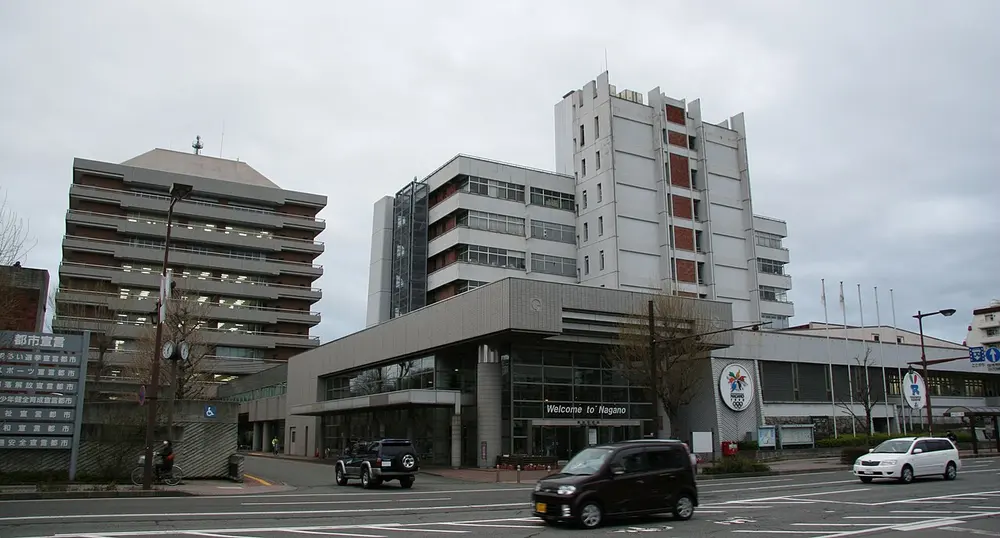
Nagano City Hall. Photo: TTTNIS / Wikimedia Commons, Public domain.
The course
The route works through Nagano, passing the stadium and the temple district. The Alps form the backdrop, so the scenery changes with the light rather than with the course. The city is compact, and the marathon stays within it rather than heading into the surrounding mountains.
At about 140 metres of climbing, the profile is undulating: short rises, gentle dips and long flat stretches. It is not a hill course in the usual sense, which explains its fast reputation. The main demand is pacing, because the rollers are small enough to ignore individually and large enough to accumulate if you attack them.
An Olympic city
Nagano hosted the 1998 Winter Olympics, and the city's identity is still shaped by those Games. The marathon passes the stadium that was built for them, giving the race a direct connection to Olympic history. For runners, it is a rare chance to run through a Winter Olympic host city in spring.
The Olympic legacy gives the course a structure: the stadium is a landmark and the city around it is compact. It is a different kind of Olympic tour from a summer Games marathon, and that makes it distinctive.
The temple district
The temple district is the other half of Nagano's identity. The route passes through it, and the atmosphere changes from the stadium's open spaces to narrower streets and older buildings. It is the point where the marathon feels most like a tour of the city rather than a loop around it.
The district is also a reminder of how old Nagano is. The city grew around its temple, and the marathon uses that history as part of the course. Runners who look up from the road will see a side of Nagano that the stadium and the Alps cannot show.
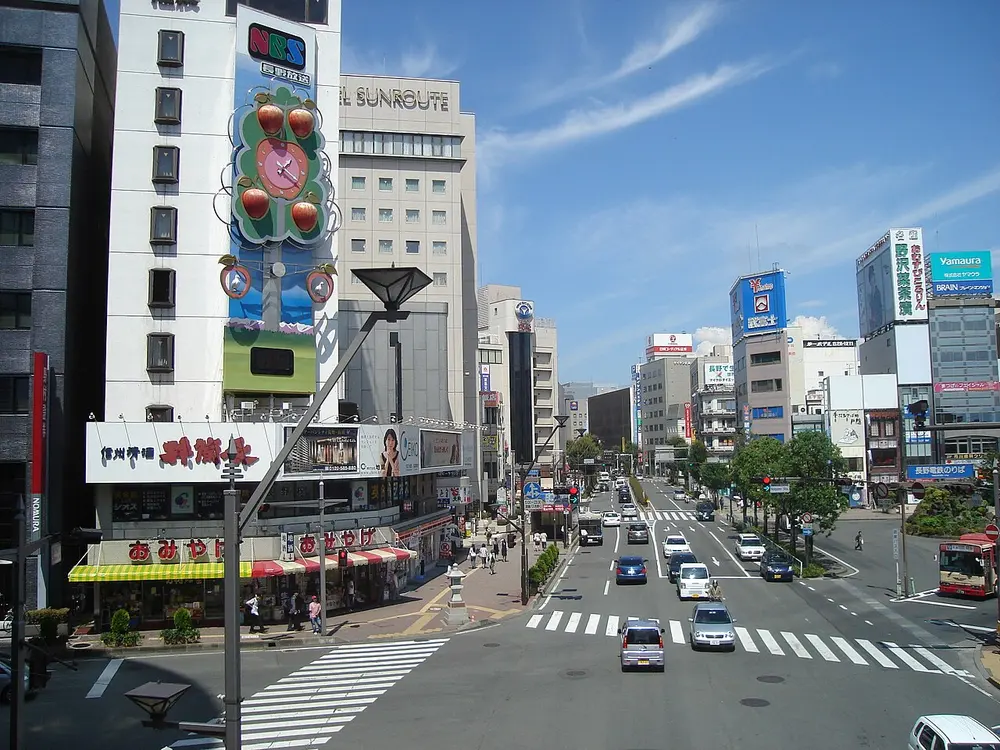
Downtown Nagano. Photo: Nihonsuku / Wikimedia Commons, CC BY-SA 3.0.
The Alps as a backdrop
The Japanese Alps rise behind Nagano, and they are visible from much of the city. They are the reason the race feels like a mountain marathon even though the course is not one. The mountains frame the skyline, change with the weather and give the event a sense of scale.
That backdrop can be deceptive. Runners who expect a mountain course may overprepare for climbs that never come, while those who ignore the terrain may underestimate the rollers. The truth is in between: Nagano is a rolling city course in a mountain setting, and the two facts are equally important.
Spring pacing
April is early spring in Nagano, and the race is timed to catch the season. The city is waking up after winter and the Alps frame the skyline. It is a different atmosphere from the autumn marathons that dominate the Japanese calendar.
The course rewards an even tempo. With about 140 metres of climbing, there is no single hill to plan around, so the race is decided by how well you hold your pace through the rollers. Start conservatively, stay relaxed on the rises and let the flat stretches do the work.
A quick mountain-city race
Nagano's combination of a gentle profile, spring weather and a compact city course makes it a good choice for a fast time. The race is not a flat time trial, but it is unusually quick for a city surrounded by mountains. That contrast is the appeal.
For runners who want a well-organised spring race in a memorable setting, that is part of the charm. It is a marathon that feels local, quick and connected to the city's history.
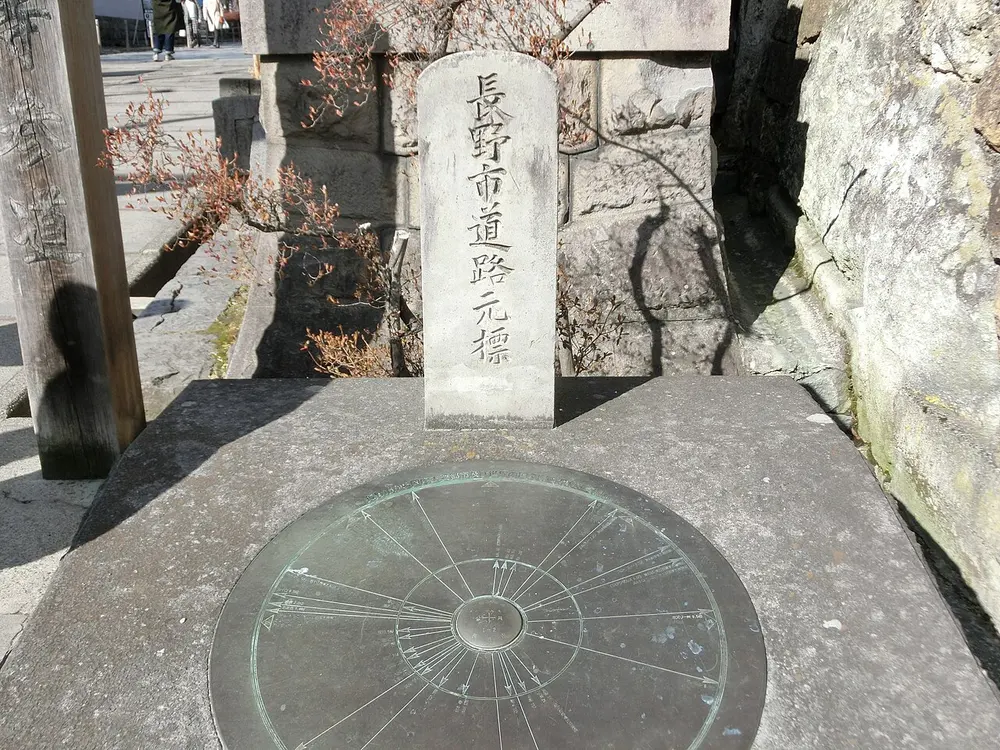
Nagano City Kilometre Zero. Photo: Abasaa / Wikimedia Commons, Public domain.
Frequently asked questions
Answers to the questions runners ask before entering, drawn from this race's course guide and the directory's own data — the sources behind them are listed below.
When is the Nagano Marathon?
The next edition is expected in April 2027. The exact date is still provisional, so confirm it before booking travel.
Is the Nagano Marathon flat or hilly?
It is undulating, with about 140 metres of climbing. There is no sustained ascent, and it is unusually quick for a mountain city. It is not flat, but it is far from a hill race.
Where does the course run?
The route passes through Nagano, including the stadium and the temple district, with the Japanese Alps in the background. The race stays within the city.
Is Nagano a good race for a personal best?
The gentle profile and spring date suit a fast attempt. The repeated rollers still require even pacing, but the course is quicker than the mountain setting suggests.
Is it suitable for a first marathon?
The race is not built around first-timers. Its accumulated rollers and quick profile set the tone, so a debut would need conservative pacing.
Why is Nagano associated with the Winter Olympics?
Nagano hosted the 1998 Winter Olympics, and the marathon passes the stadium built for the Games. The city's Olympic history is part of the race's setting.
More marathons in Japan
More marathons in Asia
Sources for this page
What each source below is used for on this page, and where to check this race yourself.
- World Athletics — the label calendar and the road-race regulations. Used to check whether the race holds a World Athletics label, and its elite competition details.
- AIMS — the international course-measurement standard behind the 42.195 km distance, and the AIMS race calendar.
- The organizer's own publications — course maps, race handbooks and published results. The date, course character and climbing on this page are compiled from them and re-checked each season.
Where do these facts come from?
Dates, course type, climbing and time limits are compiled from the organizer's publications and re-checked each season; elevation is an estimate of total climbing rather than a survey figure. Always confirm race-day details with the organizer before making plans.
Last reviewed 27 October 2026