
Hyderabad Marathon
The Hyderabad Marathon is not a winter race. It is held in August, in the monsoon season, and it begins at the Gachibowli stadium before climbing through the city's tech district and older quarters.
By Global Marathon Routes editorial team · Last reviewed 27 October 2026
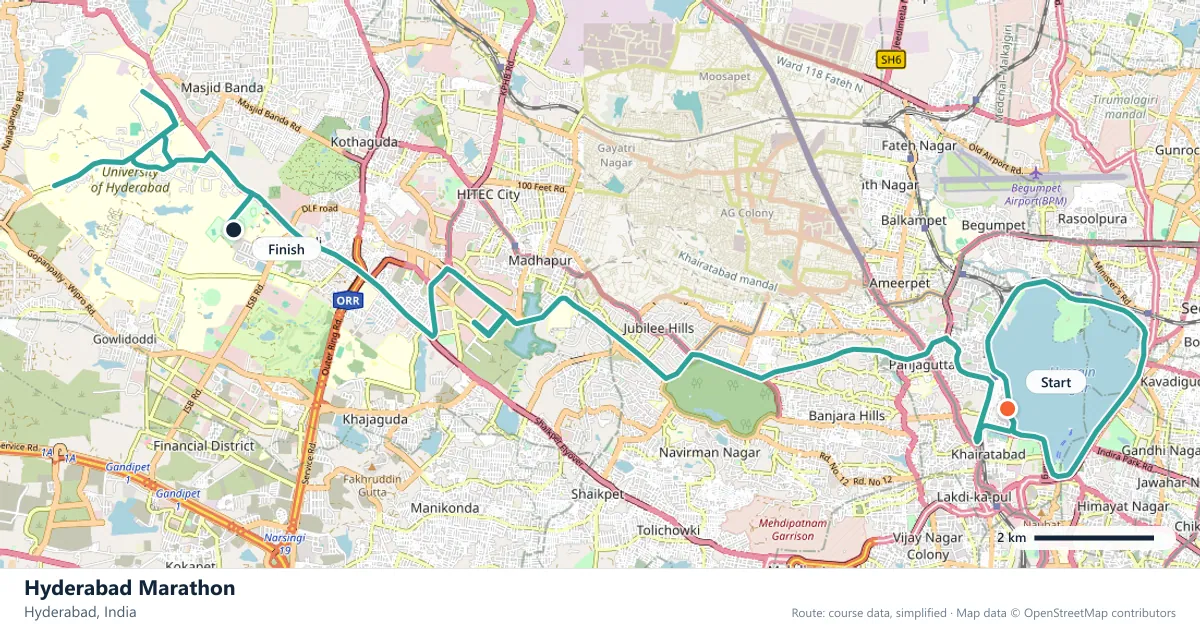
Where does the Hyderabad Marathon run?
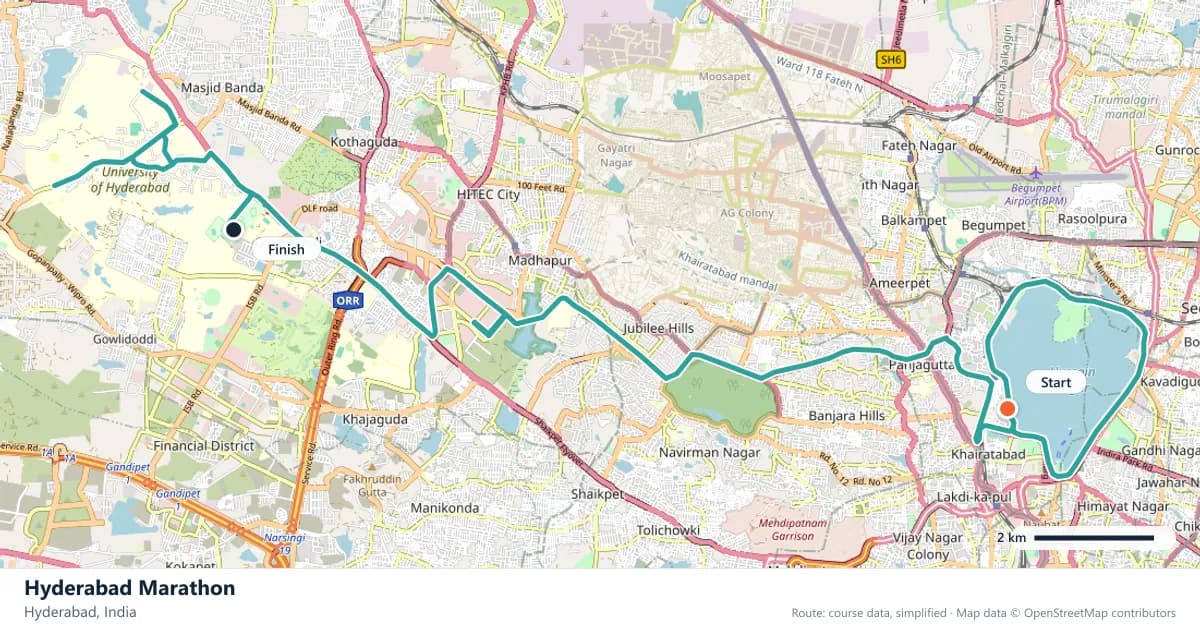
Interactive map
The trace follows the organizer's published course, simplified for the screen: the orange dot is the start, the dark dot the finish. Scroll to zoom, drag to pan.
What is the Hyderabad Marathon course like?
A monsoon-season marathon out of Hyderabad's Gachibowli stadium, climbing through the city's tech district and the old quarters. Hot, humid and hilly.
- Next edition
- August 2027 (expected)
- Elevation gain
- 357 m
- Profile
- Hilly
- First run
- —
Course guide
The Hyderabad Marathon is not a winter race. It is held in August, in the monsoon season, and it begins at the Gachibowli stadium before climbing through the city's tech district and older quarters. The next edition is expected in August 2027, with about 357 metres of climbing and a World Athletics Label.
That combination is the whole story: heat, humidity and hills. Hyderabad is a high-tech city with an old soul, and the course moves between the two. The result is a marathon that feels much harder than its distance and much more atmospheric than a flat city loop.
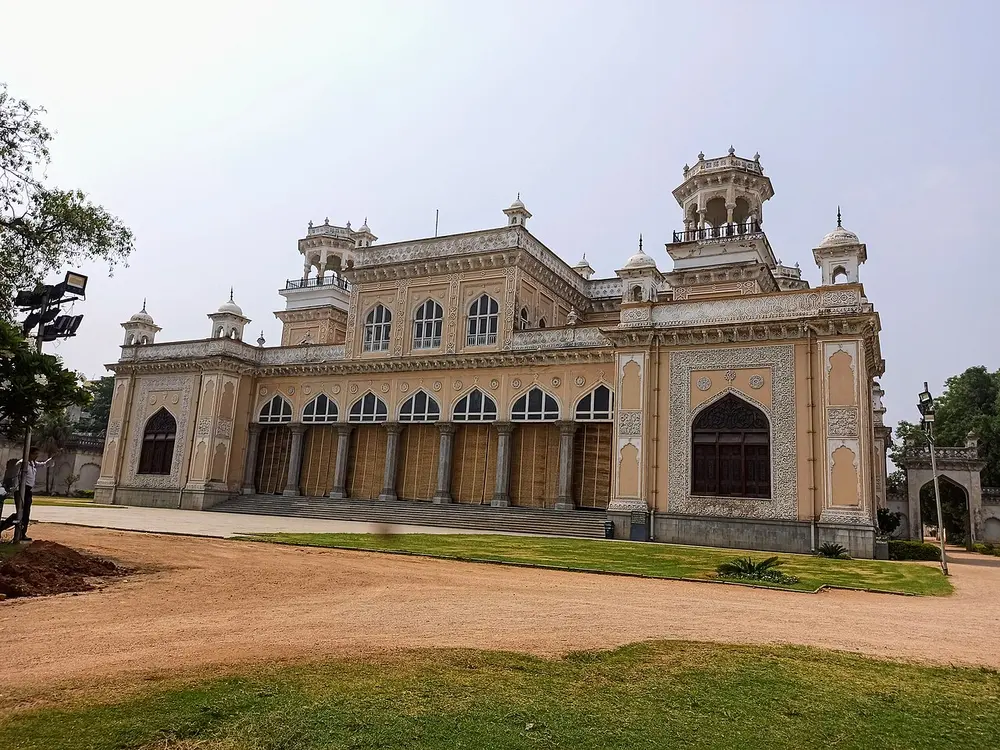
Chowmahalla Palace Hyderabad Telangana India 11. Photo: Kavali Chandrakanth KCK / Wikimedia Commons, CC BY-SA 4.0.
The course
The race starts out of Hyderabad's Gachibowli stadium and climbs through the city's tech district and older quarters. The course has 357 metres of climbing, enough to make the hills a defining feature. The climbing comes in repeated rises rather than a single ascent, so consistent effort matters more than one big push.
The route moves between modern tech districts and older parts of the city, giving the marathon a varied urban character. The stadium provides a clear base for the start, and the city's changing districts provide the backdrop. There is no flat, anonymous stretch to settle into; the course keeps asking for attention.
The monsoon season
August is monsoon season in Hyderabad, and the race is built around that fact. Conditions are hot and humid, and the weather is a bigger opponent than any single climb. The monsoon does not necessarily mean rain all day, but it does mean the air is heavy and the effort feels higher than the pace suggests.
That changes the racing plan. Runners should pace by effort, drink early and expect the second half to be slower than the first. A time that would be comfortable in a dry winter marathon is not a fair target in Hyderabad in August.
Two Hyderabads
The course's character comes from the contrast between the tech district and the old quarters. Gachibowli and the surrounding IT corridor are modern, wide and car-oriented; the older parts of the city are denser, more layered and full of history. The marathon moves between them, and the change of scene is part of the experience.
That variety also makes the course harder to read. Road widths, surfaces and gradients change with the districts, and the field can compress in the older streets. Runners should stay alert and adjust to the environment rather than assuming the next kilometre will look like the last.
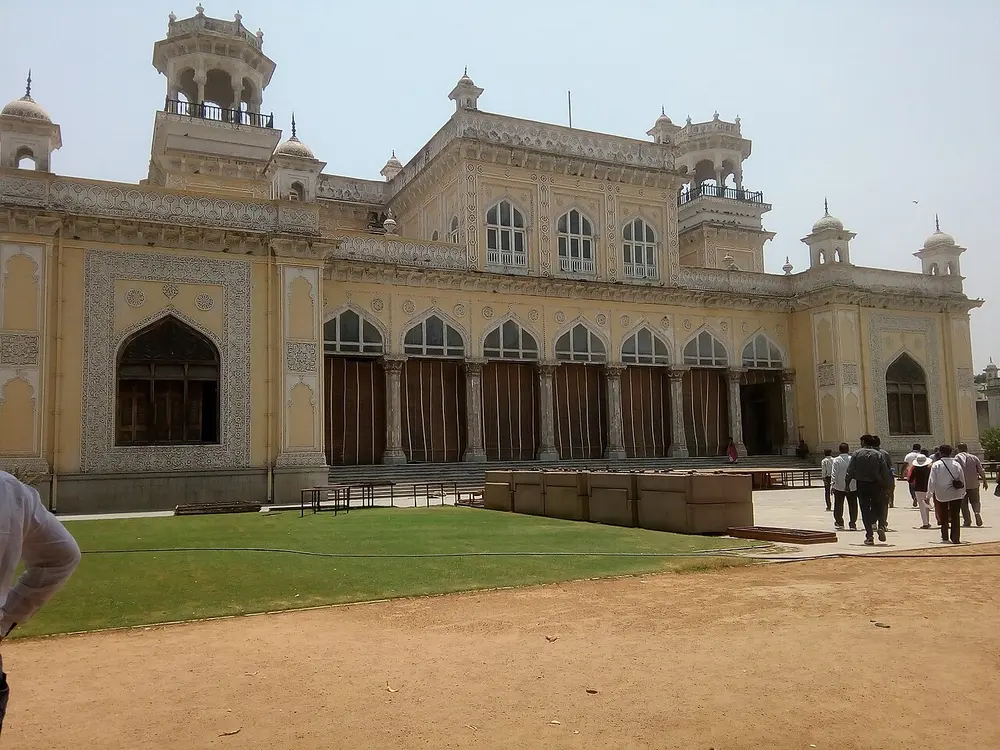
Chowmallah Palace,hyderabad. Photo: Anshutrisha / Wikimedia Commons, CC BY-SA 4.0.
Climbing in humidity
About 357 metres of climbing is a significant total for a city marathon, and Hyderabad adds humidity to every metre. The combination is what makes the race demanding: the hills raise the effort, and the moisture in the air makes it harder to cool down.
The practical approach is to keep the climbs controlled and use the descents to recover. Do not chase the fast starters, and do not treat the flat sections as an opportunity to make up time. In these conditions, even effort is the only sustainable strategy.
The stadium start
The race begins at the Gachibowli stadium, which gives the event a clear, stadium-style base. The start area is the one part of the course that feels contained; after that, the marathon opens into the city and the climbing begins.
For runners, the stadium is a useful mental anchor. It marks the beginning of the day and gives the race a sense of occasion before the heat and the hills take over.
A race with a label
The Hyderabad Marathon carries a World Athletics Label, a sign of its standing within the international road-racing system. The label reflects the organisation and the standard of the event, and it gives the race a credibility that matches its demanding course.
For most runners, the label is a confirmation rather than a reason to enter. The reason is the challenge: a monsoon-season marathon through a city of two halves, with real climbing and real humidity. It is not a place to chase a personal best, but it is a place to test yourself.
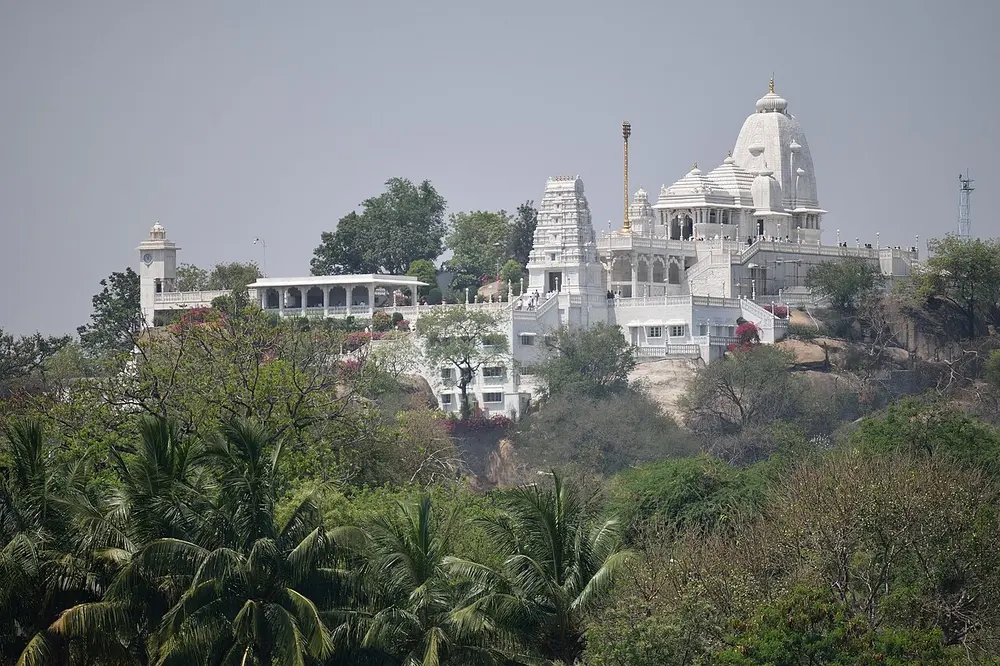
Birla Mandir in Hyderabad, 2015. Photo: Nikhilb239 / Wikimedia Commons, CC BY-SA 4.0.
Frequently asked questions
Answers to the questions runners ask before entering, drawn from this race's course guide and the directory's own data — the sources behind them are listed below.
When is the Hyderabad Marathon?
The next edition is expected in August 2027. It is held during the monsoon season, and the exact date is still provisional.
Is the Hyderabad Marathon flat or hilly?
It is hilly, with about 357 metres of climbing. The route climbs in repeated rises through the tech district and older quarters rather than in one sustained ascent.
Where does the course start?
The race begins at the Gachibowli stadium. From there it climbs through Hyderabad's tech district and older parts of the city.
What are the conditions like?
The race is held in the monsoon season, so conditions are hot and humid. The weather is a bigger factor than the course profile, and runners should pace by effort.
Is Hyderabad a good race for a personal best?
The climbing and the monsoon humidity make it a hard day for a fast time. A personal best is possible for runners who handle heat well, but the conditions usually have the final say.
Does the race hold a World Athletics label?
Yes. The Hyderabad Marathon carries a World Athletics Label.
More marathons in India
More marathons in Asia
Sources for this page
What each source below is used for on this page, and where to check this race yourself.
- World Athletics — the label calendar and the road-race regulations. Used to check whether the race holds a World Athletics label, and its elite competition details.
- AIMS — the international course-measurement standard behind the 42.195 km distance, and the AIMS race calendar.
- The organizer's own publications — course maps, race handbooks and published results. The date, course character and climbing on this page are compiled from them and re-checked each season.
“A World Athletics Label denotes a full application of the Competition and Technical Rules in, at a minimum, the elite component of the competition. Labels also denote superior standards in event organisation, safety and runner experience, support from public authorities to the event and a financial commitment to anti-doping.”
Where do these facts come from?
Dates, course type, climbing and time limits are compiled from the organizer's publications and re-checked each season; elevation is an estimate of total climbing rather than a survey figure. Always confirm race-day details with the organizer before making plans.
Last reviewed 27 October 2026