
Mumbai Marathon
Mumbai's marathon is less a race through a city than a city throwing a race for itself. India's biggest marathon returns on 17 January 2027, running through south Mumbai over the Sea Link and past…
By Global Marathon Routes editorial team · Last reviewed 27 October 2026
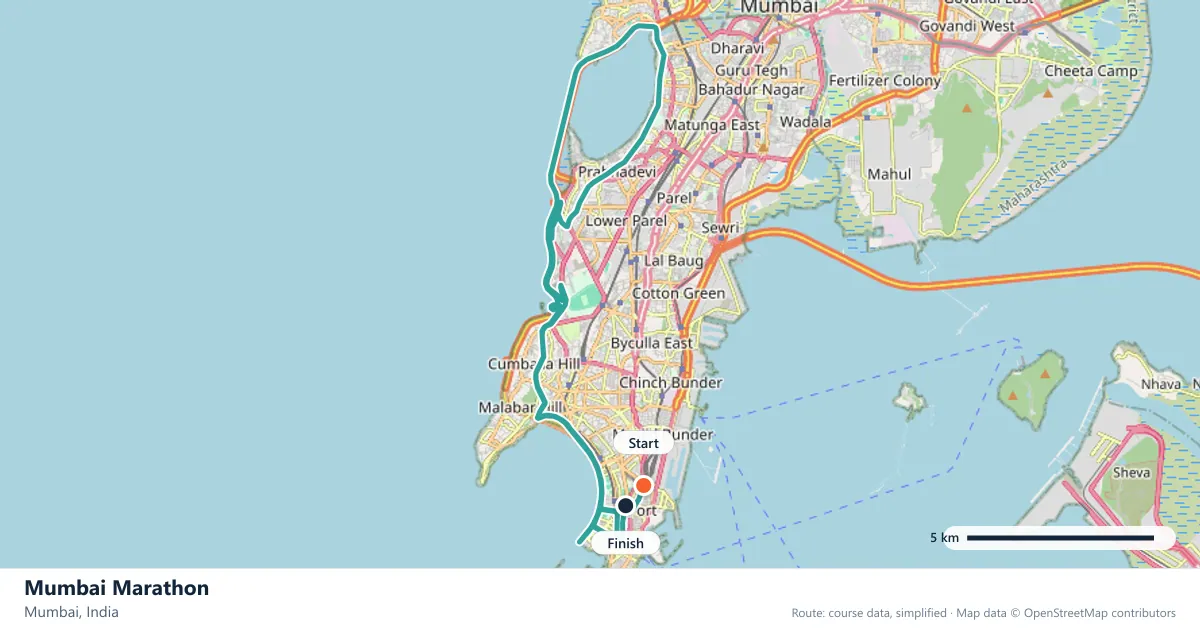
Where does the Mumbai Marathon run?
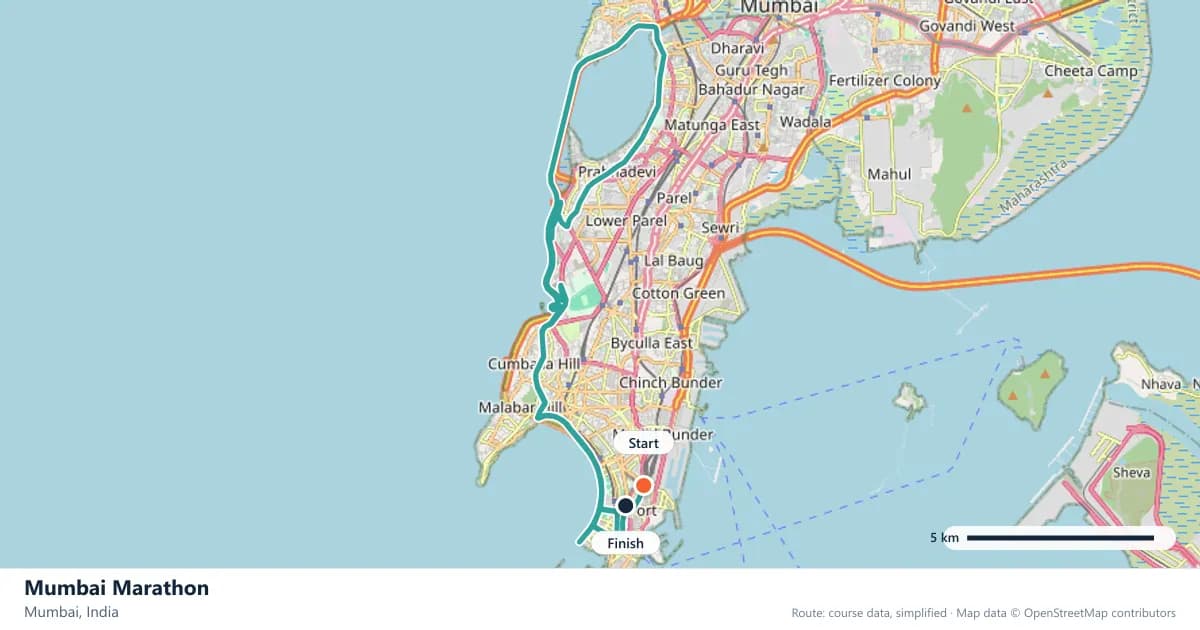
Interactive map
The trace follows the organizer's published course, simplified for the screen: the orange dot is the start, the dark dot the finish. Scroll to zoom, drag to pan.
What is the Mumbai Marathon course like?
India's biggest marathon, run in January through south Mumbai over the Sea Link and past the city's colonial landmarks. Warm even at dawn, with crowds unlike anywhere else.
- Next edition
- 17 January 2027
- Elevation gain
- 134 m
- Profile
- Undulating
- First run
- —
Course guide
Mumbai's marathon is less a race through a city than a city throwing a race for itself. India's biggest marathon returns on 17 January 2027, running through south Mumbai over the Sea Link and past the city's colonial landmarks. It carries a World Athletics Gold Label.
The course is undulating, climbing about 134 metres, and the day is warm even at dawn. Those two facts shape the race more than any single landmark. Mumbai is a city of crowds, and the support along the route is unlike anywhere else; the challenge is to use that energy without letting it set the pace.
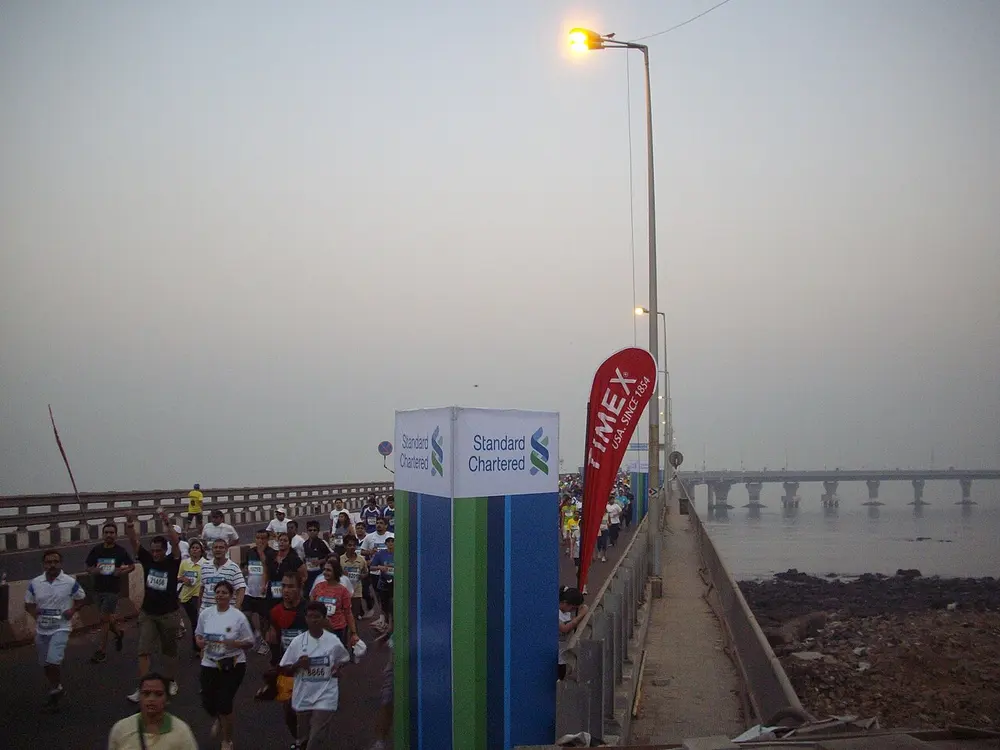
'Mumbai Half-Marathon' runners crossing 'Bandra-Worli Sea-Link Bridge'. Photo: Rudolph.A.furtado / Wikimedia Commons, CC0.
The course
The route works through south Mumbai, with the Sea Link crossing and the older colonial streets as its signatures. The bridge gives the race a long section over the water; the surrounding streets bring the crowds and the city's densest support.
With about 134 metres of climbing, the course is undulating: short rises and dips rather than one sustained ascent. The total is modest, but repetition matters. Pace by effort rather than by feel on the flat stretches, and expect the road to keep asking small questions all the way to the finish.
The Sea Link
The Bandra–Worli Sea Link is the image most people associate with the Mumbai Marathon, and for good reason. The bridge carries the race over the water, with the city on one side and the Arabian Sea on the other. It is a dramatic stretch and one of the great urban race views in Asia.
It is also a place where the field strings out. The bridge is exposed, the road is wide and the rhythm changes as runners settle into the crossing. Keep your own pace, use the space to move rather than to surge and remember that the bridge is a segment of the race, not the whole of it.
Crowds unlike anywhere else
Mumbai's crowds are part of the course. They line the streets, fill the balconies and turn the marathon into a public event rather than a closed race. The noise can lift a tired runner and carry them through a hard kilometre.
It can also be a trap. Excitement raises the pace, and the early kilometres along the support-lined streets can feel easier than they are. Treat the crowd as energy rather than as a signal to speed up, and save the response for the final stretch when the noise can actually help.
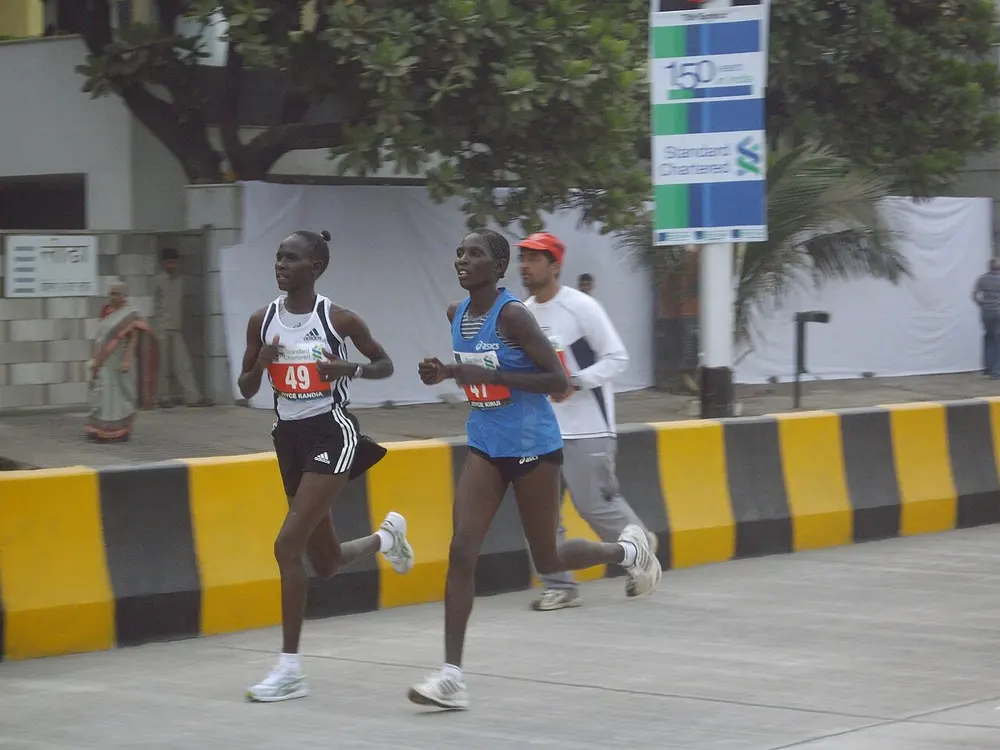
'International runners' at 'Mumbai Marathon-2009' passing through 'worli Sea-face. Photo: Rudolph.A.Furtado / Wikimedia Commons, Public domain.
Warm from the start
The race is warm even at dawn, so the early kilometres are not the cool window that runners in other climates expect. The heat is present from the beginning, and it builds as the morning goes on. That makes hydration and restraint more important than a fast opening.
The coastal setting adds humidity, and the city's density can make the air feel heavier still. Runners should drink early, adjust the target to the conditions and avoid the temptation to bank time while the legs are fresh. In Mumbai, the second half is where the day is decided.
An undulating 42 kilometres
About 134 metres of climbing is not a mountain course, but it is enough to make the race feel active. The rises are short and repeated, and they arrive in the middle of a route that is already demanding because of the heat and the crowds.
The best way to handle them is to stay relaxed. Run the ups by effort, let the downs restore you and keep the flat sections controlled. There is no dominant climb to prepare for, which means there is no single place to recover; the whole course asks for even pacing.
A big-city marathon
Mumbai is a major marathon in every sense: a huge field, a famous bridge, a route through the historic heart of the city and crowds that make the event feel national. The Gold Label reflects that standing.
For runners, the appeal is the atmosphere. The warmth, the rolling ground and the size of the event make it a race to approach with respect rather than a soft target. But as an experience, it is hard to match.
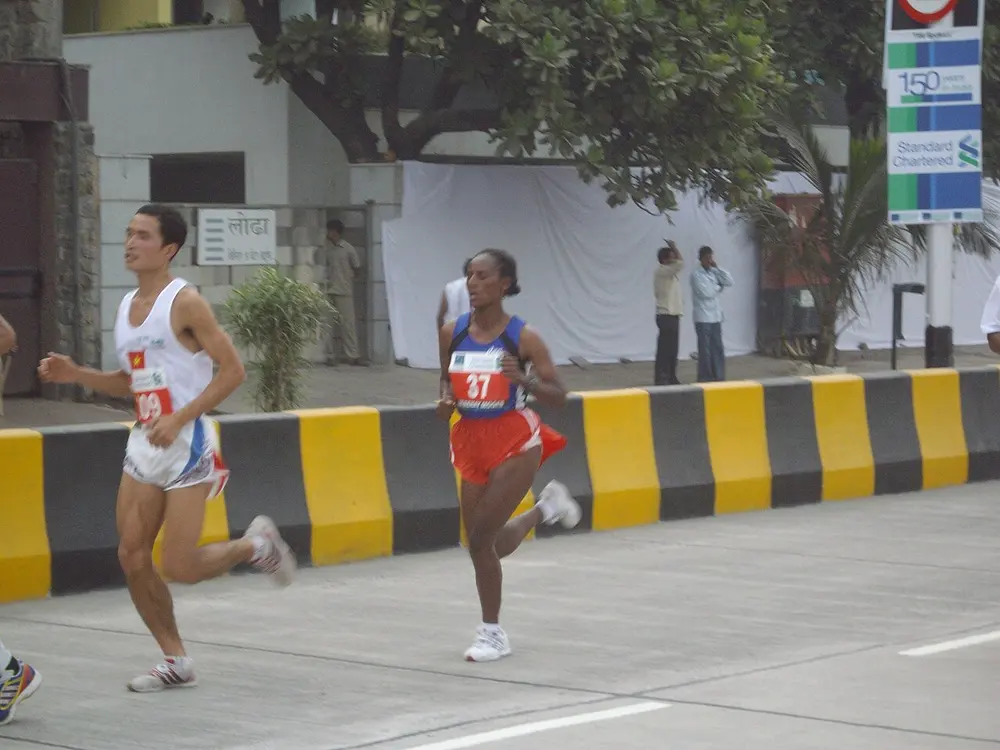
'International runners' at the 'Mumbai Marathon-2009'. Photo: Rudolph.A.furtado / Wikimedia Commons, Public domain.
Frequently asked questions
Answers to the questions runners ask before entering, drawn from this race's course guide and the directory's own data — the sources behind them are listed below.
When is the Mumbai Marathon?
The race is on 17 January 2027. It is a January fixture in Mumbai and carries a World Athletics Gold Label.
Is the Mumbai Marathon a flat course?
No. It is undulating, with around 134 metres of climbing over 42.195 kilometres. The rises are short and repeated rather than long, but they are enough that even pacing matters.
Where does the course run?
The route goes through south Mumbai, crossing the Sea Link and passing the city's colonial landmarks. The course stays within the southern part of the city.
What is the crowd support like?
The crowds are unlike anywhere else and line much of the route. Treat the noise as energy rather than as a signal to speed up.
What are the conditions like?
The race is warm even at dawn, and the heat builds through the morning. The coastal humidity adds to the load, so hydration and conservative pacing are essential.
Is Mumbai a good race for a personal best or a first marathon?
The warmth, rolling ground and size of the event make it a demanding choice for either. It is better approached as a big-city experience than as a fast-time course.
More marathons in India
More marathons in Asia
Sources for this page
What each source below is used for on this page, and where to check this race yourself.
- World Athletics — the label calendar and the road-race regulations. Used to check whether the race holds a World Athletics label, and its elite competition details.
- AIMS — the international course-measurement standard behind the 42.195 km distance, and the AIMS race calendar.
- The organizer's own publications — course maps, race handbooks and published results. The date, course character and climbing on this page are compiled from them and re-checked each season.
“A World Athletics Label denotes a full application of the Competition and Technical Rules in, at a minimum, the elite component of the competition. Labels also denote superior standards in event organisation, safety and runner experience, support from public authorities to the event and a financial commitment to anti-doping.”
Where do these facts come from?
Dates, course type, climbing and time limits are compiled from the organizer's publications and re-checked each season; elevation is an estimate of total climbing rather than a survey figure. Always confirm race-day details with the organizer before making plans.
Last reviewed 27 October 2026