
Kobe Marathon
Kobe's marathon runs between two landmarks: the harbour and Mount Rokko. The next edition is on 15 November 2026, and the course leaves the waterfront, heads out towards the mountain and returns to…
By Global Marathon Routes editorial team · Last reviewed 27 October 2026
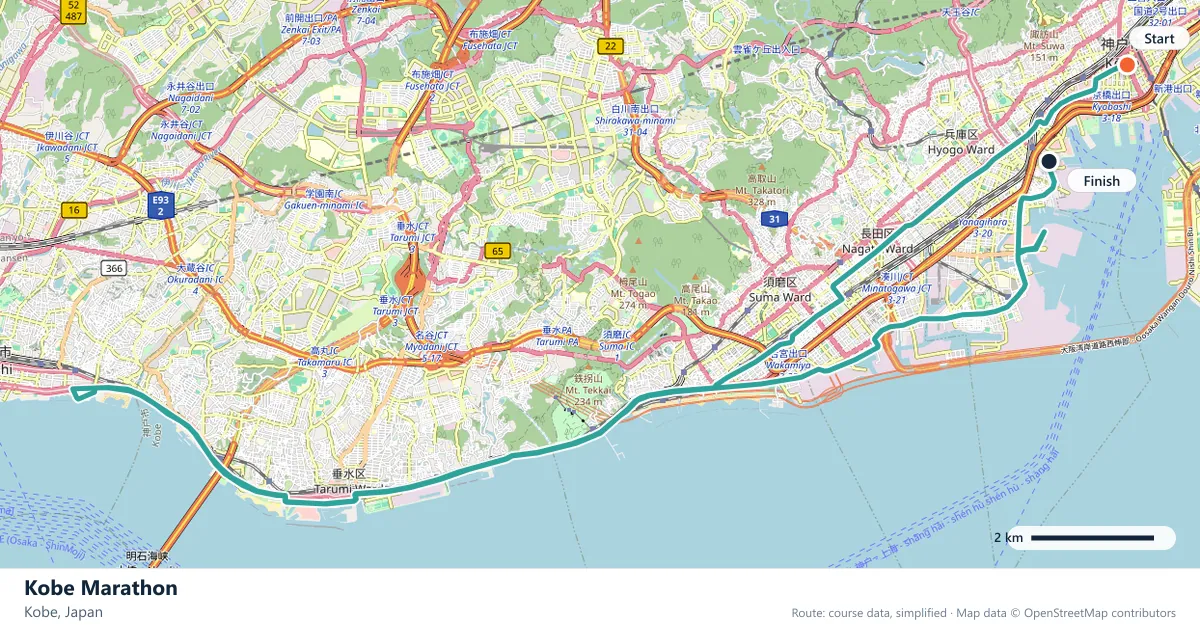
Where does the Kobe Marathon run?
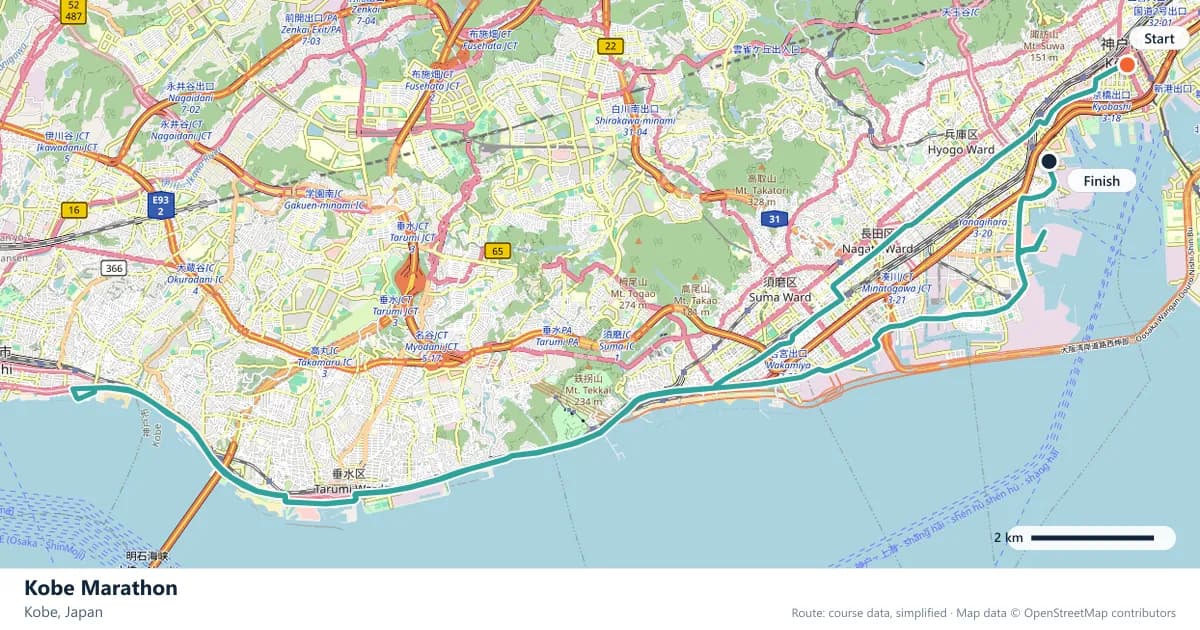
Interactive map
The trace follows the organizer's published course, simplified for the screen: the orange dot is the start, the dark dot the finish. Scroll to zoom, drag to pan.
What is the Kobe Marathon course like?
A November marathon through the port city, from the harbour front out towards Mount Rokko and back. Rolling terrain, big Japanese crowds and reliably good autumn weather.
- Next edition
- 15 November 2026
- Elevation gain
- 115 m
- Profile
- Undulating
- First run
- —
Course guide
Kobe's marathon runs between two landmarks: the harbour and Mount Rokko. The next edition is on 15 November 2026, and the course leaves the waterfront, heads out towards the mountain and returns to the city. It climbs about 115 metres, carries a World Athletics Label and is well suited to fast times.
The profile is rolling, but the total is modest and the autumn weather is reliably good. What gives the race its character is the setting: a compact port city, a mountain backdrop and crowds that fill the streets. Kobe is a marathon that feels deeply local.
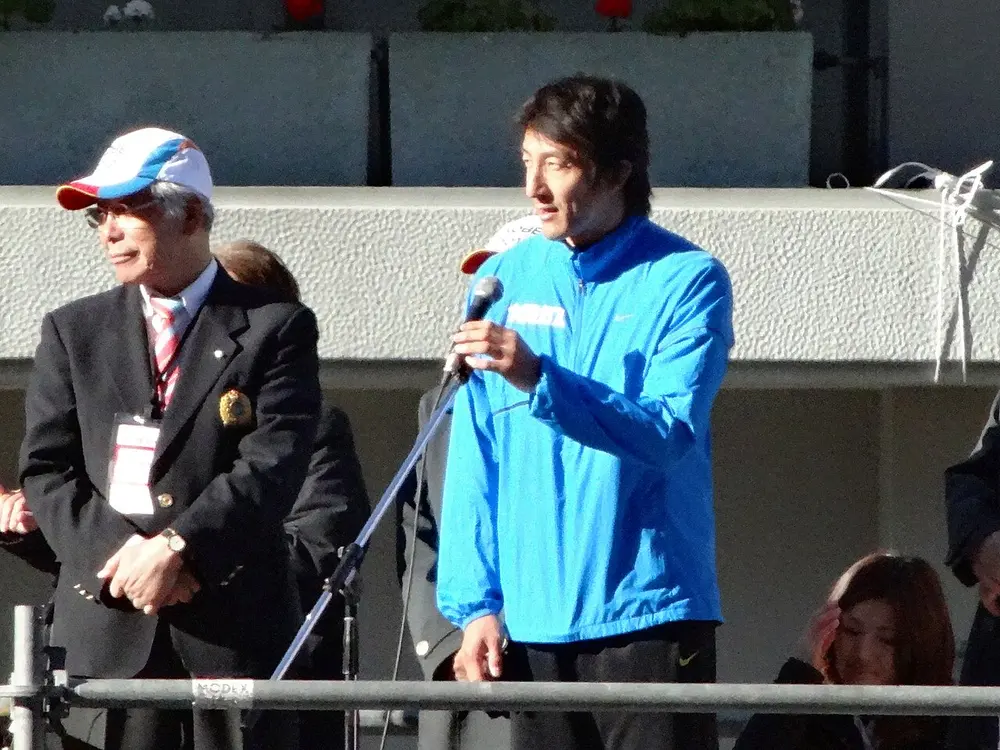
2012 Kobe Marathon 03n. Photo: 663highland / Wikimedia Commons, CC BY 2.5.
The course
The race starts on the harbour front and runs out towards Mount Rokko before turning back towards the city. The terrain rolls, with about 115 metres of climbing. That is modest, but the changes of gradient are frequent enough that the course feels active.
The harbour front gives the race its opening character, while the approach towards Mount Rokko introduces the rolling ground that defines the middle of the course. The city sections bring large crowds. The combination of gentle hills, good autumn weather and strong support makes Kobe a race that can produce a quick time.
From the harbour to Rokko
The harbour front is the race's opening statement. Kobe is a port city, and the waterfront gives the marathon a maritime start before the route turns inland. The change from water to mountain is the defining movement of the day.
The approach towards Mount Rokko introduces the climbing. It is not a mountain ascent in the alpine sense, but the road tilts upward and the legs notice. The return to the city brings its own rhythm, with the gradient switching and the crowds thickening. Runners who manage the transition well are the ones who finish strongly.
The crowd effect
Kobe's crowds are part of the course. Large Japanese crowds line the streets, particularly through the city sections, and their support gives the race an energy that a quiet coastal road cannot match. On a good day, the noise can carry a tired runner through a hard kilometre.
It can also pull you out of your plan. The excitement of a crowded street raises the pace, and the rolling ground makes it easy to spend too much before the return. Use the crowds as fuel, not as a signal to speed up.
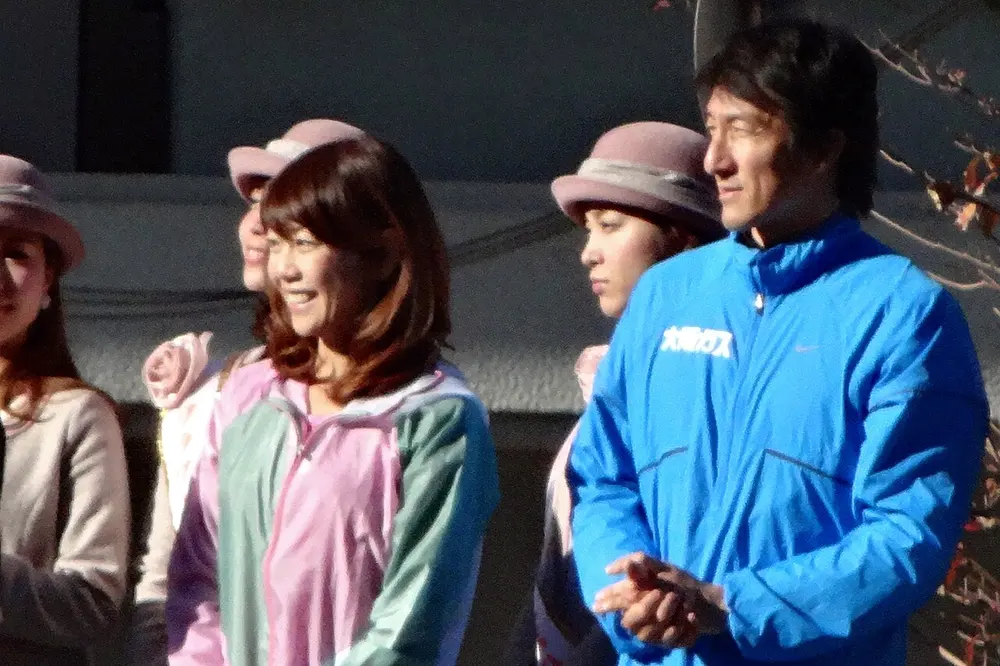
2012 Kobe Marathon 05s3. Photo: 663highland / Wikimedia Commons, CC BY 2.5.
Autumn in Kobe
The race is held in mid-November, and the autumn weather is one of its strengths. The season is reliably good for running, and the city's setting — sea on one side, mountain on the other — makes the most of the mild conditions.
Autumn also gives the race a visual character. The hills behind the city, the harbour and the changing light combine to make Kobe one of the more attractive city marathons in Japan. Runners who take a moment to look around will remember the setting as much as the time.
The shape of a rolling race
About 115 metres of climbing is not a lot, but it is spread across the course in repeated rises. The result is a race that never settles into a long flat rhythm. There is always another gentle change of gradient coming, and the legs have to adapt.
That makes even pacing the central skill. Run the rises by effort, let the descents restore you and keep the flat sections controlled. Kobe rewards runners who can stay relaxed through the changes rather than those who attack every up.
A quick race with a mountain view
Kobe's combination of a modest profile, good autumn weather and strong crowds makes it a good candidate for a fast time. The course is not a flat time trial, but the rolling ground is gentle enough to allow a rhythm, and the city setting keeps the day moving.
The label reflects the event's standard. For runners, the appeal is the balance: a quick course, a memorable setting and a finish in a city that knows how to support a marathon. It is a race that suits a personal-best attempt and rewards anyone who enjoys a rolling, atmospheric city route.
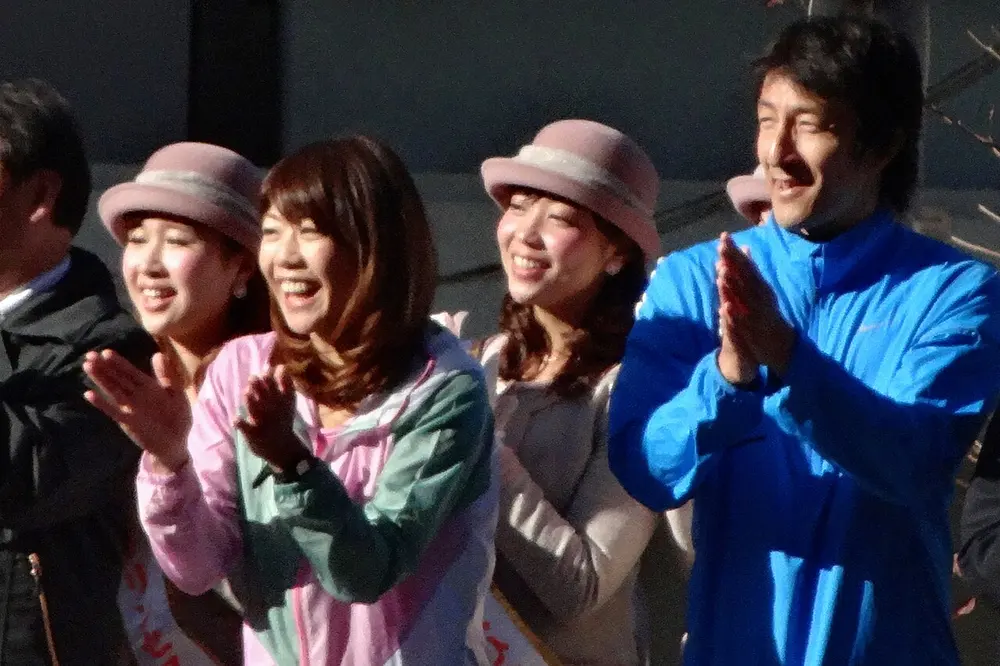
2012 Kobe Marathon 08s3. Photo: 663highland / Wikimedia Commons, CC BY 2.5.
Frequently asked questions
Answers to the questions runners ask before entering, drawn from this race's course guide and the directory's own data — the sources behind them are listed below.
When is the Kobe Marathon?
The race is on 15 November 2026. It is a mid-November race in the Japanese port city.
Is the Kobe Marathon flat or hilly?
It is undulating, climbing about 115 metres over the route. The route rolls through the city and out towards Mount Rokko, but the total elevation is modest.
Where does the course go?
The race starts on the harbour front, heads out towards Mount Rokko and returns to the city. The route moves between the port and the mountain backdrop.
Is Kobe a good race for a personal best?
The gentle rolling profile, mild autumn weather and strong crowds make it a good candidate for a fast time. The repeated rises still require even pacing.
Is it suitable for a first marathon?
The race is not built around first-timers. Its gentle rollers set the tone, and a first attempt would need a conservative plan.
Does the race hold a World Athletics label?
Yes. The Kobe Marathon carries a World Athletics Label.
More marathons in Japan
More marathons in Asia
Sources for this page
What each source below is used for on this page, and where to check this race yourself.
- World Athletics — the label calendar and the road-race regulations. Used to check whether the race holds a World Athletics label, and its elite competition details.
- AIMS — the international course-measurement standard behind the 42.195 km distance, and the AIMS race calendar.
- The organizer's own publications — course maps, race handbooks and published results. The date, course character and climbing on this page are compiled from them and re-checked each season.
“A World Athletics Label denotes a full application of the Competition and Technical Rules in, at a minimum, the elite component of the competition. Labels also denote superior standards in event organisation, safety and runner experience, support from public authorities to the event and a financial commitment to anti-doping.”
Where do these facts come from?
Dates, course type, climbing and time limits are compiled from the organizer's publications and re-checked each season; elevation is an estimate of total climbing rather than a survey figure. Always confirm race-day details with the organizer before making plans.
Last reviewed 27 October 2026