
Osaka Marathon
Osaka Castle gives this marathon its most recognisable image, but the race is not a museum tour. It is a big, modern city marathon held on 28 February 2027, looping past the castle and through…
By Global Marathon Routes editorial team · Last reviewed 27 October 2026
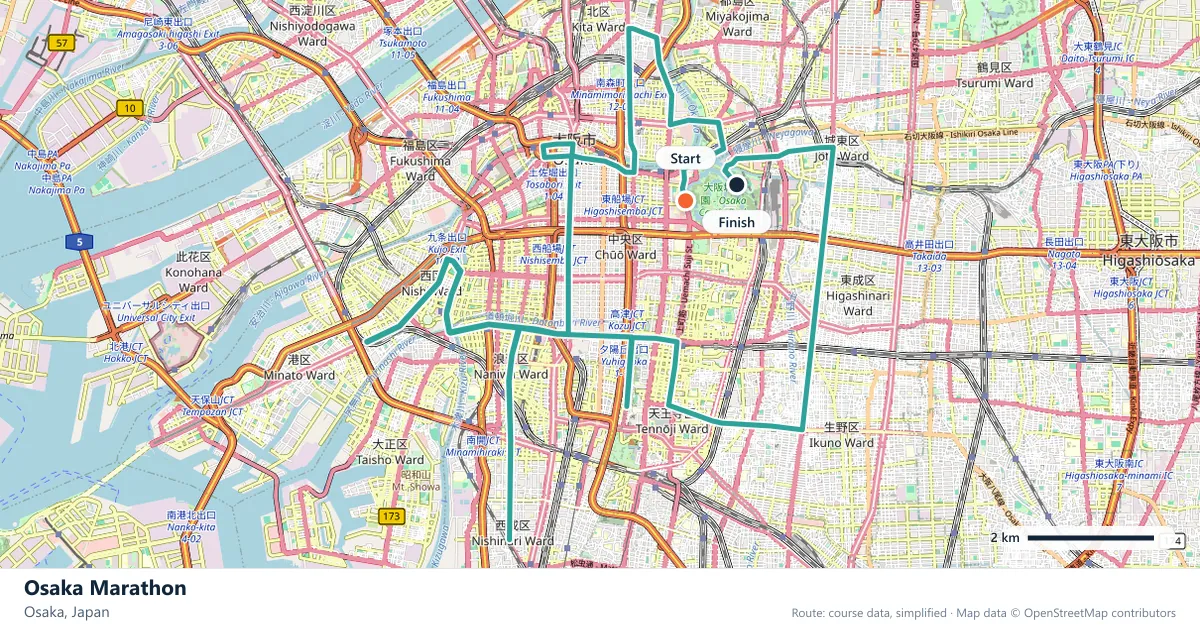
Where does the Osaka Marathon run?
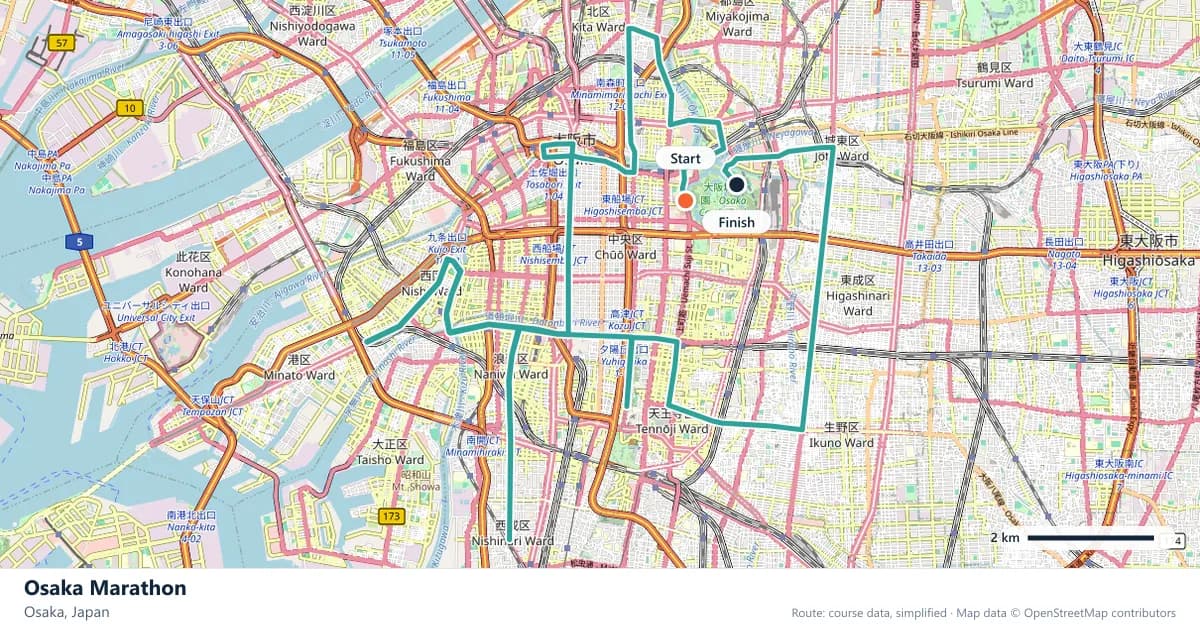
Interactive map
The trace follows the organizer's published course, simplified for the screen: the orange dot is the start, the dark dot the finish. Scroll to zoom, drag to pan.
What is the Osaka Marathon course like?
A big-city Japanese marathon that loops past Osaka Castle and through the commercial districts before finishing near the bay. Undulating, but wide and well supported.
- Next edition
- 28 February 2027
- Elevation gain
- 145 m
- Profile
- Undulating
- First run
- —
Course guide
Osaka Castle gives this marathon its most recognisable image, but the race is not a museum tour. It is a big, modern city marathon held on 28 February 2027, looping past the castle and through Osaka's commercial districts before finishing near the bay. The course is undulating, with about 145 metres of climbing, and it holds a World Athletics Gold Label.
Osaka keeps changing around the runner. Castle grounds give way to shopping streets, the streets give way to wider arterial roads, and the final kilometres open towards the water. The climbing is modest, the roads are wide, and the crowds are accustomed to the race. It can carry a personal best or a first marathon, if the early pace stays honest.
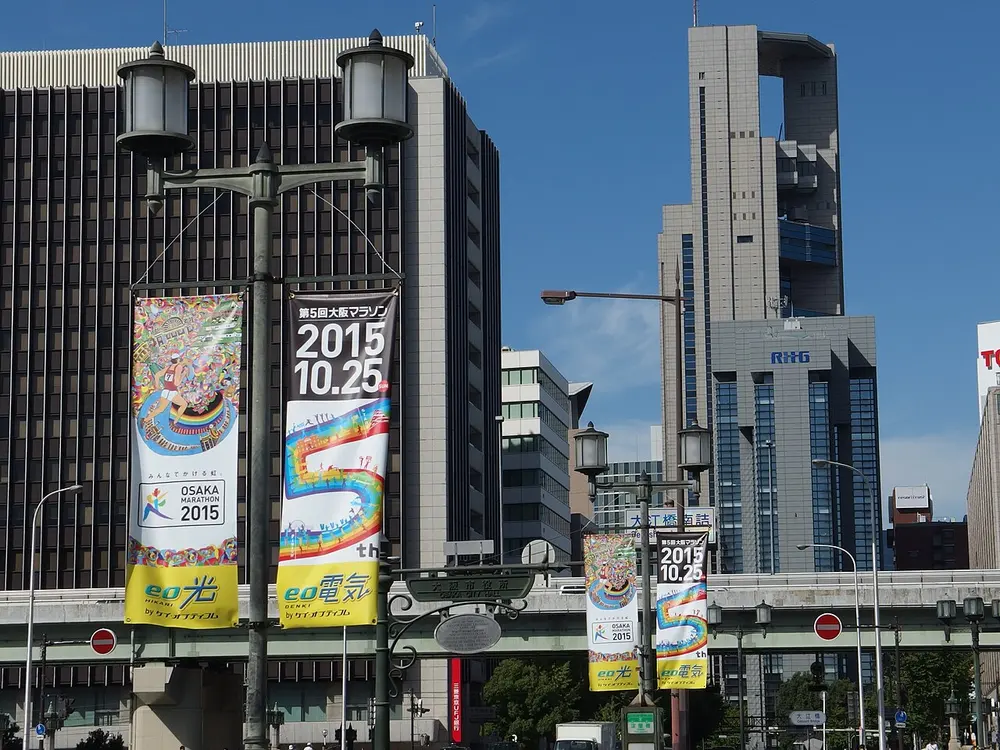
Advertising curtain of Osaka Marathon 2015. Photo: Mc681 / Wikimedia Commons, CC BY-SA 4.0.
The course
The route is a loop that takes in Osaka Castle and the commercial districts before turning towards the bay. The castle section is the race's signature, with the kind of crowd density that makes the kilometres pass quickly. The commercial streets that follow are busier with spectators and give the middle of the race a different energy.
The profile is undulating, with roughly 145 metres of climbing. The rises are short and rarely steep, and the wide roads let the field spread out instead of bunching at every incline. That combination makes the course easier to pace than a tighter city route, but it does not make it level: a flat-course target still needs adjusting.
| Race fact | Detail |
|---|---|
| Date | 28 February 2027 |
| Profile | Undulating |
| Elevation gain | About 145 m |
| Label | World Athletics Gold Label |
| Finish | Near Osaka Bay |
A castle in the middle of the race
Osaka Castle is more than a backdrop. The route passes it, the crowds gather around it, and the building gives runners a fixed point that is visible long before they reach it. For visitors, it is the image they carry home; for locals, it is the moment the race feels like it belongs to the city.
The practical risk is obvious. A landmark this prominent invites a surge, and a surge in the middle of a marathon is rarely free. The castle is best treated as a marker to enjoy and then release, not as a finish line in miniature. The race continues well beyond it, through the commercial streets and out towards the water.
February on the bay
Late February is still winter in Osaka. The race does not depend on heat management in the way a summer marathon does, and the city is not yet in its humid season. That makes the date a useful one for runners who want a big-city race without tropical conditions, and it puts the emphasis squarely on the course and on pacing.
The finish near the bay adds a second kind of exposure. After the shelter of the commercial districts, the final kilometres can feel more open, with the water and the skyline doing less to break the wind.
Racing the wide roads
Osaka's wide arterial roads are an advantage. They give runners room to choose a line, pass without dodging, and settle into a rhythm even when the field is large. On an undulating course, that space matters more than it sounds: it allows you to run your own pace up each rise instead of being carried along by the people around you.
The discipline is to use the space rather than abuse it. The first few kilometres can feel almost effortless on such roads, and the castle crowd can add to the illusion. A controlled opening, with the rises treated as small efforts rather than opportunities, leaves something for the bay and for the final climb-free run to the line.
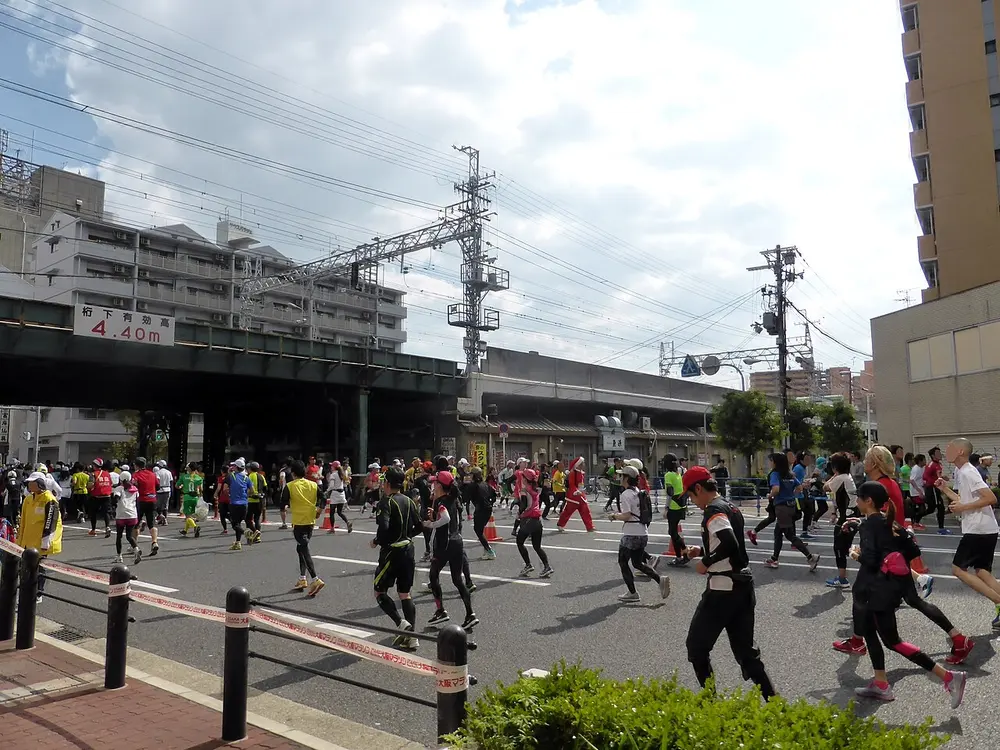
Osaka Marathon 2013 (18). Photo: Tokumeigakarinoaoshima / Wikimedia Commons, CC0.
A first marathon with a city attached
The Gold Label and the castle may suggest an intimidating race, but the course is manageable for a debut. The roads are wide, the support is strong, and the elevation gain is small enough that a sensible first-timer will not be defeated by the terrain. What the race asks for is patience and a realistic target, not hill-specific fitness.
For a personal-best attempt, the same qualities apply: there is little to disturb the rhythm beyond the short rises, and the course gives a well-paced runner a fair chance.
Osaka's tests
- The castle crowd. The atmosphere peaks around Osaka Castle. Enjoy it without letting it pull you into a faster kilometre.
- Short rises. About 145 metres of climbing is spread across the route. Run each rise by effort and recover on the other side.
- The open finish. The bay section feels different from the commercial streets. Keep something for it rather than emptying everything at the castle.
- Wide-road pacing. The roads invite an ambitious start. Use the space to hold your own pace, not to chase the field.
- The journey home. The finish is near the bay, so plan the return before race morning.
Frequently asked questions
Answers to the questions runners ask before entering, drawn from this race's course guide and the directory's own data — the sources behind them are listed below.
When is the Osaka Marathon in 2027?
The race is on 28 February 2027. It is a late-winter city marathon and holds a World Athletics Gold Label.
Is the Osaka Marathon a flat course?
No. It is undulating, with about 145 metres of climbing. The rises are short and the roads are wide, so it does not demand specialised hill training, but a flat-course pacing plan needs adjusting.
Is the Osaka Marathon good for a personal best?
It can be. The climbing is modest, the roads are wide, and the course offers long stretches where a steady rhythm is possible. The main risks are going out too fast through the castle crowds and underestimating the cumulative effect of the short rises.
Is the Osaka Marathon suitable for a first marathon?
Yes. The wide roads, strong crowd support and moderate elevation gain make it a manageable debut, provided the first half is paced conservatively. The finish near the bay is straightforward, but the post-race journey needs planning.
Where does the Osaka Marathon run?
The course loops past Osaka Castle and through the commercial districts of Osaka, then finishes near the bay. It stays within the city throughout.
What is the highlight of the Osaka Marathon course?
Osaka Castle is the signature sight, and the streets around it carry much of the crowd support. The finish near the bay gives the race a different, more open ending.
More marathons in Japan
More marathons in Asia
Sources for this page
What each source below is used for on this page, and where to check this race yourself.
- World Athletics — the label calendar and the road-race regulations. Used to check whether the race holds a World Athletics label, and its elite competition details.
- AIMS — the international course-measurement standard behind the 42.195 km distance, and the AIMS race calendar.
- The organizer's own publications — course maps, race handbooks and published results. The date, course character and climbing on this page are compiled from them and re-checked each season.
“A World Athletics Label denotes a full application of the Competition and Technical Rules in, at a minimum, the elite component of the competition. Labels also denote superior standards in event organisation, safety and runner experience, support from public authorities to the event and a financial commitment to anti-doping.”
Where do these facts come from?
Dates, course type, climbing and time limits are compiled from the organizer's publications and re-checked each season; elevation is an estimate of total climbing rather than a survey figure. Always confirm race-day details with the organizer before making plans.
Last reviewed 27 October 2026