
York Marathon
York's marathon begins and ends among the city's walls and minster, and in between it follows the River Ouse into the Yorkshire countryside. The next edition is expected in October 2027.
By Global Marathon Routes editorial team · Last reviewed 27 October 2026
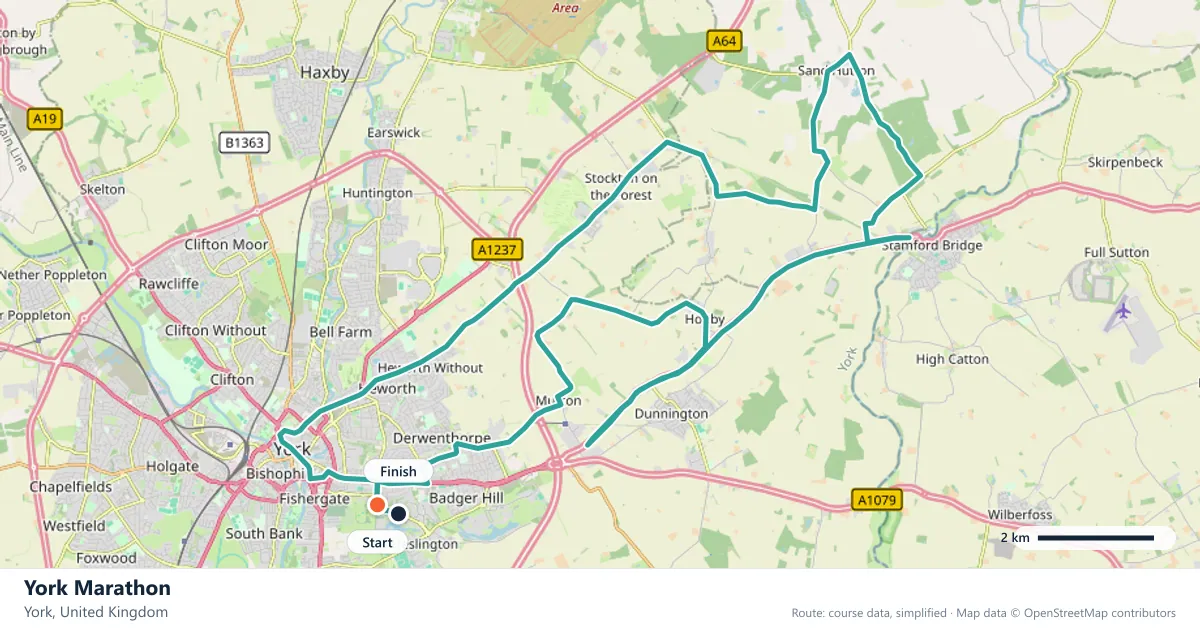
Where does the York Marathon run?
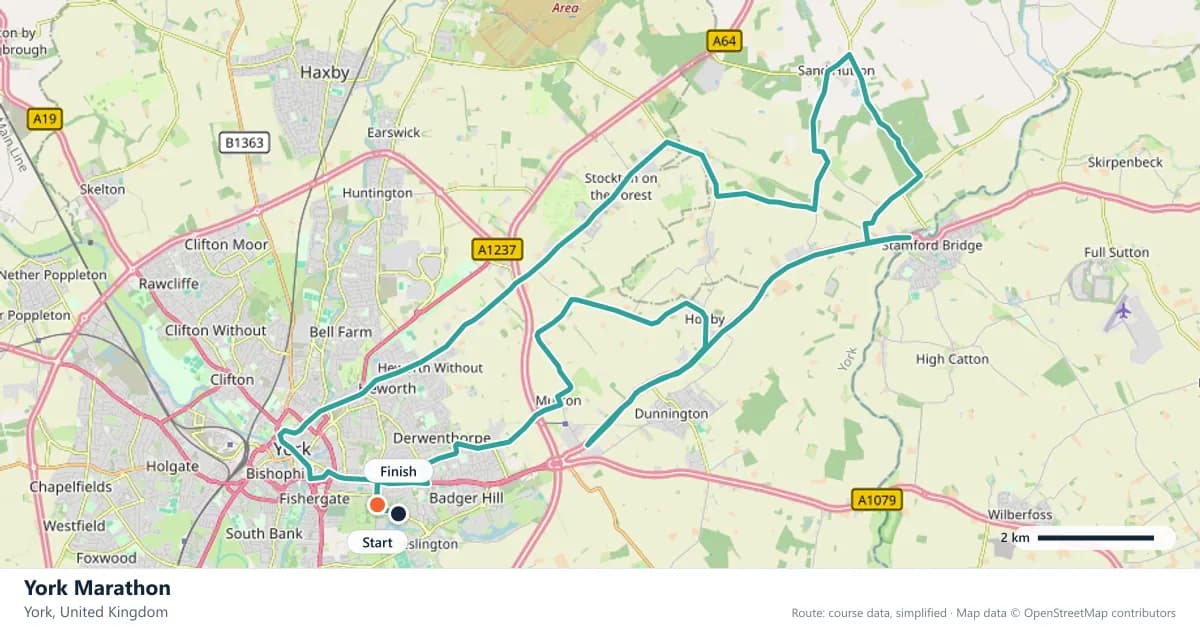
Interactive map
The trace follows the organizer's published course, simplified for the screen: the orange dot is the start, the dark dot the finish. Scroll to zoom, drag to pan.
What is the York Marathon course like?
Runs from the city centre out along the River Ouse and back through the Yorkshire countryside. Gently rolling, with the walls and minster framing the start and finish.
- Next edition
- October 2027 (expected)
- Elevation gain
- 124 m
- Profile
- Undulating
- First run
- —
Course guide
York's marathon begins and ends among the city's walls and minster, and in between it follows the River Ouse into the Yorkshire countryside. The next edition is expected in October 2027. The course is gently rolling, with about 124 metres of climbing.
The mix of city streets and open countryside gives the race a different shape from a metropolitan loop. The first and last miles are urban; the middle is rural and quieter. The walls and the minster frame the day at both ends.
With 124 metres of gain, the profile is undulating rather than hilly. It is enough to notice in the second half, but not enough to define the race. The course suits a steady rhythm and a patient first half.
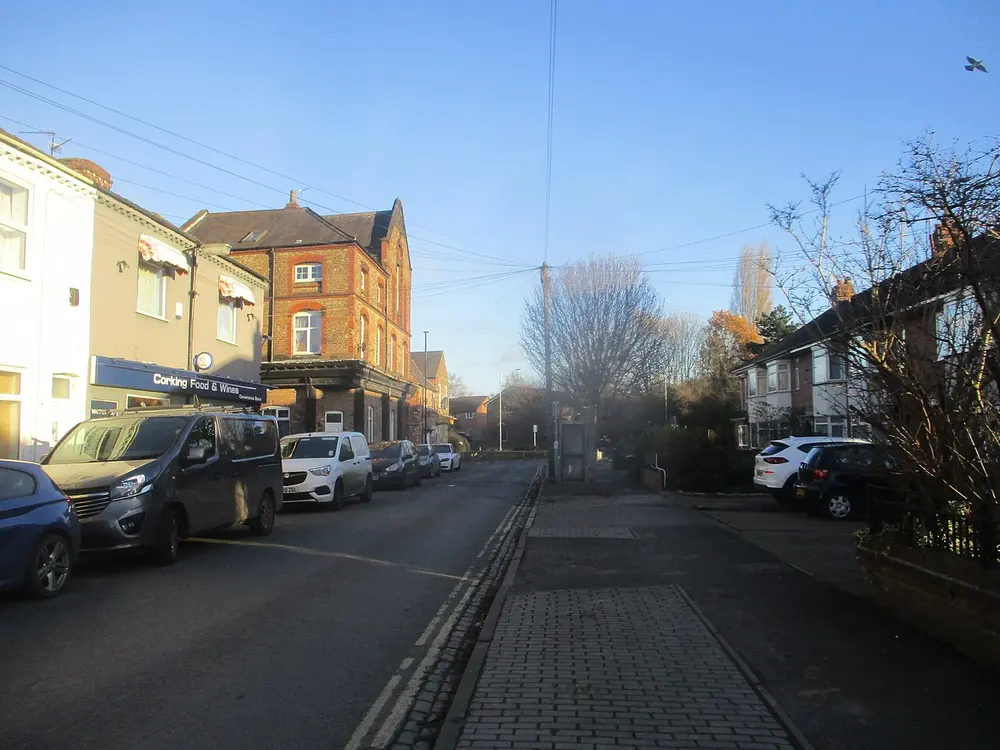
Garfield Terrace, York (24th November 2023). Photo: Mtaylor848 / Wikimedia Commons, CC BY-SA 4.0.
The course
The route leaves the city centre and follows the River Ouse for the early part of the race. York's walls and minster frame the start and finish. The middle section heads into the Yorkshire countryside, where the course becomes quieter and more exposed. The route is an out-and-back rather than a series of city laps, so the countryside is a real part of the race.
At 124 metres of gain the profile is gently rolling rather than hilly, but the rural rises are enough to demand attention. The return to the city gives the last few kilometres a lift.
Along the Ouse
The Ouse is the spine of York, running through the city centre and out into the flat Vale of York. The race follows it early, so the opening miles have a calm rhythm and a clear sense of direction. The river was York's trading artery for centuries, and the city's wharves and bridges still follow its line.
York's centre is tight and historic, so the early miles are the busiest. Settle into pace gradually instead of weaving through the field, and save the quicker running for when the road opens out.
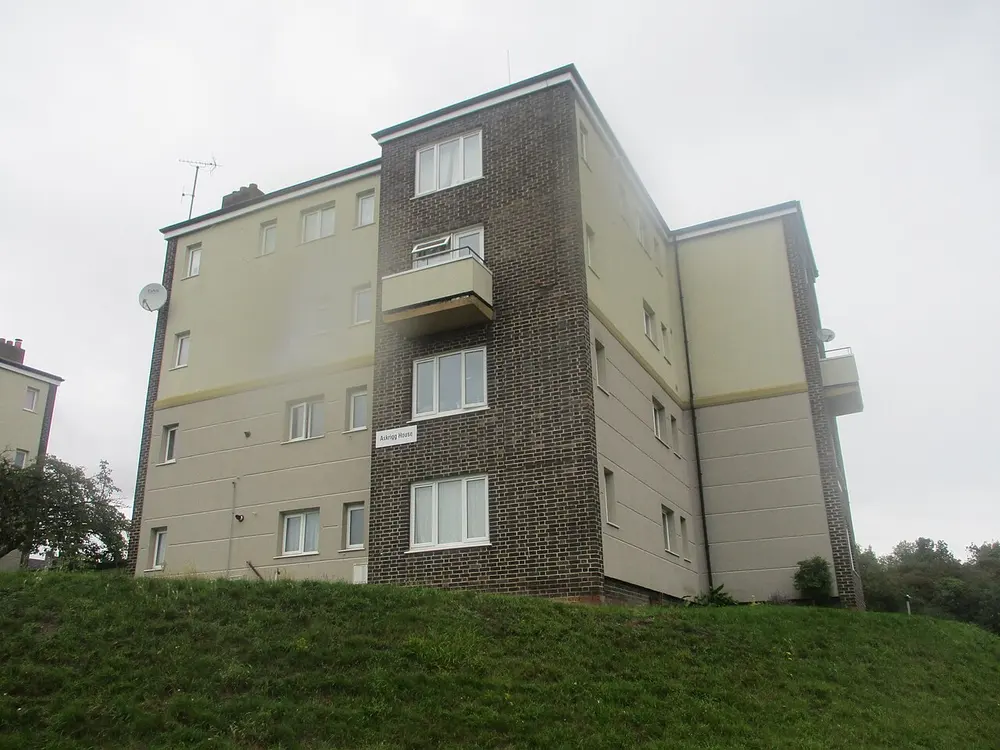
Askrigg House, Holgate, York (28th August 2020). Photo: Mtaylor848 / Wikimedia Commons, CC BY-SA 4.0.
The rural middle
Beyond the city, the route opens into farmland and quiet lanes. The crowds thin, the noise drops, and the race becomes a solo effort. The Vale of York is flat, but the route's rural roads are not: short rises break up the rhythm and keep the legs working.
Do not rely on the crowd to carry you through the middle. Carry your own rhythm and use the return to the city as a target. The quiet miles are where patience pays, and the return to the city is a different experience from the outward leg, with the city growing ahead of you.
October and the walls
The next edition is expected in October 2027. The October date places the race in autumn, when the city is quieter than in summer and the countryside is turning.
The city walls are medieval, and walking them is the best way to understand the scale of the start and finish. The finish brings you back to the walls and the minster, which is a strong way to end a marathon. Save something for the last few kilometres; the city gives you a lift, but it will not carry you.
A city of layers
York has been a Roman legionary fortress, a Viking capital and a medieval wool town. The walls, the minster, the Shambles and Clifford's Tower are the visible layers. The Minster is one of the largest Gothic cathedrals in northern Europe, and its towers dominate the skyline from almost every approach. The city frames the race without defining its middle; the running is in the streets and the countryside beyond.
Anyone who has walked the walls will recognise the scale. The race is a good excuse to spend a weekend in the city, with the finish close to everything worth seeing.
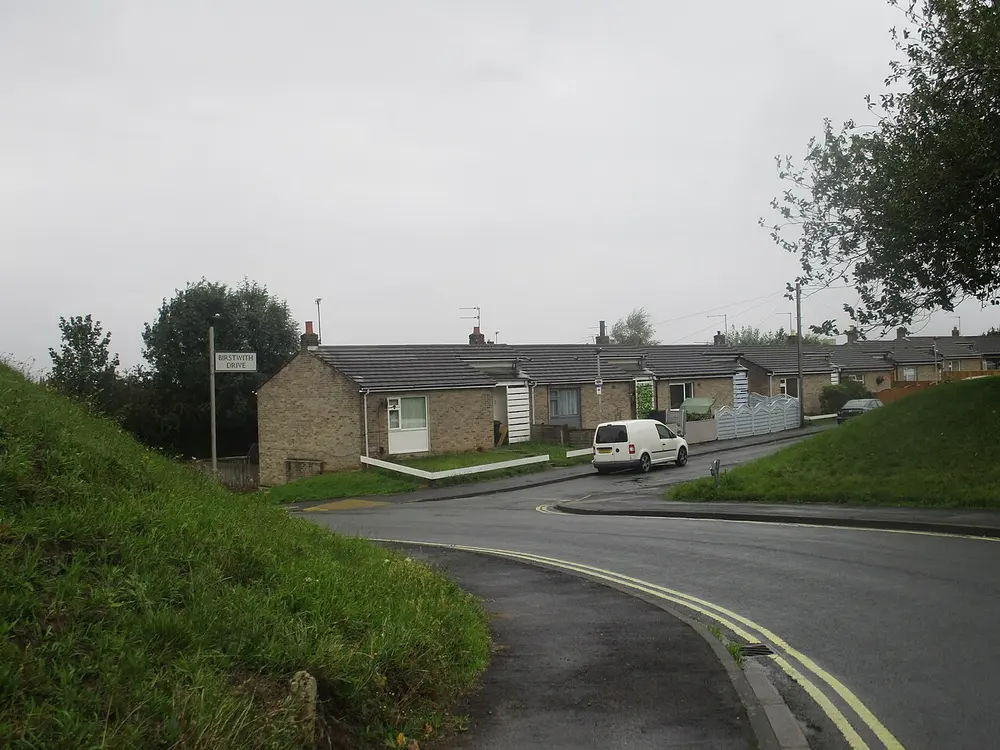
Birstwith Drive, Holgate, York (28th August 2020). Photo: Mtaylor848 / Wikimedia Commons, CC BY-SA 4.0.
Frequently asked questions
Answers to the questions runners ask before entering, drawn from this race's course guide and the directory's own data — the sources behind them are listed below.
When is the York Marathon?
The next edition is expected in October 2027. The date is confirmed.
Is the York Marathon flat or hilly?
It is undulating, with about 124 metres of climbing. The profile is gently rolling rather than hilly, with no sustained ascent. The rural middle makes the rises feel bigger than the total suggests.
Is York good for a personal best?
The climbing is low enough not to rule out a personal best, and the course has long flat stretches along the Ouse. The rural rises and the October weather are the variables to prepare for.
Is it a good first marathon?
Yes. The gently rolling route is manageable for a first marathon, with no sustained climb and a city-centre start that is easy to reach. The rural section is quiet, so prepare to run your own race.
Where is the York Marathon run?
It starts in York's city centre and follows the River Ouse out into the Yorkshire countryside before returning. The city walls and minster frame the start and finish.
Does the course stay in the city?
No. The race begins and ends in the city, but the middle runs through the Yorkshire countryside, giving it a rural character.
More marathons in United Kingdom
More marathons in Europe
Sources for this page
What each source below is used for on this page, and where to check this race yourself.
- World Athletics — the label calendar and the road-race regulations. Used to check whether the race holds a World Athletics label, and its elite competition details.
- AIMS — the international course-measurement standard behind the 42.195 km distance, and the AIMS race calendar.
- The organizer's own publications — course maps, race handbooks and published results. The date, course character and climbing on this page are compiled from them and re-checked each season.
Where do these facts come from?
Dates, course type, climbing and time limits are compiled from the organizer's publications and re-checked each season; elevation is an estimate of total climbing rather than a survey figure. Always confirm race-day details with the organizer before making plans.
Last reviewed 27 October 2026