
Galway Marathon
The Galway Marathon is a single out-and-back along the coast road west of the city. The route heads towards Barna with Galway Bay on one side, turns at the far end, and returns the same way.
By Global Marathon Routes editorial team · Last reviewed 27 October 2026
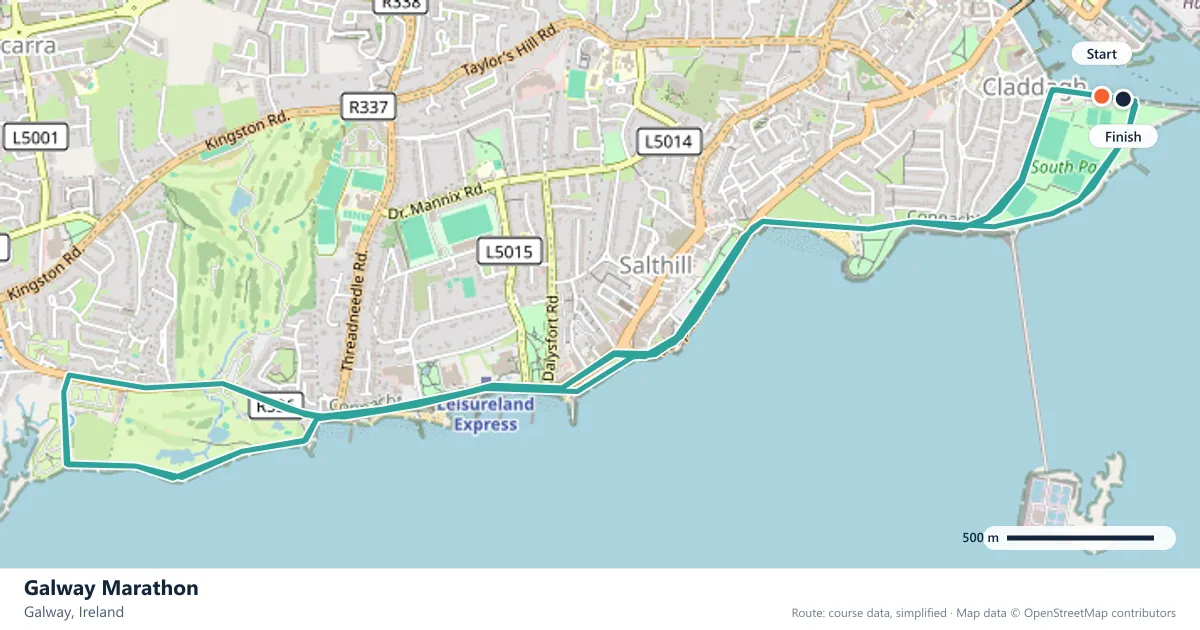
Where does the Galway Marathon run?
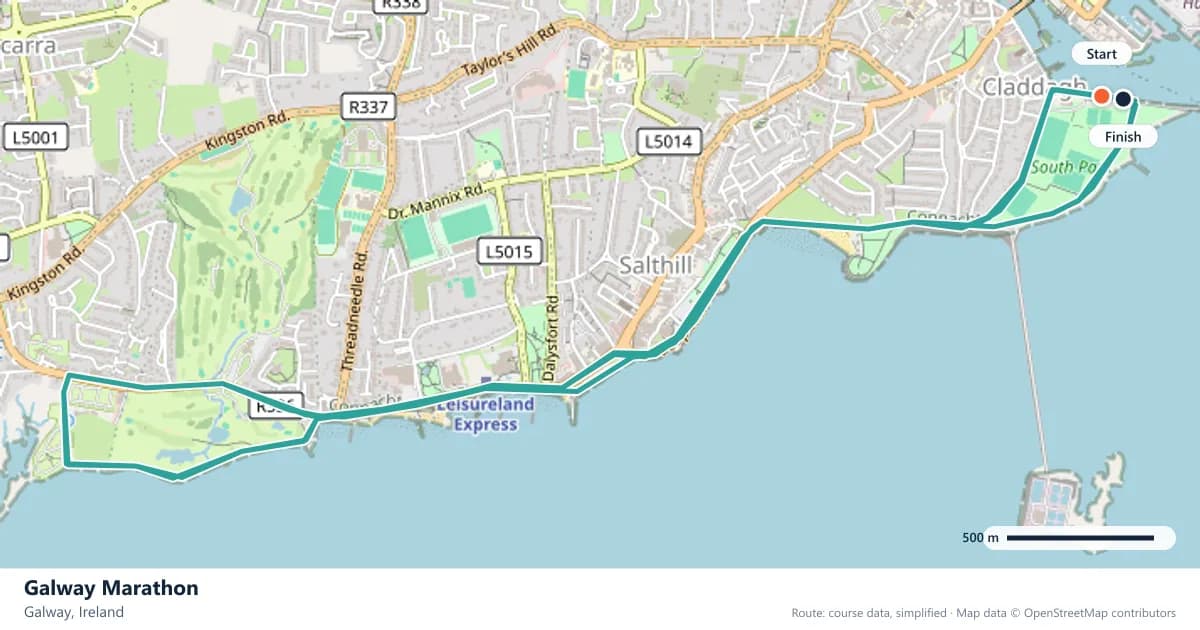
Interactive map
The trace follows the organizer's published course, simplified for the screen: the orange dot is the start, the dark dot the finish. Scroll to zoom, drag to pan.
What is the Galway Marathon course like?
An out-and-back along the coast road west of Galway city, running towards Barna with Galway Bay on one side. Almost nothing in the way of climbing, and the sea air keeps the autumn racing cool.
- Next edition
- October 2027 (expected)
- Elevation gain
- 34 m
- Profile
- Flat
- First run
- —
Course guide
The Galway Marathon is a single out-and-back along the coast road west of the city. The route heads towards Barna with Galway Bay on one side, turns at the far end, and returns the same way. The 2026 race was held on 3 October, and the profile is flat, with about 34 metres of climbing.
Almost nothing gets in the way of the running. There are no hills to break the rhythm and no complicated route to memorise: the sea is on one side, the road is in front, and the second half is the first half in reverse. That simplicity is the point.
Galway is a city of music, student energy and weather that changes its mind, and the race uses the bay road as a low-key stage. It is a first marathon rather than a personal-best chase, and the flat route makes the distance the only real opponent.
The course
The race follows the coast road west from Galway city towards Barna. Galway Bay stays on one side for much of the route, and the flat profile means the only real challenge is the distance itself. The 34 metres of climbing are barely noticeable, even by the standards of a flat city marathon.
Because the second half retraces the first, runners know exactly what is coming. That can be mentally tough, but it also makes pacing simple and removes any uncertainty about the terrain ahead. The turnaround is the only significant change of direction, and it is the point where the race really begins.
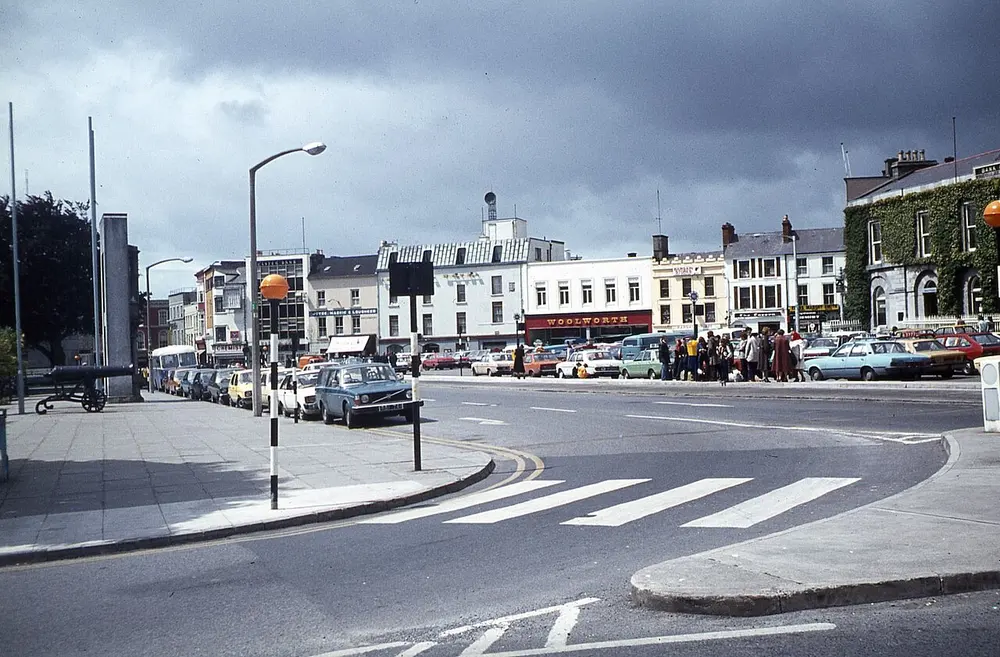
Eyre Square, Galway - geograph.org.uk. Photo: Colin Park / Wikimedia Commons, CC BY-SA 2.0.
The road to Barna
Barna sits near the far end of the outward leg, a village on the edge of the city where the coast begins to feel more like Connemara. The road out is open, with the bay on one side and the low ground of the western suburbs on the other.
The sea is the race's constant companion. On a clear day the water and the sky do most of the work, and the villages along the coast give the route a series of small markers. On a grey day the same landscape feels emptier, and the out-and-back format becomes a mental challenge as much as a physical one.
The flatness removes the usual tactical decisions. There is no hill to save energy for and no descent to recover on, so the pace you choose at the start is the pace you will be living with for the rest of the morning.
Out and back: the mental half
Turning around is always a psychological moment, and on this course it is the defining one. You meet the rest of the field coming the other way, the wind may switch from tail to head, and the finish is suddenly the full distance away rather than a vague point on the horizon.
The best response is to break the return into small sections. Use the villages, the bends and the bay as markers rather than thinking about the whole 21 km. Keep the effort even, and do not race the runners coming towards you.
The flat road offers no natural walk breaks, which makes discipline more important. A short walk at an aid station is fine if you need it, but the course will not give you a hill as an excuse to slow down. You have to choose the pace deliberately and then hold it.
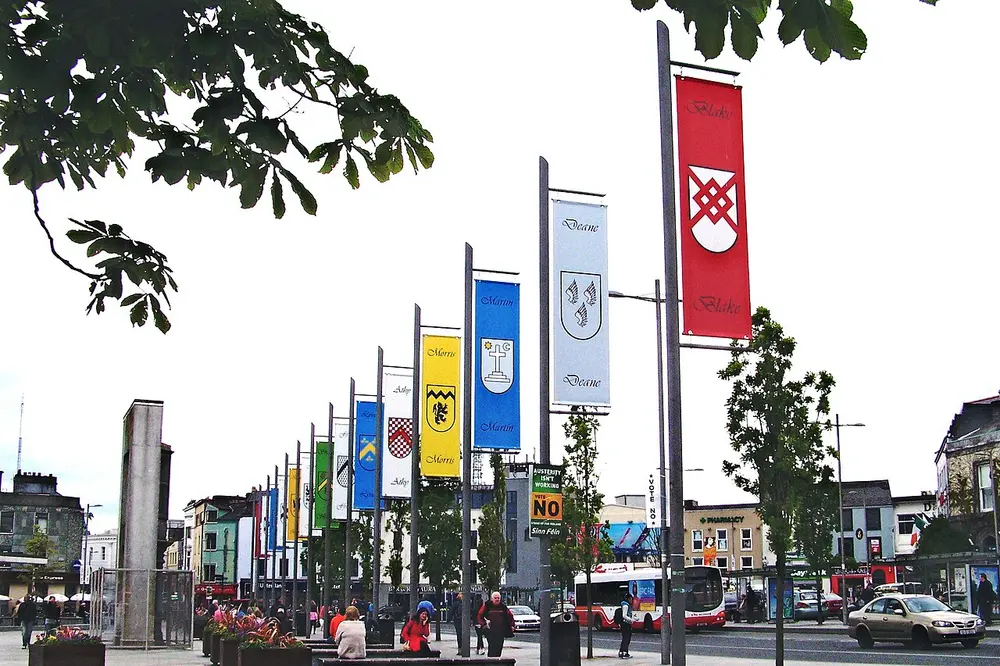
Galway - Eyre Square - Banners of Fourteen Tribes of Galway - geograph.org.uk. Photo: Suzanne Mischyshyn / Wikimedia Commons, CC BY-SA 2.0.
October on Galway Bay
The autumn date works in the race's favour. The sea air keeps the running cool, and October is a month when Galway is still lively without the full summer crowds. The city's streets, the Spanish Arch and the long promenade are all part of the weekend.
Galway is a compact city with a strong musical and student culture, and the race fits into that rather than overpowering it. The atmosphere is friendly, the course is easy to follow, and the bay gives the morning a setting that few marathons can match.
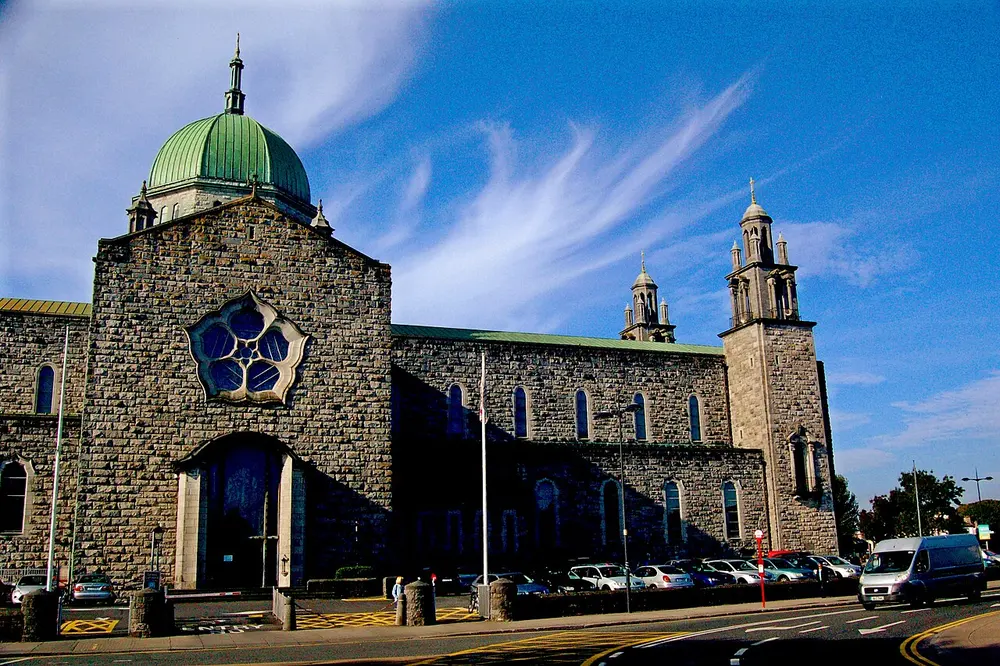
Galway - Galway (St Nicholas) Cathedral - East Side - geograph.org.uk. Photo: Joseph Mischyshyn / Wikimedia Commons, CC BY-SA 2.0.
Frequently asked questions
Answers to the questions runners ask before entering, drawn from this race's course guide and the directory's own data — the sources behind them are listed below.
When is the Galway Marathon?
The edition covered here was held on 3 October 2026. It is an autumn race along the coast west of Galway city.
Is the Galway Marathon a flat course?
Yes. It climbs only about 34 metres over 42.195 km, which is close to level. There are no real hills to train for.
Is Galway suitable for a first marathon?
The flat, simple course is a good introduction to the distance. The out-and-back format is mentally demanding, but it removes any uncertainty about the route, which helps on a first attempt.
Where is the Galway Marathon run?
It is run along the coast road west of Galway city, heading towards Barna with Galway Bay on one side. The course then returns the same way.
Is the course an out-and-back?
Yes. The route goes out along the coast road and returns the same way, so the second half retraces the first.
What makes the out-and-back hard?
The turnaround changes the psychology of the race, and the flat road offers no natural breaks. You meet other runners, the wind can change, and the finish is still a long way off. Use landmarks and even effort to stay patient.
More marathons in Ireland
More marathons in Europe
Sources for this page
What each source below is used for on this page, and where to check this race yourself.
- World Athletics — the label calendar and the road-race regulations. Used to check whether the race holds a World Athletics label, and its elite competition details.
- AIMS — the international course-measurement standard behind the 42.195 km distance, and the AIMS race calendar.
- The organizer's own publications — course maps, race handbooks and published results. The date, course character and climbing on this page are compiled from them and re-checked each season.
Where do these facts come from?
Dates, course type, climbing and time limits are compiled from the organizer's publications and re-checked each season; elevation is an estimate of total climbing rather than a survey figure. Always confirm race-day details with the organizer before making plans.
Last reviewed 27 October 2026