
Dublin Marathon
Dublin's marathon is the largest in Ireland, and it has been part of the October bank-holiday weekend since 1980. The 2026 edition is on 25 October, and it holds a World Athletics Elite Label.
By Global Marathon Routes editorial team · Last reviewed 27 October 2026
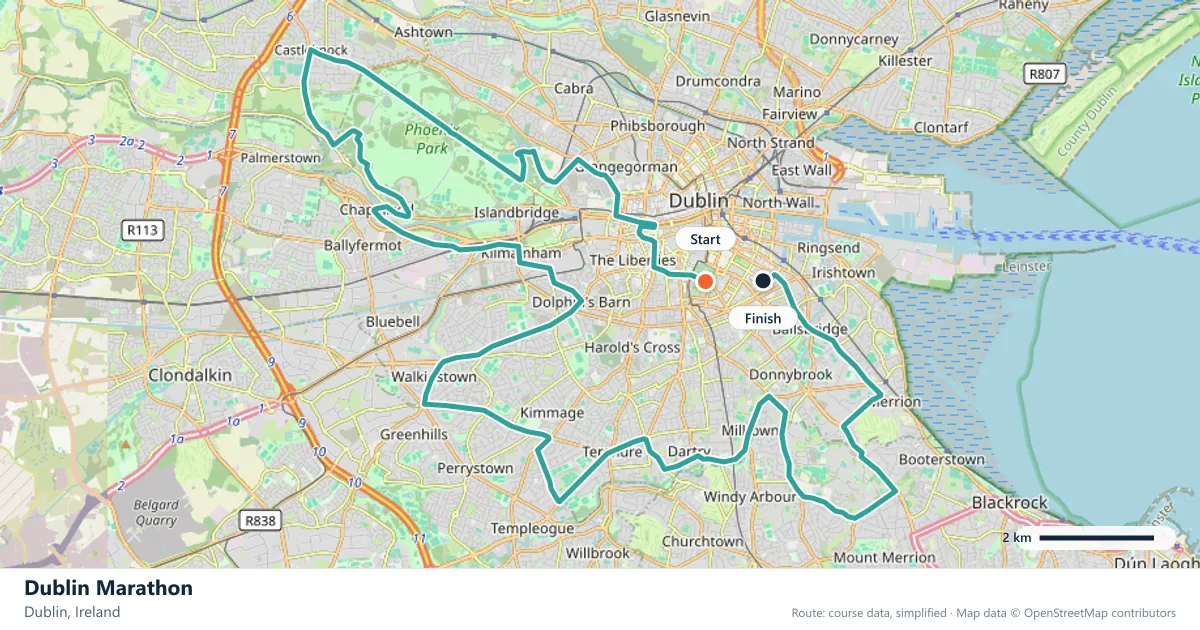
Where does the Dublin Marathon run?
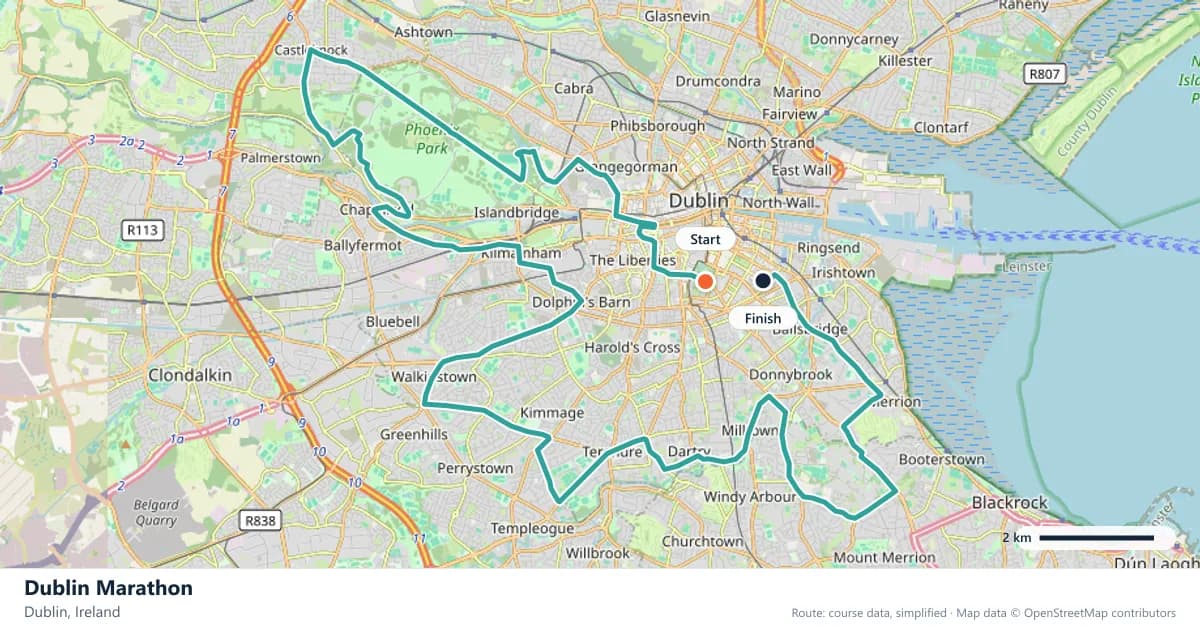
Interactive map
The trace follows the organizer's published course, simplified for the screen: the orange dot is the start, the dark dot the finish. Scroll to zoom, drag to pan.
What is the Dublin Marathon course like?
Ireland's largest marathon, run on the October bank-holiday weekend since 1980. The course works through the north and south sides of the city and takes a long loop through Phoenix Park.
- Next edition
- October 2027 (expected)
- Elevation gain
- 216 m
- Profile
- Undulating
- First run
- —
Course guide
Dublin's marathon is the largest in Ireland, and it has been part of the October bank-holiday weekend since 1980. The 2026 edition is on 25 October, and it holds a World Athletics Elite Label. The course is undulating, with about 216 metres of climbing, and it works through both the north and south sides of the city.
The scale is part of the appeal. Dublin is a city of low buildings and wide skies, and the marathon uses the Liffey, the Georgian streets and Phoenix Park to keep the route readable. The park loop is the longest open section; the rest is city running, with crowds and corners.
It is a first marathon rather than a time trial. The repeated rises and the distance add up, and the best days here tend to belong to runners who start calmly and finish strongly.
The course
The race is a loop that takes in both the north and south sides of Dublin. It uses Phoenix Park for a long section, where the field can spread out and the route feels more open than the city streets. The rest of the course works through residential and commercial districts on both banks of the Liffey.
The undulating character comes from repeated short rises rather than one long climb. Around 216 metres is enough to matter over 42.195 km, especially if the first half is run too quickly, but it is not a mountain course. The finish is in the city, and the final kilometres are as much about holding form as finding speed.
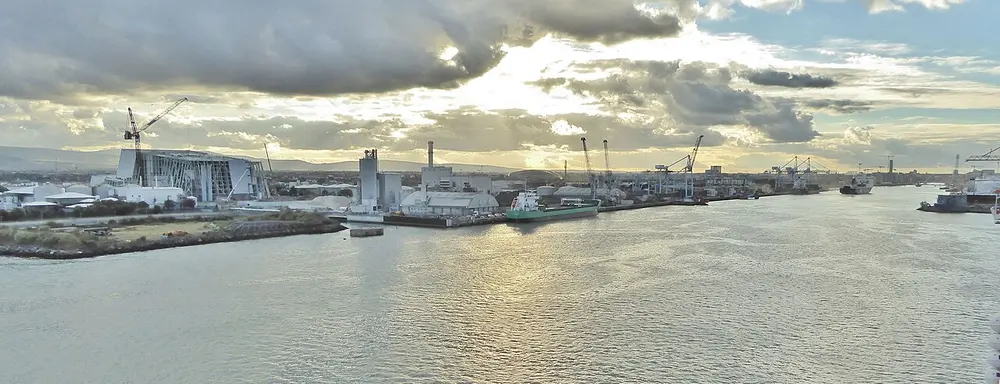
Dublin skyline and River Liffey from ferry arriving at Dublin Port - geograph.org.uk. Photo: Chris Morgan / Wikimedia Commons, CC BY-SA 2.0.
Phoenix Park and the long opening loop
Phoenix Park is one of Europe's largest enclosed city parks, and it gives the marathon a stretch of open ground that feels nothing like the rest of the route. The field spreads out, the noise of the city falls away, and the walking paths and tree-lined avenues take over.
The park is also home to the President's residence, Dublin Zoo and a herd of fallow deer. The race does not turn into a wildlife tour, but the deer and the open grassland are part of what makes this section memorable.
The danger is the quiet. With fewer crowds and fewer corners, it is easy to drift faster than planned. Check your watch, hold your effort, and treat the park as a place to bank patience rather than time.
North side, south side
Dublin's two sides of the Liffey have distinct characters, and the marathon uses both. The north side brings the wide streets and the docklands; the south side brings the Georgian squares and the older residential streets.
The repeated rises are spread across both halves, so there is no single climb to prepare for. The course asks for even effort and a willingness to let the pace vary with the ground. Runners who try to hold a fixed pace on every rise will find the last 10 km much harder than the profile suggests.
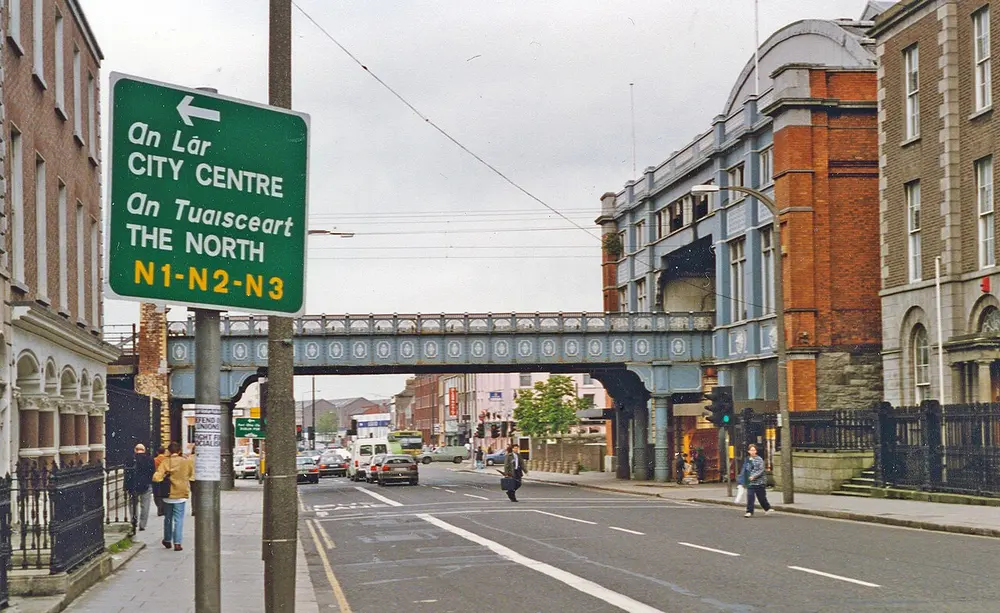
Dublin, north on Westland Row to bridge of City of Dublin Junction Railway, 1993 - geograph.org.uk. Photo: Ben Brooksbank / Wikimedia Commons, CC BY-SA 2.0.
The bank-holiday weekend
The race has been held on the October bank-holiday weekend since 1980, and that long-standing date is part of its identity. The city is used to the marathon, the pubs and cafés are busy, and the Monday holiday gives runners a day to recover before travelling home.
October weather in Dublin can be anything from bright and calm to wet and windy, so pack for a range rather than a single forecast. The city centre is compact and walkable, which makes the weekend easy to manage without a car.
The bank holiday also means accommodation fills up. Book early, and plan to stay close enough to the start and finish that race morning does not become a logistics exercise.
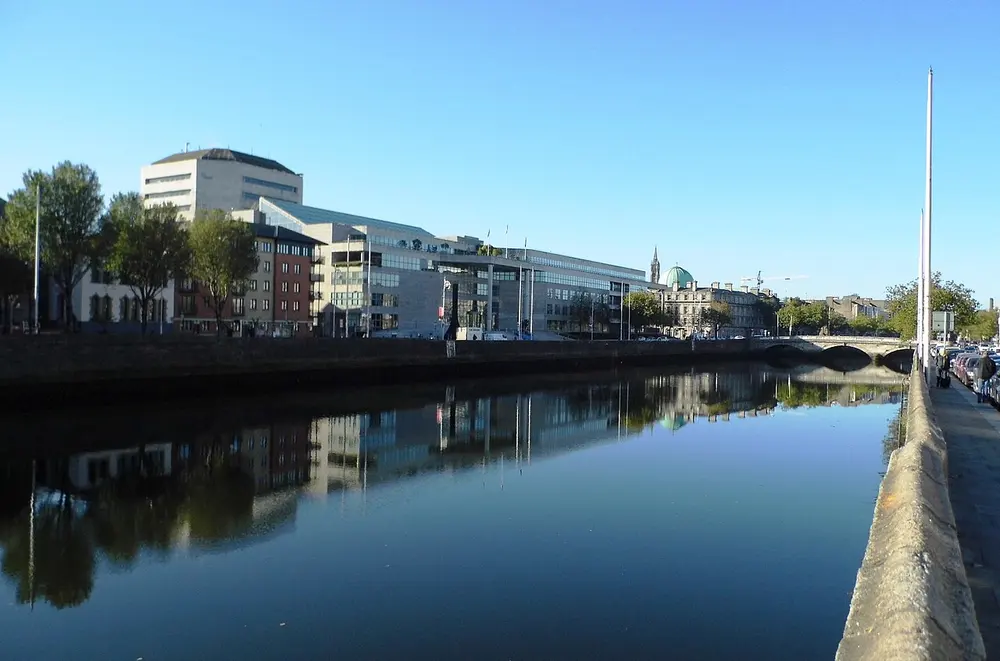
Dublin City Council Offices and The River Liffey - geograph.org.uk. Photo: Anthony Parkes / Wikimedia Commons, CC BY-SA 2.0.
Frequently asked questions
Answers to the questions runners ask before entering, drawn from this race's course guide and the directory's own data — the sources behind them are listed below.
When is the Dublin Marathon?
The marathon is expected in October 2027. The race has been run on the October bank-holiday weekend since 1980.
Is the Dublin Marathon a flat or hilly course?
It is undulating. The route climbs about 216 metres in repeated short rises rather than a single long climb, so it is not flat, but it is also not a mountain course.
Is Dublin suitable for a first marathon?
Yes. The loop format and rolling profile are manageable with sensible pacing, and the city atmosphere carries you through the later stages. It is a better choice for a debut than for a serious personal-best attempt.
Where is the Dublin Marathon run?
It is run in Dublin on a loop through the north and south sides of the city. A long section goes through Phoenix Park.
Why is the race held in October?
The marathon has been held on the October bank-holiday weekend since 1980. That long-standing date is part of the race's identity and places it in the autumn marathon season.
How should I pace the Phoenix Park section?
Treat it as a controlled stretch rather than a free speed section. The quiet and the open space make it easy to drift, so check your effort regularly and save something for the return to the city.
More marathons in Ireland
More marathons in Europe
Sources for this page
What each source below is used for on this page, and where to check this race yourself.
- World Athletics — the label calendar and the road-race regulations. Used to check whether the race holds a World Athletics label, and its elite competition details.
- AIMS — the international course-measurement standard behind the 42.195 km distance, and the AIMS race calendar.
- The organizer's own publications — course maps, race handbooks and published results. The date, course character and climbing on this page are compiled from them and re-checked each season.
“A World Athletics Label denotes a full application of the Competition and Technical Rules in, at a minimum, the elite component of the competition. Labels also denote superior standards in event organisation, safety and runner experience, support from public authorities to the event and a financial commitment to anti-doping.”
Where do these facts come from?
Dates, course type, climbing and time limits are compiled from the organizer's publications and re-checked each season; elevation is an estimate of total climbing rather than a survey figure. Always confirm race-day details with the organizer before making plans.
Last reviewed 27 October 2026