
Loch Ness Marathon
The Loch Ness Marathon follows the south shore of the loch from near Fort Augustus into Inverness, and the water stays in view for long stretches. The next edition is on 26 September 2027.
By Global Marathon Routes editorial team · Last reviewed 27 October 2026
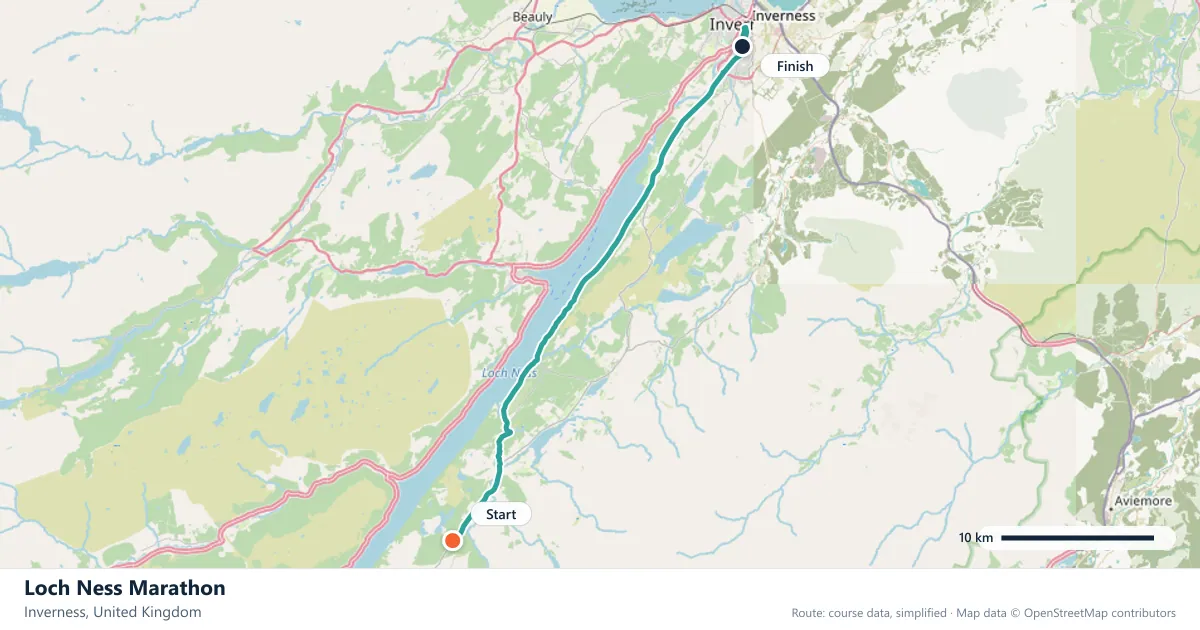
Where does the Loch Ness Marathon run?
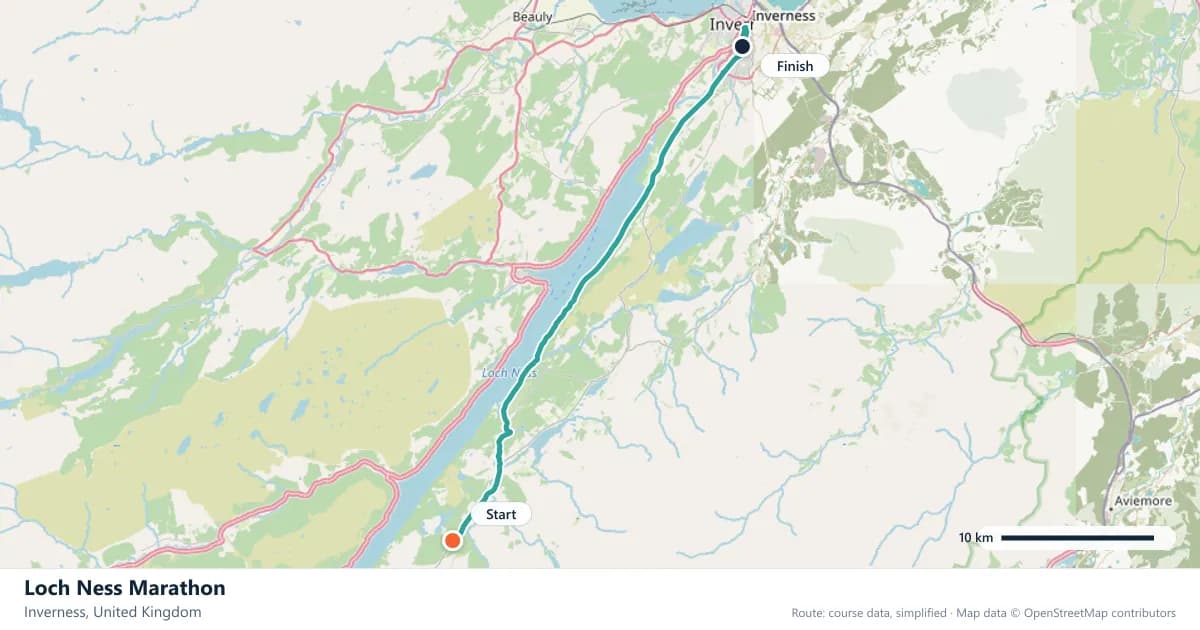
Interactive map
The trace follows the organizer's published course, simplified for the screen: the orange dot is the start, the dark dot the finish. Scroll to zoom, drag to pan.
What is the Loch Ness Marathon course like?
A point-to-point along the south shore of Loch Ness from near Fort Augustus into Inverness. Rolling Highland roads, long views over the water, and almost no flat sections.
- Next edition
- 26 September 2027
- Elevation gain
- 298 m
- Profile
- Hilly
- First run
- —
Course guide
The Loch Ness Marathon follows the south shore of the loch from near Fort Augustus into Inverness, and the water stays in view for long stretches. The next edition is on 26 September 2027. The course is hilly, with about 298 metres of climbing, and almost no flat sections.
The loch shapes the day. The road rolls along the shore, with short climbs and descents following one another and the hills on the far side giving the race its scale. This is a Highland road race rather than a city marathon, and the terrain is the point.
Runners who enjoy changing gradients and quiet roads will find plenty to like; those chasing a flat, even rhythm will not. The race is a test of endurance and pacing rather than raw speed.
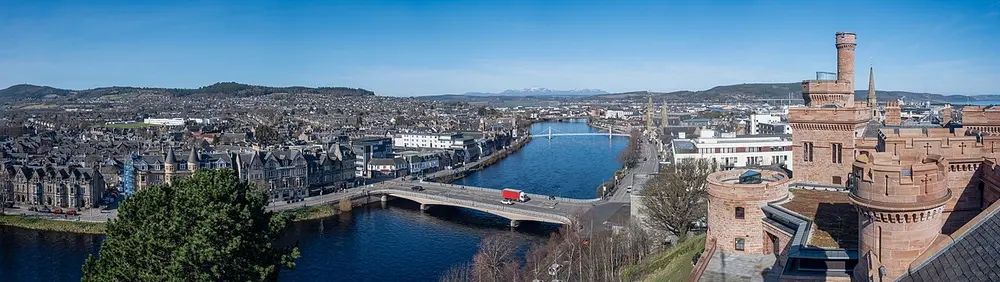
Panoramic view of Inverness. Photo: Lucas Kendall / Wikimedia Commons, CC BY-SA 4.0.
The course
The route is a single point-to-point traverse of the loch's southern shore. From near Fort Augustus it works eastwards on undulating roads, with short climbs and descents following one another rather than settling into a plateau. The 298 metres of gain is modest in total, but it is spread across the whole race.
The second half continues the pattern as the course approaches Inverness. There is no single mountain pass to prepare for; instead the challenge is the accumulation of rolling miles and the fact that the legs never get a long flat stretch to recover. The finish brings the race into the city.
The south shore
The south shore route keeps the race beside the water, with the hills on one side and the loch on the other. The views change constantly as the route moves along the shore, which is the reward for the climbing.
Because the course is point to point, there is no return leg and no chance to compare the way out with the way back. What you see is new for the whole race.
Inverness to Kyle SWalesCst060416 9. Photo: Richard Szwejkowski / Wikimedia Commons, CC BY-SA 2.0.
Almost no level ground
The absence of flat sections is the key to the course. The climbs are short, but they come constantly, and the descents do not give back as much as the rises take. Pace by effort; the same speed costs more on the uphill sections, and the legs accumulate fatigue.
Long runs on rolling roads are the best preparation. Flat mileage alone will not prepare you for a course that never settles, and the last ten kilometres will expose any weakness in your pacing.
A Highland weekend
Inverness is the finish, and the city has road and rail links to the rest of Scotland. The start near Fort Augustus is remote, so the journey to the start needs planning separately from the journey home. Arrange travel in advance; this is not a course you can walk to from the finish.
The race is a reason to spend a weekend in the Highlands. The loch, the Great Glen and Inverness itself are worth the trip, and the long views over the water are part of what makes the marathon memorable.
Why the long view matters
The course is not built for fast times. It is built for the experience of running through a landscape, with the loch beside you and the Highland hills around you. Runners who choose it usually want the setting, the quiet roads and the sense of crossing a real glen.
Time goals are secondary to finishing well. On a course with almost no flat ground, the smartest plan is to start conservatively, run by effort and let the scenery do some of the work.
Inverness, California - March 2022 - Sarah Stierch. Photo: Missvain / Wikimedia Commons, CC BY 4.0.
Frequently asked questions
Answers to the questions runners ask before entering, drawn from this race's course guide and the directory's own data — the sources behind them are listed below.
When is the Loch Ness Marathon?
The next edition is on 26 September 2027. It is an autumn race, and the date is confirmed rather than provisional.
Is the Loch Ness Marathon hilly?
Yes. The course climbs about 298 metres in total, but the more important point is that almost no section is flat. Short rises and descents follow each other for most of the route, so it feels hillier than the raw gain suggests.
Is it a fast course?
No. The rolling terrain and the repeated changes of gradient make it a slow course by marathon standards. The profile is a series of small climbs rather than a single pass, and the lack of flat ground wears runners down.
Is it suitable for a first marathon?
A first marathon here is a bigger undertaking than on a flat city course. The rolling terrain and the remote point-to-point layout demand preparation, so a first-timer should be comfortable with hills and with spending a long day on exposed roads.
Where is the Loch Ness Marathon run?
It starts near Fort Augustus and follows the south shore of Loch Ness into Inverness. The route is point to point rather than a loop, so the start and finish are in different places.
Is the course a loop?
No. It is a point-to-point route along the loch's southern shore, beginning near Fort Augustus and finishing in Inverness. That shape is part of what gives the race its character, but it also means the start requires separate travel planning.
More marathons in United Kingdom
More marathons in Europe
Sources for this page
What each source below is used for on this page, and where to check this race yourself.
- World Athletics — the label calendar and the road-race regulations. Used to check whether the race holds a World Athletics label, and its elite competition details.
- AIMS — the international course-measurement standard behind the 42.195 km distance, and the AIMS race calendar.
- The organizer's own publications — course maps, race handbooks and published results. The date, course character and climbing on this page are compiled from them and re-checked each season.
Where do these facts come from?
Dates, course type, climbing and time limits are compiled from the organizer's publications and re-checked each season; elevation is an estimate of total climbing rather than a survey figure. Always confirm race-day details with the organizer before making plans.
Last reviewed 27 October 2026