
Brighton Marathon
Brighton's marathon begins beside the sea and finishes on the promenade, which is a simple idea and a good one.
By Global Marathon Routes editorial team · Last reviewed 27 October 2026
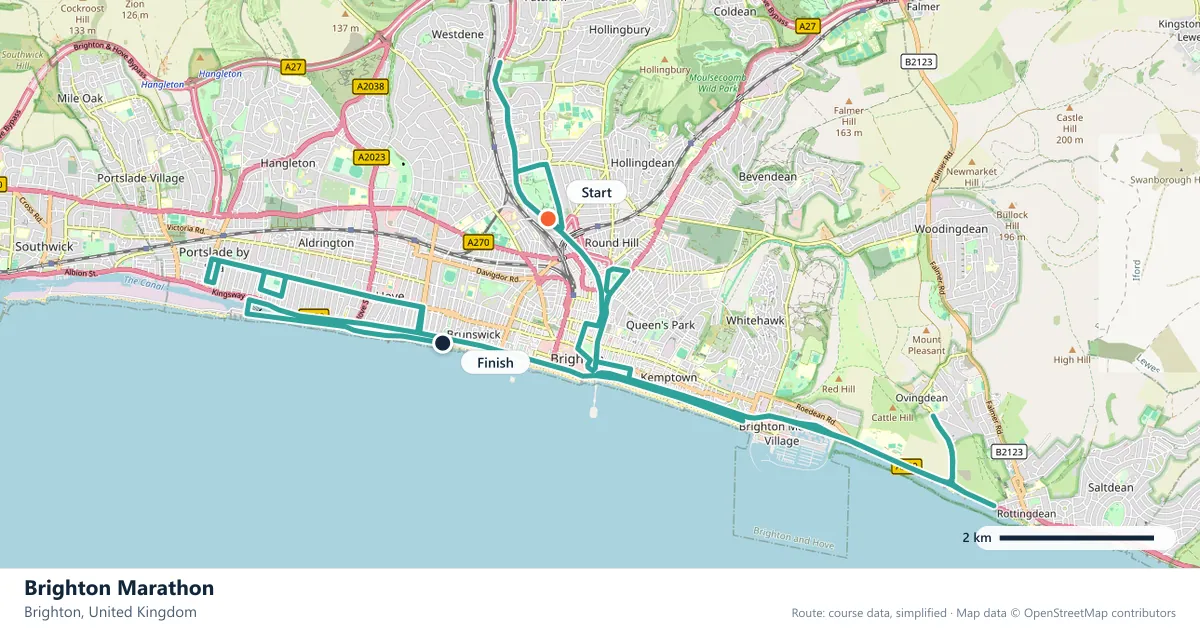
Where does the Brighton Marathon run?
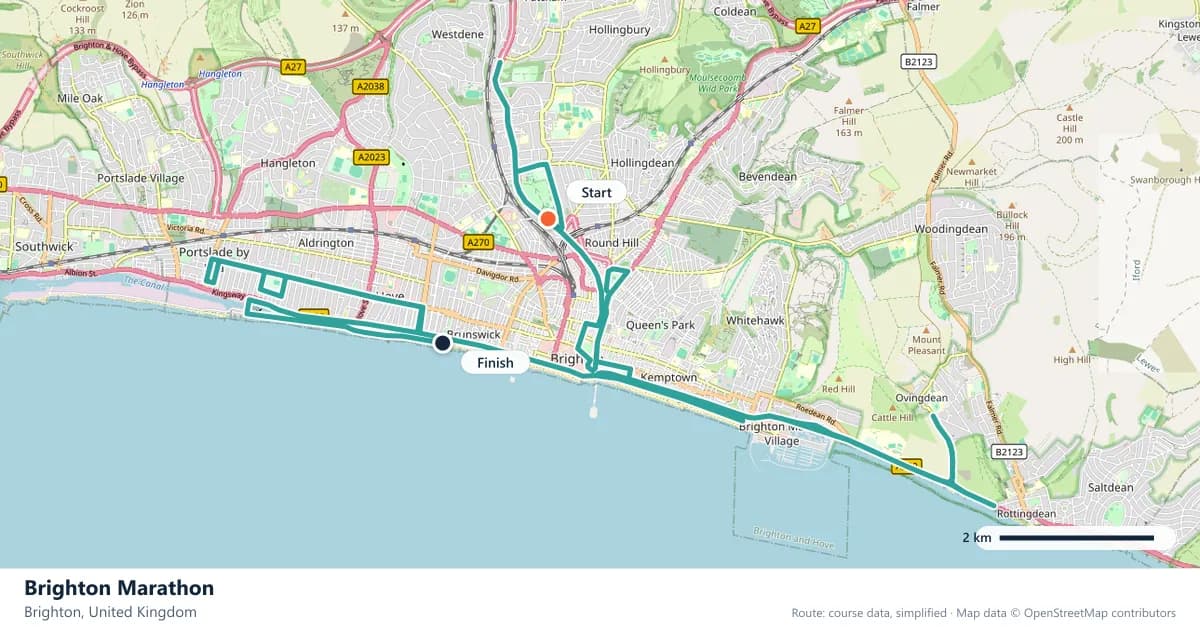
Interactive map
The trace follows the organizer's published course, simplified for the screen: the orange dot is the start, the dark dot the finish. Scroll to zoom, drag to pan.
What is the Brighton Marathon course like?
Starts on the seafront and heads east along the coast before looping back through Hove and central Brighton. A sea-level course with some gentle rises and a finish on the promenade.
- Next edition
- 04 April 2027
- Elevation gain
- 158 m
- Profile
- Undulating
- First run
- —
Course guide
Brighton's marathon begins beside the sea and finishes on the promenade, which is a simple idea and a good one. The route heads east along the coast before looping back through Hove and central Brighton. The next edition is on 04 April 2027.
The course stays at sea level. It climbs about 158 metres in total, but the rises are gentle and spread across the route rather than gathered into a hill. That makes it undulating in profile but quick in practice, especially in the early coastal kilometres.
Brighton itself is a city of piers, pebbles and Regency seafront, and the race uses the seafront as its stage. The sea is never far away, and the finish line is on the promenade with the water behind it.

Brighton Marathon 2010. Photo: Templer27 / Wikimedia Commons, CC BY-SA 3.0.
The course
The race starts on the seafront and heads east along the coast before looping back through Hove and central Brighton to a promenade finish. The sea-level setting removes altitude from the equation; the 158 metres arrive as gentle rises rather than sustained climbs.
The first half is the more open of the two. The coastal road gives long views and a steady rhythm. The return through Hove and central Brighton brings turns, shorter straights and a different kind of concentration. The promenade finish means the last mile is flat and open rather than a climb to the line.
East from the pier
The seafront is Brighton's front room: the pier, the pebble beach, the promenade, and the ruined West Pier standing offshore. The race heads east along it, with the sea on one side and the city on the other. The road is wide and the running is quick, which is both an opportunity and a trap.
Take the opening kilometres steadily. The coast can make a fast pace feel effortless, and the turn back towards Hove comes sooner than you expect.
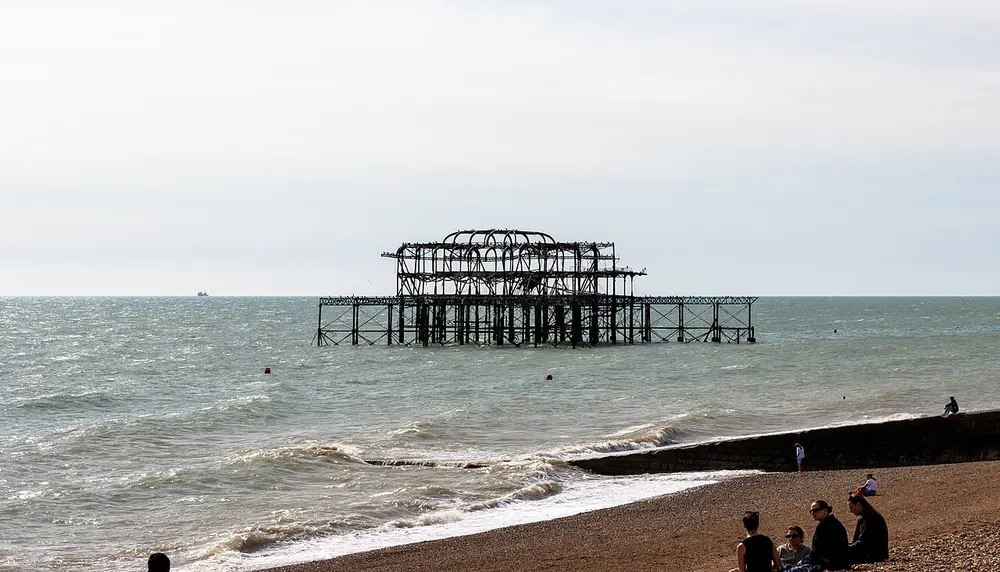
At Brighton 2025 003 - Brighton West Pier. Photo: Photograph by Mike Peel ( www.mikepeel.net ). / Wikimedia Commons, CC BY-SA 4.0.
Hove and the turn home
Hove is quieter than Brighton, with wide streets and a settled feel. The route loops through it and back into central Brighton, where the streets narrow and the crowds thicken. The change of rhythm is the point: after a long coastal stretch, the turns ask you to pay attention again. Its seafront has Regency squares set back from the promenade, and the contrast with the pier end of Brighton is part of the race's shape.
The final kilometres on the promenade are flat and open. If you are chasing a time, do not leave everything for the last mile; the finish is exposed and the line can feel further away than it looks.
At sea level
Sea level is an underrated advantage. There is no altitude to steal your breath, and the body has one less variable to manage. The course's 158 metres are modest, and the gentle rises are spread evenly across the route.
That does not make the route flat. The undulation is real, and it is constant enough to wear you down if you race every rise. The climbs are short enough to run through, but they are frequent enough that a steady effort beats a surge-and-recover approach.
An April morning on the promenade
April is early season in Brighton, and the seafront is coming back to life after winter. The date is confirmed for 04 April 2027. Brighton is easy to reach from London and the south-east, which makes it a practical race for a spring target.
Book early, because the city is a popular weekend destination and a spring marathon fills it. Staying near the seafront keeps the start and the finish within reach and puts the sea at the end of the day.
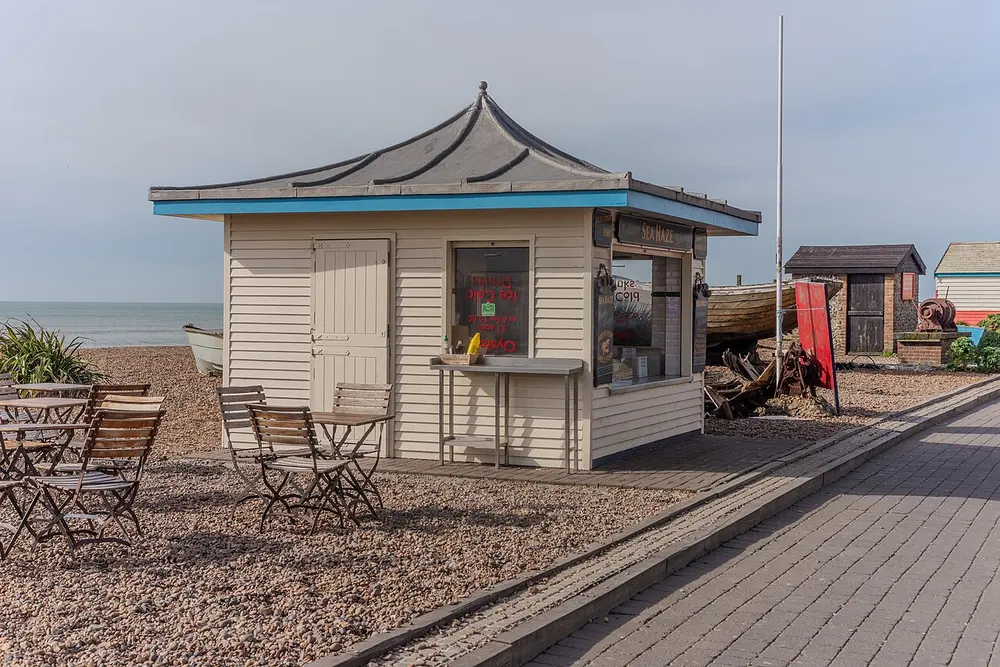
Brighton March 2017 04. Photo: ArildV / Wikimedia Commons, CC BY-SA 4.0.
Frequently asked questions
Answers to the questions runners ask before entering, drawn from this race's course guide and the directory's own data — the sources behind them are listed below.
When is the Brighton Marathon?
The next edition is on 04 April 2027. It is an early-spring race on a sea-level coastal course.
Is the Brighton Marathon flat or hilly?
It is undulating rather than hilly, with about 158 metres of gain. There are no sustained climbs, but the gentle rises come regularly. The sea-level setting removes altitude from the equation, so the course is more about rhythm than gradient.
Is Brighton good for a personal best?
Yes. The sea-level course, modest climbing and fast coastal sections give a personal-best attempt a fair chance. The main risks are going out too hard along the seafront and losing time in the turns through Hove.
Is it a good first marathon?
The course is approachable for a debut: no altitude, no serious climbs and a finish on the promenade. The distance is still 42.195 km, so the usual rules about pacing and fuelling apply.
Where is the Brighton Marathon run?
It is run in Brighton, starting on the seafront and heading east. The route loops back through Hove and central Brighton before finishing on the promenade.
Is the course at sea level?
Yes. The race starts and finishes on the seafront, and the course is a sea-level route with gentle rises rather than any sustained climb. It is not flat, but altitude is not a factor.
More marathons in United Kingdom
More marathons in Europe
Sources for this page
What each source below is used for on this page, and where to check this race yourself.
- World Athletics — the label calendar and the road-race regulations. Used to check whether the race holds a World Athletics label, and its elite competition details.
- AIMS — the international course-measurement standard behind the 42.195 km distance, and the AIMS race calendar.
- The organizer's own publications — course maps, race handbooks and published results. The date, course character and climbing on this page are compiled from them and re-checked each season.
Where do these facts come from?
Dates, course type, climbing and time limits are compiled from the organizer's publications and re-checked each season; elevation is an estimate of total climbing rather than a survey figure. Always confirm race-day details with the organizer before making plans.
Last reviewed 27 October 2026