
Manchester Marathon
Manchester's marathon starts near Old Trafford, works through the city and finishes in the centre. The next edition is on 18 April 2027.
By Global Marathon Routes editorial team · Last reviewed 27 October 2026
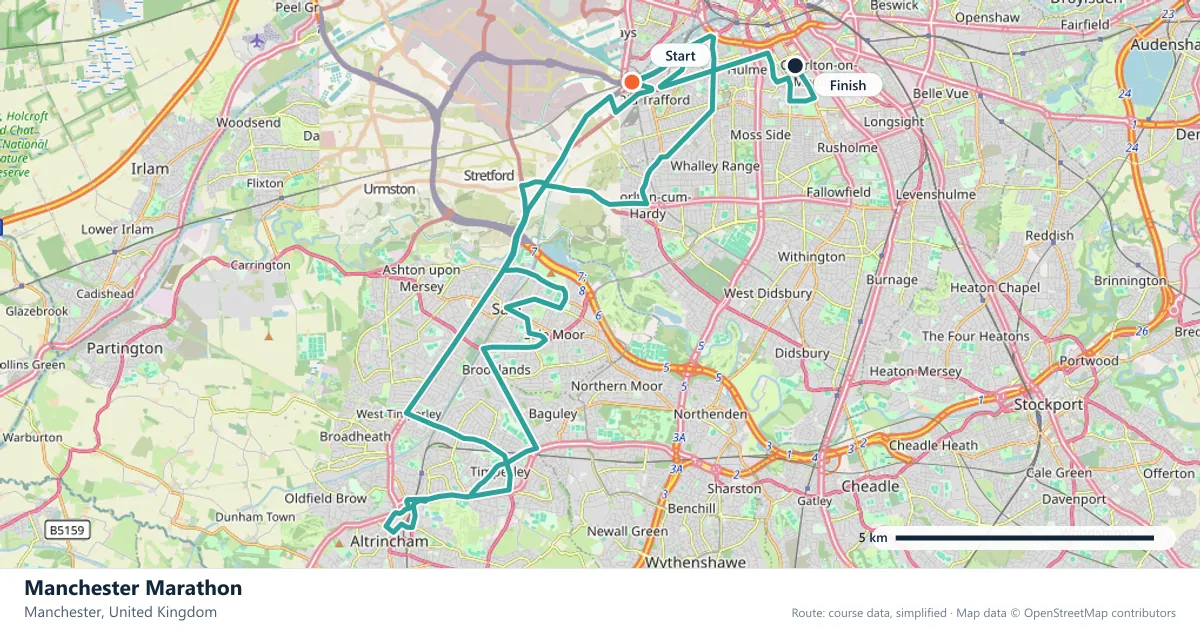
Where does the Manchester Marathon run?
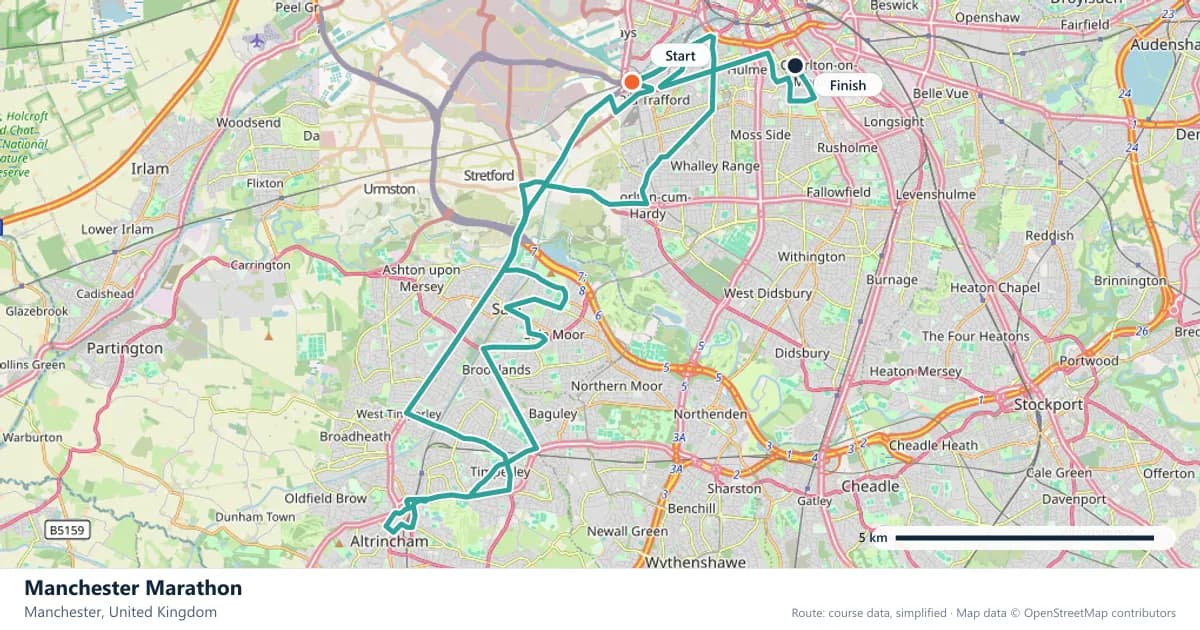
Interactive map
The trace follows the organizer's published course, simplified for the screen: the orange dot is the start, the dark dot the finish. Scroll to zoom, drag to pan.
What is the Manchester Marathon course like?
A flat, fast city course that starts near Old Trafford and works through Manchester before finishing in the centre. Run mostly on closed main roads with wide, open racing lines.
- Next edition
- 18 April 2027
- Elevation gain
- 108 m
- Profile
- Undulating
- First run
- —
Course guide
Manchester's marathon starts near Old Trafford, works through the city and finishes in the centre. The next edition is on 18 April 2027. The course is flat and fast in character, with about 108 metres of climbing over closed main roads.
Wide carriageways and open racing lines give the field room to spread out. The rises are short, the surface is good, and the spring date makes the race a natural target for a winter build. It is a city marathon built for rhythm.
Manchester is a football city, a music city and a city of canals and mills, and the race passes through its modern centre. The start near Old Trafford and the finish in the centre frame a route that is more about pace than scenery. The route is a single push from the football ground into the city, with no return leg to soften the finish.
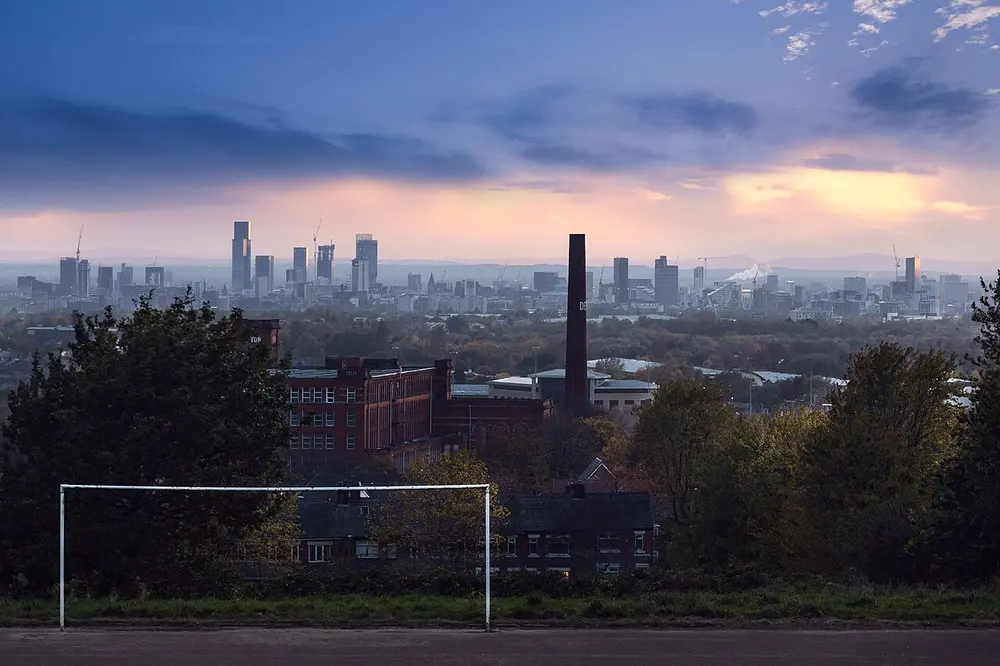
Manchester Skyline From Oldham 2020. Photo: ChrisClarke88 / Wikimedia Commons, CC BY-SA 4.0.
The course
The course sets out near Old Trafford and heads through the city on mostly closed main roads. Wide carriageways and open corners give the field room to spread out, and the climbing arrives as a series of short rises totalling about 108 metres.
The start and finish are in different places, so the race is point to point. The final kilometres run on city streets as the route closes in on the centre. Plan your day around that separation.
Wide roads, quick lines
The course is built for running, not for turning. Wide roads mean fewer bottlenecks and more room to choose a line; open corners mean you can carry speed through the city. The 108 metres are spread across the route, so no single climb defines the race. The course is not technical, so the main skill is holding a steady effort while the city passes by.
Use the space to run your own pace. The temptation on a wide road is to go with the group ahead; the discipline is to let them go if their pace is not yours.
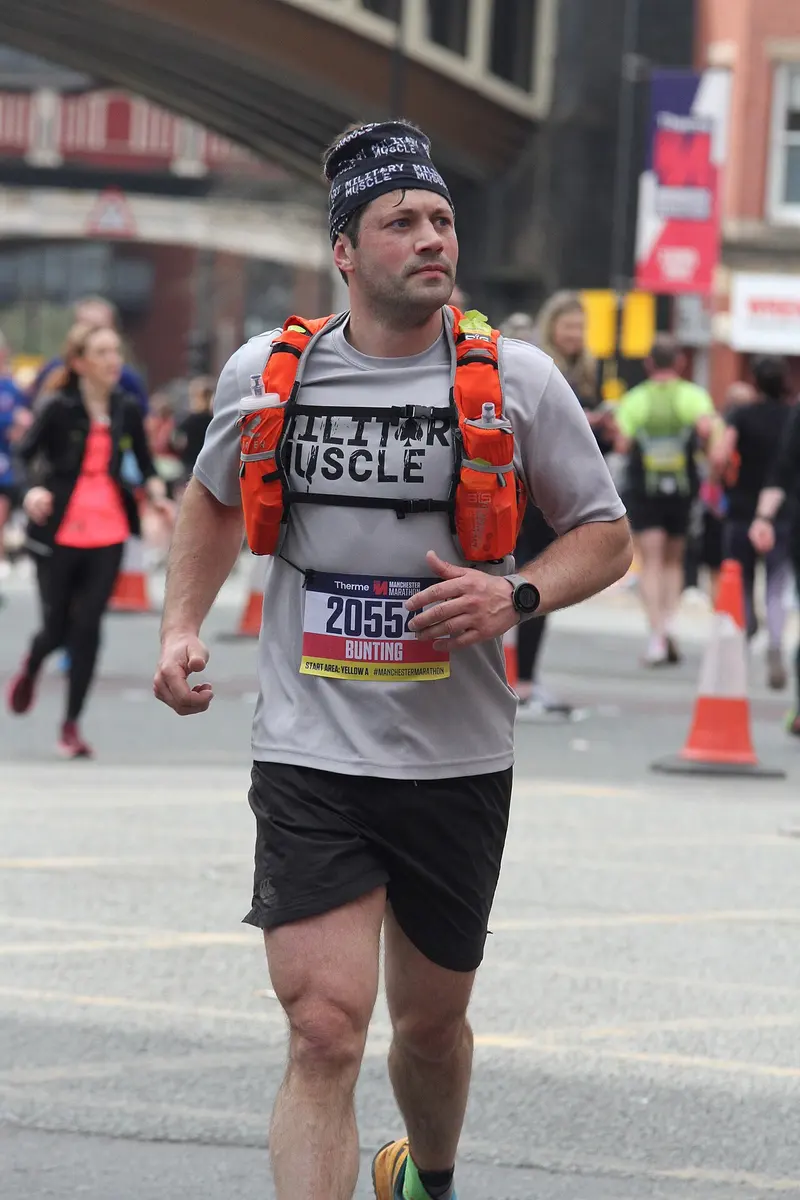
Benjamin Bunting manchester marathon 2022. Photo: Benjamin Bunting / Wikimedia Commons, CC BY-SA 4.0.
From Old Trafford to the centre
The start near Old Trafford is a reminder of the city's football identity, and the finish in the centre puts the race in the middle of Manchester's modern skyline. Between the two, the route crosses the city on main roads. The change from the stadium area to the city centre is also a change in scale, from wide approach roads to denser streets.
Arrange your meeting point and your journey home before race day. A point-to-point race in a big city is easy to manage if you have a plan and frustrating if you do not.
An April race built in winter
An April date means most of the training falls in the colder months. The course's lack of serious climbing means the training emphasis is on volume and consistency rather than hill work. Long runs on flat roads and along the canals are closer to race conditions than a hilly route would be. The race rewards consistency more than sharpness.
The spring date also means the city is coming back to life after winter. Race weekend is a good time to stay in the centre, where the finish is within walking distance of hotels and restaurants.
The city around the finish
Manchester's centre is compact, with the Town Hall, the Northern Quarter and the canal basin at Castlefield within easy reach of the finish. The city's industrial past is visible in the mills and warehouses that have become apartments, bars and galleries.
The finish puts runners in the middle of that, which is a strong way to end a race. The centre is well served by trains and trams, which makes the journey home simpler than at a remote point-to-point race. The cheers are loud, the streets are busy, and the city feels close.
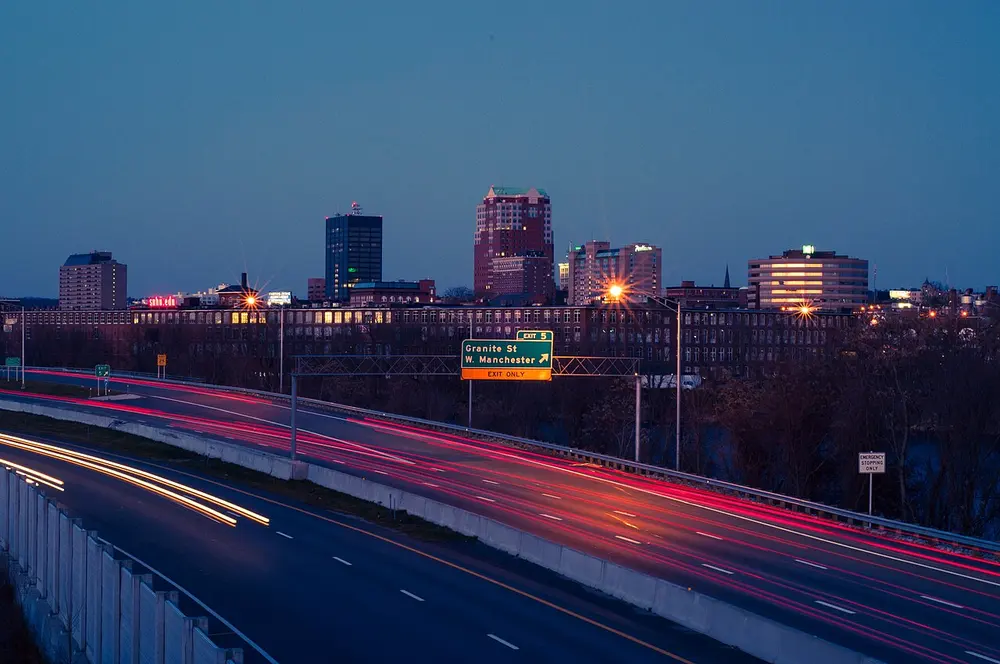
Manchester Skyline Night. Photo: Bryan Marble / Wikimedia Commons, CC BY 2.0.
Frequently asked questions
Answers to the questions runners ask before entering, drawn from this race's course guide and the directory's own data — the sources behind them are listed below.
When is the Manchester Marathon?
The next edition is on 18 April 2027. It is a spring fixture, and the date is confirmed.
Is the Manchester Marathon flat?
Mostly. The course climbs about 108 metres, so it is undulating rather than pancake-flat, but the rises are short and the roads wide. It is better described as fast and gently rolling than hilly.
Is Manchester good for a personal best?
Yes. The wide roads, modest climbing and spring date give returning runners a fair chance of a personal best. Conservative pacing is the main requirement.
Is it a good first marathon?
The course is approachable for a debut: 108 metres of climbing, wide roads and a city-centre finish. The point-to-point layout adds a little planning, but the running itself is straightforward.
Where does the Manchester Marathon take place?
It begins near Old Trafford and crosses the city before ending in the centre, mostly on closed main roads. It is point to point.
Does the race start and finish in the same place?
No. It is a point-to-point race from near Old Trafford to the city centre, so allow time for the journey between the two ends.
More marathons in United Kingdom
More marathons in Europe
Sources for this page
What each source below is used for on this page, and where to check this race yourself.
- World Athletics — the label calendar and the road-race regulations. Used to check whether the race holds a World Athletics label, and its elite competition details.
- AIMS — the international course-measurement standard behind the 42.195 km distance, and the AIMS race calendar.
- The organizer's own publications — course maps, race handbooks and published results. The date, course character and climbing on this page are compiled from them and re-checked each season.
Where do these facts come from?
Dates, course type, climbing and time limits are compiled from the organizer's publications and re-checked each season; elevation is an estimate of total climbing rather than a survey figure. Always confirm race-day details with the organizer before making plans.
Last reviewed 27 October 2026