
Palermo Marathon
Palermo's marathon climbs. The route works through the historic quarters and out towards Monte Pellegrino, and the gain of about 256 metres is spread across the city rather than concentrated in one…
By Global Marathon Routes editorial team · Last reviewed 27 October 2026
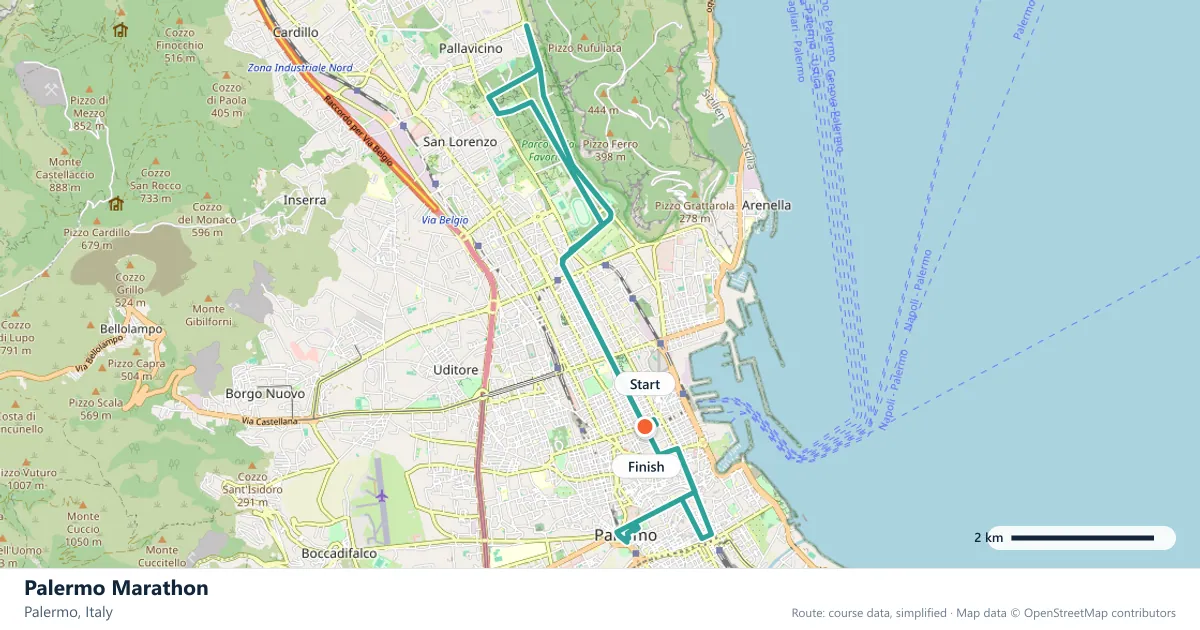
Where does the Palermo Marathon run?
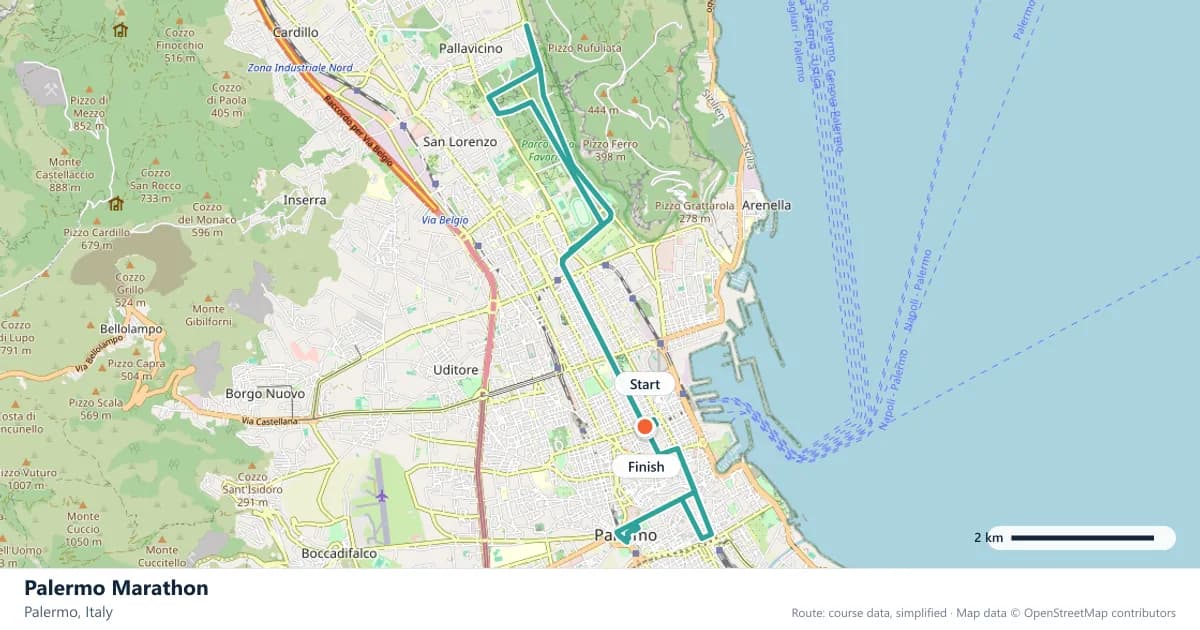
Interactive map
The trace follows the organizer's published course, simplified for the screen: the orange dot is the start, the dark dot the finish. Scroll to zoom, drag to pan.
What is the Palermo Marathon course like?
A Sicilian city marathon that climbs through Palermo's historic quarters and out towards Monte Pellegrino. Warm, hilly and unmistakably Mediterranean, with sea views for much of the second half.
- Next edition
- 15 November 2026
- Elevation gain
- 256 m
- Profile
- Hilly
- First run
- —
Course guide
Palermo's marathon climbs. The route works through the historic quarters and out towards Monte Pellegrino, and the gain of about 256 metres is spread across the city rather than concentrated in one wall. The next edition is on 15 November 2026, and the course is hilly.
This is a Mediterranean race in more than setting. The city is warm even in November, the sea is never far away, and the second half opens onto views of the bay. The combination of heat and hills makes it a first marathon with a difference: the distance is standard, the day is not.
Palermo rewards runners who arrive fit and patient. The climbs are woven into the streets, the historic centre is dense with turns, and the sea views arrive late, when they are most welcome.
The course
The route climbs through Palermo's historic quarters and heads out towards Monte Pellegrino. The 256 metres of gain are spread across the course, and the second half opens up to sea views for much of its length.
This is a city marathon with a mountainous edge. The climbing shapes the race, but the route remains a road marathon rather than a trail. Warm conditions add a second variable, so pacing and hydration matter as much as hill strength.
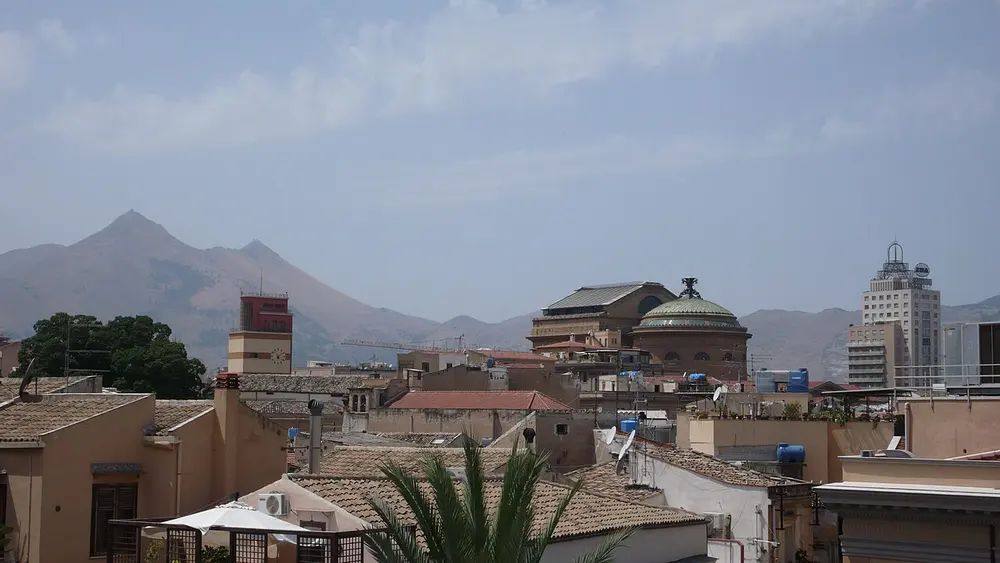
Monte Cuccio nello skyline di Palermo. Photo: Windingball / Wikimedia Commons, CC BY-SA 4.0.
The climb through the historic quarters
Palermo's centre is a palimpsest. Phoenician, Roman, Arab, Norman and Baroque layers sit on top of each other, and the result is a street plan that twists and turns rather than following a grid. The marathon uses that density as its first act, climbing through streets that are often narrow and always full of detail.
The Arab-Norman heritage is the city's best-known architectural legacy, and the centuries of exchange are visible in the churches, the markets and the courtyards. The markets of Ballarò and Vucciria are part of that texture, and the food is as much a reason to come as the architecture. The race does not stop to sightsee, but the setting makes the early kilometres feel different from a modern city course.
The climbing in this section is constant rather than steep. Runners feel it more in the accumulation than in any single ramp, and the effort needs to be managed from the start.
Monte Pellegrino and the sea
Monte Pellegrino is the mountain that defines Palermo's northern edge, a limestone promontory with the sanctuary of Santa Rosalia on its slopes. The route heads out towards it, and the mountain's presence gives the second half a sense of scale. It is the backdrop, not the summit: the race never asks you to climb the mountain itself.
The sea views are the reward. Much of the second half looks out over the bay, and the combination of water, light and tired legs is one of the race's distinctive experiences. It is a good distraction from the climbing, but not a reason to abandon pacing.
The second half is where the race is decided. The climbing has already taken its toll, and the open sea views can make the terrain feel gentler than it is. Keep the effort steady and let the landmarks come to you.
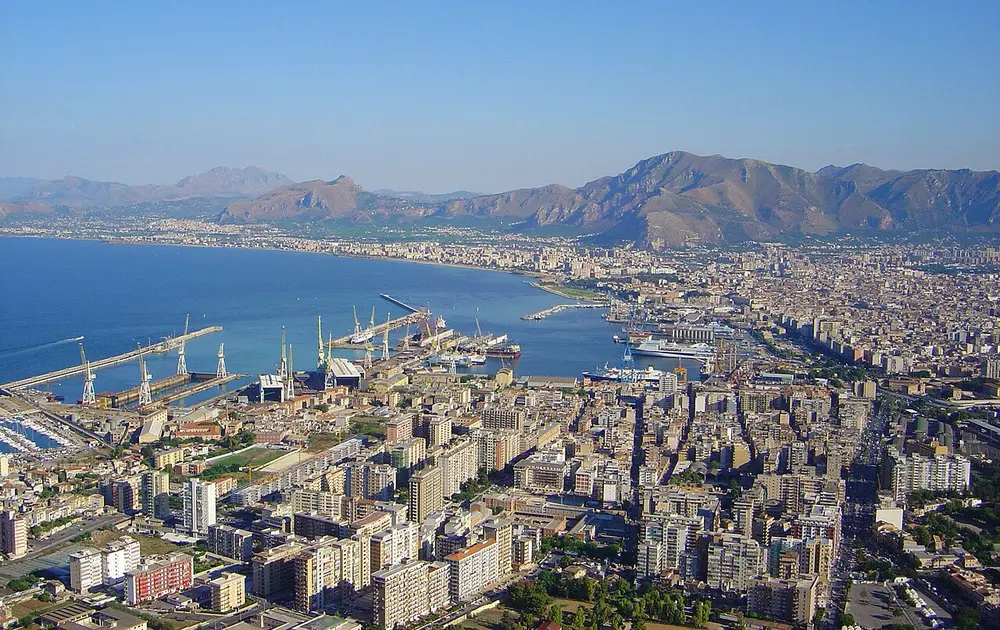
Palermo02 flickr. Photo: Xerones / Wikimedia Commons, CC BY 2.0.
A November race in Sicily
November is one of the best months to be in Palermo: the summer heat has eased and the city is comfortable to walk. It is not a cool autumn race by northern European standards, and runners should prepare for warmth rather than assume it.
The city's food culture is a reason to stay. Palermo's markets, street food and seafood are part of the life of the city, and the race weekend is a good excuse to explore them. Book accommodation early and plan the race around the heat rather than the other way round.
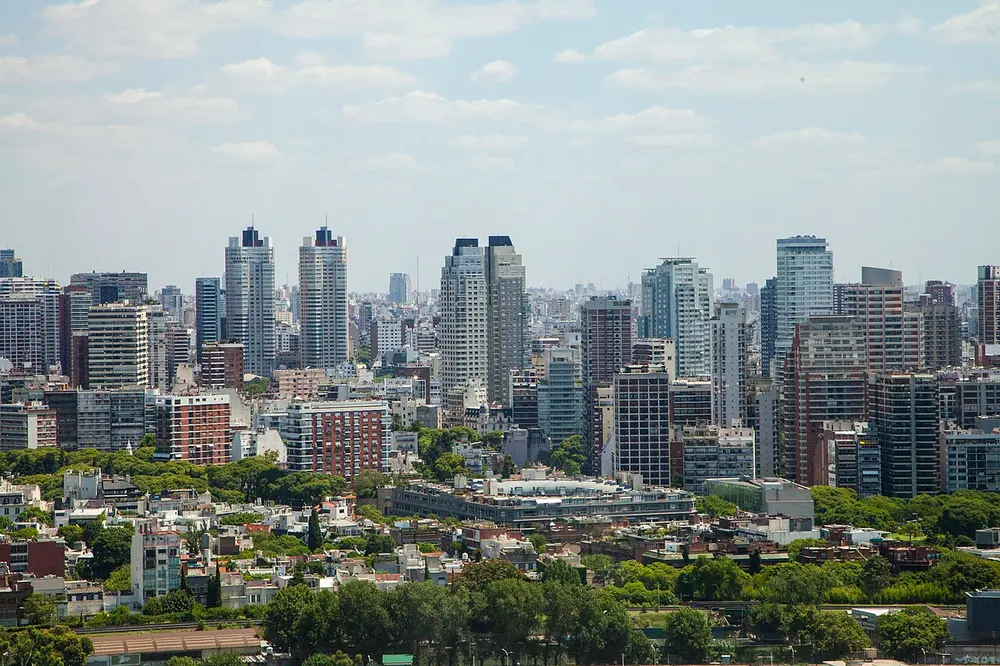
Aerial view - Palermo, Buenos Aires (2). Photo: Ricardo Patiño / Wikimedia Commons, CC BY-SA 2.0.
Frequently asked questions
Answers to the questions runners ask before entering, drawn from this race's course guide and the directory's own data — the sources behind them are listed below.
When is the Palermo Marathon?
The next edition is on 15 November 2026. The race is an autumn fixture in Sicily.
Is the Palermo Marathon hilly?
Yes. The course climbs about 256 metres as it works through the historic quarters and out towards Monte Pellegrino. The climbing is spread across the route but still makes hill preparation worthwhile.
Is Palermo suitable for a first marathon?
It is a first-marathon option, but a demanding one. The hills and the warmth make it harder than a flat city race, so arrive with hill training and a conservative pacing plan.
Where is the Palermo Marathon run?
It is run in Palermo, Sicily, climbing through the city's historic quarters and out towards Monte Pellegrino. Sea views accompany much of the second half.
Which part of the course is hardest?
The climbing is the defining challenge, particularly through the historic quarters and out towards Monte Pellegrino. With about 256 metres of total gain, the effort accumulates rather than arriving in one climb.
How should I handle the warmth?
Start conservatively, use the aid stations regularly, and do not wait until you are thirsty to drink. The sea breeze helps on the exposed sections but does not replace a sensible pacing plan.
More marathons in Italy
More marathons in Europe
Sources for this page
What each source below is used for on this page, and where to check this race yourself.
- World Athletics — the label calendar and the road-race regulations. Used to check whether the race holds a World Athletics label, and its elite competition details.
- AIMS — the international course-measurement standard behind the 42.195 km distance, and the AIMS race calendar.
- The organizer's own publications — course maps, race handbooks and published results. The date, course character and climbing on this page are compiled from them and re-checked each season.
Where do these facts come from?
Dates, course type, climbing and time limits are compiled from the organizer's publications and re-checked each season; elevation is an estimate of total climbing rather than a survey figure. Always confirm race-day details with the organizer before making plans.
Last reviewed 27 October 2026