
Bologna Marathon
Bologna's marathon begins in Piazza Maggiore, under the arcades that define the city, and then goes looking for hills.
By Global Marathon Routes editorial team · Last reviewed 27 October 2026
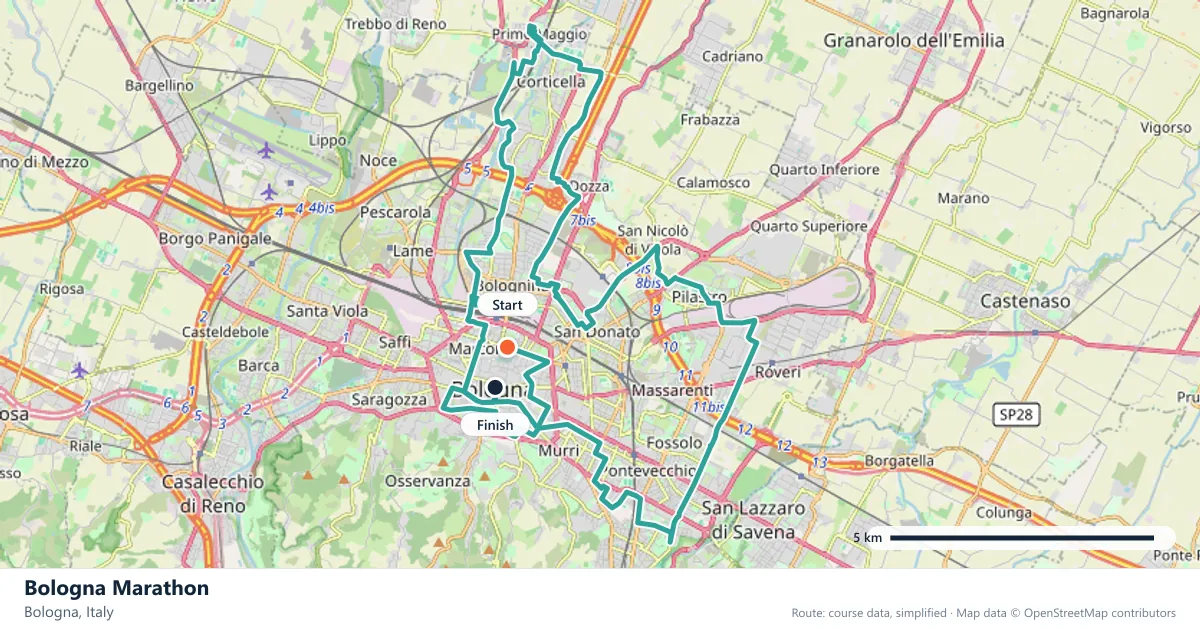
Where does the Bologna Marathon run?
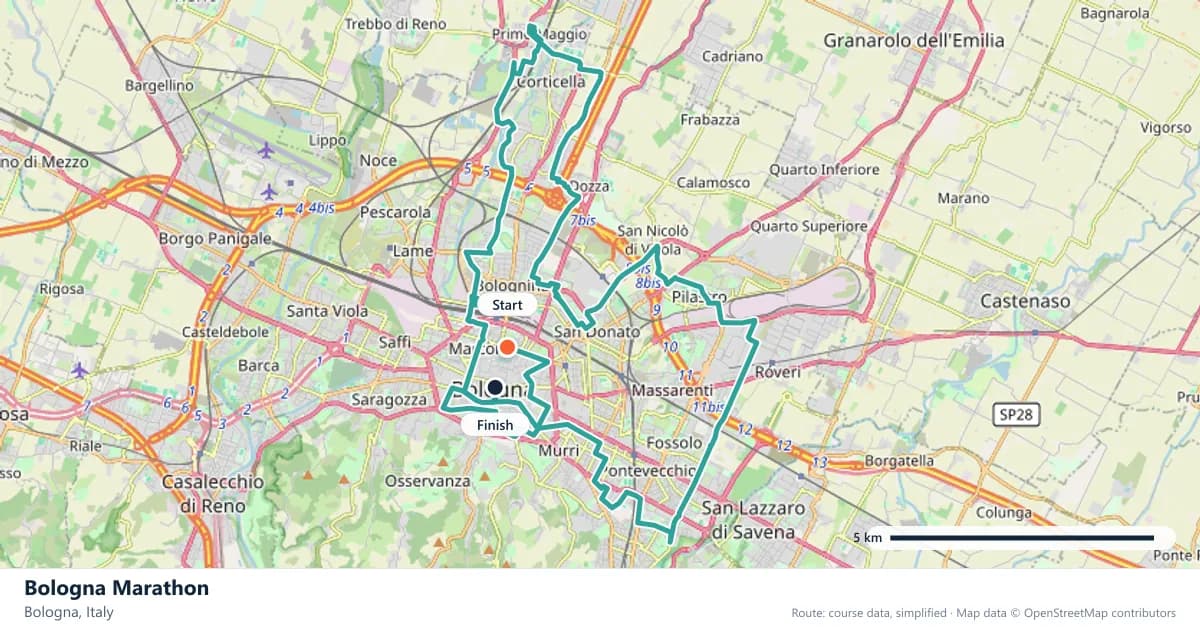
Interactive map
The trace follows the organizer's published course, simplified for the screen: the orange dot is the start, the dark dot the finish. Scroll to zoom, drag to pan.
What is the Bologna Marathon course like?
A spring race out of Piazza Maggiore, looping through the porticoed streets and into the surrounding hills. Undulating, with the two towers as the fixed point of the course.
- Next edition
- 07 March 2027
- Elevation gain
- 150 m
- Profile
- Undulating
- First run
- —
Course guide
Bologna's marathon begins in Piazza Maggiore, under the arcades that define the city, and then goes looking for hills. The route loops through the porticoed streets and out into the surrounding hills, with the Two Towers as its fixed point. The next edition is on 7 March 2027, and the course is undulating, with about 150 metres of climbing.
Bologna is a city that has made an art of the covered walkway. The porticoes run for kilometres through the centre and up towards the hills, and they change the way the race feels: shade, rhythm, sudden openings onto squares. The course uses them before it turns uphill.
It is an early-spring race and a quick one by rolling-course standards. The climbs are short, the streets between them are fast, and the Two Towers give you a bearing whenever the route doubles back. It is a course for personal bests and for first marathons, which is not a combination every Italian city race can offer.
The course
The route leaves Piazza Maggiore and works through the porticoed streets, then heads into the surrounding hills. The 150 metres of gain arrive in short rises, and the Two Towers act as a compass point whenever the route turns back towards the centre. The hills are not alpine, but they make the course feel different from a flat city marathon.
The porticoes define the city section. Running under them changes the light and the sound, and it gives the race a rhythm that is unique to Bologna. On the hills, the priority is steady effort. The return to the city is where the fast running resumes.
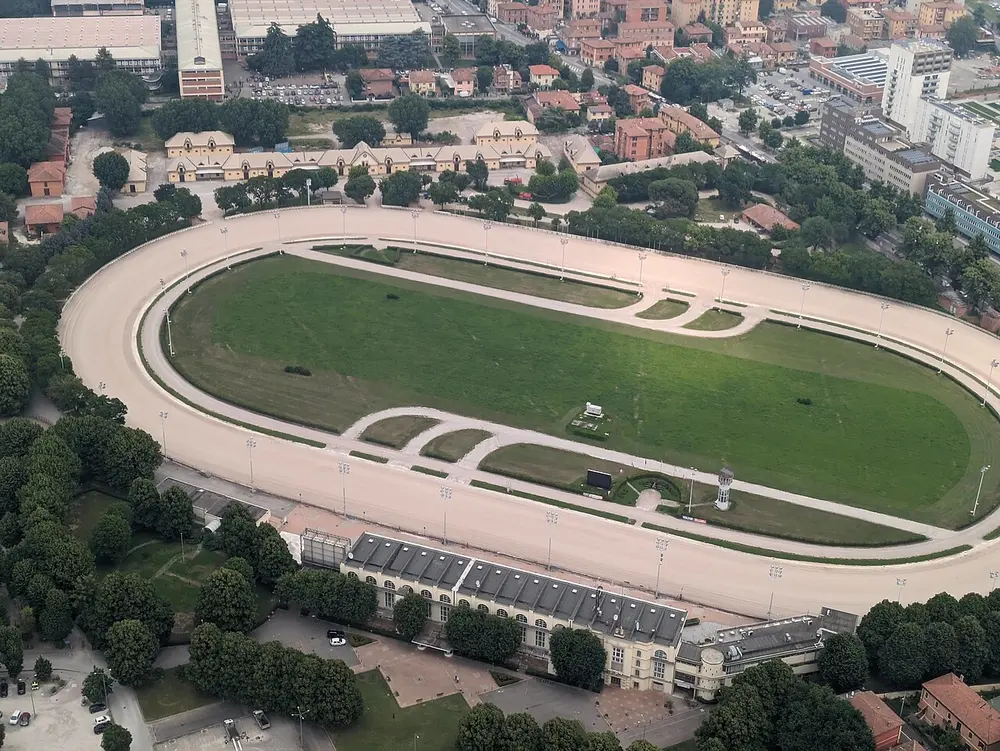
Aerial view of Ippodromo dell'Arcoveggio, Bologna, Italy. Photo: Reddalo / Wikimedia Commons, CC BY-SA 4.0.
Porticoes and the Two Towers
Bologna's porticoes are a UNESCO World Heritage site, and they are not a decorative extra: they are the city's everyday architecture, sheltering shoppers, students and runners alike. The race uses them as a corridor through the historic centre.
The Two Towers are the other fixed point. The Asinelli tower leans slightly; the Garisenda leans much more and has been stabilised over the centuries. They rise above the roofs and remain visible from many parts of the course, which makes them a useful way to stay oriented.
Between the towers and the arcades, the city section is dense with detail. It is also fast, with wide streets and a mostly level surface. The temptation is to treat it as easy ground before the hills; the better approach is to bank patience for the climbing that follows.
Into the hills and back
The hills around Bologna begin close to the city, and the race uses them in short doses rather than one long ascent. The climbs are steep enough to change the working muscles, but not long enough to become a hiking exercise.
The return to the city is the reward. Once the route drops back towards the centre, the streets are fast and the towers are ahead of you. Runners who paced the hills conservatively can use the final kilometres to make up time; runners who attacked them will be counting down the distance.
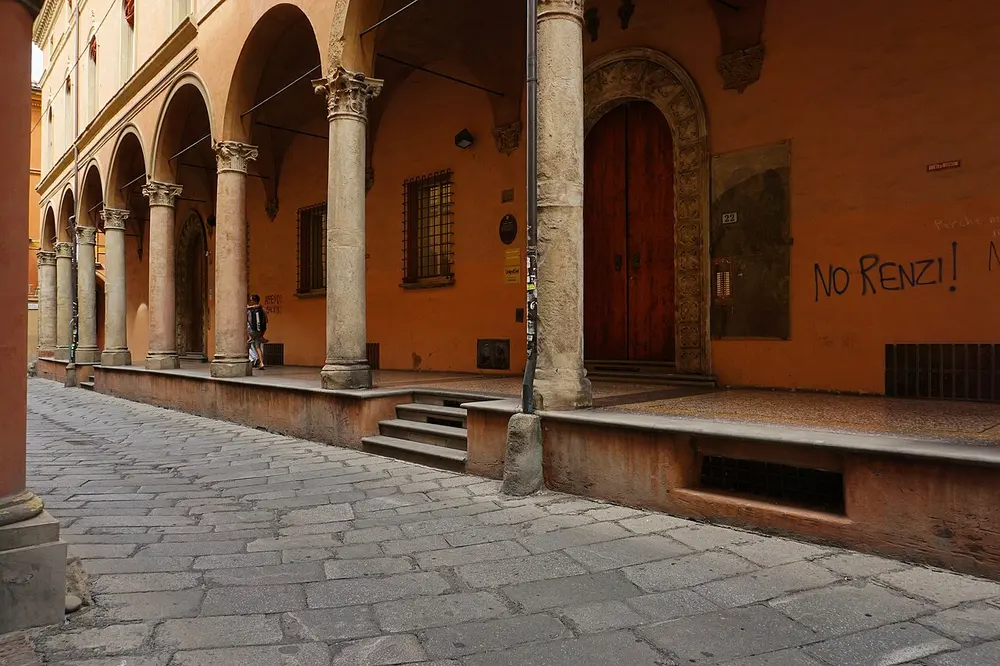
Bologna, Palazzo Guastavillani. Photo: Armin Kleiner / Wikimedia Commons, CC BY-SA 4.0.
March in Emilia-Romagna
An early-March date means the race sits at the edge of winter, and the build happens through the coldest months. Arrive with the long runs already banked rather than trying to cram them into the final weeks.
Bologna is one of Italy's great food cities, and the race weekend is a good excuse to eat well after the finish. The centre is compact and walkable, with the arcades making even a rainy day pleasant. It is a city that rewards wandering, which is exactly what tired marathon legs need.
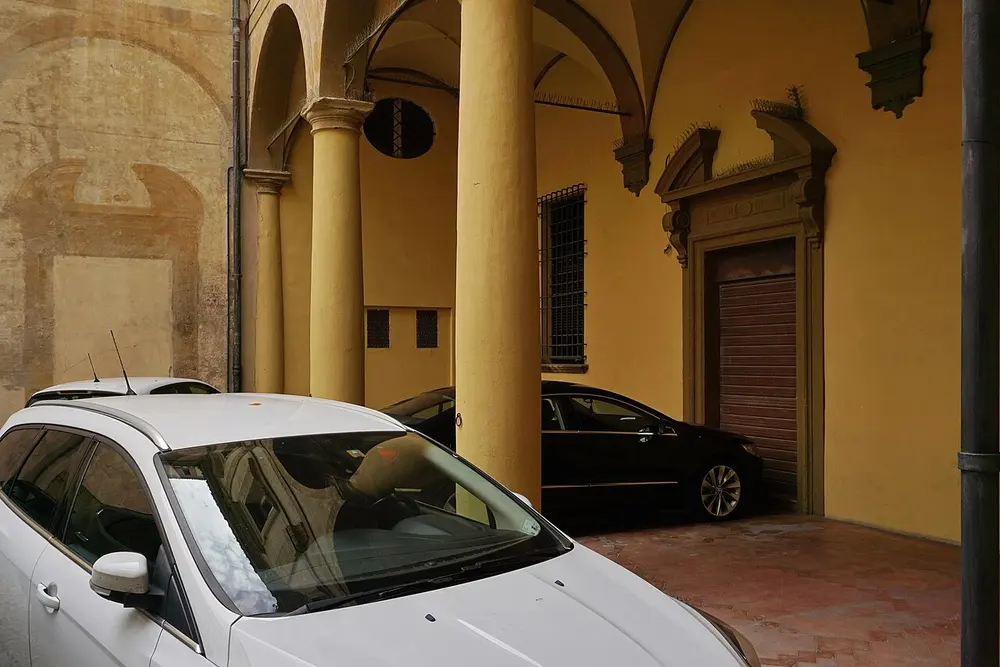
Bologna, Plzo Pepoli Campogrande, courtyard (2). Photo: Armin Kleiner / Wikimedia Commons, CC BY-SA 4.0.
Frequently asked questions
Answers to the questions runners ask before entering, drawn from this race's course guide and the directory's own data — the sources behind them are listed below.
When is the Bologna Marathon?
The next edition is on 7 March 2027. It is an early-spring race that works for a personal best or a first marathon.
Is the Bologna Marathon a hilly course?
It is undulating rather than hilly, with about 150 metres of gain. The route includes short climbs into the hills around the city, but the streets between them are fast.
Is Bologna good for a first marathon or a personal best?
The rolling course is manageable for a debut if you train on hills, and the city streets give a personal-best attempt a fair chance. The key is to keep the early pace controlled and save energy for the climbs.
Where is the Bologna Marathon run?
It is run in Bologna, starting from Piazza Maggiore and looping through the porticoed streets before heading into the hills. The Two Towers remain visible as a reference point.
Is the Bologna Marathon a loop course?
Yes. The route is a loop that sets out from Piazza Maggiore, works through the city and heads into the hills before returning. The Two Towers provide a fixed point.
How should I pace the short climbs?
Run them at an even effort rather than surging, and use the flat sections between them to recover. The climbs are short, so the cost of attacking them is easy to underestimate.
More marathons in Italy
More marathons in Europe
Sources for this page
What each source below is used for on this page, and where to check this race yourself.
- World Athletics — the label calendar and the road-race regulations. Used to check whether the race holds a World Athletics label, and its elite competition details.
- AIMS — the international course-measurement standard behind the 42.195 km distance, and the AIMS race calendar.
- The organizer's own publications — course maps, race handbooks and published results. The date, course character and climbing on this page are compiled from them and re-checked each season.
Where do these facts come from?
Dates, course type, climbing and time limits are compiled from the organizer's publications and re-checked each season; elevation is an estimate of total climbing rather than a survey figure. Always confirm race-day details with the organizer before making plans.
Last reviewed 27 October 2026