
Milan Marathon
Milan's marathon starts at the Duomo and heads for San Siro, and the route between them is as close to a pure rhythm course as Italy offers. The next edition is expected in April 2027.
By Global Marathon Routes editorial team · Last reviewed 27 October 2026
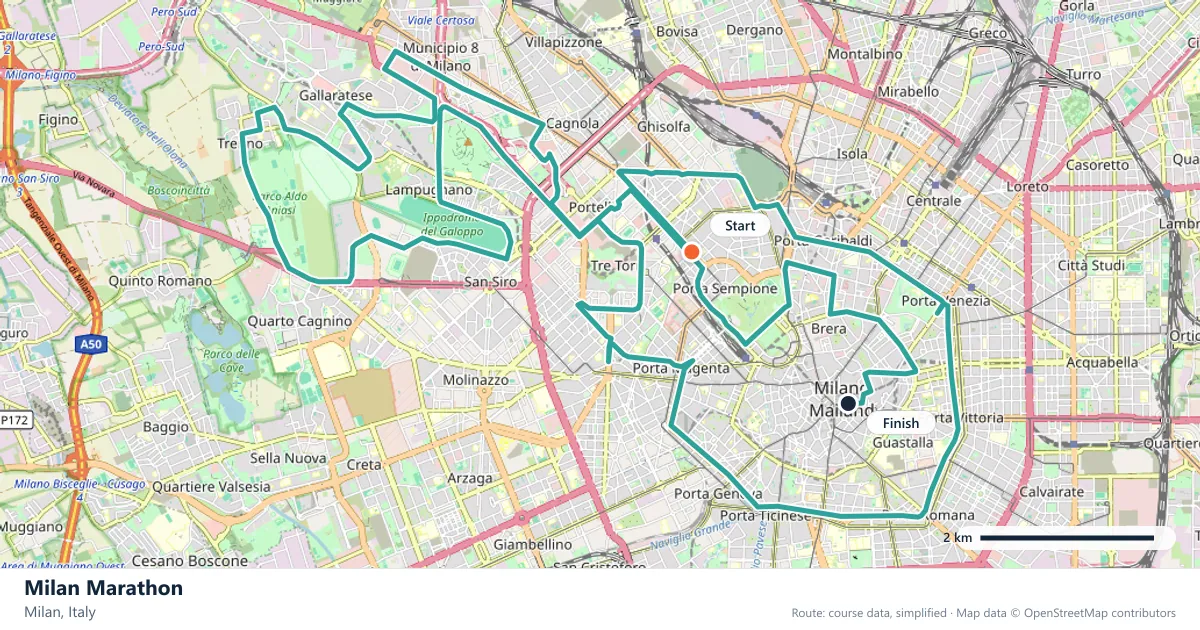
Where does the Milan Marathon run?
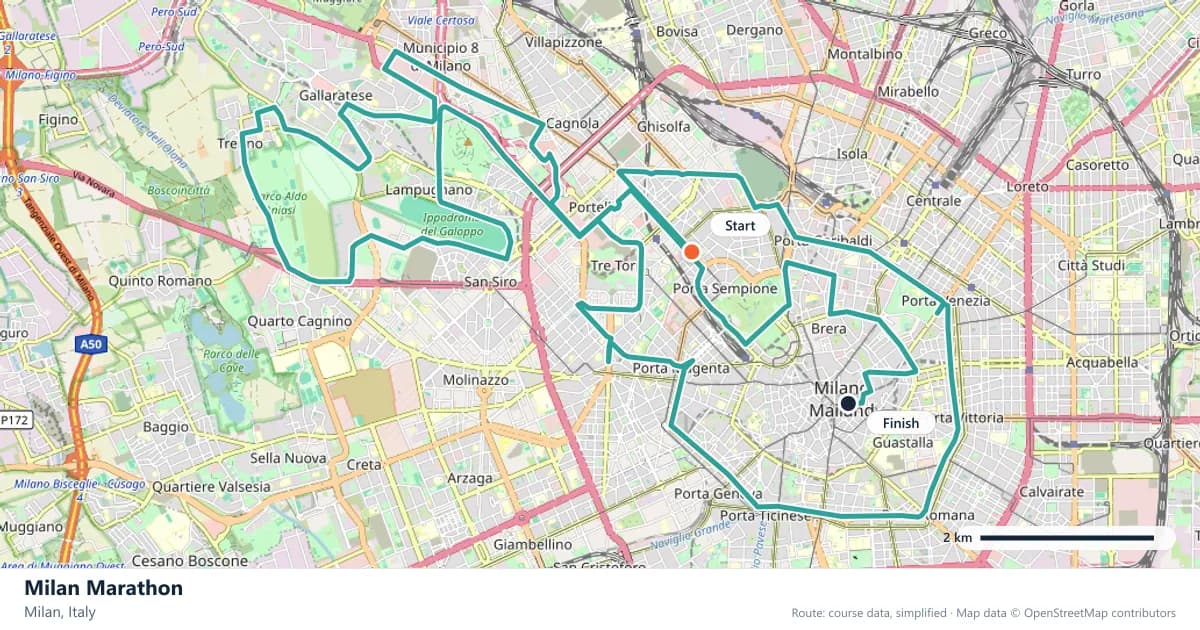
Interactive map
The trace follows the organizer's published course, simplified for the screen: the orange dot is the start, the dark dot the finish. Scroll to zoom, drag to pan.
What is the Milan Marathon course like?
A flat, fast city course from the Duomo out past San Siro and back through the business districts. Wide roads and a spring date make it northern Italy's quickest marathon.
- Next edition
- April 2027 (expected)
- Elevation gain
- 52 m
- Profile
- Flat
- First run
- —
Course guide
Milan's marathon starts at the Duomo and heads for San Siro, and the route between them is as close to a pure rhythm course as Italy offers. The next edition is expected in April 2027. The profile is flat, with only about 52 metres of climbing, and the race holds a World Athletics Label.
Milan is a city of wide boulevards and business districts, and the course uses them. There are few tight corners and no sustained climbs, which means the race is decided by pace rather than terrain. It is a personal-best course and a first-marathon course at the same time, which is rare enough to be worth saying.
The Duomo start gives the day a dramatic opening, and San Siro gives the middle a destination. The return through the business districts is less scenic but faster, and the last kilometres are where the flat profile either pays you back or exposes the pace you set early.
The course
The race begins at the Duomo and leaves the historic centre, heading out towards San Siro before turning back through the business districts. Wide roads define the route, with room to move and few tight corners.
With just 52 metres of gain, there is no meaningful climb to break the rhythm. The flat kilometres come quickly, so the temptation is to bank time early. The low profile keeps the closing kilometres honest rather than punishing: there is no hill to blame, only the pace you chose.
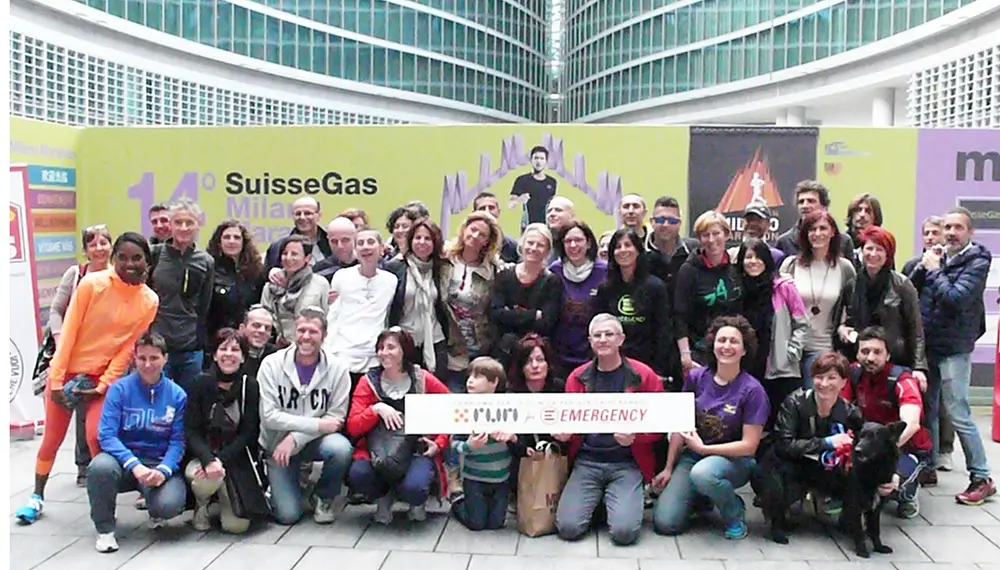
X.RUNNERs alla Milano Marathon. Photo: Franz.Rossi / Wikimedia Commons, CC BY-SA 4.0.
Duomo to San Siro
The Duomo is the centre of Milan in every sense: the cathedral, the square, the arcades and the streets that radiate from them. Starting a marathon there gives the race an opening that most city courses cannot match.
San Siro is the other landmark. The stadium is one of football's famous addresses, and the route heads out towards it before turning back. The middle of the race therefore has a clear destination, which helps on a course where the scenery is more urban than picturesque.
The return through the business districts is where the race becomes a time trial. The roads are wide, the crowds are thinner, and the buildings are modern. It is not the most beautiful part of Milan, but it is the fastest.
Wide roads and a rhythm course
A flat marathon with wide roads is an invitation to run evenly. There are no hills to disrupt the stride and few corners to slow the field, so the race turns into a long, controlled effort. The runners who succeed are the ones who resist the early speed.
The course is also exposed. Wide boulevards offer little shelter if the day turns warm, and the urban surface can feel hard by the end. Hydration and pacing matter more than any course-specific technique.
For a first marathon, the lack of climbing is a gift. For a personal-best attempt, the flatness is an opportunity, but only if the first half is disciplined. Either way, the course rewards the same thing: patience.
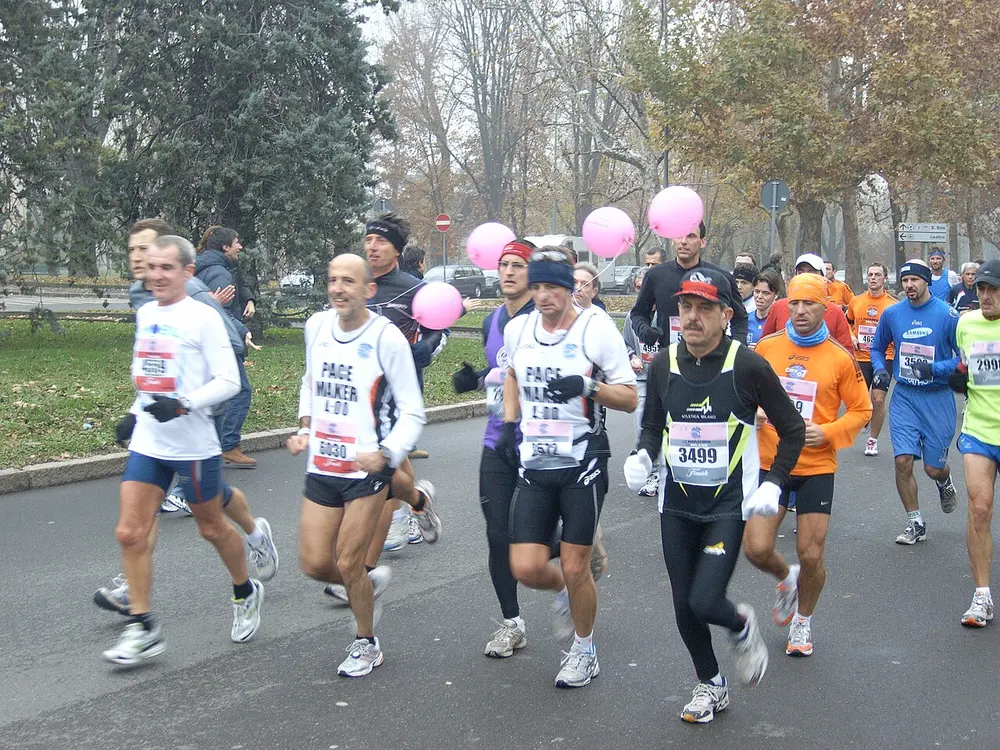
Milano City Marathon 2007 @ Qt8. Photo: Paolo / Wikimedia Commons, CC BY 2.0.
Spring in Milan
April 2027 is expected rather than confirmed, so check the organiser's announcement before locking in travel. Spring is a good time to see Milan: the city is lively, the days are longer, and the aperitivo hour is at its best.
Milan is Italy's most modern city in atmosphere, and the race reflects that. The Navigli, the Brera district and the shopping streets are all part of the weekend, and the city is easy to navigate on public transport. The Duomo and the Galleria Vittorio Emanuele II are a short walk apart, which makes the post-race afternoon easy to plan. It is a race that fits into a short break without feeling rushed.
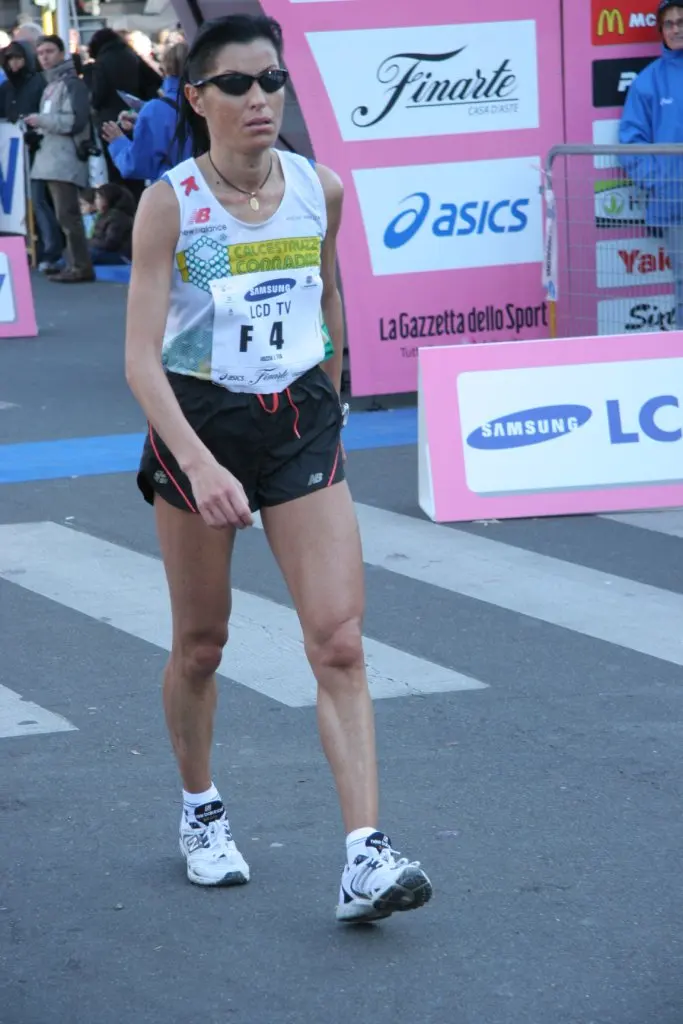
0936-Milano City Marathon 08. Photo: Sport Communities from Italia / Wikimedia Commons, CC BY-SA 2.0.
Frequently asked questions
Answers to the questions runners ask before entering, drawn from this race's course guide and the directory's own data — the sources behind them are listed below.
When is the Milan Marathon?
The next edition is expected in April 2027. The exact date has not been confirmed, so check the organiser's final schedule before booking travel.
Is the Milan Marathon flat?
Yes. The course climbs only about 52 metres over 42.195 km, which is flat even for a city marathon. There is no sustained ascent, and the wide roads allow an even rhythm.
Is Milan good for a first marathon or a personal best?
The flat profile and wide roads make it an approachable debut, while the low climbing total and spring date give faster runners a good chance of a personal best. The main risk is starting too quickly.
Where is the Milan Marathon run?
The route begins at the Duomo and heads out towards San Siro before looping back via the business districts. It stays on wide city roads and covers 42.195 km within Milan.
How should I plan around the expected date?
Treat April 2027 as provisional. The month is the expected window rather than a confirmed date, so wait for the organiser's announcement before booking flights or accommodation.
How should I pace a 52-metre course?
Aim for even effort from the start and resist the urge to bank time in the first 10 km. With no hills to recover on, a fast opening is difficult to repair later.
More marathons in Italy
More marathons in Europe
Sources for this page
What each source below is used for on this page, and where to check this race yourself.
- World Athletics — the label calendar and the road-race regulations. Used to check whether the race holds a World Athletics label, and its elite competition details.
- AIMS — the international course-measurement standard behind the 42.195 km distance, and the AIMS race calendar.
- The organizer's own publications — course maps, race handbooks and published results. The date, course character and climbing on this page are compiled from them and re-checked each season.
“A World Athletics Label denotes a full application of the Competition and Technical Rules in, at a minimum, the elite component of the competition. Labels also denote superior standards in event organisation, safety and runner experience, support from public authorities to the event and a financial commitment to anti-doping.”
Where do these facts come from?
Dates, course type, climbing and time limits are compiled from the organizer's publications and re-checked each season; elevation is an estimate of total climbing rather than a survey figure. Always confirm race-day details with the organizer before making plans.
Last reviewed 27 October 2026