
Florence Marathon
Florence's marathon is run at the end of November, when the city has lost the worst of its crowds and the air is usually cool and still.
By Global Marathon Routes editorial team · Last reviewed 27 October 2026
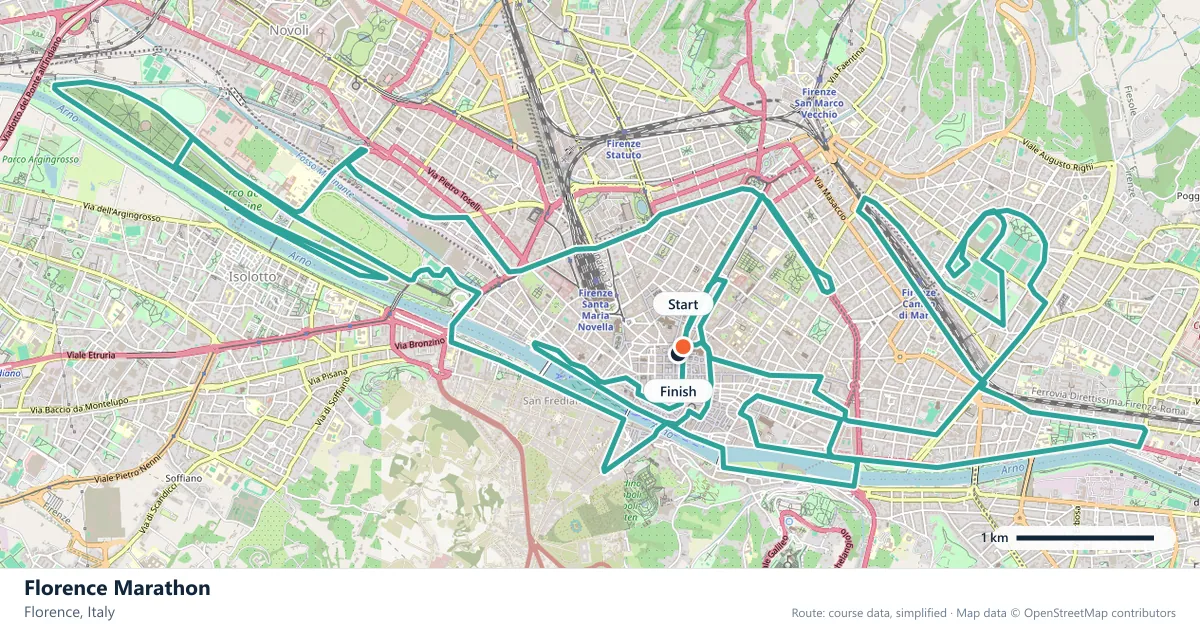
Where does the Florence Marathon run?
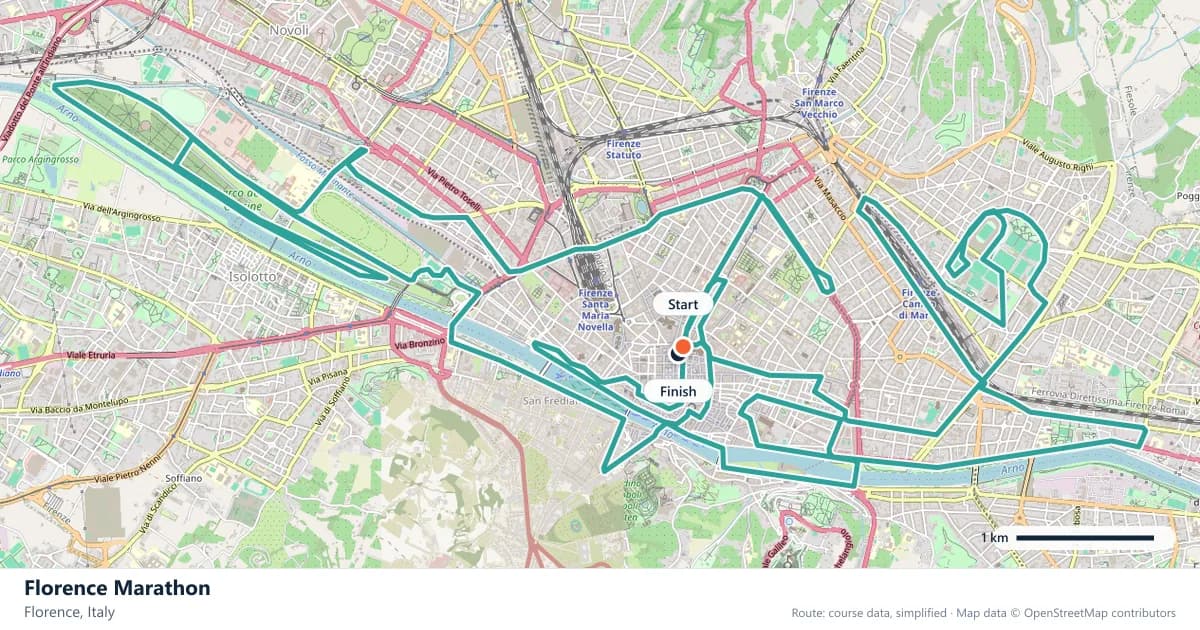
Interactive map
The trace follows the organizer's published course, simplified for the screen: the orange dot is the start, the dark dot the finish. Scroll to zoom, drag to pan.
What is the Florence Marathon course like?
A late-autumn tour of the Renaissance city, past the Duomo and along the Arno, with a loop out towards Fiesole. Gently rolling and usually run in cool, still air.
- Next edition
- 29 November 2026
- Elevation gain
- 148 m
- Profile
- Undulating
- First run
- —
Course guide
Florence's marathon is run at the end of November, when the city has lost the worst of its crowds and the air is usually cool and still. The route passes the Duomo, follows the Arno and loops out towards Fiesole. The next edition is on 29 November 2026, and the course is undulating, with about 148 metres of climbing.
The setting is almost absurdly beautiful, which is part of the problem. The first kilometres run through the Renaissance centre, past the Duomo and along the river, and it is easy to let the pace drift while looking up. The loop towards Fiesole adds the most sustained rolling ground and arrives when the race is starting to bite.
For all the art, this is a working city marathon: a loop, a measured course and a profile that rewards patience more than speed. It is a course for personal bests and debuts, but only if the opening is kept under control.
The course
The route passes the Duomo and runs along the Arno, then heads out towards Fiesole before looping back. The Renaissance centre and the more open ground towards Fiesole give the race two distinct moods, and the transition between them is one of the things that keeps the distance interesting.
The profile is gently rolling, with about 148 metres of climbing and no sustained ascent. Cool, still air is typical for late November, and the loop format keeps the race close to the city rather than strung out along a point-to-point course.

Panorama of the Florence skyline at sunset. Photo: Bely Medved / Wikimedia Commons, CC BY-SA 2.0.
The Duomo, the Arno and Fiesole
The Duomo is the image of Florence: Brunelleschi's dome, the marble facade, the baptistery and the campanile all packed into a small square. The marathon passes it, which means the most famous sight of the race is also one of the first things runners see.
The Arno is the other constant. The river runs through the city with the Ponte Vecchio at its most photographed point, and the embankments give the race a flat, open stretch between the historic centre and the hills. The water is a useful marker when the streets become a maze.
Fiesole sits on the hill above the city, and the route heads out in its direction, gaining height as Florence falls away. The views back across the city are the reward for the outward section.
Cool air and rolling stone
Late November in Florence usually brings cool, still air, which is close to ideal for distance running. The stone streets and the shaded riverbank can feel colder than the open hills, so layers that can be adjusted are more useful than a single heavy top.
The rolling profile is gentle but repeated. The climbs are short, and the descents are short too, which means the legs never settle into a completely flat rhythm. Running by effort rather than by a fixed pace is the simplest way to manage that.
The other challenge is the city itself. The historic centre is tight, the surface changes, and the crowds can narrow the road. Keep your line, stay aware of the runners around you, and do not try to make up time in the narrow streets.
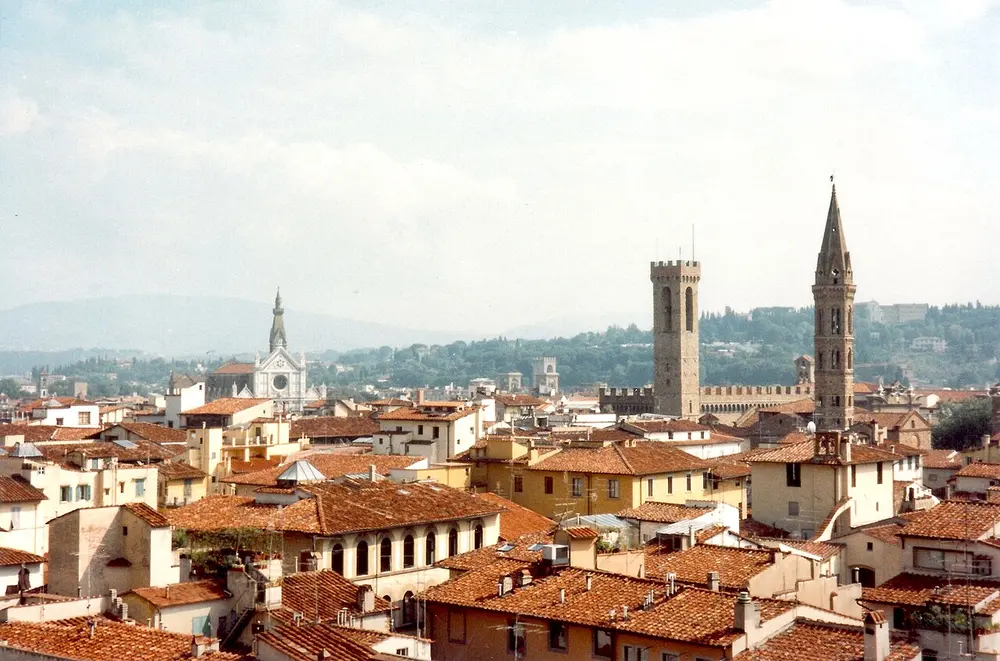
Firenze Sett 1993 - Florence skyline 03. Photo: Infrogmation / Wikimedia Commons, CC BY-SA 4.0.
Race weekend in the Renaissance city
Florence is a city that rewards an extra day. The Uffizi, the Ponte Vecchio and the Oltrarno are all within walking distance of the centre, and the food is as much a part of the experience as the art. Book accommodation early: late November is quieter than summer, but the marathon still fills the centre.
The race is a good excuse to see the city in autumn light, when the crowds are thinner and the air is clearer. It is also a reminder that Florence is not a museum: the race moves through working streets, and the city's everyday life continues around it.
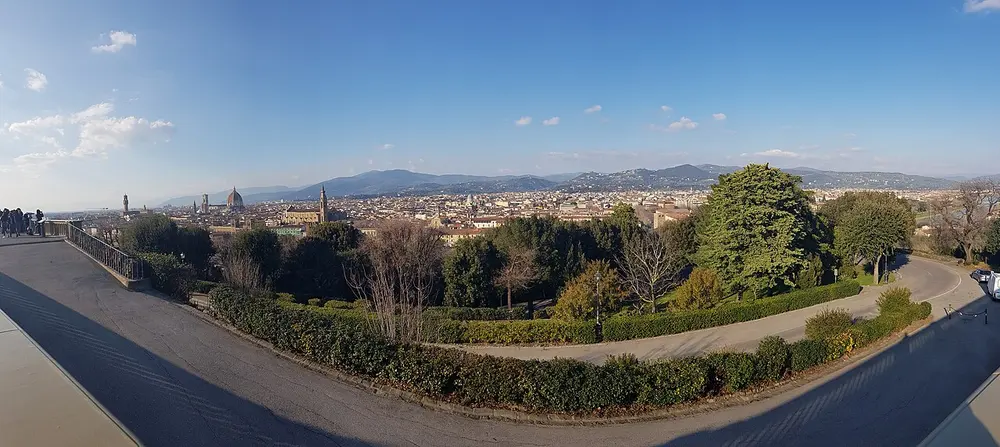
Florence's skyline. Photo: Dimoegy1999 / Wikimedia Commons, CC BY-SA 4.0.
Frequently asked questions
Answers to the questions runners ask before entering, drawn from this race's course guide and the directory's own data — the sources behind them are listed below.
When is the Florence Marathon?
The next edition is on 29 November 2026. It is a late-autumn race, and the date is confirmed rather than provisional.
Is the Florence Marathon flat or hilly?
It is gently undulating. The course climbs about 148 metres, with no sustained ascent, so it is neither flat nor hilly in the usual sense. The rolls are short and manageable.
Is Florence good for a first marathon or a personal best?
The moderate climbing and cool late-November conditions suit a personal best, while the gentle grades make it approachable for a first marathon. The main risk is starting too quickly through the historic centre.
Where is the Florence Marathon run?
It is run in Florence, passing the Duomo and following the Arno, with a loop out towards Fiesole. The route stays close to the city throughout.
What is the weather usually like?
The race is usually run in cool, still air. That makes it a comfortable late-autumn marathon, though runners should still prepare for changeable conditions.
What is the toughest part of the course?
The Fiesole loop adds the most sustained rolling ground, and it arrives in the second half. Pace it conservatively and save something for the return to the city.
More marathons in Italy
More marathons in Europe
Sources for this page
What each source below is used for on this page, and where to check this race yourself.
- World Athletics — the label calendar and the road-race regulations. Used to check whether the race holds a World Athletics label, and its elite competition details.
- AIMS — the international course-measurement standard behind the 42.195 km distance, and the AIMS race calendar.
- The organizer's own publications — course maps, race handbooks and published results. The date, course character and climbing on this page are compiled from them and re-checked each season.
Where do these facts come from?
Dates, course type, climbing and time limits are compiled from the organizer's publications and re-checked each season; elevation is an estimate of total climbing rather than a survey figure. Always confirm race-day details with the organizer before making plans.
Last reviewed 27 October 2026