
Leipzig Marathon
Leipzig's marathon is a race through a city that has reinvented itself more than once. The route links the old trade-fair halls, the Neuseenland lake district and the centre, and the next edition is…
By Global Marathon Routes editorial team · Last reviewed 27 October 2026
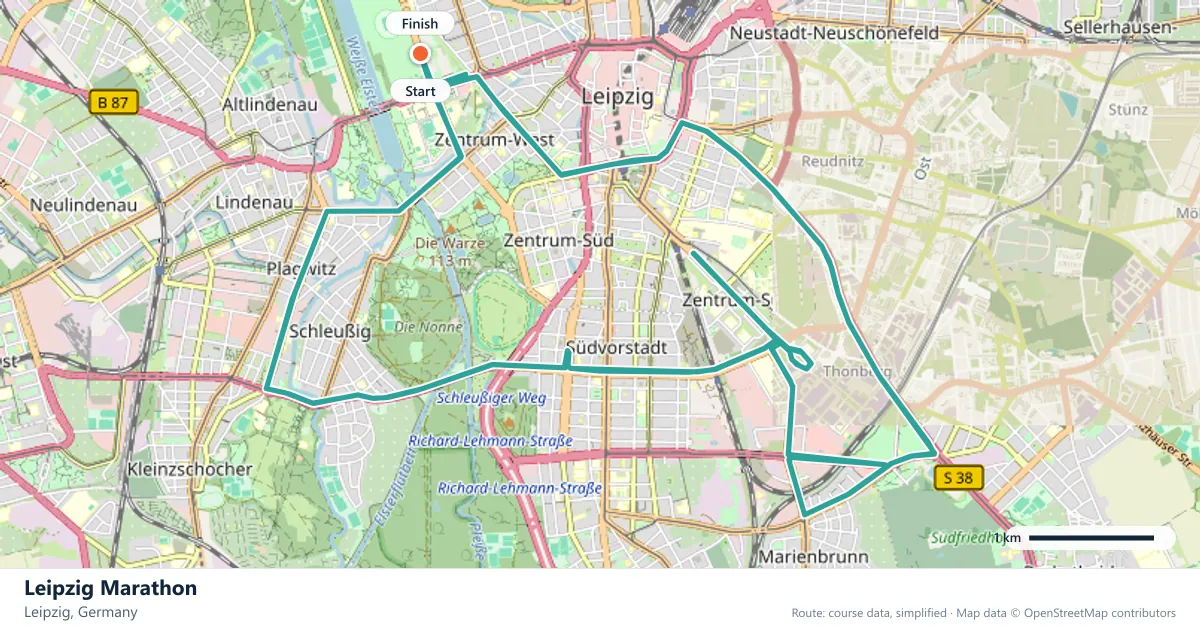
Where does the Leipzig Marathon run?
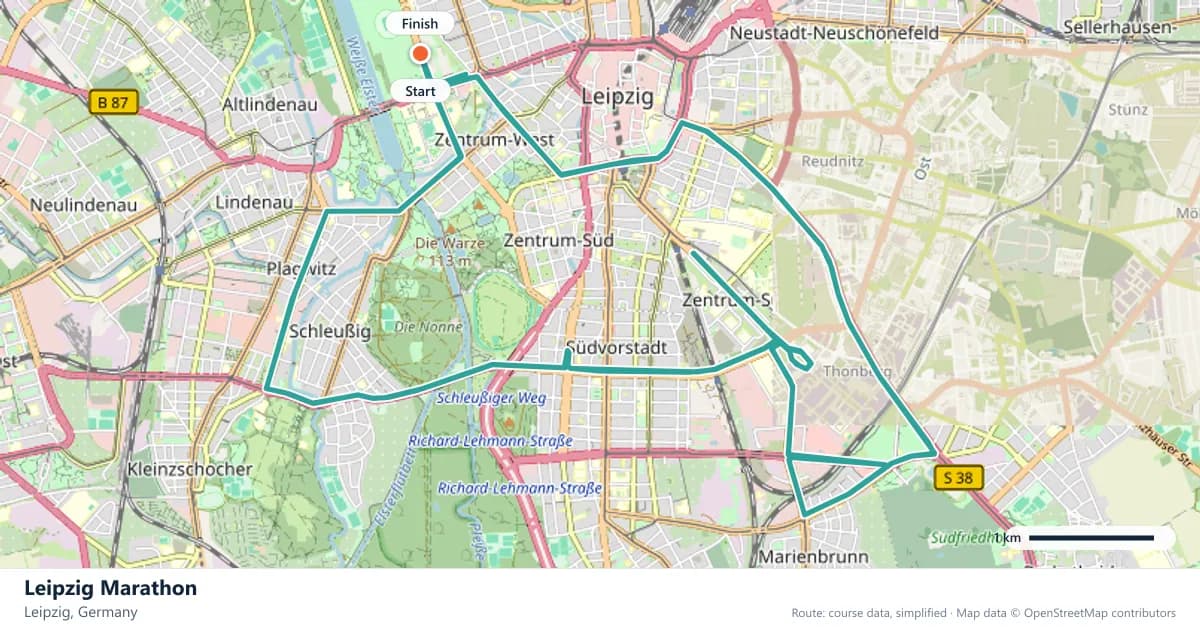
Interactive map
The trace follows the organizer's published course, simplified for the screen: the orange dot is the start, the dark dot the finish. Scroll to zoom, drag to pan.
What is the Leipzig Marathon course like?
A spring city marathon that links the old trade-fair halls, the Neuseenland lakes and the city centre. Mostly gentle, with a few short rises on the inward half.
- Next edition
- April 2027 (expected)
- Elevation gain
- 108 m
- Profile
- Undulating
- First run
- —
Course guide
Leipzig's marathon is a race through a city that has reinvented itself more than once. The route links the old trade-fair halls, the Neuseenland lake district and the centre, and the next edition is expected in April 2027. The course is undulating, with about 108 metres of gain, although most of it is gentle and the few short rises wait until the inward half.
Trade made Leipzig, and music gave it a second identity: Bach spent the last decades of his life as cantor at the Thomaskirche, and the Gewandhaus orchestra still carries the city's name around the world. The marathon does not turn into a sightseeing tour, but it does use the fairgrounds and the water that now surrounds the city as its structural poles.
The Neuseenland is the newer half of the story: a landscape of lakes created from former open-cast mines south of Leipzig. The race touches that water before returning to the streets, which gives the day two distinct moods and a reason to keep something in reserve for the way home.
The course
The route connects the old trade-fair halls with the Neuseenland lakes and the city centre. Most of the running is gentle, and the course is broad enough for the field to settle without constant changes of direction. The short rises on the inward half are the main interruptions to the rhythm.
With about 108 metres of gain across 42.195 km, no single climb defines the race. The undulations are small but persistent, and they arrive at the point where tired legs notice them most. The return to the centre is not a victory lap; it is a working part of the course, and it rewards runners who have paced the lakes section sensibly.
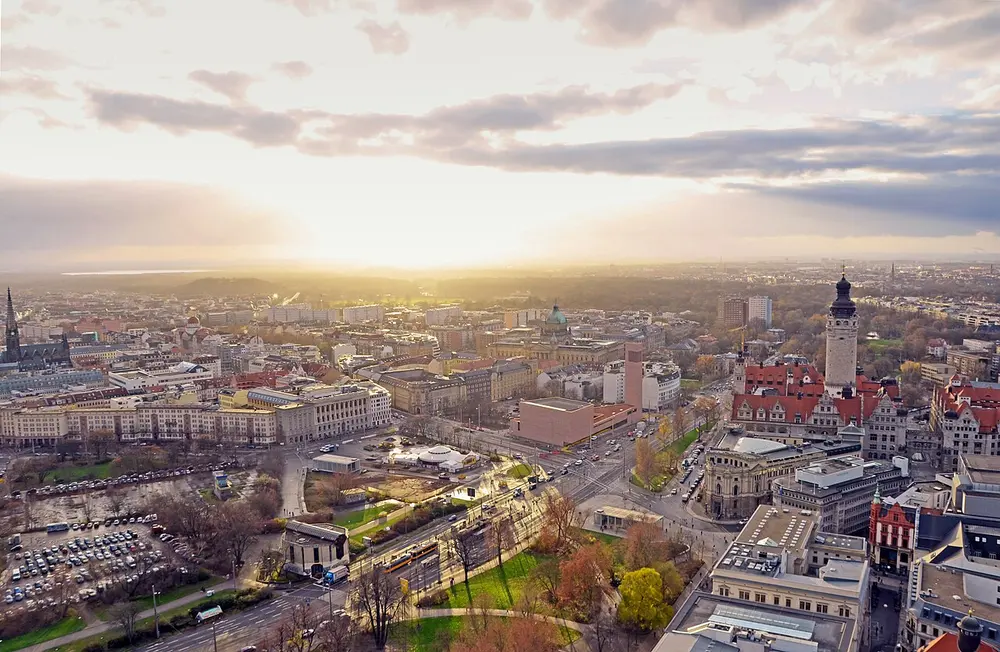
Leipzig Skyline. Photo: LeipzigTravel / Wikimedia Commons, CC BY-SA 4.0.
From the exhibition halls to the lakes
Leipzig's old trade-fair halls are monuments to the city's role as a meeting place between east and west. The Messe has moved to newer ground, but the old halls remain part of the urban fabric, and the marathon uses them as a starting image rather than a backdrop.
The lakes are the opposite kind of landscape: new, open and still being finished. The Neuseenland was created by flooding former lignite workings, and the result is a chain of water where there used to be pits and spoil. Running through it gives the race a sense of space that few German city marathons can match.
The contrast between the two halves is the point. You begin among buildings that speak of commerce and end among water that speaks of repair, with the city centre waiting at the end.
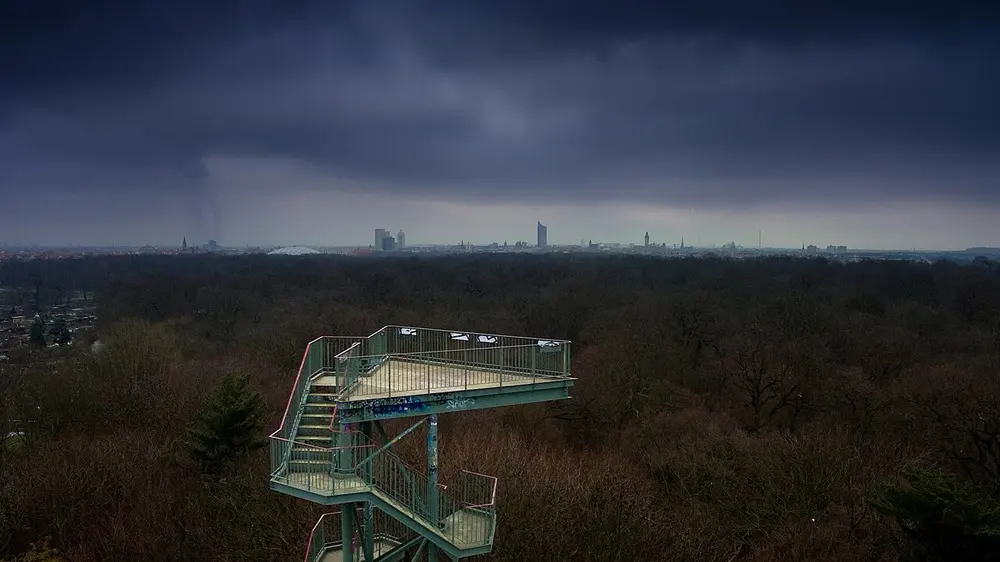
Leipzig, Rosental, Aussichtsturm. Luftbildaufnahme des Aussichtsturm im Rosental Leipzig mir Panoram. Photo: Thomas Wagner - Lutfbilder Leipzig / Wikimedia Commons, CC BY-SA 4.0.
The rises on the way home
The inward half is where the course changes character. After the flat ground around the lakes, the route begins to lift and fall in short steps, and the accumulation is more tiring than any single gradient suggests.
The right response is effort-based pacing. Run the rises at the same effort you used on the flat, let the pace drop a little uphill, and recover on the other side rather than surging to make up time. Runners who try to hold a fixed pace through every roll will spend more than they have.
None of these rises is long enough to justify a walk break on its own. They matter because they arrive late, when the legs have already covered most of the distance and the city centre is still ahead.
Leipzig on an April weekend
April 2027 is expected rather than confirmed, so keep some flexibility around travel until the organiser publishes the final date. The spring timing means the build happens through winter, and race day can be cool even when the city is starting to bloom.
Leipzig is compact and easy to walk, with the Thomaskirche, the Gewandhaus and the market square close together. The city's coffee-house culture is a good reason to stay for the weekend, and the lake district is close enough for an easy afternoon away from the crowds. It is a race that fits neatly into a short spring break.
Frequently asked questions
Answers to the questions runners ask before entering, drawn from this race's course guide and the directory's own data — the sources behind them are listed below.
When is the Leipzig Marathon?
The next edition is expected in April 2027. The date is provisional, so check the organiser's announcement before booking travel.
Is the Leipzig Marathon a flat course?
It is undulating rather than flat, with about 108 metres of gain. Most of the route is gentle, and the short rises on the inward half are the main changes in gradient.
Is Leipzig good for a first marathon or a personal best?
The low climbing and mostly gentle profile give a personal-best attempt and a debut a fair chance. The short rises still need to be paced sensibly, and a first marathon should start conservatively, but neither goal is unrealistic here.
Where is the Leipzig Marathon run?
It is run in Leipzig, linking the old trade-fair halls, the Neuseenland lakes and the city centre. The route stays within the city and its nearby lake district.
What are the short rises on the inward half?
They are small climbs on the return towards the centre. None is long enough to define the race, but together they are why the course is undulating rather than flat.
How should I prepare for an April race?
Build the long runs through winter and early spring, and include some rolling ground so the inward rises do not come as a surprise. Keep travel plans flexible until the date is confirmed.
More marathons in Germany
More marathons in Europe
Sources for this page
What each source below is used for on this page, and where to check this race yourself.
- World Athletics — the label calendar and the road-race regulations. Used to check whether the race holds a World Athletics label, and its elite competition details.
- AIMS — the international course-measurement standard behind the 42.195 km distance, and the AIMS race calendar.
- The organizer's own publications — course maps, race handbooks and published results. The date, course character and climbing on this page are compiled from them and re-checked each season.
Where do these facts come from?
Dates, course type, climbing and time limits are compiled from the organizer's publications and re-checked each season; elevation is an estimate of total climbing rather than a survey figure. Always confirm race-day details with the organizer before making plans.
Last reviewed 27 October 2026