
Dresden Marathon
Dresden's skyline is a baroque composition, rebuilt after the destruction of the Second World War and now one of the most recognisable in Germany.
By Global Marathon Routes editorial team · Last reviewed 27 October 2026
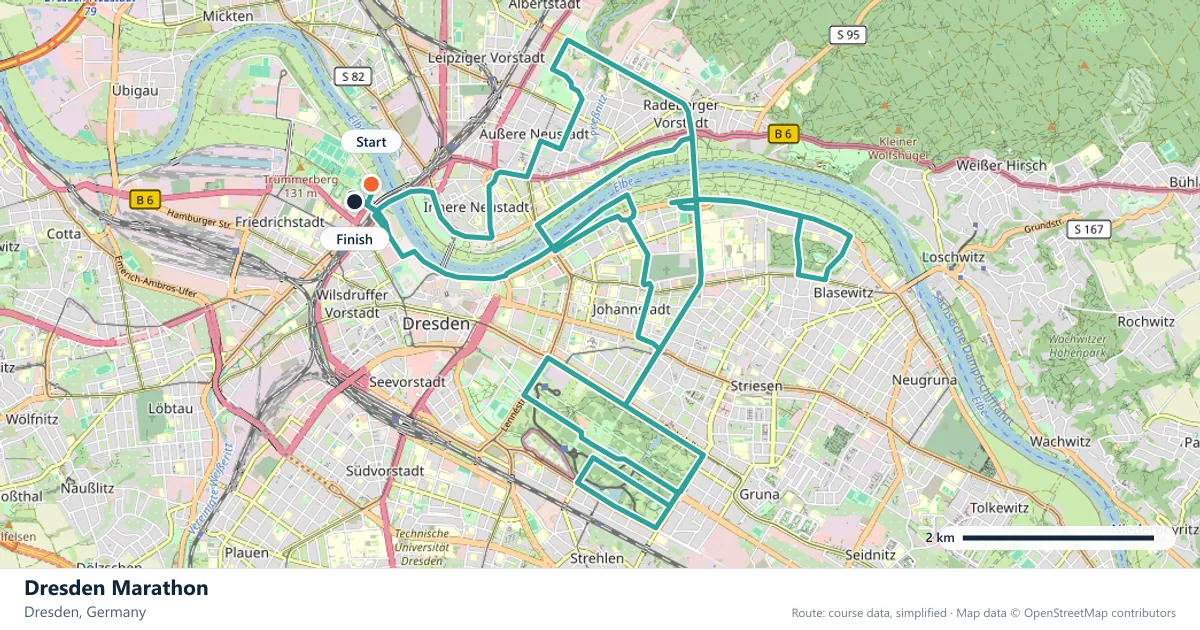
Where does the Dresden Marathon run?
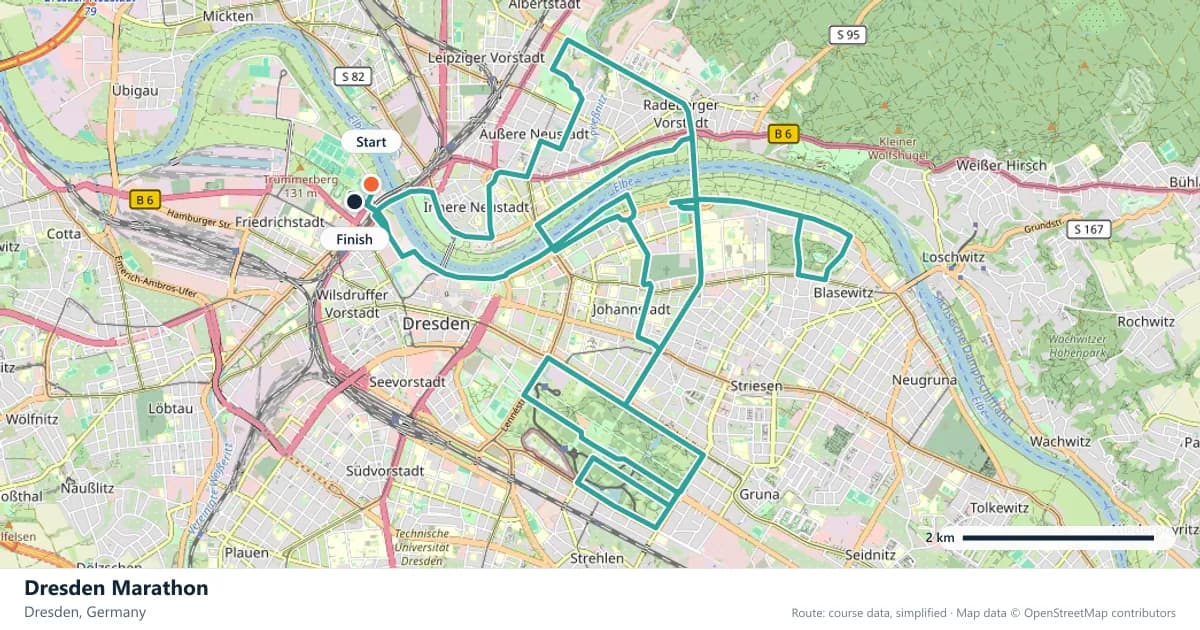
Interactive map
The trace follows the organizer's published course, simplified for the screen: the orange dot is the start, the dark dot the finish. Scroll to zoom, drag to pan.
What is the Dresden Marathon course like?
Follows the Elbe past the baroque old town and out into the river meadows. Gently undulating with long riverside stretches and a finish in the historic centre.
- Next edition
- October 2027 (expected)
- Elevation gain
- 108 m
- Profile
- Undulating
- First run
- —
Course guide
Dresden's skyline is a baroque composition, rebuilt after the destruction of the Second World War and now one of the most recognisable in Germany. The Elbe runs beneath it, broad and slow, with meadows stretching along both banks. The marathon uses that river as its organising line: past the old town, out into the meadows and back to a finish in the historic centre. The next edition is expected in October 2027.
The course is gently undulating, with about 108 metres of climbing. It is not a flat river path from start to finish; the route moves between the riverbank and the city streets, and the transitions supply most of the elevation change. The long riverside stretches give the race its calm, and the baroque finish gives it a strong sense of arrival.
Dresden is a race for runners who want a course with a clear identity rather than a generic city loop. The Elbe, the old town and the meadows are all part of the same landscape, and the marathon follows it closely.
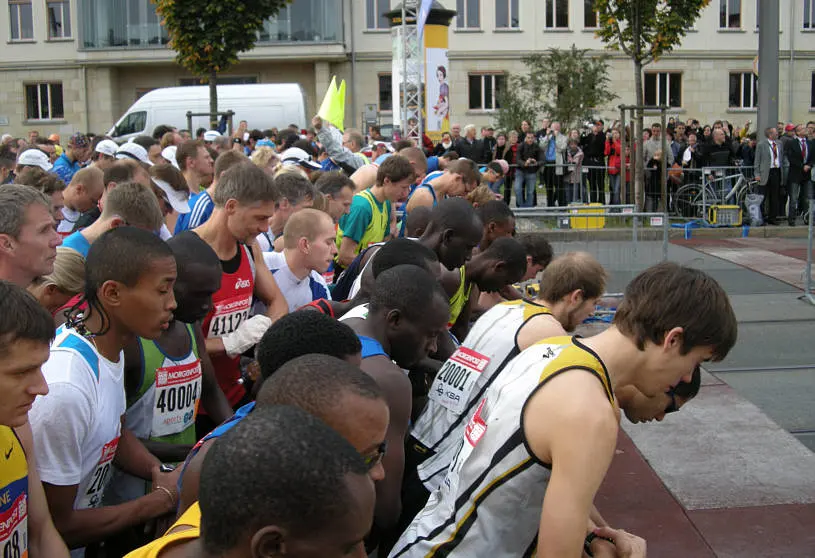
Dresden-marathon. Photo: Thomas Schmidtkonz at de.wikipedia / Wikimedia Commons, CC BY-SA 3.0.
The course
The Elbe is the organising principle of the route. The course follows the river past the baroque old town and then out into the river meadows, where the streets give way to longer, more open riverside stretches. The 108 metres of climbing come from the transitions between the riverbank and the city streets rather than from a single hill.
The long riverside sections are where the race settles into a rhythm. The meadows are flat and open, with views across the water and the city skyline in the distance. The return to the historic centre brings the buildings back and gives the final kilometres a clear destination.
The Elbe and the meadows
The Elbe meadows are one of Dresden's defining features: wide, green floodplains that run through the city and give it room to breathe. The marathon uses them for the long, calm stretches of the course, where the field spreads out and the running becomes steady.
The river itself is a constant reference. Dresden's old town sits on the left bank, the newer districts on the right, and the bridges connect them. The race follows the water rather than crossing it repeatedly, so the course has a linear, riverside feel even though it returns to the centre.
A baroque finish
The finish in the historic centre is the race's strongest image. The old town was rebuilt after the war, and its landmarks — the Frauenkirche, the Zwinger, the Semperoper — now form a compact baroque ensemble beside the river. The marathon's closing kilometres bring runners back into that setting.
The approach to the finish is also where the course's gentle undulation matters. The last part of the race is not a long descent or a victory lap; it is a return through city streets after the openness of the meadows. Leave something for it, and let the buildings mark the end of the morning.
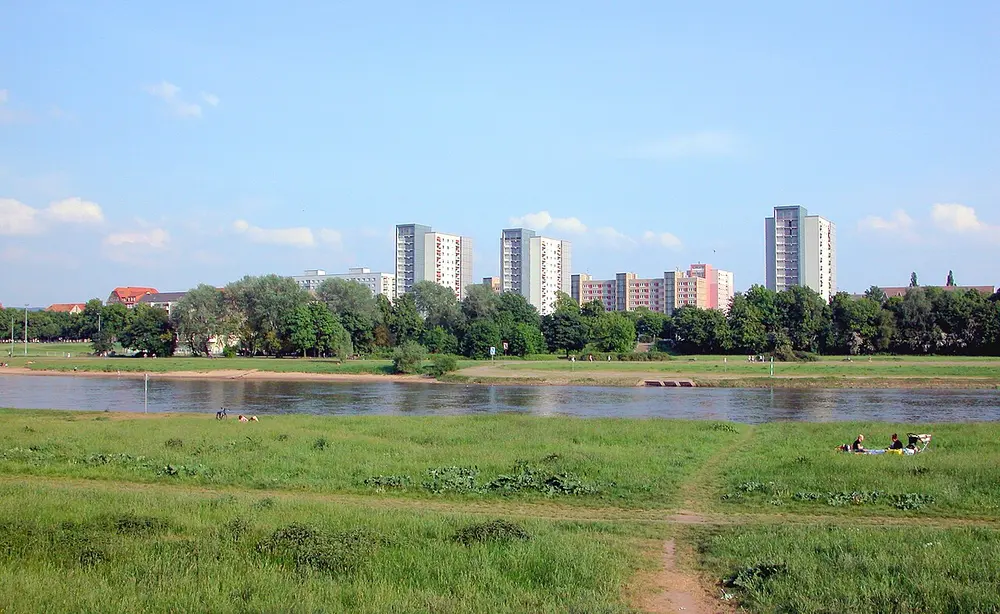
20090509120DR Dresden-Johannstadt Skyline. Photo: Jörg Blobelt / Wikimedia Commons, CC BY-SA 4.0.
Gentle rolls, patient running
The 108 metres of climbing are easy to dismiss individually. The course is closer to flat than hilly, and the riverside stretches are genuinely level. But the transitions between the river and the city add up, and they arrive in the later stages when the legs are less willing to absorb them.
The right approach is an even effort rather than a fixed pace. Let the small rises slow you slightly, and use the flat meadows to recover. The course rewards patience: runners who start conservatively and keep their fuelling on schedule will have enough left for the return to the old town.
Late October in Saxony
Late October is a transitional weekend in Dresden. The summer crowds are gone, the river meadows are quiet and the city has a calm, autumnal feel. The race sits near the end of the German season, which makes it a natural target for runners who have built through the summer.
The compact centre and the riverside setting make race weekend easy to manage. The old town, the Elbe and the meadows are all within reach, and supporters can move between viewpoints without long journeys. It is a race that feels local in the best sense: a city course with a strong landscape and a memorable finish.
Frequently asked questions
Answers to the questions runners ask before entering, drawn from this race's course guide and the directory's own data — the sources behind them are listed below.
When is the Dresden Marathon?
The next edition is expected in October 2027. It is a late-October race in Saxony.
Is the Dresden Marathon flat or hilly?
It is gently undulating. The course climbs about 108 metres, with no sustained ascent, so it is far closer to flat than hilly while still offering enough rolling road to reward even pacing.
Is Dresden good for a personal best?
The limited climbing and long riverside stretches make it a fair course for a fast time. A personal best still depends on pacing, and the transitions between the river and the city can cost more than the profile suggests.
Is the Dresden Marathon suitable for a first marathon?
Yes. The gentle profile, compact route and riverside setting make it a manageable debut. The main caveat is starting too quickly on the flat meadows and then fading on the return to the city.
Where does the Dresden Marathon run?
It follows the Elbe past the baroque old town and out into the river meadows, finishing in the historic centre. The route stays within Dresden.
What is the finish like?
The race finishes in Dresden's historic centre, among the reconstructed baroque landmarks. After the open riverside meadows, the old-town setting gives the final part of the course a very different character.
More marathons in Germany
More marathons in Europe
Sources for this page
What each source below is used for on this page, and where to check this race yourself.
- World Athletics — the label calendar and the road-race regulations. Used to check whether the race holds a World Athletics label, and its elite competition details.
- AIMS — the international course-measurement standard behind the 42.195 km distance, and the AIMS race calendar.
- The organizer's own publications — course maps, race handbooks and published results. The date, course character and climbing on this page are compiled from them and re-checked each season.
Where do these facts come from?
Dates, course type, climbing and time limits are compiled from the organizer's publications and re-checked each season; elevation is an estimate of total climbing rather than a survey figure. Always confirm race-day details with the organizer before making plans.
Last reviewed 27 October 2026