
Valencia Marathon
Valencia has built a reputation as one of Europe's fastest marathons, and the course is the reason. The next edition is on Sunday 6 December 2026, and the route runs through the Turia gardens and…
By Global Marathon Routes editorial team · Last reviewed 27 October 2026
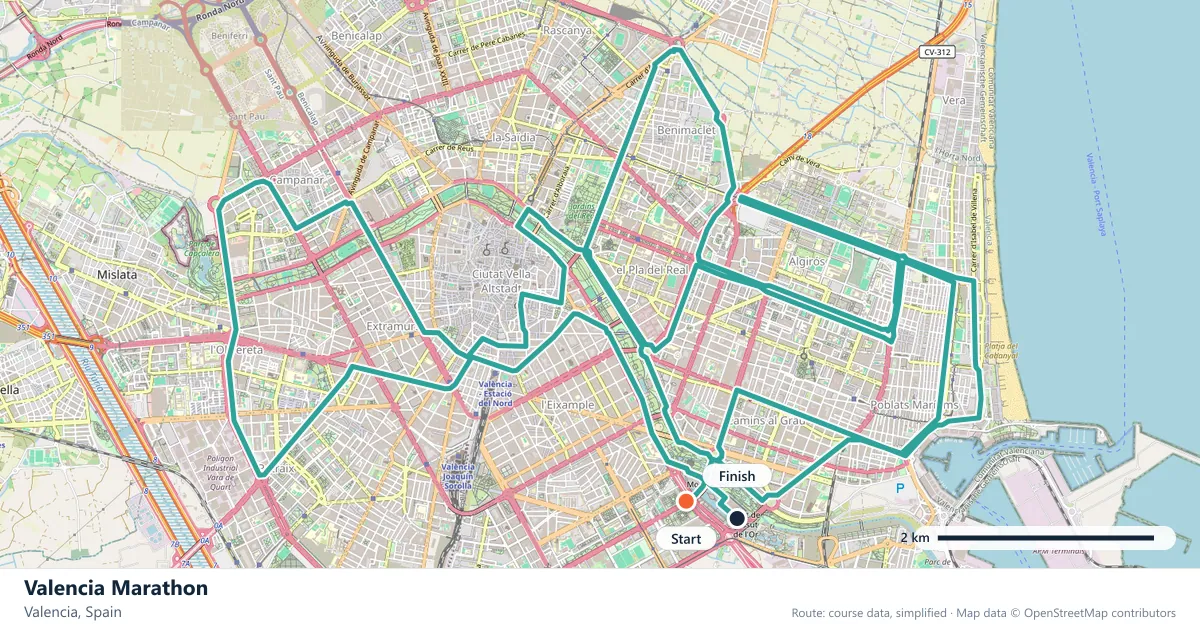
Where does the Valencia Marathon run?
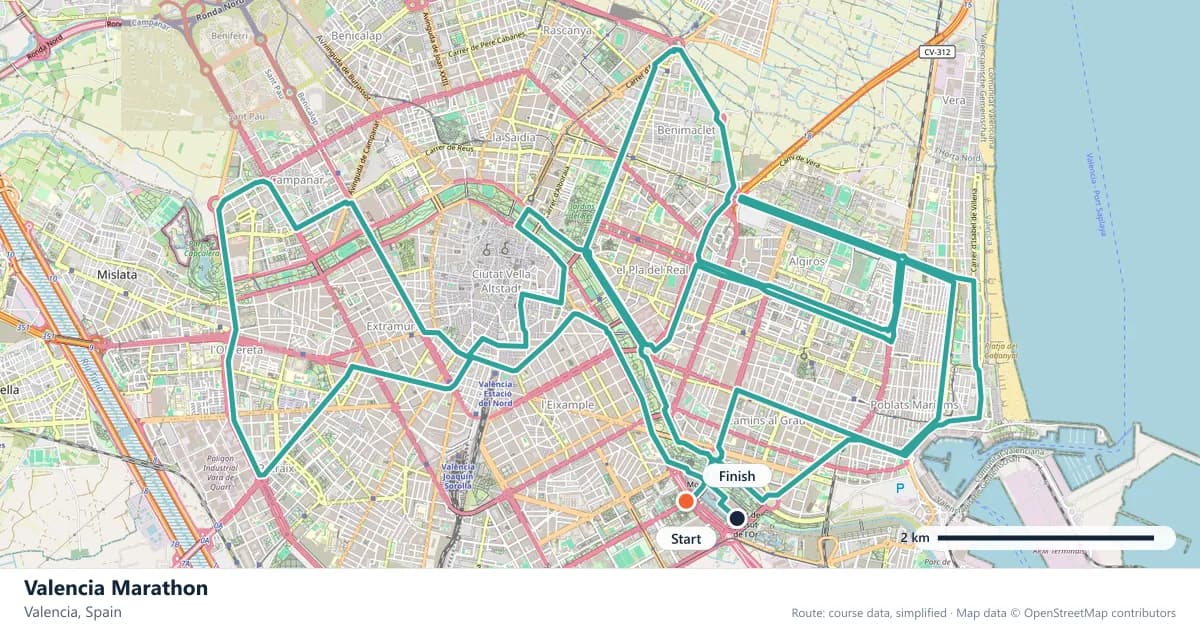
Interactive map
The trace follows the organizer's published course, simplified for the screen: the orange dot is the start, the dark dot the finish. Scroll to zoom, drag to pan.
What is the Valencia Marathon course like?
One of the fastest marathons in Europe: flat, sheltered and run through the Turia gardens and the City of Arts and Sciences. Early December weather on the Mediterranean is close to ideal.
- Next edition
- 06 December 2026
- Elevation gain
- 62 m
- Profile
- Flat
- First run
- —
Course guide
Valencia has built a reputation as one of Europe's fastest marathons, and the course is the reason. The next edition is on Sunday 6 December 2026, and the route runs through the Turia gardens and past the City of Arts and Sciences. It climbs about 62 metres, holds a World Athletics Platinum Label, and is designed, in effect, for fast times.
The Turia gardens are the race's green spine. The river that once ran through the city was diverted, and its old bed became a long park that cuts through Valencia from west to east. The marathon uses that corridor for a sheltered, flat stretch that feels nothing like a conventional city street.
December weather on the Mediterranean is close to ideal for racing, and the course is flat enough that the race becomes a test of pacing rather than terrain. That combination has made Valencia a destination for runners chasing times, and the Platinum Label reflects the depth of the event as well as its speed.
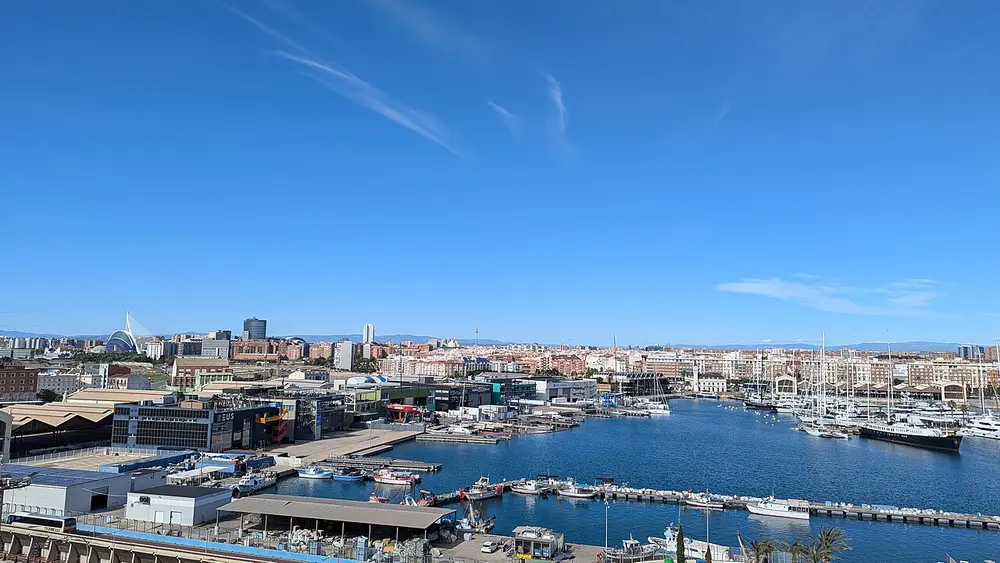
Valencia Skyline. Photo: Mukeber / Wikimedia Commons, CC BY 4.0.
The course
The route is flat and urban, with the Turia gardens providing the longest sheltered section. The park is sunk below street level, which gives the race a different atmosphere from the surrounding city: trees, paths and bridges rather than traffic and tall buildings.
The City of Arts and Sciences is the other defining landmark. The cluster of modern buildings at the eastern end of the Turia is unmistakable, with white concrete and glass rising above the park. It gives runners a visual target and the race a dramatic landmark.
The 62 metres of climbing are almost incidental. There is no sustained ascent and no hill that changes the character of the day. The course is flat in the way that matters: it lets runners hold a rhythm from the first kilometre to the last.
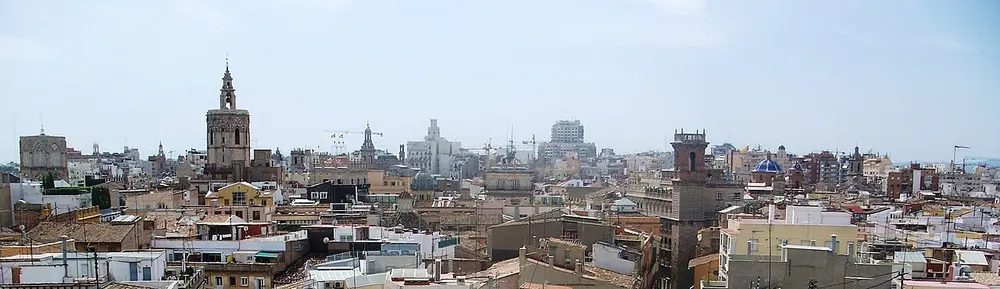
Old city of Valencia Skyline from Serrans Towers. Photo: Carlesmari / Wikimedia Commons, CC BY 3.0.
The Turia gardens
The Turia gardens exist because the river was moved. After the Turia was diverted, the old riverbed was turned into a green corridor rather than a road, and the park is one of the most distinctive urban landscapes in Spain.
For runners, the gardens offer shade, shelter and a flat surface. The park is below the level of the surrounding streets, so the wind is reduced and the city feels further away than it is. On a December morning, that shelter can make a real difference.
The gardens also break the race into manageable pieces. Runners move from one bridge to the next, with the park stretching ahead and the City of Arts and Sciences gradually coming closer. It is a rare thing in a city marathon: a course that feels calm without feeling empty.
Why the times fall
Valencia's speed comes from a combination of factors. The course is flat, the Turia section is sheltered, the December date avoids the heat of summer, and the route is wide enough for runners to hold their pace without fighting the field.
The flatness is the foundation. With only 62 metres of climbing, there is no point on the course where the gradient forces a change of effort. Runners can settle into a rhythm early and keep it, which is exactly what a fast marathon requires.
The sheltered sections add another layer. A course that is exposed to wind can be just as slow as a hilly one, and Valencia's gardens reduce that risk for a long stretch of the race. It is not a guarantee, but it is a help.
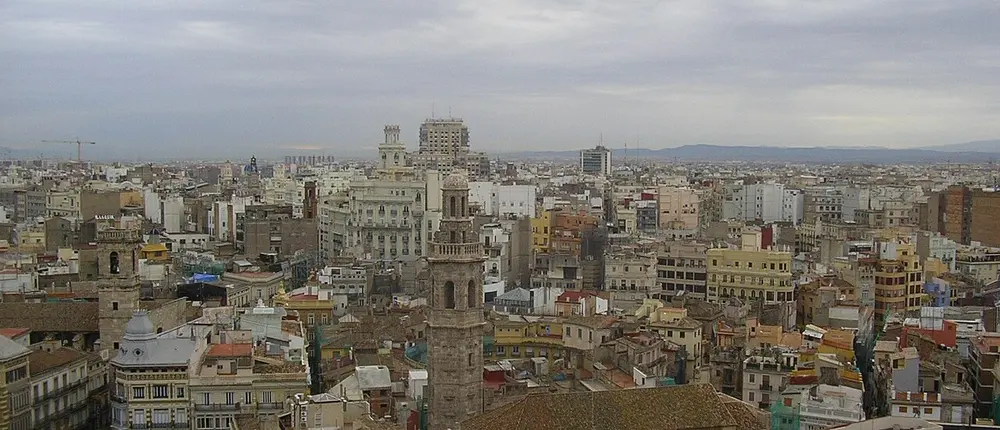
Skyline de València des del Micalet cap al sud. Photo: Carlesmari / Wikimedia Commons, CC BY-SA 3.0.
December on the Mediterranean
Early December is a useful date for a marathon. The summer heat is long gone, the Mediterranean is still mild, and the city is not yet in the grip of winter. For runners from northern Europe, it is a chance to race in conditions that are hard to find at home.
The date also sits at the end of the season, which shapes the training. The summer base is already there, and the autumn is spent sharpening rather than building from scratch. Runners who have a long season behind them may arrive tired; runners who target Valencia specifically can plan the year around it.
The city itself is at its most comfortable in December. The old town is walkable, the food is warm and substantial, and the beach is quiet. It is not the Valencia of summer holidays, which is part of the appeal.
Frequently asked questions
Answers to the questions runners ask before entering, drawn from this race's course guide and the directory's own data — the sources behind them are listed below.
When is the Valencia Marathon?
The next edition is on Sunday 6 December 2026. Final start times are published closer to the event.
Is the Valencia Marathon flat?
Yes. It climbs about 62 metres in total and has no sustained ascent, which is why it is regarded as one of the fastest marathons in Europe. The Turia gardens are also sheltered, adding to the course's speed.
Is Valencia a personal-best course?
Yes. The flat profile, the sheltered parkland and the early-December date make it one of the strongest personal-best courses in Europe. The race is built around fast running.
Can you debut in Valencia?
Yes. The course is flat and forgiving, and the atmosphere of a major race can help a debutant through the later stages. The main risk is going out too fast in the sheltered early kilometres.
Where is the Valencia Marathon run?
It is run in Valencia through the Turia gardens and past the City of Arts and Sciences. The course stays within the city and uses the old riverbed as its green corridor.
What label does the Valencia Marathon hold?
It holds a World Athletics Platinum Label, the top tier of the international label road-racing calendar.
Why is the Valencia Marathon so fast?
The course is flat, sheltered for long stretches and run in mild December conditions. Those factors combine to make even pacing easy, which is the foundation of fast marathon times.
More marathons in Spain
More marathons in Europe
Sources for this page
What each source below is used for on this page, and where to check this race yourself.
- World Athletics — the label calendar and the road-race regulations. Used to check whether the race holds a World Athletics label, and its elite competition details.
- AIMS — the international course-measurement standard behind the 42.195 km distance, and the AIMS race calendar.
- The organizer's own publications — course maps, race handbooks and published results. The date, course character and climbing on this page are compiled from them and re-checked each season.
“A World Athletics Label denotes a full application of the Competition and Technical Rules in, at a minimum, the elite component of the competition. Labels also denote superior standards in event organisation, safety and runner experience, support from public authorities to the event and a financial commitment to anti-doping.”
Where do these facts come from?
Dates, course type, climbing and time limits are compiled from the organizer's publications and re-checked each season; elevation is an estimate of total climbing rather than a survey figure. Always confirm race-day details with the organizer before making plans.
Last reviewed 27 October 2026