
Seville Marathon
Seville's marathon is a winter race built for fast times. The next edition is expected in February 2027, and the course follows the Guadalquivir past the Torre del Oro and the Plaza de España.
By Global Marathon Routes editorial team · Last reviewed 27 October 2026
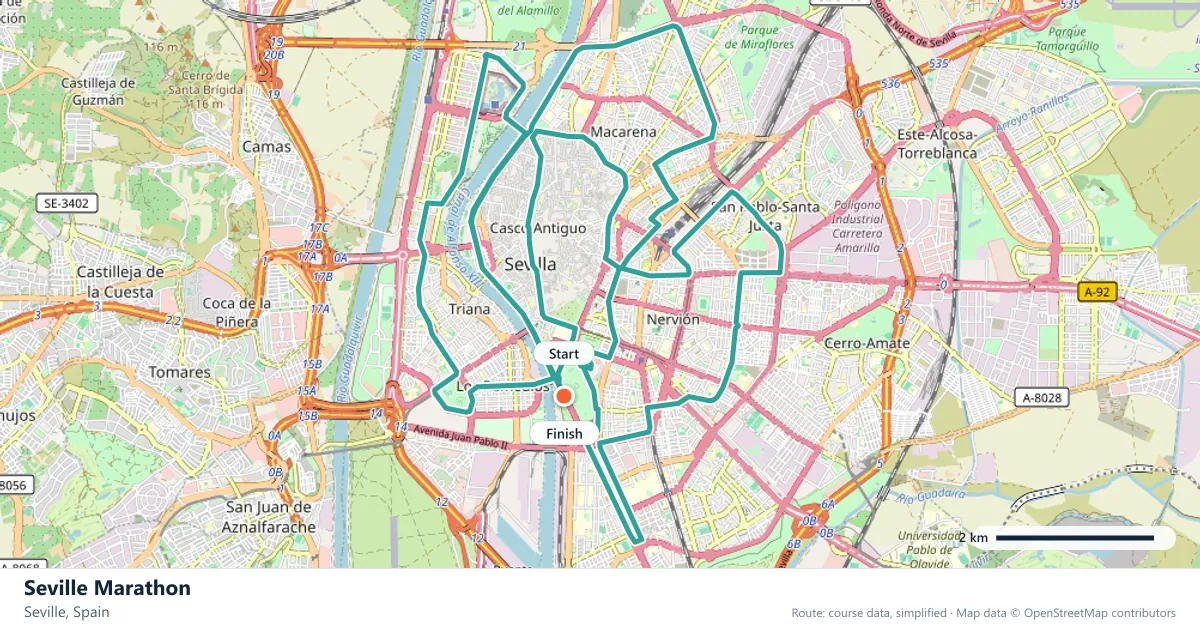
Where does the Seville Marathon run?
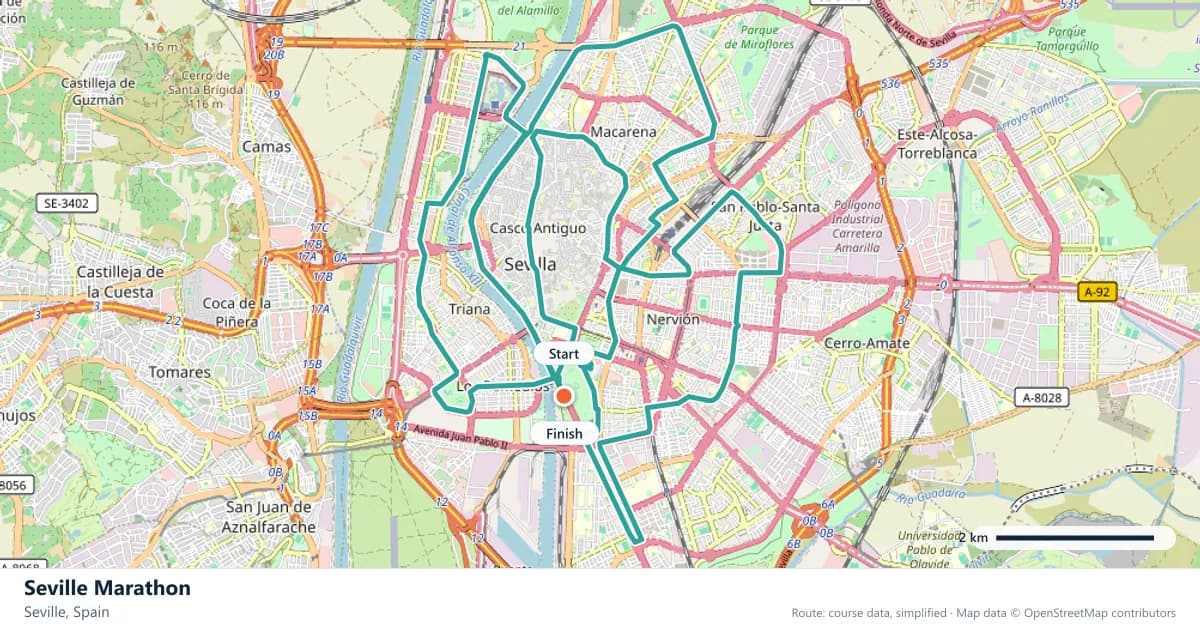
Interactive map
The trace follows the organizer's published course, simplified for the screen: the orange dot is the start, the dark dot the finish. Scroll to zoom, drag to pan.
What is the Seville Marathon course like?
A pancake-flat winter course beside the Guadalquivir, past the Torre del Oro and the Plaza de España. Mild February temperatures and a wide, uncrowded route make it a favourite for fast times.
- Next edition
- February 2027 (expected)
- Elevation gain
- 59 m
- Profile
- Flat
- First run
- —
Course guide
Seville's marathon is a winter race built for fast times. The next edition is expected in February 2027, and the course follows the Guadalquivir past the Torre del Oro and the Plaza de España. It climbs about 59 metres, holds a World Athletics Elite Label, and uses some of the widest, emptiest roads in European marathon running.
Flatness is the headline. With only 59 metres of climbing, the course offers almost nothing in the way of terrain to interrupt a rhythm, and the wide roads give runners room to hold their own pace rather than follow the field. The race is decided by patience, not by strength on the hills.
The date is the other attraction. February in Seville is mild by northern European standards, and the city is at its best in the winter light, with the orange trees lining the streets and the tourist crowds thinner than in spring. The race gives runners a reason to visit at a time when the city is still itself.
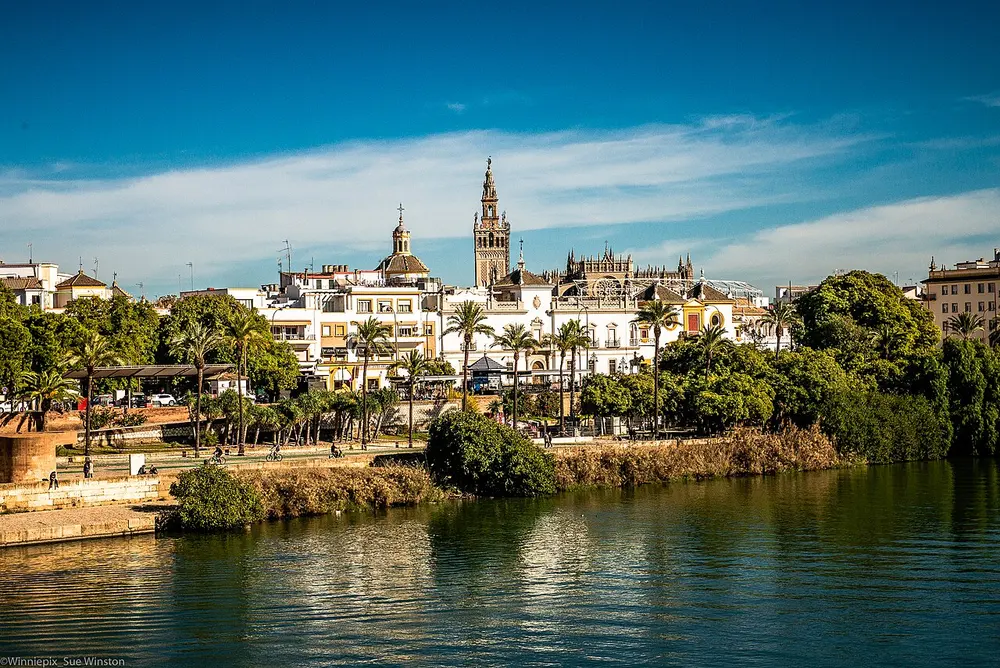
Seville skyline. Photo: Winniepix / Wikimedia Commons, CC BY 2.0.
The course
The route follows the Guadalquivir through the heart of Seville. It passes the Torre del Oro, the medieval watchtower that has become the city's symbol, and it goes by the Plaza de España, the vast semicircular square on the edge of the centre. Both landmarks give the race a sense of place without adding a hill.
The profile is pancake-flat. There is no sustained ascent, no technical descent and almost nothing that would register as a climb on a training route. The course is a long, wide ribbon through the city, and its difficulty comes entirely from the pace you choose.
The roads are also unusually open. Seville's marathon is not a cramped city centre race; the route has room for runners to spread out, overtake and settle. That is a rare luxury in a major-city marathon, and it makes the course feel faster than its profile alone would suggest.
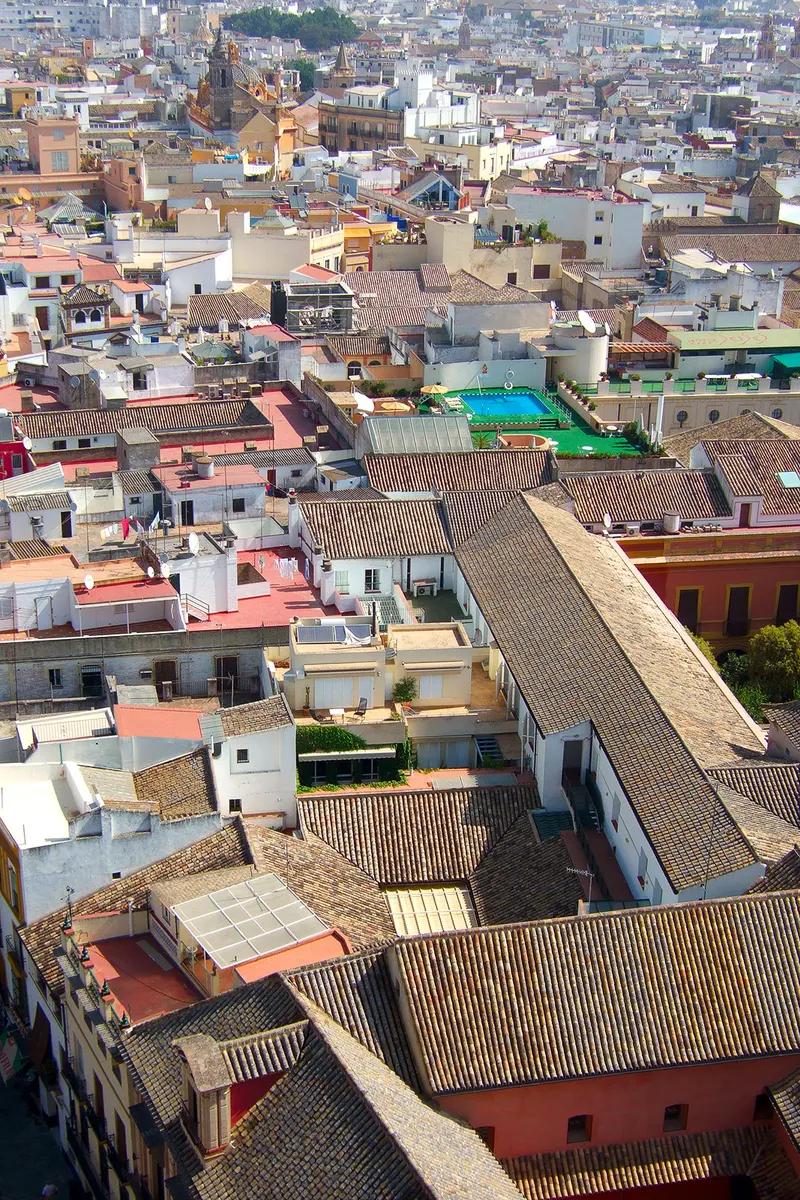
View From Seville Cathedral. Photo: Shawn Lipowski ( Shawnlipowski ) / Wikimedia Commons, CC BY 2.5.
Why Seville is so quick
The combination of a flat profile, wide roads and a mild winter date is close to ideal for marathon running. There is no altitude to account for, no climb to break the rhythm and no need to fight for space in the early kilometres.
The wide, uncrowded route matters more than it might seem. Runners can run their own pace from the start rather than being carried along by the field, and they can overtake without weaving. On a flat course, that freedom is worth a lot of time over 42 kilometres.
The records and the elite fields confirm the reputation, but the course is not only for professionals. The same qualities that make it quick for the front of the race make it manageable for runners chasing a personal best further back. It is a course that rewards discipline.
February on the Guadalquivir
February is a good month to run in Seville. The city is mild, the days are lengthening and the heat of the Andalusian summer is still months away. The centre is busy without being overwhelmed, and the race gives runners a reason to see the city at a quieter time of year.
The date also gives the race a distinct identity. It is not part of the autumn crowd and it is not a spring race competing with the bigger European marathons. It sits in the quiet part of the calendar, when runners can target a fast time without the distractions of the main season.
For visitors, February is a pleasant time to explore the city. The cathedral, the Alcázar and the old Jewish quarter are all within reach of the course, and the city's food culture is easier to enjoy when the temperature is mild.
An early-year target
A February marathon shapes the training year. The long runs happen through winter, often in cold and dark conditions, and the race arrives before the spring season has properly begun. That makes it a useful target for runners who want to start the year with a result.
The flat course means the training can be specific. Long, steady runs at goal pace are more relevant than hill repeats, and the race itself is a test of rhythm and fuelling rather than climbing strength. Runners who prepare for even splits will find the course accommodating.
The mild conditions are a bonus, but they are not a guarantee. February in Seville can still surprise, and the wide roads offer little shelter if the weather turns. The race rewards runners who prepare for a range of conditions rather than assuming a warm day.
Frequently asked questions
Answers to the questions runners ask before entering, drawn from this race's course guide and the directory's own data — the sources behind them are listed below.
What date is the next Seville Marathon?
The next edition is expected in February 2027. The exact date has not been confirmed, so check the organiser's final schedule before booking travel.
Is the Seville Marathon flat?
Yes. The course climbs only about 59 metres, making it one of the flattest marathons on the calendar. There is no sustained ascent, and the wide roads allow an even rhythm.
Why is Seville considered a fast course?
The pancake-flat course, the wide uncrowded roads and the mild winter date make it one of the strongest personal-best candidates in Europe. The main risk is starting too fast on such an easy profile.
Would Seville suit a first-timer?
Yes. The flat course and open roads are forgiving, and the mild February conditions are easier to manage than a hot-weather race. Hold back in the first half.
Where is the Seville Marathon run?
It runs beside the Guadalquivir in Seville, passing the Torre del Oro and the Plaza de España. The course is flat and stays within the city.
What label does the Seville Marathon hold?
It holds a World Athletics Elite Label, alongside its reputation as one of Europe's fastest winter courses.
More marathons in Spain
More marathons in Europe
Sources for this page
What each source below is used for on this page, and where to check this race yourself.
- World Athletics — the label calendar and the road-race regulations. Used to check whether the race holds a World Athletics label, and its elite competition details.
- AIMS — the international course-measurement standard behind the 42.195 km distance, and the AIMS race calendar.
- The organizer's own publications — course maps, race handbooks and published results. The date, course character and climbing on this page are compiled from them and re-checked each season.
“A World Athletics Label denotes a full application of the Competition and Technical Rules in, at a minimum, the elite component of the competition. Labels also denote superior standards in event organisation, safety and runner experience, support from public authorities to the event and a financial commitment to anti-doping.”
Where do these facts come from?
Dates, course type, climbing and time limits are compiled from the organizer's publications and re-checked each season; elevation is an estimate of total climbing rather than a survey figure. Always confirm race-day details with the organizer before making plans.
Last reviewed 27 October 2026