
San Sebastián Marathon
San Sebastián's marathon is shaped by its bay. The next edition is on Sunday 22 November 2026, and the course follows the curve of La Concha before heading out along the Basque coast.
By Global Marathon Routes editorial team · Last reviewed 27 October 2026
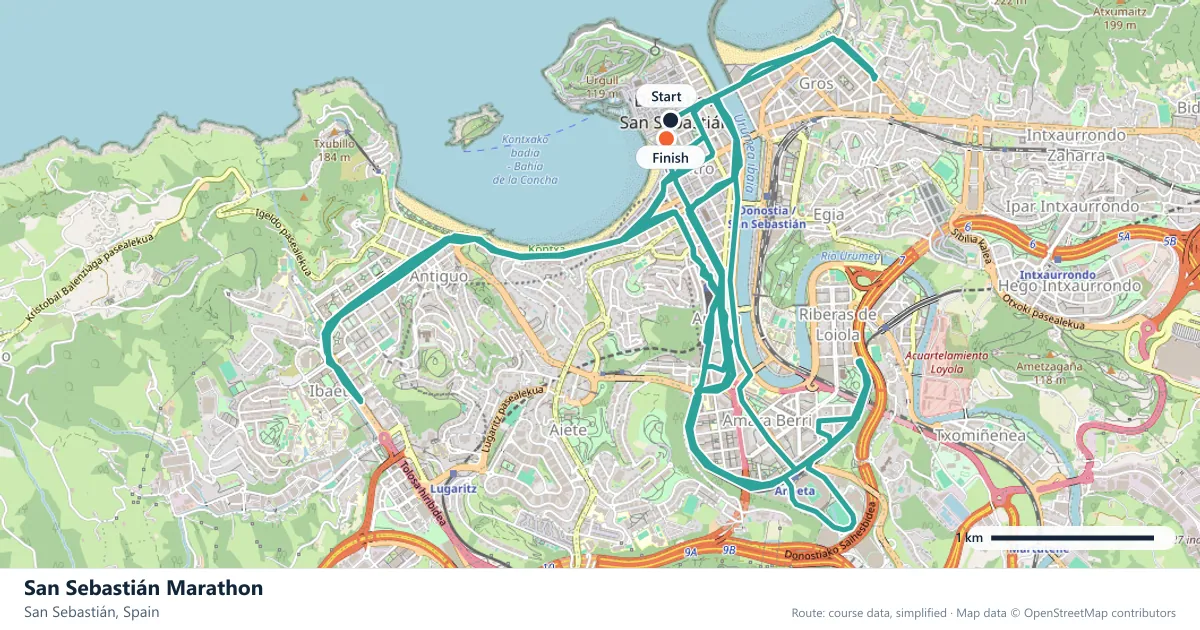
Where does the San Sebastián Marathon run?
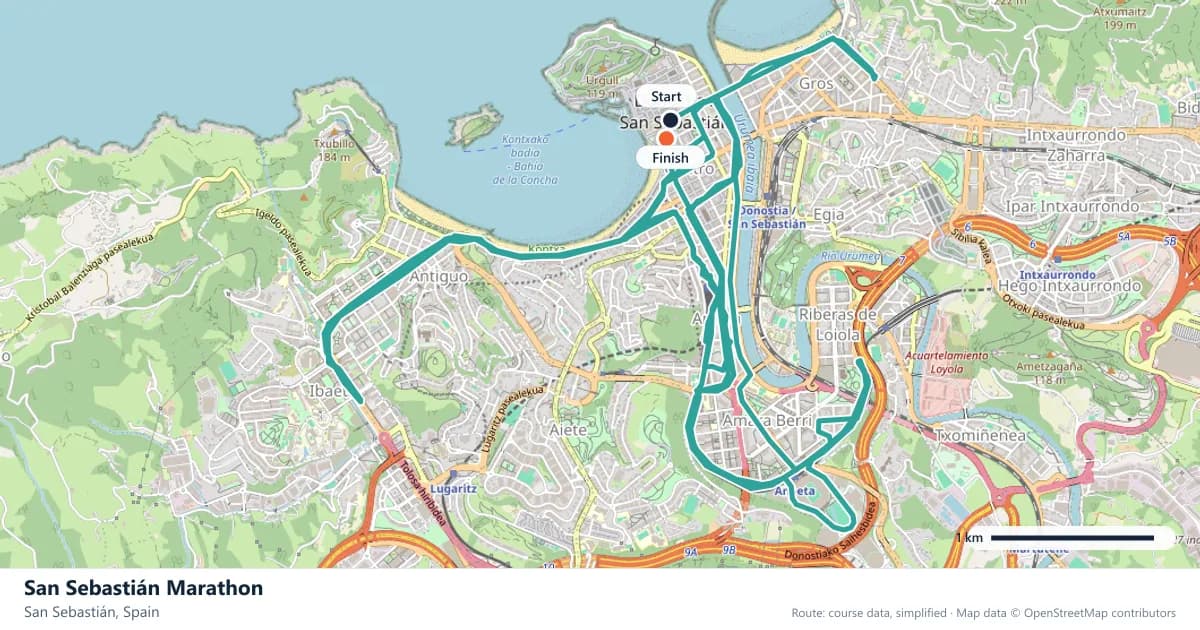
Interactive map
The trace follows the organizer's published course, simplified for the screen: the orange dot is the start, the dark dot the finish. Scroll to zoom, drag to pan.
What is the San Sebastián Marathon course like?
Runs along the bay of La Concha and out towards the Basque coast, with Kursaal and Monte Igueldo as landmarks. Rolling but quick, and usually cool and damp in late November.
- Next edition
- 22 November 2026
- Elevation gain
- 102 m
- Profile
- Undulating
- First run
- —
Course guide
San Sebastián's marathon is shaped by its bay. The next edition is on Sunday 22 November 2026, and the course follows the curve of La Concha before heading out along the Basque coast. It climbs about 102 metres, rolling rather than flat, with Kursaal and Monte Igueldo as the landmarks.
The city is one of the most elegant in Spain, and the race uses its seafront as the opening act. La Concha's promenade curves around the bay, with the beach on one side and the city's Belle Époque buildings on the other, and the course gives runners a long look at it before turning towards the open coast.
Late November is usually cool and damp here. That is not a drawback for a marathon; once you are warm, the conditions can be kind, and the Basque coast has a dramatic, weather-driven beauty that a summer race cannot offer. The race is rolling rather than flat, but the climbing is modest and the short rises keep the course varied.
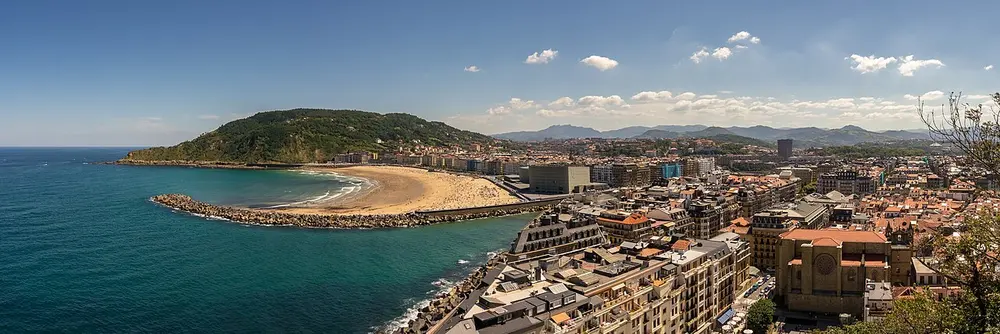
San Sebastian Donostia Panoramic 1190583. Photo: Ermell / Wikimedia Commons, CC BY-SA 4.0.
The course
The route traces the shoreline of La Concha and continues along the Basque coast. It passes Kursaal, the modern congress centre that sits at the mouth of the Urumea, and Monte Igueldo frames the western end of the bay. The 102 metres of climbing arrive in short rises rather than a sustained ascent.
The waterfront sections are the most memorable. The bay is wide and sheltered, and the promenade gives the race a flat, elegant opening before the route turns towards the coast. The coastal roads are more exposed, with the sea on one side and the hills on the other.
The rolling profile is the course's quiet difficulty. There is no single climb to prepare for, but the repeated changes of grade make even pacing harder than it looks on paper. Runners who keep the effort steady through the rises will find the course much more manageable than those who chase every crest.
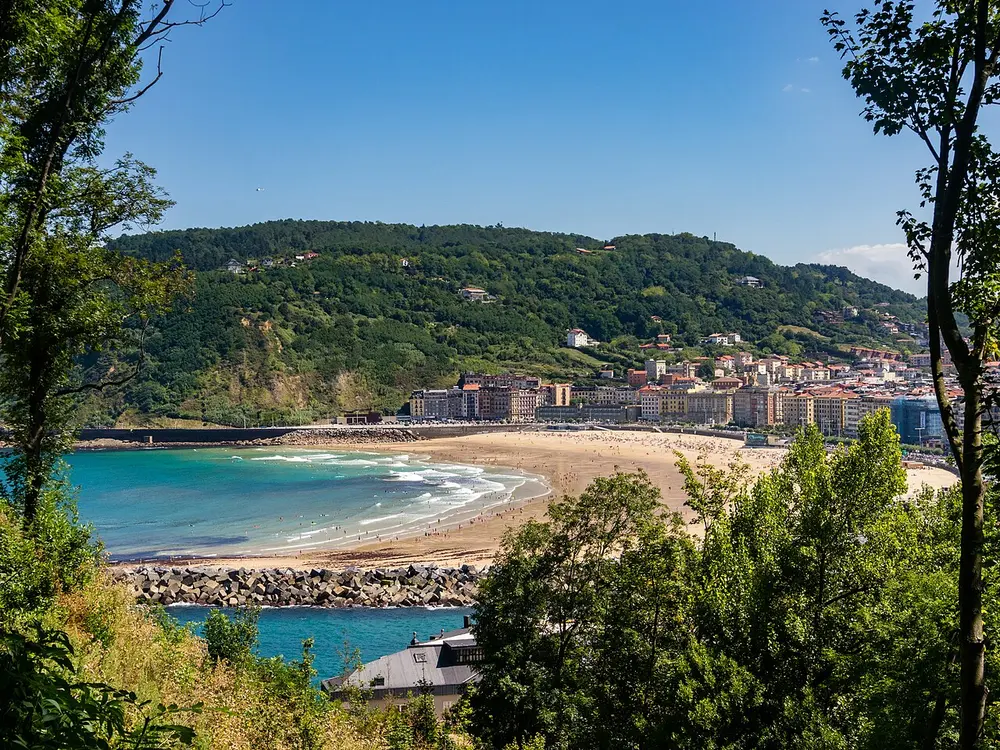
San Sebastian Zurriola beach 1190579. Photo: Ermell / Wikimedia Commons, CC BY-SA 4.0.
The bay and the Basque coast
San Sebastián is built around two beaches and a river mouth. La Concha is the postcard bay, a near-perfect curve of sand protected by Monte Igueldo and Monte Urgull. Zurriola, on the other side of the Urumea, faces the open sea and has a very different character.
The marathon uses that geography. The sheltered bay gives the race its elegant opening and its flattest running, while the coast beyond it feels wilder and more exposed. The transition between the two is one of the things that makes the course distinctive.
The city itself is famous for its food culture, and the pintxos bars of the old town are part of the reason runners stay for the weekend. After a cool, damp race, a warm bar and a plate of pintxos is a better recovery plan than a long journey home.
Late-autumn weather
Late November on the Cantabrian coast is usually cool and damp. The region is green for a reason, and the race is more likely to meet a soft day than a hot one. That can be ideal for distance running, as long as runners prepare for it.
The practical approach is to plan for wet weather. A light, packable layer, dry kit at the finish and shoes that can cope with damp roads will make more difference than a detailed weather forecast. The coast can change quickly, and the race should not depend on a single prediction.
The upside is that the conditions rarely become oppressive. A cool, damp marathon is easier on the body than a warm one, and the course's exposed coastal sections are more forgiving when the sun is not beating down.
A debut by the sea
The course is manageable for a first marathon. The climbing is modest, the waterfront is forgiving and the distance is broken up by the changing scenery of the bay and the coast. The rolling profile adds interest without turning the day into a hill race.
Start conservatively. The opening along La Concha is so scenic and so flat that it is easy to run faster than planned, and the short rises later in the race will expose that. A debutant who holds back in the first 10 kilometres will enjoy the coast much more.
The city is also a rewarding place to finish a first marathon. San Sebastián is compact, walkable and full of places to eat, and the finish gives runners a reason to stay rather than rush for a train.
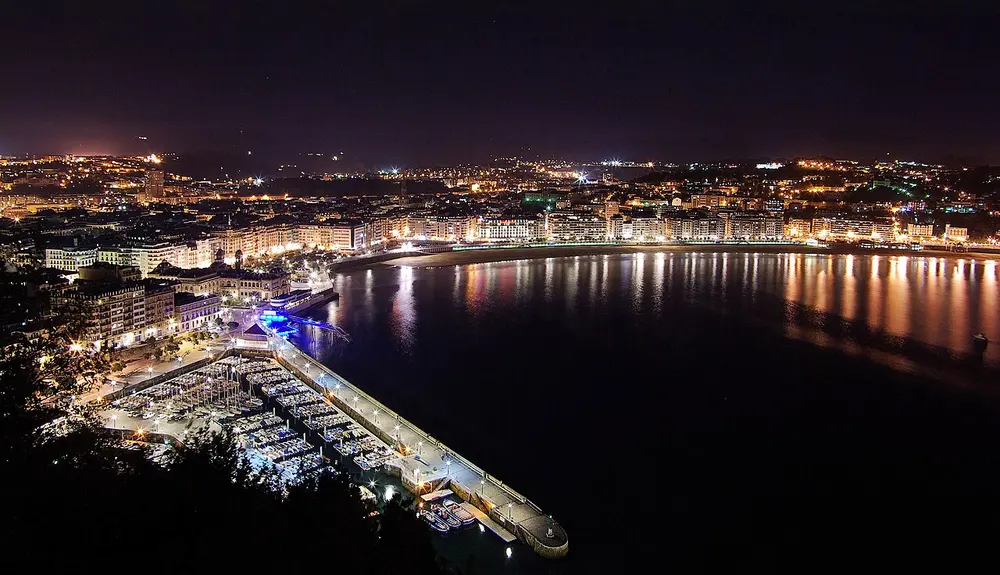
San Sebastian at night from Monte Urgull. Photo: Phillip Maiwald ( Nikopol ) / Wikimedia Commons, CC BY-SA 3.0.
Frequently asked questions
Answers to the questions runners ask before entering, drawn from this race's course guide and the directory's own data — the sources behind them are listed below.
When is the San Sebastián Marathon run?
The next edition is on Sunday 22 November 2026. It is a late-autumn race, with final start times published closer to the day.
Is the San Sebastián Marathon hilly?
It is undulating rather than hilly, with about 102 metres of climbing in short rises. The coastal route keeps the race rolling, but there is no sustained ascent.
Is San Sebastián a good place to debut?
Yes. The modest climbing and the bayfront setting make it a manageable debut. The short rises add interest, but they are not severe enough to dominate the day if the early pace is controlled.
Where is the San Sebastián Marathon run?
It follows the shoreline of La Concha towards the Basque coast, with Kursaal and Monte Igueldo as landmarks. The course stays close to the city and the sea.
What is the weather usually like?
Late November in San Sebastián is usually cool and damp. That can be good for running once you are warm, but it makes a dry clothing plan and a proper warm-up important.
What are the highlights of the course?
The sweep of La Concha, the Kursaal building at the river mouth and the views towards Monte Igueldo are the defining images. The route then turns along the Basque coast for a wilder, more exposed second act.
More marathons in Spain
More marathons in Europe
Sources for this page
What each source below is used for on this page, and where to check this race yourself.
- World Athletics — the label calendar and the road-race regulations. Used to check whether the race holds a World Athletics label, and its elite competition details.
- AIMS — the international course-measurement standard behind the 42.195 km distance, and the AIMS race calendar.
- The organizer's own publications — course maps, race handbooks and published results. The date, course character and climbing on this page are compiled from them and re-checked each season.
Where do these facts come from?
Dates, course type, climbing and time limits are compiled from the organizer's publications and re-checked each season; elevation is an estimate of total climbing rather than a survey figure. Always confirm race-day details with the organizer before making plans.
Last reviewed 27 October 2026