
Málaga Marathon
Málaga's marathon is a late-season race with the sea in view for much of the day. The next edition is on Sunday 8 November 2026, and the route runs through the port, the city centre and the…
By Global Marathon Routes editorial team · Last reviewed 27 October 2026
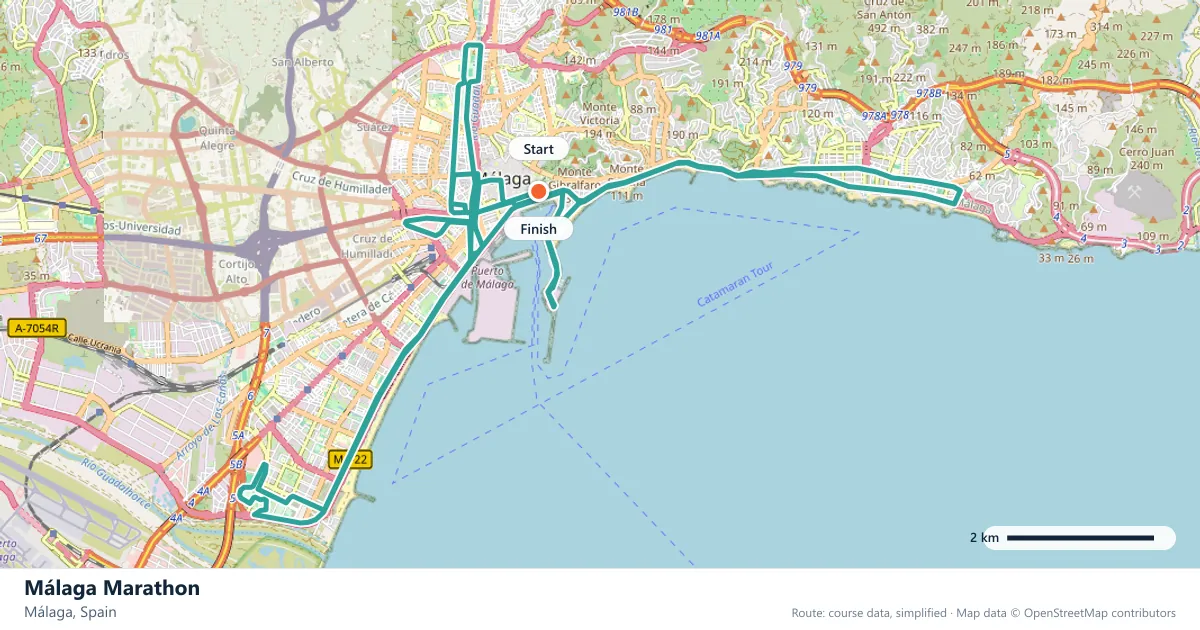
Where does the Málaga Marathon run?
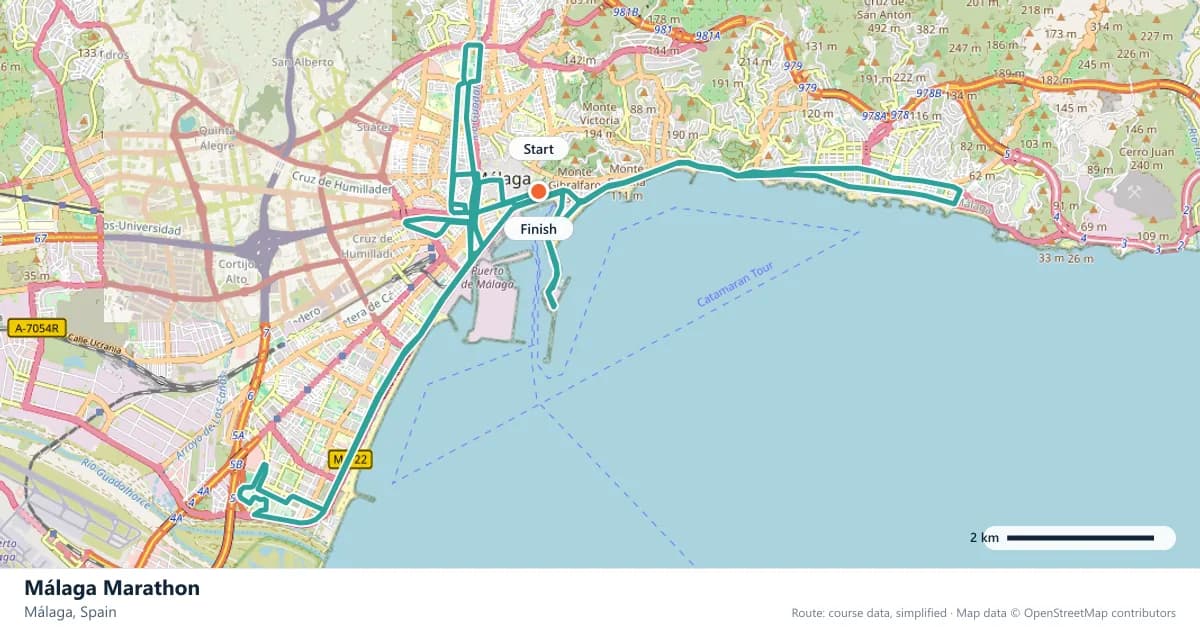
Interactive map
The trace follows the organizer's published course, simplified for the screen: the orange dot is the start, the dark dot the finish. Scroll to zoom, drag to pan.
What is the Málaga Marathon course like?
A late-season race along the Costa del Sol, running through Málaga's port, centre and beachfront promenades. Flat and fast, with mild November conditions.
- Next edition
- 08 November 2026
- Elevation gain
- 125 m
- Profile
- Undulating
- First run
- —
Course guide
Málaga's marathon is a late-season race with the sea in view for much of the day. The next edition is on Sunday 8 November 2026, and the route runs through the port, the city centre and the beachfront promenades of the Costa del Sol. It climbs about 125 metres, holds a World Athletics Label, and has a reputation for fast running in mild weather.
November is the draw. By the time the race arrives, the Spanish summer season is over, the coast has emptied a little, and the conditions are usually kinder than they were in August. That makes the marathon attractive to runners who want a late target without the cold of a northern European winter race.
The course is not perfectly flat, but it is close to it. The 125 metres arrive in gentle changes of grade rather than a single climb, and the long stretches beside the sea give the race a rhythm that is easy to hold. It is a course for runners who want to run fast, not one that demands a specialist.
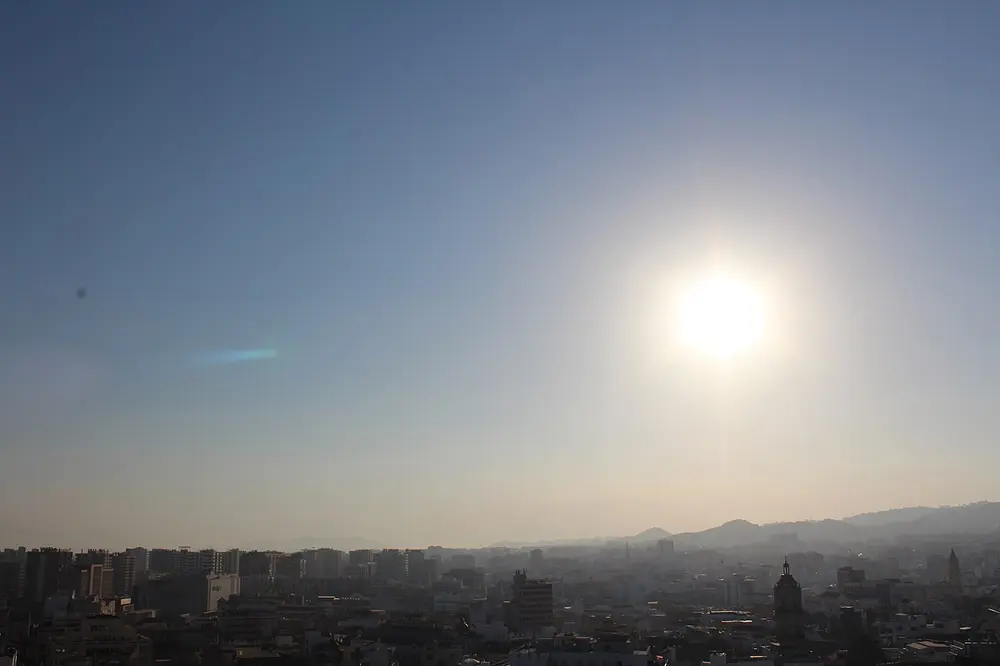
Málaga skyline. Photo: Alphacosmos / Wikimedia Commons, CC BY-SA 4.0.
The course
The route uses the city's relationship with the sea as its structure. It passes through the port, where the water opens up and the course feels wide and exposed, then works through the centre before joining the beachfront promenades that run along the coast.
The changes are gentle. There is no sustained ascent and no technical descent, just a series of small rises and falls that keep the legs interested without changing the character of the race. The 125 metres are spread across the distance, so the profile never becomes the story.
The promenades are the most distinctive part of the day. They are flat, open and lined with the kind of coastal architecture that makes Málaga recognisable, and they give runners a long, steady stretch when the race is beginning to bite.
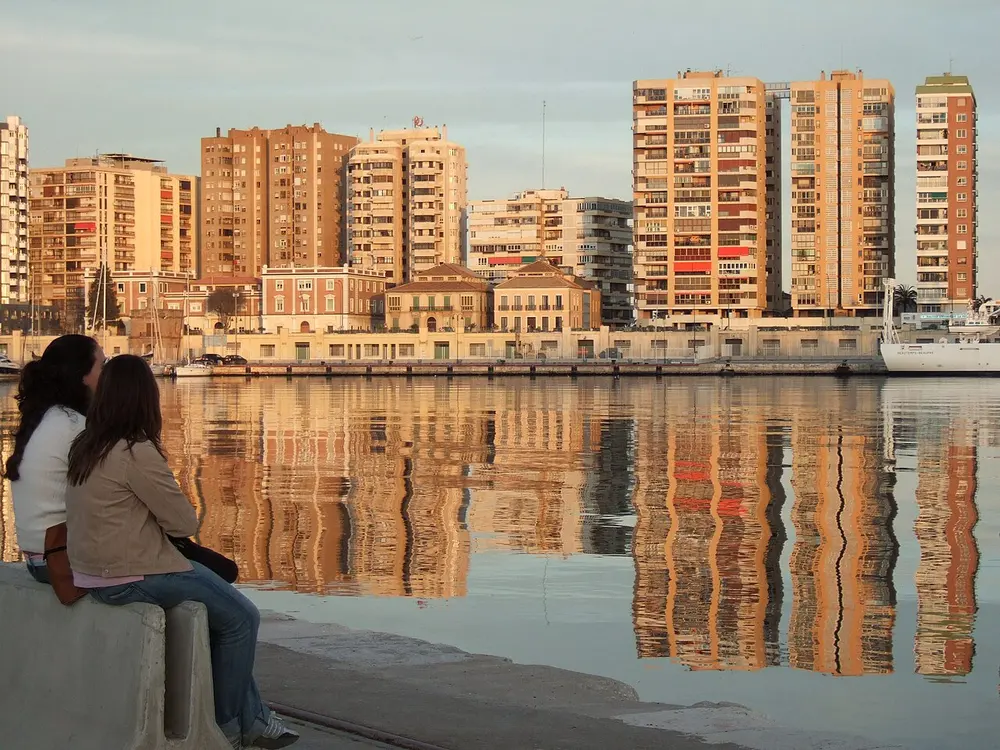
Malaga Harbour.skyline. Photo: Udo Hannok / Wikimedia Commons, CC BY-SA 3.0.
The port, the centre and the promenades
Málaga's port is one of the oldest on the Andalusian coast, and the modern waterfront has been reshaped around it with wide promenades and public spaces. For runners, that means long sightlines, a flat surface and a sense of openness that the old town cannot provide.
The centre is the opposite. The streets are narrower, the buildings closer and the course more interrupted, with the cathedral and the Alcazaba giving the city its historic silhouette. Gibralfaro looks down from above, a reminder that Málaga is a city built between the sea and a hill.
The beachfront is where the two worlds meet. The promenades run along the coast with the Mediterranean on one side and the city on the other, and the course uses them for some of its fastest and most enjoyable kilometres. The sea is a constant, even when the road turns inland.
A late-season target
A November marathon occupies a specific place in the training year. It comes after the summer, when the base is already there, and before the winter, when the next season begins. For runners who have been training through the autumn, it is a chance to cash in the work rather than start again.
The late date also means the race can be a final fling rather than the centre of the year. Some runners arrive with a full season in their legs; others use Málaga as the one marathon that matters. Both approaches work, provided the build-up respects the date.
The mild conditions are part of the appeal. November on the Costa del Sol is usually a gentle introduction to winter rather than a confrontation with it, and that makes the race easier to prepare for than a cold-weather marathon in the north.
What 125 metres means here
The 125 metres are a small number, but they are not zero. On a coastal course, the climbing arrives in short ramps and changes of grade rather than long hills, and those changes can catch runners who expect a completely flat route.
The practical approach is to run by effort. The flat sections beside the sea will feel easy, and the small rises will briefly feel harder; if you keep the effort constant rather than the pace, the race will unfold more evenly. The total climbing is low enough that a personal best is realistic.
For a first marathon, the profile is forgiving. The flat promenades give a debutant room to settle, and the gentle rises are manageable. The main risk is the late-season date, which can leave runners arriving either fresh or tired depending on how the year has gone.
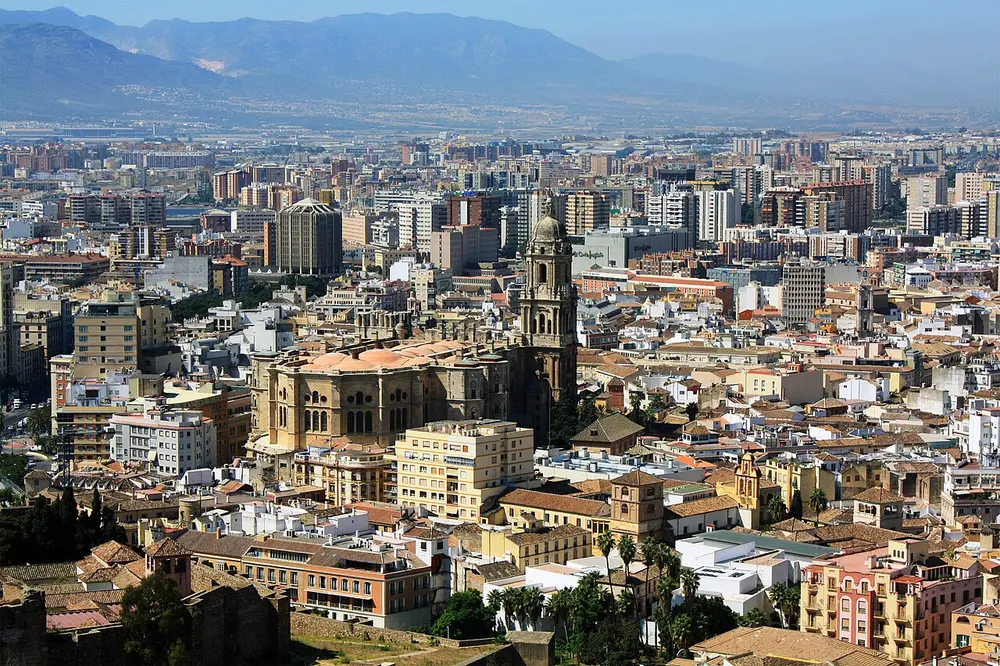
Malaga skyline from Gibralfaro - panoramio. Photo: Vlad Podvorny / Wikimedia Commons, CC BY-SA 3.0.
Frequently asked questions
Answers to the questions runners ask before entering, drawn from this race's course guide and the directory's own data — the sources behind them are listed below.
When does the Málaga Marathon take place?
The next edition is on Sunday 8 November 2026. It is a late-autumn race and holds a World Athletics Label.
Is the Málaga Marathon a flat course?
It is undulating rather than completely level, with about 125 metres of gain. The changes are gentle, and the course is generally regarded as fast. The port and promenade sections are the flattest parts.
Can you chase a personal best in Málaga?
Yes. The low climbing, the flat coastal stretches and the mild November conditions give runners a fair chance of a fast day. The course is close enough to flat that a personal best is a realistic target.
Is Málaga a good debut?
Yes. The profile is gentle and the beachfront promenades are forgiving. The bigger task is to manage the late-season build-up and arrive fresh rather than carrying the fatigue of a long year.
Where is the Málaga Marathon run?
It is run in Málaga, through the port, the city centre and the beachfront promenades. The course stays in and around the city, with the sea close by for much of the day.
What is the weather usually like for the Málaga Marathon?
November on the Costa del Sol is mild, and that is part of the race's appeal. Conditions can still vary, so check the forecast and prepare for a range of temperatures rather than assuming a hot day.
Is the Málaga Marathon a labelled race?
Yes. It holds a World Athletics Label, alongside a late-autumn date and a fast coastal course.
More marathons in Spain
More marathons in Europe
Sources for this page
What each source below is used for on this page, and where to check this race yourself.
- World Athletics — the label calendar and the road-race regulations. Used to check whether the race holds a World Athletics label, and its elite competition details.
- AIMS — the international course-measurement standard behind the 42.195 km distance, and the AIMS race calendar.
- The organizer's own publications — course maps, race handbooks and published results. The date, course character and climbing on this page are compiled from them and re-checked each season.
“A World Athletics Label denotes a full application of the Competition and Technical Rules in, at a minimum, the elite component of the competition. Labels also denote superior standards in event organisation, safety and runner experience, support from public authorities to the event and a financial commitment to anti-doping.”
Where do these facts come from?
Dates, course type, climbing and time limits are compiled from the organizer's publications and re-checked each season; elevation is an estimate of total climbing rather than a survey figure. Always confirm race-day details with the organizer before making plans.
Last reviewed 27 October 2026