
Barcelona Marathon
Barcelona's marathon is a spring circuit that sells itself on speed, but the city refuses to be a background.
By Global Marathon Routes editorial team · Last reviewed 27 October 2026
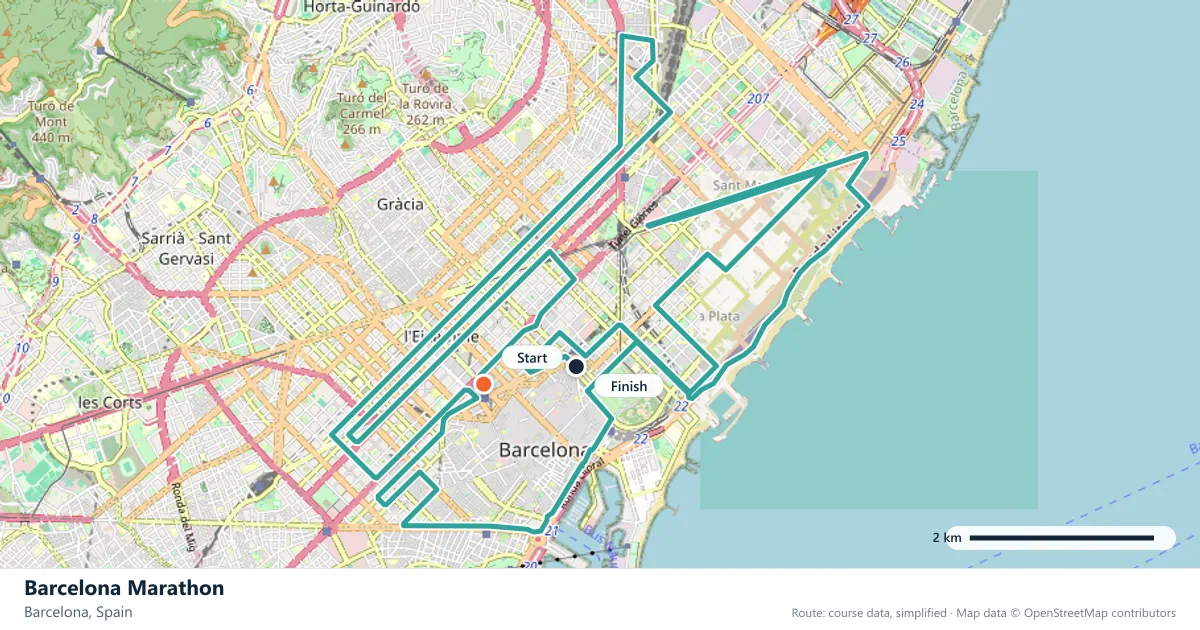
Where does the Barcelona Marathon run?
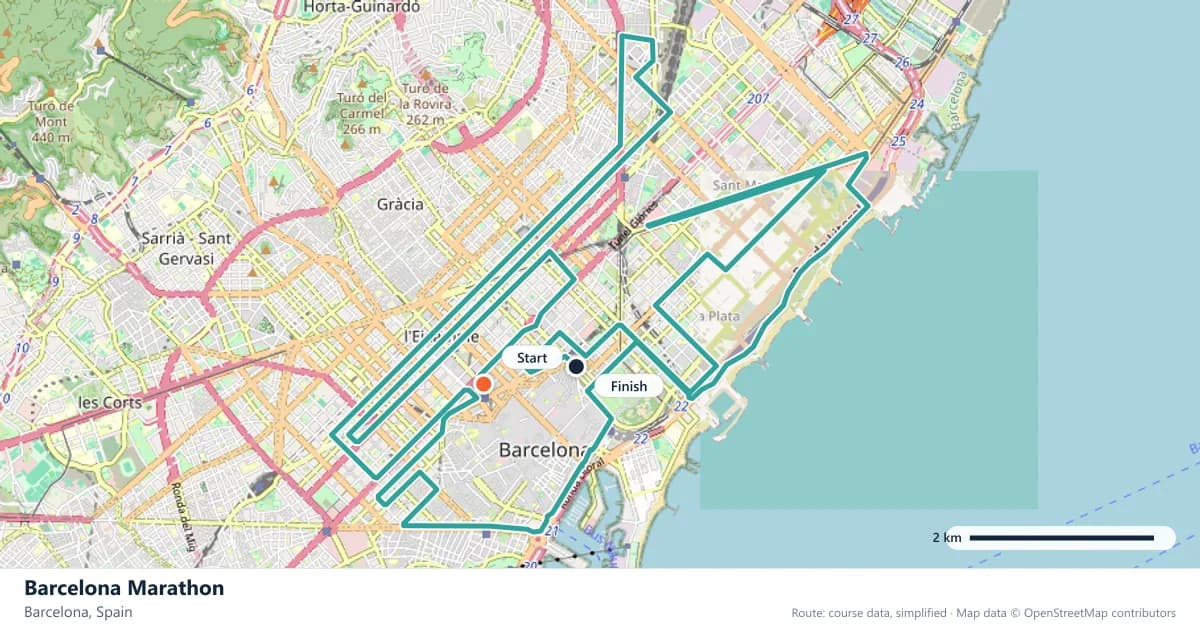
Interactive map
The trace follows the organizer's published course, simplified for the screen: the orange dot is the start, the dark dot the finish. Scroll to zoom, drag to pan.
What is the Barcelona Marathon course like?
A fast, flat circuit through the Eixample and along the waterfront, with Gaudí's landmarks marking the kilometres. One of Europe's quicker spring marathons.
- Next edition
- 14 March 2027
- Elevation gain
- 135 m
- Profile
- Undulating
- First run
- —
Course guide
Barcelona's marathon is a spring circuit that sells itself on speed, but the city refuses to be a background. The next edition is on Sunday 14 March 2027, and the route threads through the Eixample's grid before dropping to the waterfront. It climbs about 135 metres, and it holds a World Athletics Gold Label.
The Eixample is the key to the course. Cerdà's grid gives Barcelona wide streets and chamfered corners, and the marathon uses them to create long, straight avenues with regular turns. The course feels spacious and fast even when it is passing some of the city's most famous buildings.
Gaudí's landmarks are the other marker. The Sagrada Família, the Casa Batlló and the rest of his work give the city a skyline that no other marathon can offer, and they turn the middle kilometres into a tour as well as a race. The profile is undulating rather than flat, but the rises are short and the overall climbing is modest, which is why Barcelona is one of Europe's quicker spring marathons.
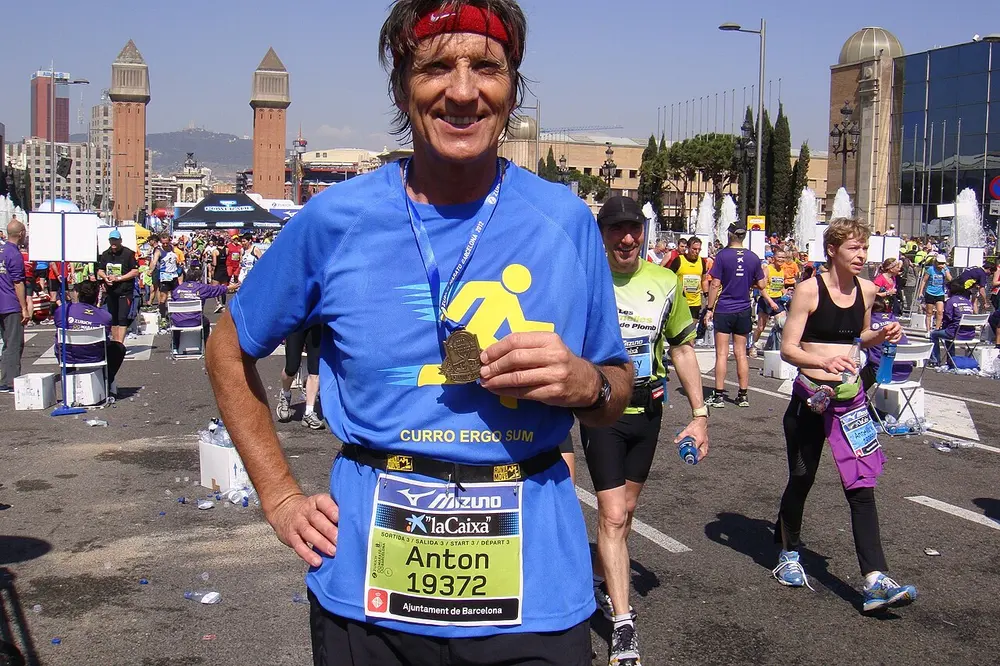
Dr. Anton Reiter, Barcelona marathon, March 25, 2012. Photo: Epadechta / Wikimedia Commons, CC BY-SA 4.0.
The course
The route is an urban circuit that moves between the Eixample and the sea. The grid section is wide and regular, with long sightlines that let the field spread out and a rhythm establish itself. The waterfront section is flatter still, with the Mediterranean as the constant on one side.
The 135 metres of climbing arrive in gentle pieces. There is no single climb that defines the race, but the course is not perfectly level, and the repeated short rises can add up if they are attacked rather than absorbed. The total is low enough that a fast time is realistic, and high enough that the race is not a pure time trial.
The transitions are part of the challenge. Moving from the grid to the waterfront changes the light, the space and the feel of the race, and the return to the city brings the rises back. Runners who manage those changes calmly tend to finish strongly.
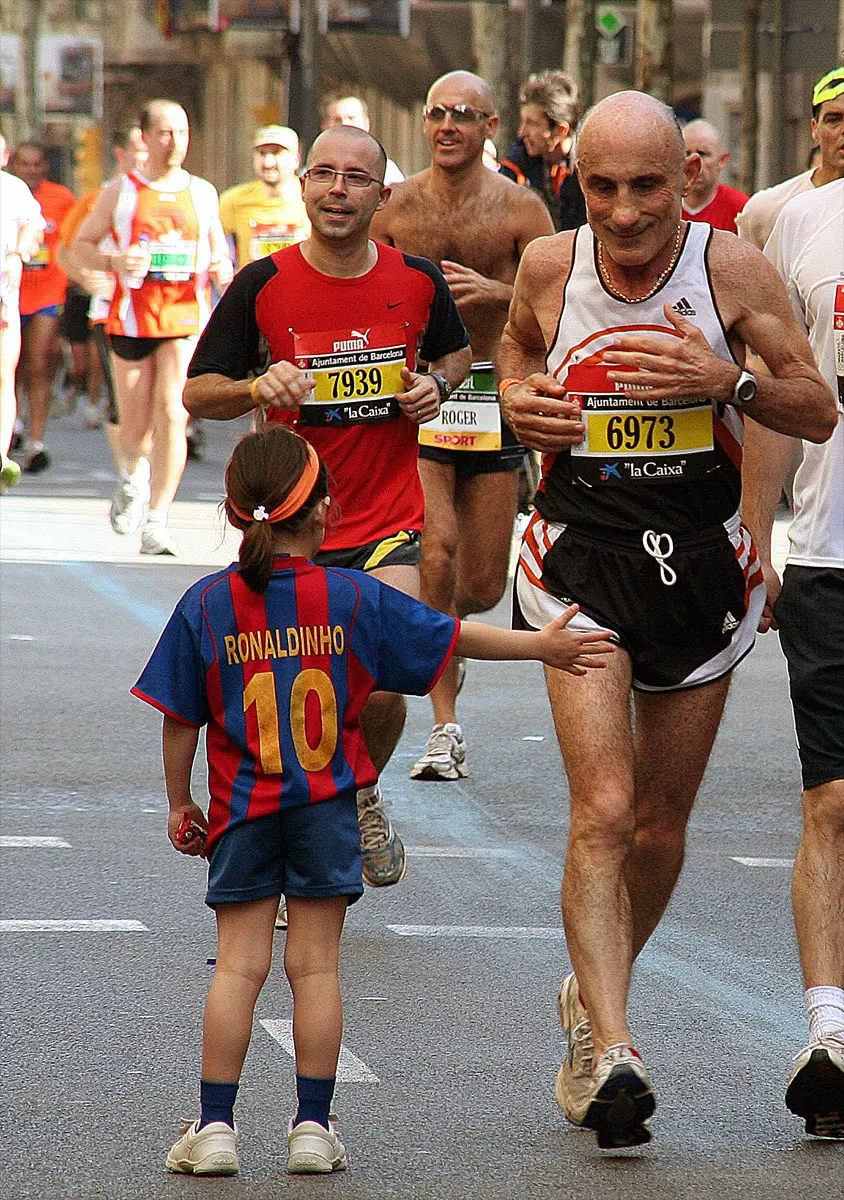
Marathon Barcelona Catalunya 2007. Photo: fibercool / Wikimedia Commons, CC BY-SA 2.0.
The Eixample grid
The Eixample was designed as an extension of the old city, with a grid of streets and octagonal blocks that give the district its distinctive rhythm. Ildefons Cerdà's plan called for wide avenues, chamfered corners and open intersections, and the neighbourhood feels both ordered and generous.
For runners, that generosity matters. The avenues are broad enough to hold a marathon field, the corners are easy to negotiate, and the grid makes the course easy to follow. It is also a very urban experience: the city is close on both sides, and the buildings provide a sense of enclosure that a parkland course lacks.
The grid is not completely flat. Barcelona's topography is gentle here, but the streets still rise and fall, and the repeated changes are enough to make even pacing worthwhile. The course uses the grid rather than fighting it.
The waterfront miles
The waterfront is the most open part of the race. The city gives way to the sea, the road runs along the coast, and the horizon expands after the enclosure of the Eixample. It is the section where the race feels fastest and where the temptation to push is strongest.
That flatness is useful, but it is also a trap. Runners who use the waterfront to make up time often pay for it when the course turns back into the city and the short rises return. The better approach is to hold the pace that got you there and let the flat kilometres do their quiet work.
The sea also gives the race a visual anchor. In a city marathon, it is easy to lose track of where you are; on the waterfront, the direction is obvious and the next landmark is always in sight. That simplicity is worth a lot in the later stages.
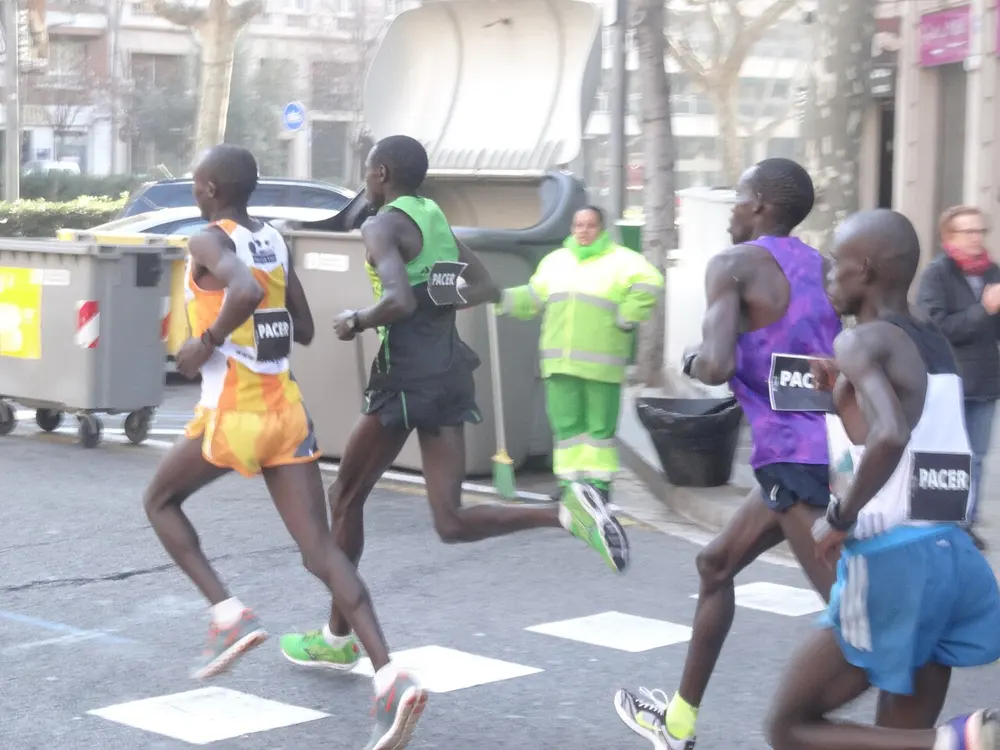
Marató de Barcelona 2016. Photo: Jordiferrer / Wikimedia Commons, CC BY-SA 4.0.
March in Barcelona
March is an early-spring date, which means the race sits at the end of a winter training block rather than in the middle of a summer season. For runners in northern Europe, that is a useful target: the long runs happen in the cold, and the race arrives just as the days begin to lengthen.
The date also gives the event a particular atmosphere. Barcelona is a city that lives outdoors, and March is when the terraces and the waterfront start to fill again. The marathon catches that transition, with the city waking up around the course.
The race has a strong international feel. The combination of a fast course, a spring date and a city that is easy to love makes it a popular choice for runners from across Europe.
Frequently asked questions
Answers to the questions runners ask before entering, drawn from this race's course guide and the directory's own data — the sources behind them are listed below.
What date is the 2027 Barcelona Marathon?
The next edition is on Sunday 14 March 2027. It is an early-spring race and holds a World Athletics Gold Label.
Is the Barcelona Marathon flat or hilly?
It is neither truly flat nor hilly: the course is undulating with about 135 metres of gain. The rises are gentle and short, which is why the circuit has a reputation for speed despite the climbing.
Is Barcelona a personal-best course?
Yes. The wide Eixample avenues and the flat waterfront give runners the chance to hold a rhythm, and the 135 metres of climbing are modest for a city course. It is one of the quicker spring marathons in Europe.
Could Barcelona be a first marathon?
Yes. The wide streets, the manageable profile and the waterfront sections make it an approachable debut. The main risk is the atmosphere of the city itself, which can pull the early pace up before the climbing begins.
Where is the Barcelona Marathon run?
It is run in Barcelona on a circuit through the Eixample and along the waterfront. Gaudí's landmarks mark parts of the route, and the course stays within the city.
What World Athletics label does Barcelona hold?
It holds a World Athletics Gold Label, alongside a fast circuit and a spring date.
More marathons in Spain
More marathons in Europe
Sources for this page
What each source below is used for on this page, and where to check this race yourself.
- World Athletics — the label calendar and the road-race regulations. Used to check whether the race holds a World Athletics label, and its elite competition details.
- AIMS — the international course-measurement standard behind the 42.195 km distance, and the AIMS race calendar.
- The organizer's own publications — course maps, race handbooks and published results. The date, course character and climbing on this page are compiled from them and re-checked each season.
“A World Athletics Label denotes a full application of the Competition and Technical Rules in, at a minimum, the elite component of the competition. Labels also denote superior standards in event organisation, safety and runner experience, support from public authorities to the event and a financial commitment to anti-doping.”
Where do these facts come from?
Dates, course type, climbing and time limits are compiled from the organizer's publications and re-checked each season; elevation is an estimate of total climbing rather than a survey figure. Always confirm race-day details with the organizer before making plans.
Last reviewed 27 October 2026