
Lausanne Marathon
Lausanne's marathon runs along the Lake Geneva shore, beneath the terraced vineyards of Lavaux. The next edition is expected in October 2027, and the route connects Lausanne with La Tour-de-Peilz on…
By Global Marathon Routes editorial team · Last reviewed 27 October 2026
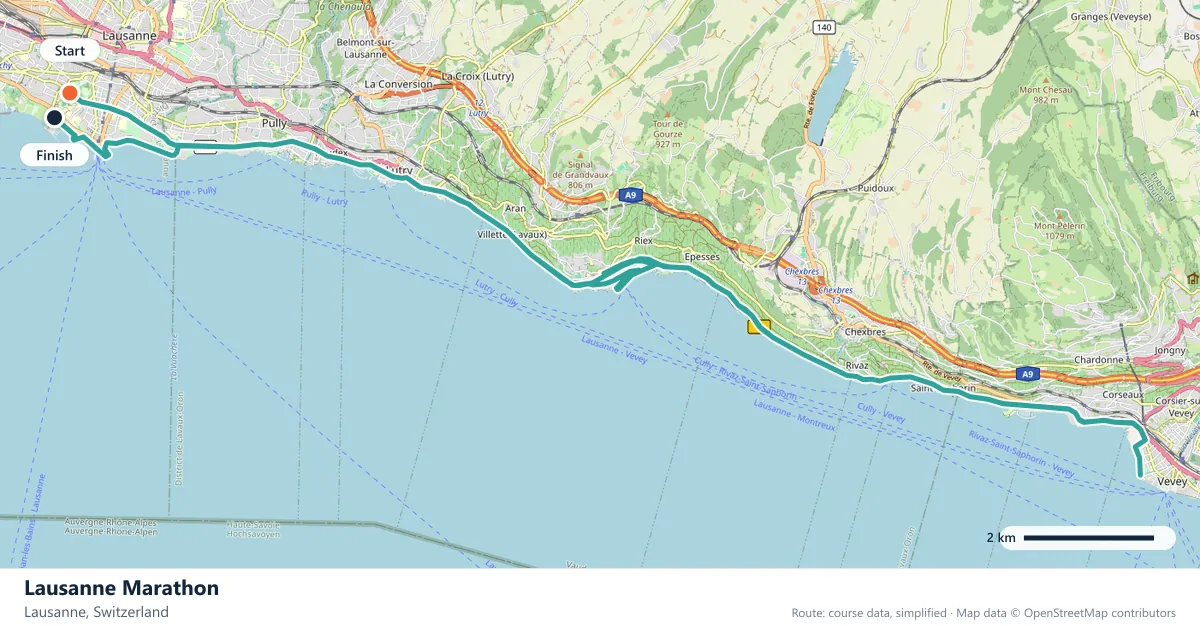
Where does the Lausanne Marathon run?
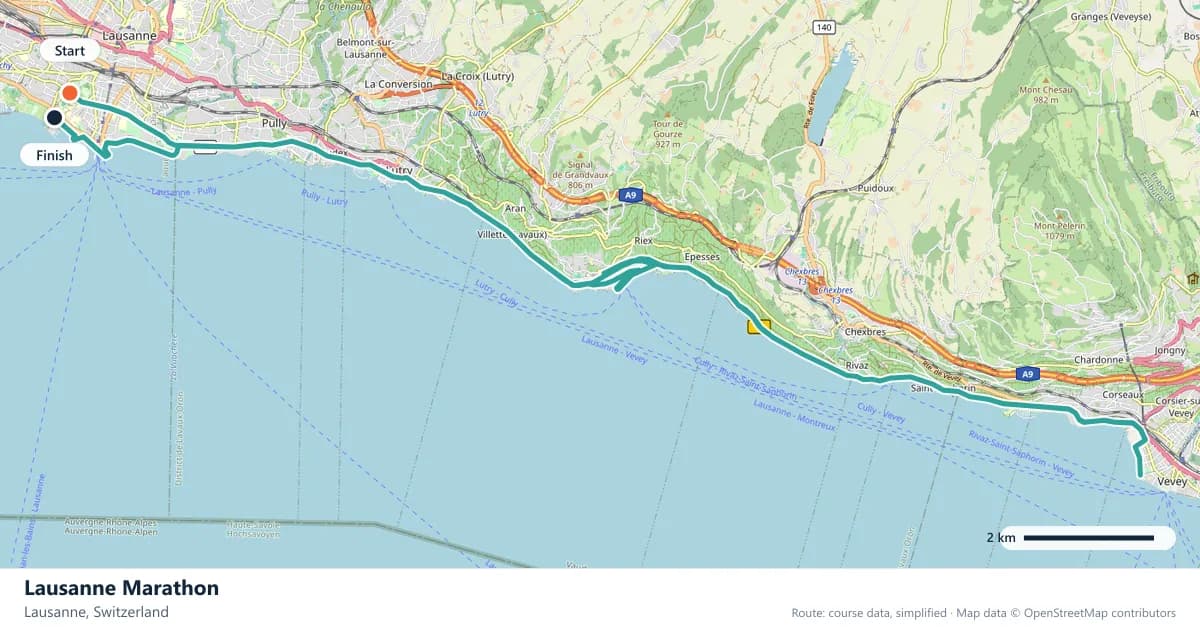
Interactive map
The trace follows the organizer's published course, simplified for the screen: the orange dot is the start, the dark dot the finish. Scroll to zoom, drag to pan.
What is the Lausanne Marathon course like?
A lakeside course along Lake Geneva between Lausanne and La Tour-de-Peilz, with the Lavaux terraces above. Rolling rather than flat, and the autumn colours are part of the appeal.
- Next edition
- October 2027 (expected)
- Elevation gain
- 223 m
- Profile
- Undulating
- First run
- —
Course guide
Lausanne's marathon runs along the Lake Geneva shore, beneath the terraced vineyards of Lavaux. The next edition is expected in October 2027, and the route connects Lausanne with La Tour-de-Peilz on a rolling lakeside course. It climbs about 223 metres, which is enough to make the day feel like more than a flat promenade.
The route stays close to the water for much of the distance, with the lake on one side and the Lavaux slopes on the other. The terraces rise steeply above the shore, and the villages along the coast give the race a series of small, recognisable landmarks rather than one grand set piece.
Autumn colours are part of the appeal. Late October is when the vineyards turn, the light softens and the lakeside feels quieter than in summer. The race uses that setting rather than fighting it, and the course feels seasonal in the best sense.
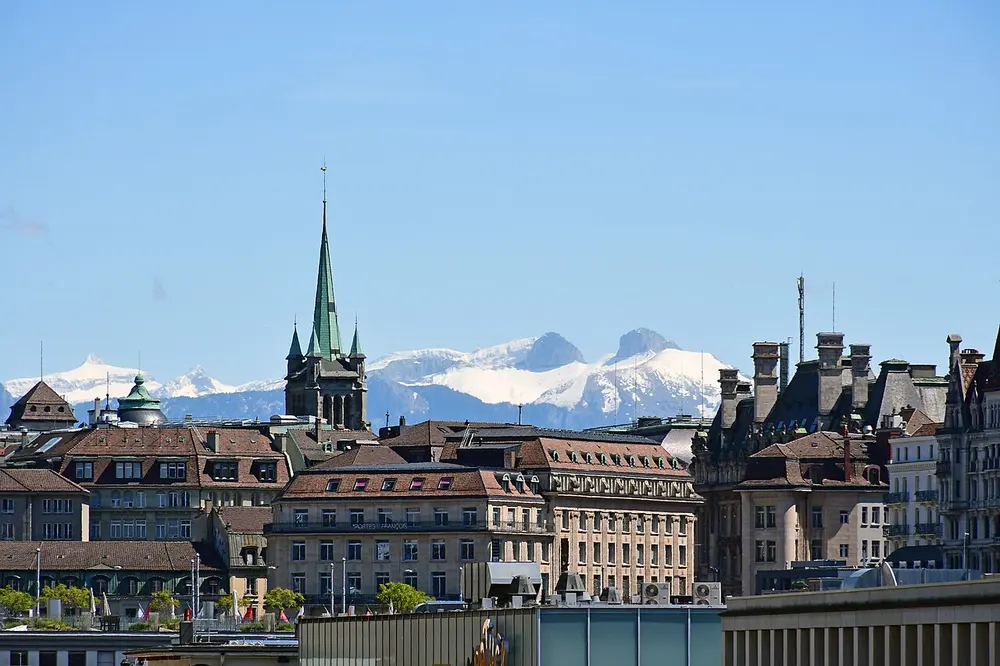
Skyline Lausanne depuis pont Chauderon (1). Photo: Gzzz / Wikimedia Commons, CC BY-SA 4.0.
The course
The route follows the Lake Geneva shore between Lausanne and La Tour-de-Peilz. It stays close to the water rather than climbing into the hills, but the ground is not flat: the lakeside road rolls, with short rises and dips that repeat through the race.
The 223 metres of climbing are spread across the distance. There is no single ascent that defines the day, but the repeated changes of grade make the course more demanding than a pure flat route. The dips are as important as the rises, because they interrupt the rhythm and tempt runners to accelerate.
La Tour-de-Peilz sits on the lake, below the vineyards, and the shore between the two towns is unmistakably Lavaux.
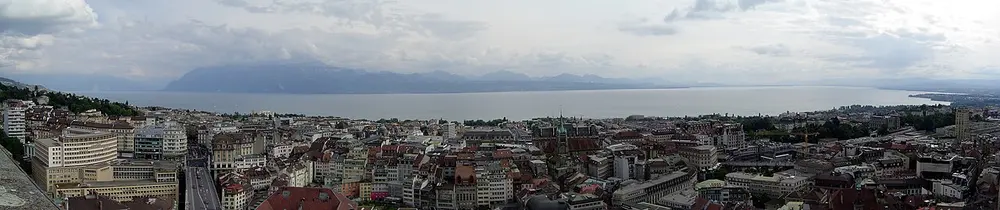
2008 06 14 Lausanne et côte Lutry Panorama HQ. Photo: FabHawk / Wikimedia Commons, CC BY-SA 3.0.
The Lavaux shoreline
The Lavaux terraces are one of the most distinctive landscapes in Switzerland. The vineyards are planted on steep terraces above the lake, supported by stone walls, and the villages sit between the vines and the water. The race runs below them, with the slope rising on one side and the lake falling away on the other. Across the water, the French Alps close the horizon; on the race side, the terraces climb away from the lake in long stone-walled steps.
That geography gives the course its character. The lakeside road is never far from a view, and the terraces provide a constant sense of scale. The climbs are short because the route stays near the water, but the land around it is steep enough to remind runners that this is not a flat coastal path.
The villages along the shore break the race into stages. Each one has a small centre, a church or a cluster of houses, and each one marks another few kilometres. In a race like this, those markers matter.
Autumn colours and rolling ground
Late October is a good time to run through the vineyards. The leaves change, the light is low and golden, and the lakeside is quieter than it is in summer. The race catches the Lavaux at one of its most photogenic moments.
The rolling ground is the other side of the experience. The course is not flat, and the short climbs accumulate. Runners who try to hold a perfectly even pace will find themselves working harder on the rises and recovering on the dips; pacing by effort is a better approach.
The combination of scenery and rolling terrain makes the race feel bigger than its climbing total. It is not a mountain marathon, but it is not a city promenade either. The course asks for attention and gives something back.
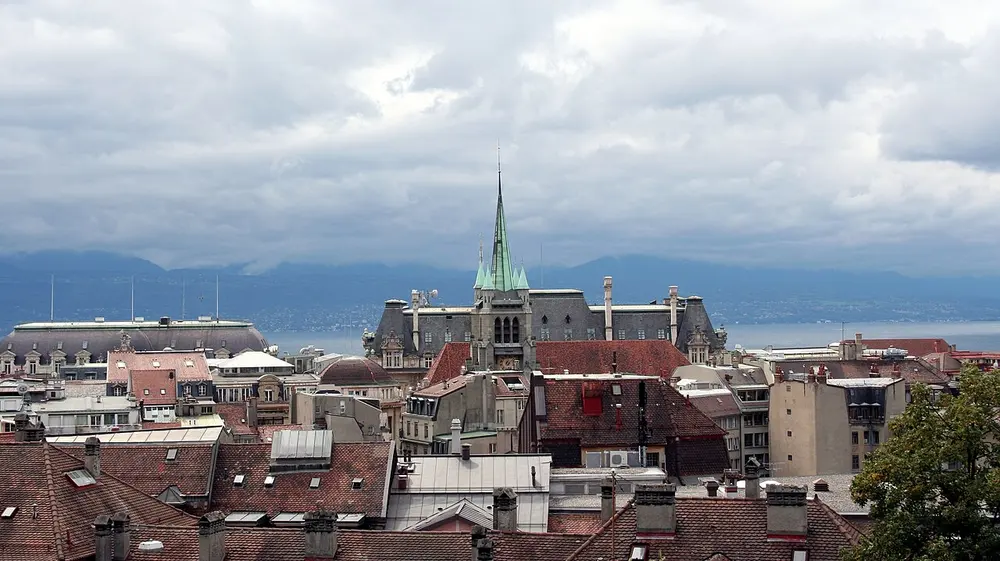
Lausanne skyline. Photo: Nelson Minar / Wikimedia Commons, CC BY-SA 2.0.
A first marathon in Lavaux
The race is a manageable first marathon, provided the training respects the terrain. The climbing is modest, the lakeside setting is inspiring and the distance is broken up by villages and views. A debutant who has practised on rolling roads will find the course approachable.
Start conservatively. The first few kilometres along the lake are easy to run too fast, especially with the vineyards ahead and the water beside you. A first-timer who holds back will enjoy the second half much more.
La Tour-de-Peilz is a reward in itself. The town is small, the lake is close and the vineyards are still above you. It is a gentler place than the centre of Lausanne, and it suits the character of the race.
Frequently asked questions
Answers to the questions runners ask before entering, drawn from this race's course guide and the directory's own data — the sources behind them are listed below.
When does the Lausanne Marathon take place?
The next edition is expected in October 2027. It is a late-autumn race, run along the shore of Lake Geneva.
Is the Lausanne Marathon a flat course?
No. It is undulating, with about 223 metres of gain. The climbs are short and rolling rather than mountainous, but the course is not flat and should be paced accordingly.
Is Lausanne a sensible first marathon?
Yes. The lakeside setting and the modest climbing make it an appealing debut, provided the training includes rolling terrain. The repeated rises are short enough to manage but long enough to notice.
Where is the Lausanne Marathon run?
It follows the shore of Lake Geneva between Lausanne and La Tour-de-Peilz, below the Lavaux terraces. The route stays close to the water for much of the distance.
What are the views like on the course?
The Lavaux vineyards and terraces rise above the lake, and the autumn colours are part of the race's appeal. The lakeside setting is the defining feature of the day.
Could Lausanne be a personal-best course?
It is not built around fast times. The rolling profile and the repeated short climbs make even pacing harder than on a flat course, so the race is better suited to runners who value the setting over a split.
More marathons in Switzerland
More marathons in Europe
Sources for this page
What each source below is used for on this page, and where to check this race yourself.
- World Athletics — the label calendar and the road-race regulations. Used to check whether the race holds a World Athletics label, and its elite competition details.
- AIMS — the international course-measurement standard behind the 42.195 km distance, and the AIMS race calendar.
- The organizer's own publications — course maps, race handbooks and published results. The date, course character and climbing on this page are compiled from them and re-checked each season.
Where do these facts come from?
Dates, course type, climbing and time limits are compiled from the organizer's publications and re-checked each season; elevation is an estimate of total climbing rather than a survey figure. Always confirm race-day details with the organizer before making plans.
Last reviewed 27 October 2026