
Geneva Marathon
Geneva's marathon follows the lake out of the city, and the view does most of the talking. The next edition is expected in May 2027, and the route runs along Lake Geneva towards the vineyards and the…
By Global Marathon Routes editorial team · Last reviewed 27 October 2026
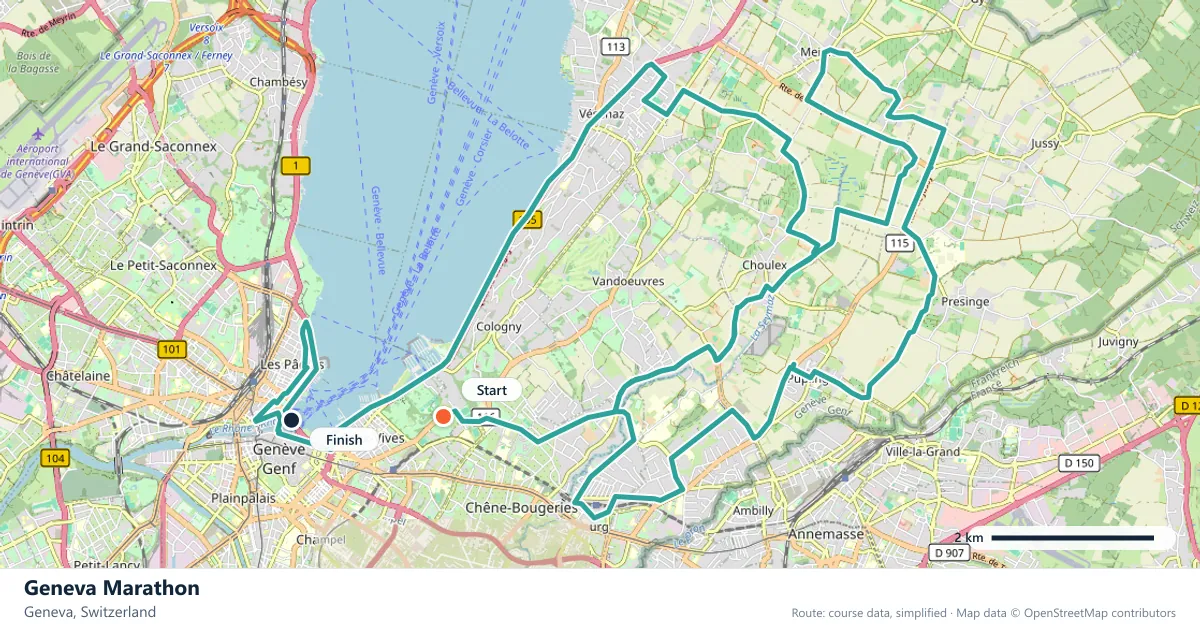
Where does the Geneva Marathon run?
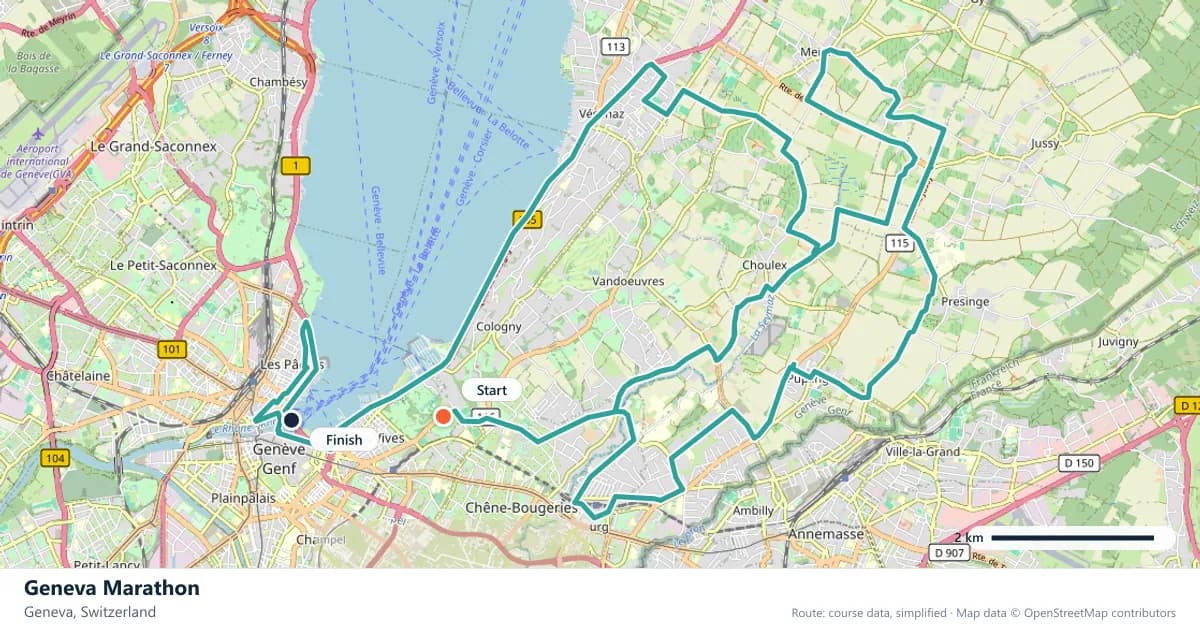
Interactive map
The trace follows the organizer's published course, simplified for the screen: the orange dot is the start, the dark dot the finish. Scroll to zoom, drag to pan.
What is the Geneva Marathon course like?
Follows Lake Geneva out of the city towards the vineyards and the French border. Mostly flat with a few rolling sections, and a view of Mont Blanc on a clear day.
- Next edition
- May 2027 (expected)
- Elevation gain
- 119 m
- Profile
- Undulating
- First run
- —
Course guide
Geneva's marathon follows the lake out of the city, and the view does most of the talking. The next edition is expected in May 2027, and the route runs along Lake Geneva towards the vineyards and the French border. It climbs about 119 metres, mostly flat with a few rolling sections, and it holds a World Athletics Label.
The lake is the city's front garden. Geneva's waterfront is wide, open and backed by the Alps, and the marathon uses it to leave the city rather than loop around it. The race feels rural for long stretches even though it starts in the middle of an international city.
On a clear day, Mont Blanc is visible across the water. That is the image most runners take home, and it is a reminder that this is not a flat, featureless time trial: the mountains are there, the lake is there, and the course is always pointing towards them.

086 Wild Grass snake at Lake Geneva Photo by Giles Laurent. Photo: Giles Laurent / Wikimedia Commons, CC BY-SA 4.0.
The course
The route leaves Geneva along the lake and heads towards the vineyards and the French border. The lakeside sections are mostly flat, with long views across the water and the Alps on the far side, and the rolling parts arrive as short changes of grade rather than a sustained climb.
The 119 metres are gentle. There is no mountain pass and no city hill that defines the race, but the course is not perfectly level either. The little rises come after long flat stretches, which makes them feel more significant than their size suggests.
The course leaves the city behind for its middle section. Runners spend time in the wine country, where the roads are quieter and the landscape opens up, and the lake remains the connecting thread for the whole route.
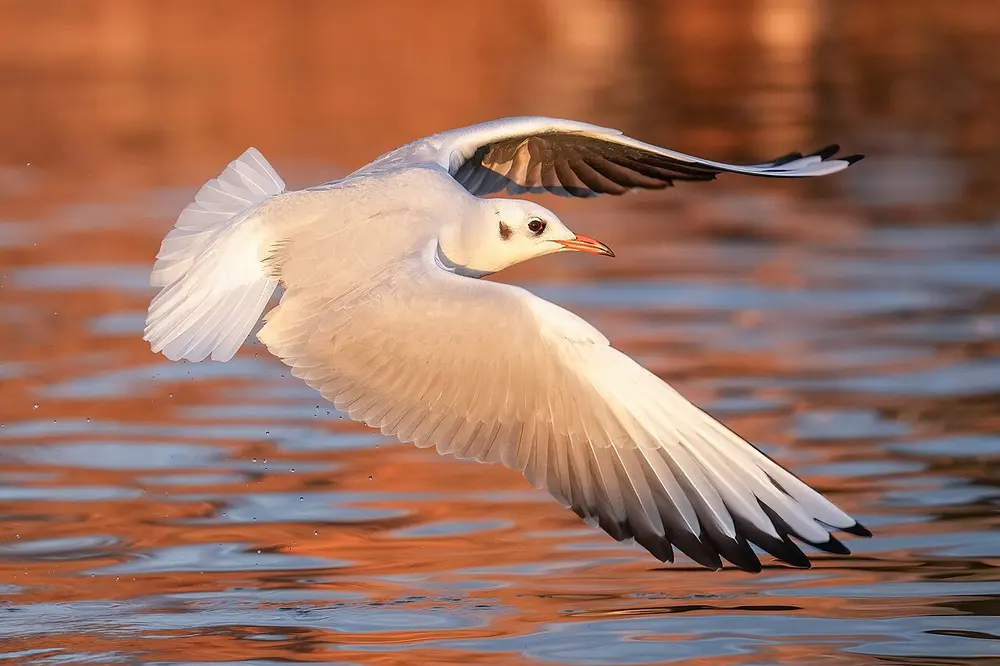
090 Wild Black-headed gull in flight at Lake Geneva during sunset Photo by Giles Laurent. Photo: Giles Laurent / Wikimedia Commons, CC BY-SA 4.0.
The lake road
The lake road is the race's most elegant stretch. Geneva's waterfront is lined with parks, quays and the Jet d'Eau, the fountain that has become the city's symbol, and the marathon uses the shoreline to escape the urban grid.
Geneva sits where the Rhône leaves Lake Geneva, and the city is organised around that outflow. The quays are wide, the water is close and the Alps frame the horizon. The race uses the layout to leave the streets behind quickly, which is why the opening kilometres feel more like a waterfront promenade than a city marathon.
The lake itself is vast. It stretches east towards Lausanne and the Lavaux terraces, and the far shore belongs to France. For runners, the water provides a constant reference point and a sense of space that a city-centre course cannot match.
The lakeside running is also exposed. There is little shelter on the quays, and the flat profile makes the lake road feel smooth without making it easy.
Mont Blanc and the border
Mont Blanc dominates the view on a clear day. The mountain is far enough away to look unreal, a white outline above the lake and the rooftops, and it gives the race a horizon that shifts as the course turns.
The vineyards and the French border give the middle of the race a different character. The roads are quieter, the buildings smaller and the landscape more agricultural. It is a part of the course that feels far from Geneva even though the city is still close.
That contrast is the appeal. The race moves from an international city into the wine country, with the lake and the mountains as the connecting thread. It is a course that rewards runners who look up.
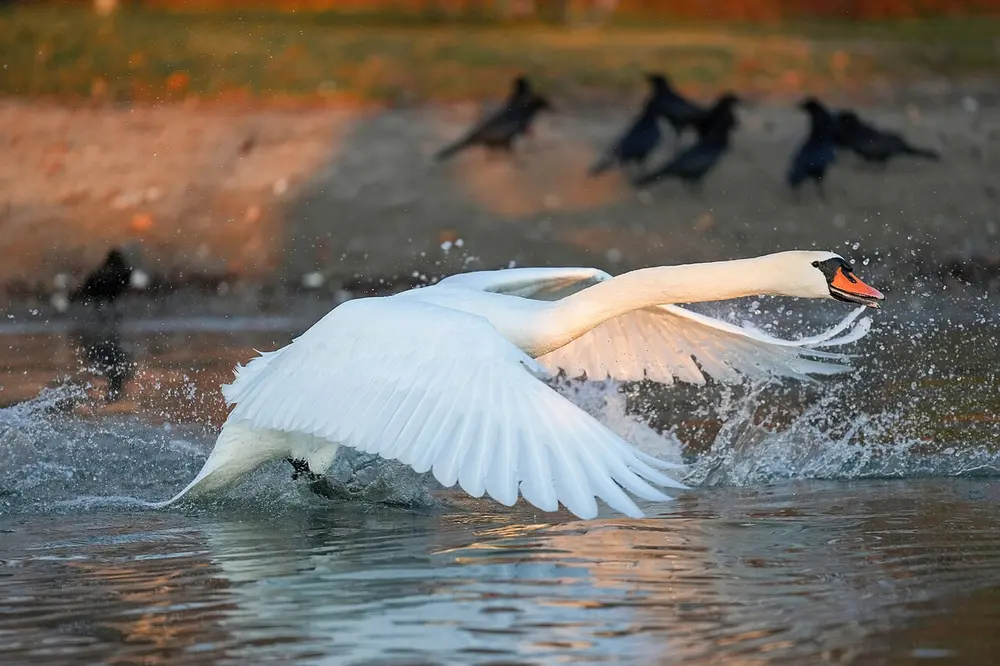
092 Wild Mute swan in flight at Lake Geneva during golden hour of sunset Photo by Giles Laurent. Photo: Giles Laurent / Wikimedia Commons, CC BY-SA 4.0.
The first-marathon case
For a first marathon, the course is approachable. The climbing is modest, the lakeside sections are forgiving and the rolling parts are short enough to manage. The race does not ask for specialist mountain training. Geneva's flat quays and gentle vineyard roads suit a steady debut better than a course with one defining climb.
The May date helps. It gives runners the spring to build, with longer days, the worst of winter behind them and milder weather than an early-spring race, and it arrives before the summer heat makes long runs harder. A debutant can prepare through the spring without fighting the calendar.
Run the lake road conservatively. The flat kilometres beside the water are easy, and the vineyards come after them; a first-timer who starts too fast will remember the rolling sections more than the views.
Frequently asked questions
Answers to the questions runners ask before entering, drawn from this race's course guide and the directory's own data — the sources behind them are listed below.
When is the Geneva Marathon expected?
The next edition is expected in May 2027. The date is provisional, so confirm it with the organiser before booking travel.
Is the Geneva Marathon flat or hilly?
It is mostly flat with rolling sections, climbing about 119 metres in total. That makes it undulating rather than hilly, and less demanding than a course with sustained climbs.
Would Geneva work for a first marathon?
Yes. The modest climbing and the lakeside setting make it a manageable debut. The rolling sections add interest without turning the day into a hill race.
Where is the Geneva Marathon run?
It is run in Geneva, following Lake Geneva out of the city towards the vineyards and the French border. The route is mostly flat, with a few rolling sections.
What can I see on the route?
The course follows the lake and passes towards the vineyards and the French border. On a clear day, Mont Blanc is visible across the water.
What World Athletics label does Geneva hold?
It holds a World Athletics Label, alongside a spring date and a lakeside course.
More marathons in Switzerland
More marathons in Europe
Sources for this page
What each source below is used for on this page, and where to check this race yourself.
- World Athletics — the label calendar and the road-race regulations. Used to check whether the race holds a World Athletics label, and its elite competition details.
- AIMS — the international course-measurement standard behind the 42.195 km distance, and the AIMS race calendar.
- The organizer's own publications — course maps, race handbooks and published results. The date, course character and climbing on this page are compiled from them and re-checked each season.
“A World Athletics Label denotes a full application of the Competition and Technical Rules in, at a minimum, the elite component of the competition. Labels also denote superior standards in event organisation, safety and runner experience, support from public authorities to the event and a financial commitment to anti-doping.”
Where do these facts come from?
Dates, course type, climbing and time limits are compiled from the organizer's publications and re-checked each season; elevation is an estimate of total climbing rather than a survey figure. Always confirm race-day details with the organizer before making plans.
Last reviewed 27 October 2026