
Big Five Marathon
The Big Five Marathon is not a city race with a wildlife theme. It is run inside a private game reserve in Limpopo, on dirt roads, through bush where lions, elephants and rhinos live.
By Global Marathon Routes editorial team · Last reviewed 27 October 2026
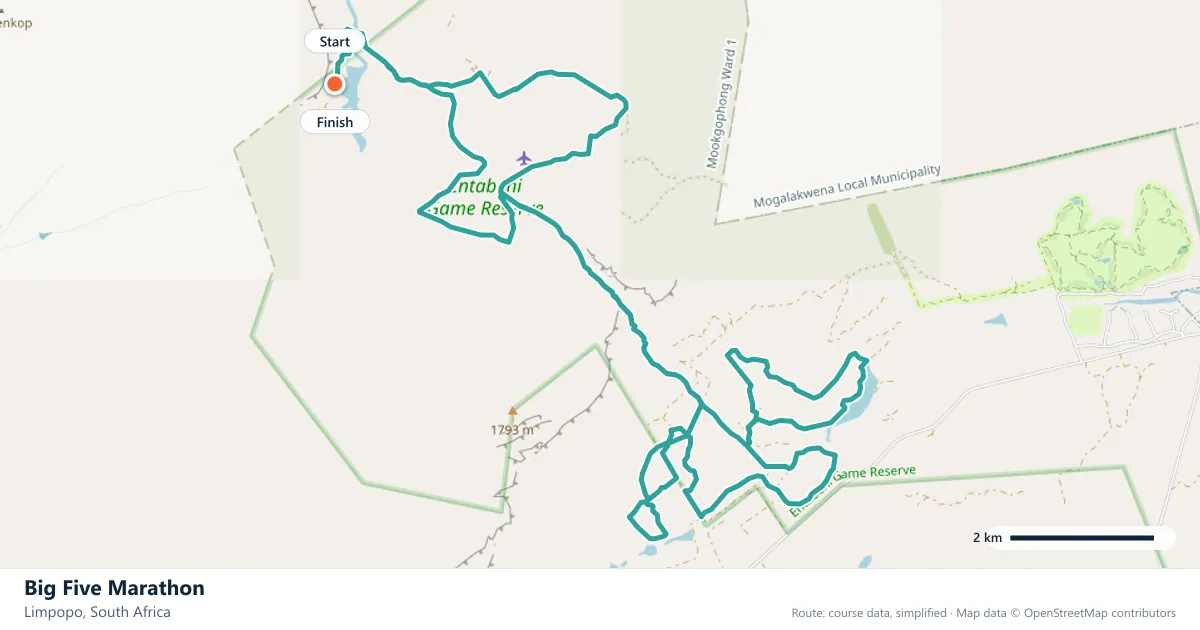
Where does the Big Five Marathon run?
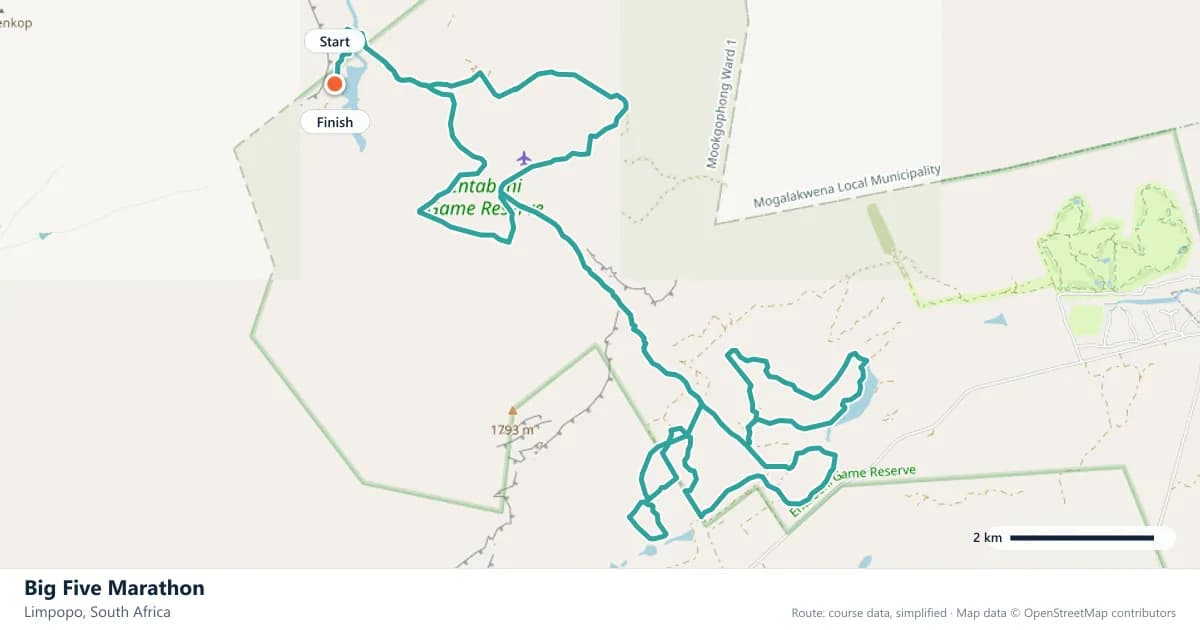
Interactive map
The trace follows the organizer's published course, simplified for the screen: the orange dot is the start, the dark dot the finish. Scroll to zoom, drag to pan.
What is the Big Five Marathon course like?
Run inside a private game reserve in Limpopo, with lions, elephants and rhinos in the surrounding bush and no fences between runners and wildlife. Nearly 1,000 metres of climbing on dirt roads.
- Next edition
- June 2027 (expected)
- Elevation gain
- 936 m
- Profile
- Hilly
- First run
- —
Course guide
The Big Five Marathon is not a city race with a wildlife theme. It is run inside a private game reserve in Limpopo, on dirt roads, through bush where lions, elephants and rhinos live. There are no fences between the runners and the animals. The setting is the race, and the hilly course climbs 936 m.
The date is June 2027 (expected). That date places the marathon in the southern African winter, when the bush is dry and the days are shorter, though the race is still a long one: nearly 1,000 m of climbing over unsealed roads makes it closer to a mountain marathon than a road race in both effort and time on feet.
It is a first marathon for runners prepared for an adventure rather than a time trial, and a race to remember.
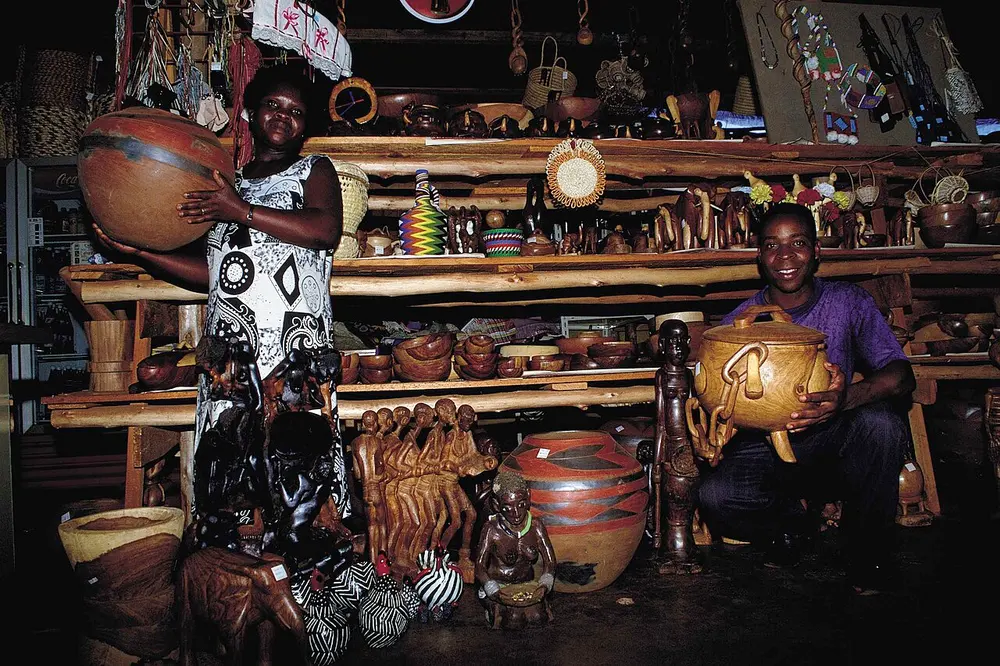
A Venda Vendor, Limpopo, South Africa. Photo: South African Tourism from South Africa / Wikimedia Commons, CC BY 2.0.
The course
The route stays inside the reserve, which means the marathon is defined by its surroundings as much as its profile. Dirt roads replace asphalt, the bush closes in on both sides, and the animals named in the race's title are part of the landscape rather than a distant attraction. The course does not run through a manicured park; it uses the reserve's working roads.
The climbing is the second defining feature. At 936 m, the gain is closer to a mountain race than a city marathon, and it arrives in repeated rises over unsealed ground. The surface matters as much as the gradient: climbing on dirt takes more effort than the same climb on tarmac, and descending on loose ground demands concentration as well as fitness.
The route rolls through the bush, with the profile and the surface combining to keep the pace honest. The finish comes after a full day on the reserve's roads, and the sense of crossing a landscape is stronger than any stadium finish.
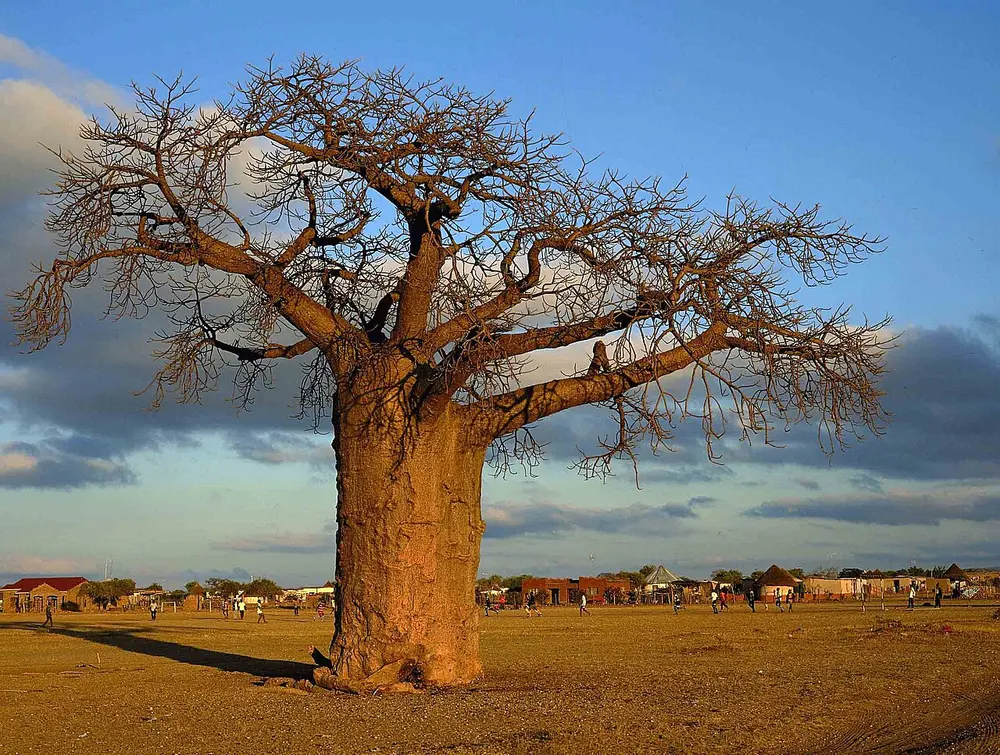
Baobab in the Veld, Limpopo, South Africa. Photo: South African Tourism from South Africa / Wikimedia Commons, CC BY 2.0.
The reserve
The reserve is a private game reserve in Limpopo, and the race uses it as a course rather than a venue. That distinction matters. There are no city streets to fall back on, no crowds lining pavements and no shortcut through a park. The route is the reserve, and the reserve is the reason the race exists.
The bushveld is the landscape: dry, thorny and full of the kinds of trees that make the region distinctive. Baobabs are part of that picture, and the reserve's roads pass through country that feels far from any city. The scale is large, the horizons are wide, and the silence between sightings is part of the experience.
For runners used to road marathons, the reserve changes the rhythm of the day. There are no regular junctions or landmarks in the urban sense, and the course can feel remote even with other runners around.
Dirt roads and 936 metres
The dirt surface is the first thing to prepare for. Uneven ground demands more from the ankles, knees and hips, and the effort of running on it is higher than the same pace on tarmac. Shoes with grip and a little more protection are useful; racing flats are not.
The climbing then compounds the surface. Nearly 1,000 m of ascent over 42.195 km is a serious total, and the repeated rises mean the legs are always working. The descents are not a rest either, because loose ground requires control and the quads take a beating.
The practical consequence is that the marathon will take longer than a road race of the same distance. Runners should plan for time on their feet, fuel for a long day and pace by effort rather than by a road-race target. A first marathon here is a commitment to patience.
Wildlife on the route
Lions, elephants and rhinos are part of the reserve, and the route has no fences separating runners from them. That fact shapes the race more than any other. Runners should expect the possibility of wildlife near the course and follow the organiser's instructions on the day.
The animals are not a decorative theme. They are large, wild and resident in the landscape the race crosses, and that is what makes preparation and discipline essential.
What to plan for
The race is expected in June 2027, so the exact date should be checked before booking travel. The reserve setting means accommodation and access are part of the race plan rather than an afterthought, and the organiser's information should be followed closely.
Training should include time on unsealed roads and regular hill work. The 936 m of climbing and the dirt surface are not things to encounter for the first time on race day. A runner who has practised on similar ground will be more comfortable and more able to enjoy the reserve.
The race also rewards a conservative start. The best approach is to settle into a sustainable effort and finish with enough left to appreciate where you have been.
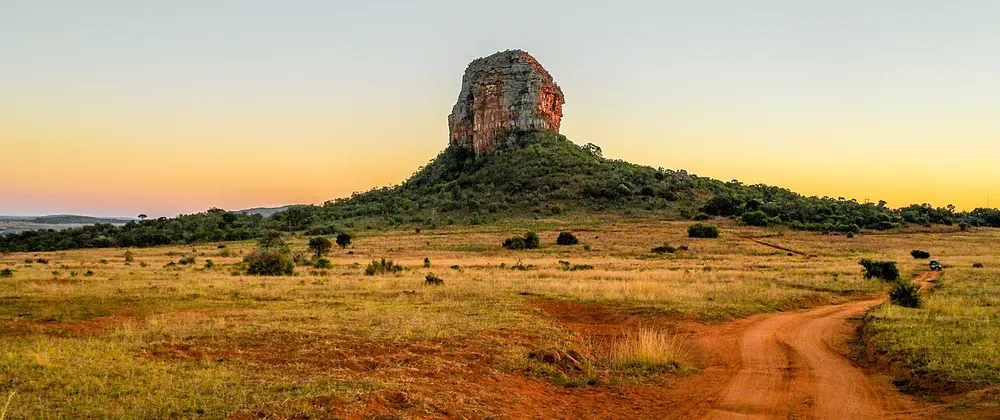
Entabeni - Limpopo, South Africa. Photo: Fyre Mael / Wikimedia Commons, CC BY 2.0.
Frequently asked questions
Answers to the questions runners ask before entering, drawn from this race's course guide and the directory's own data — the sources behind them are listed below.
When is the Big Five Marathon in 2027?
The 2027 edition is expected in June. The exact date is not yet confirmed, so check the organiser's calendar before booking.
Is the Big Five Marathon a flat course?
No. It climbs about 936 m over the full distance, and the route is on dirt roads inside a private game reserve. The repeated rises and the unsealed surface both add to the effort.
Is the Big Five Marathon a good first marathon?
It can be, for a runner prepared for a long day on rough ground. The distance is standard and the route is straightforward, but the climbing and the surface make it more demanding than a road race. Hill work and time on dirt are essential preparation.
Is the Big Five Marathon a personal-best course?
No. The dirt roads, the climbing and the reserve setting all work against fast times. The race is better approached as an adventure than as a time trial.
Where is the Big Five Marathon run?
It is run inside a private game reserve in Limpopo, South Africa, on dirt roads through the bush. Lions, elephants and rhinos live in the surrounding reserve, and there are no fences between runners and wildlife.
More marathons in South Africa
More marathons in Africa
Sources for this page
What each source below is used for on this page, and where to check this race yourself.
- World Athletics — the label calendar and the road-race regulations. Used to check whether the race holds a World Athletics label, and its elite competition details.
- AIMS — the international course-measurement standard behind the 42.195 km distance, and the AIMS race calendar.
- The organizer's own publications — course maps, race handbooks and published results. The date, course character and climbing on this page are compiled from them and re-checked each season.
Where do these facts come from?
Dates, course type, climbing and time limits are compiled from the organizer's publications and re-checked each season; elevation is an estimate of total climbing rather than a survey figure. Always confirm race-day details with the organizer before making plans.
Last reviewed 27 October 2026