
Kilimanjaro Marathon
Kilimanjaro is the reason most runners sign up for the marathon in Moshi, and the mountain does not disappoint.
By Global Marathon Routes editorial team · Last reviewed 27 October 2026
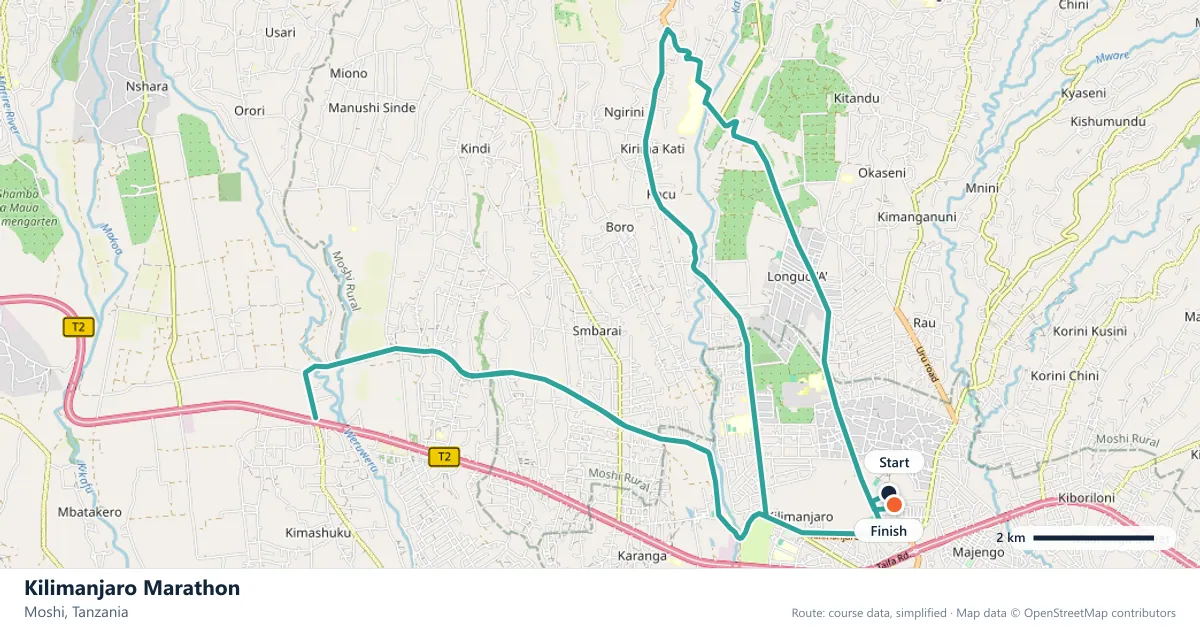
Where does the Kilimanjaro Marathon run?
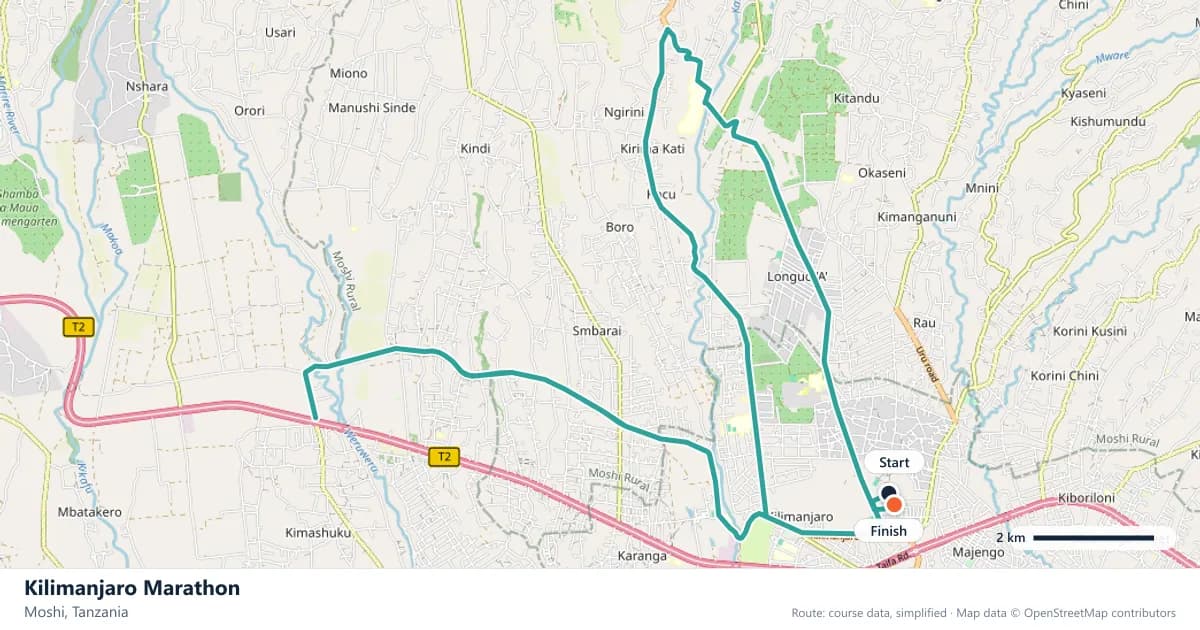
Interactive map
The trace follows the organizer's published course, simplified for the screen: the orange dot is the start, the dark dot the finish. Scroll to zoom, drag to pan.
What is the Kilimanjaro Marathon course like?
Runs out of Moshi at the base of Kilimanjaro, on an out-and-back through coffee farms and villages with the mountain visible for most of the way. Rolling, warm and high at the start.
- Next edition
- March 2027 (expected)
- Elevation gain
- 602 m
- Profile
- Hilly
- First run
- —
Course guide
Kilimanjaro is the reason most runners sign up for the marathon in Moshi, and the mountain does not disappoint. It stands above the town for most of the race, a snow-capped presence on the horizon, and the course runs out and back through the coffee farms and villages below.
The date is March 2027 (expected). The route is hilly, rolling and warm, with about 602 m of climbing, and the start sits high enough above sea level that the opening kilometres feel different from a sea-level race.
It can be a first marathon. The route is straightforward, the out-and-back format is easy to follow, and the atmosphere is welcoming, though the hills and the warmth still have to be respected.
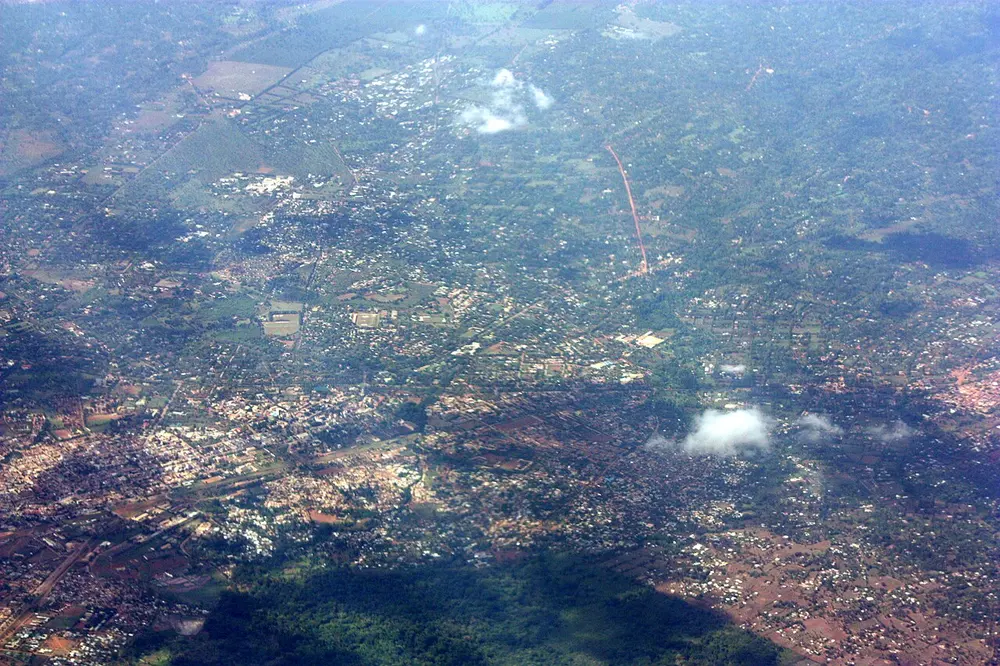
Aerial Photo of Moshi, Tanzania. Photo: Hansbaer / Wikimedia Commons, CC BY-SA 3.0.
The course
The out-and-back format keeps the route simple: runners head away from Moshi through coffee farms and villages, then retrace their steps to the finish. There is no complex city network to navigate, and the mountain provides a constant orientation. The course is rural rather than urban, with the town at the start and end and farmland in between.
The climbing totals about 602 m, spread over rolling ground rather than a single sustained ascent. The route rises and falls through the farms, and the changes of grade are frequent enough to keep the legs working. The start is high, and the warmth builds through the morning, so altitude, heat and repeated rises combine to make the race feel harder than a flat marathon of the same distance.
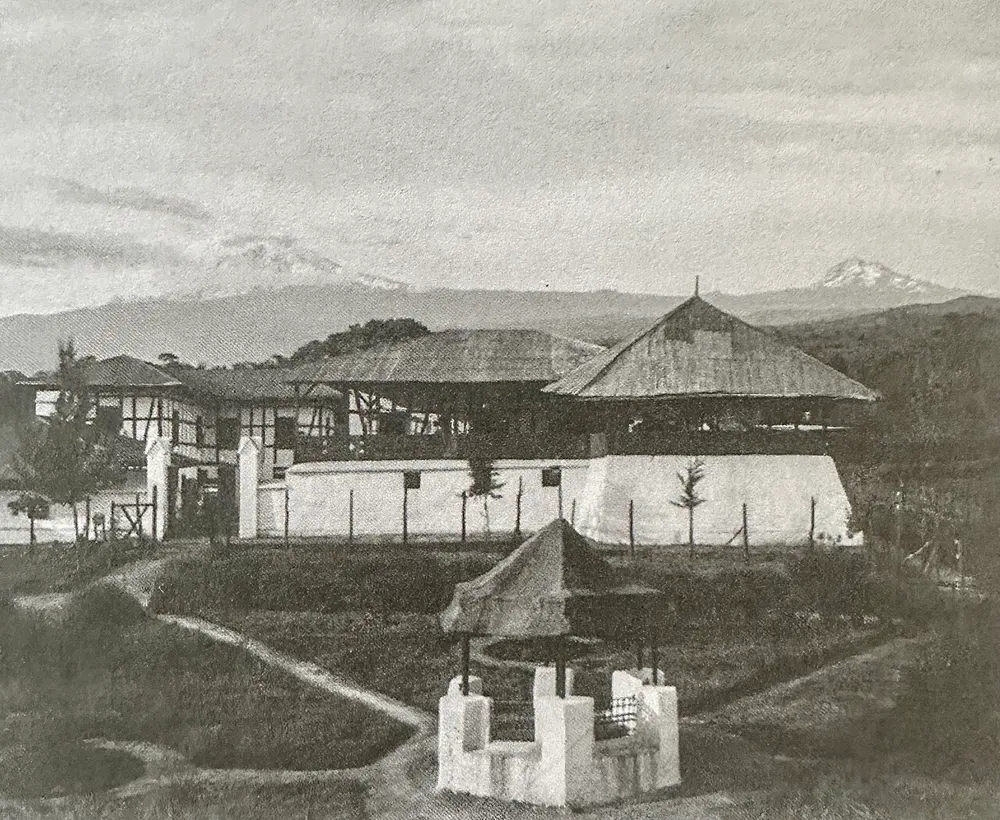
German Moshi Boma Built in 1893 on the former site of Mangi Meli's Boma. Photo: Halidtz / Wikimedia Commons, CC BY-SA 4.0.
Kilimanjaro on the horizon
The mountain is more than scenery. It is the organising principle of the race: the route points towards it, runs beneath it and returns with it still in view. On a clear morning, the summit is visible above the farmland, and the scale of the landscape changes how the kilometres feel.
The mountain also explains the course's character. The lower slopes are fertile and populated, with coffee farms and villages rather than wilderness. The race passes through a working agricultural landscape, and the combination of the mountain above and the farms below gives the marathon a sense of place that few city races can match.
Weather permitting, the view is constant enough to serve as a landmark. Runners who are struggling can use the mountain as a mental anchor: it is there at the start, there at the turnaround and there on the way home.
Coffee farms and villages
The villages give the route a sequence of small landmarks, and the farmland changes character as the race moves through it. This is not a race through a resort; it is a race through the working landscape around Moshi, and the middle miles feel more varied than a flat city course.
The farmland setting has a practical side too. The route is exposed in places, with little shade, and the warmth builds as the morning goes on. Runners should plan their hydration and sun protection around the open sections.
The return leg
The out-and-back format means the second half retraces the first. That has advantages and disadvantages. On the plus side, you know what is coming: the same rises, the same villages and the same views. On the minus side, the return leg is where the climbing and the heat take their toll, and familiarity does not make either easier.
The turnaround is also a psychological marker. Runners who reach it feeling strong can use the return to build momentum; those who arrive already tired need to adjust their expectations and settle into a survival pace. The mountain stays in view either way.
The closing kilometres back into Moshi are the reward. The town returns, the farmland gives way to streets, and the finish brings the race full circle. After a morning beneath Kilimanjaro, the return into town feels like a completion.
The day's demands
- The rolling profile. More than 600 m of climbing, mostly in short rises, makes hill work a sensible part of the build-up.
- The warmth. The race is warm, and the temperature rises as the morning goes on. Start drinking early.
- The high start. Moshi sits above sea level, so the opening kilometres may feel harder than the pace suggests.
- The return leg. The second half retraces the first, and the accumulated climbing and heat are waiting for you.
- The exposure. The farmland offers little shade in places. Protect yourself and take fluids regularly.
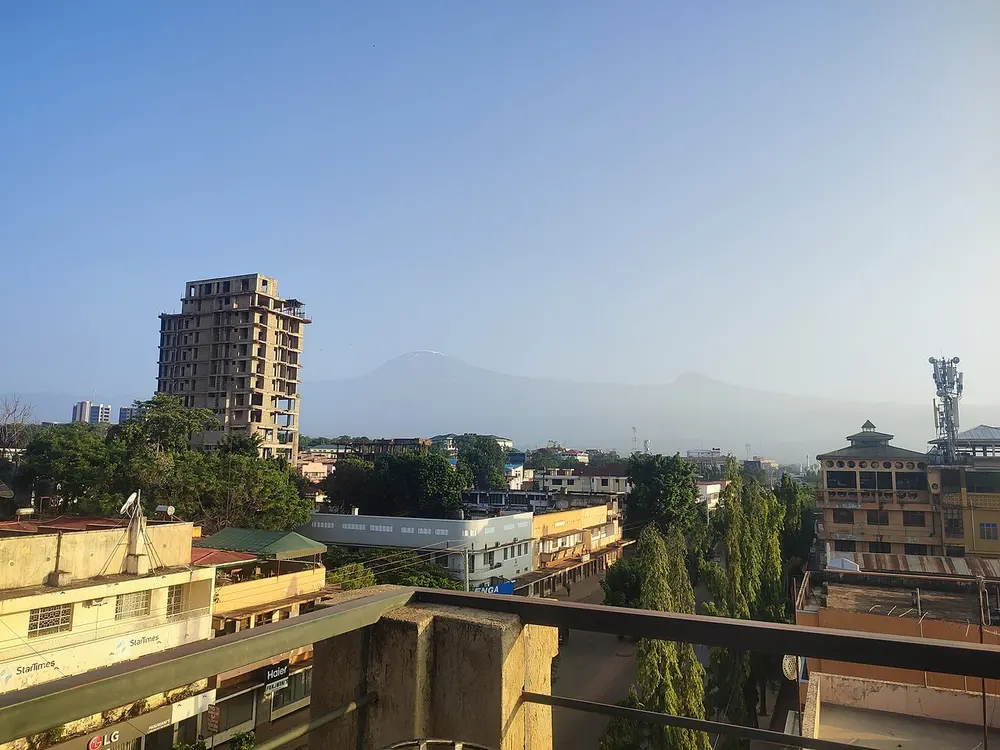
Moshi - Tanzania. Photo: Lebu Ayiga / Wikimedia Commons, CC BY 4.0.
Frequently asked questions
Answers to the questions runners ask before entering, drawn from this race's course guide and the directory's own data — the sources behind them are listed below.
When is the Kilimanjaro Marathon in 2027?
The 2027 edition is expected in March. The exact date is not yet confirmed, so check the organiser's calendar before booking.
Is the Kilimanjaro Marathon a flat course?
No. The route climbs about 602 m, with rolling ground through coffee farms and villages. The rises are short and repeated rather than one long ascent.
Is the Kilimanjaro Marathon a good first marathon?
It can be. The out-and-back route is straightforward and the atmosphere is welcoming, but first-timers should train on rolling ground and prepare for warm conditions.
Is the Kilimanjaro Marathon a personal-best course?
The rolling profile, the warmth and the altitude at the start all work against fast times. The race is better suited to runners who value the experience and the setting.
Where does the Kilimanjaro Marathon run?
It starts in Moshi, Tanzania, at the base of Kilimanjaro, and goes out and back through coffee farms and villages. The mountain is visible for most of the route.
What is the hardest part of the Kilimanjaro Marathon?
The return leg. The out-and-back format means the second half repeats the climbing and the exposure of the first, with the heat now higher and the legs more tired.
More marathons in Africa
Sources for this page
What each source below is used for on this page, and where to check this race yourself.
- World Athletics — the label calendar and the road-race regulations. Used to check whether the race holds a World Athletics label, and its elite competition details.
- AIMS — the international course-measurement standard behind the 42.195 km distance, and the AIMS race calendar.
- The organizer's own publications — course maps, race handbooks and published results. The date, course character and climbing on this page are compiled from them and re-checked each season.
Where do these facts come from?
Dates, course type, climbing and time limits are compiled from the organizer's publications and re-checked each season; elevation is an estimate of total climbing rather than a survey figure. Always confirm race-day details with the organizer before making plans.
Last reviewed 27 October 2026