
Warsaw Marathon
Warsaw's old town is a reconstruction, which is part of what makes running through it remarkable. The city was rebuilt after the Second World War, and the old town was reconstructed with such care…
By Global Marathon Routes editorial team · Last reviewed 27 October 2026
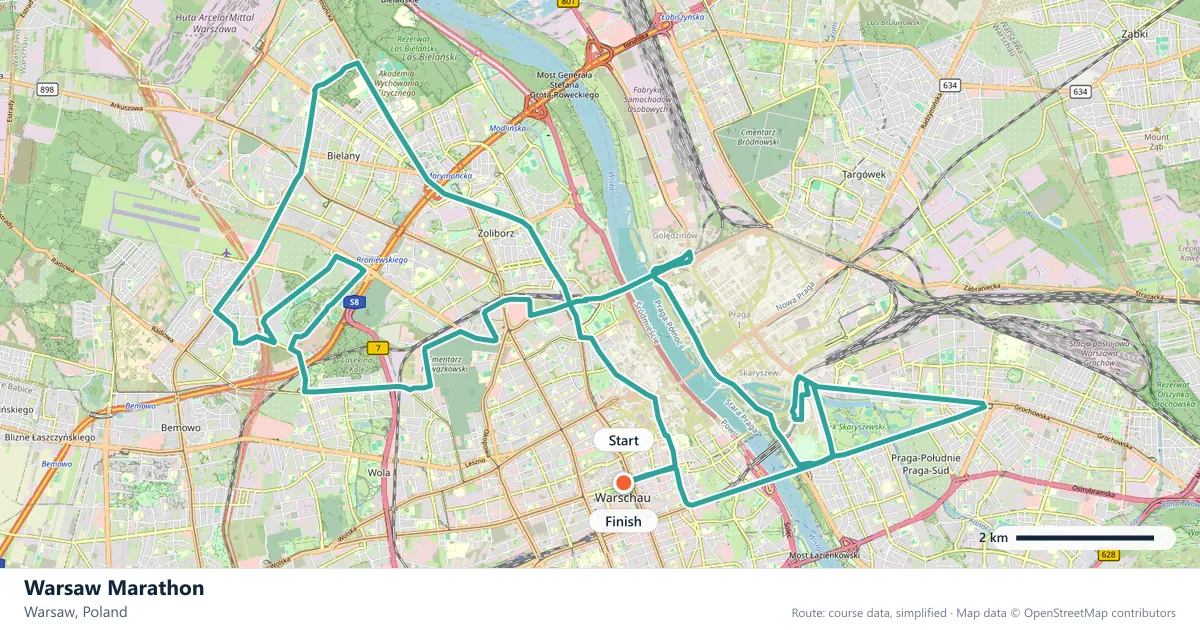
Where does the Warsaw Marathon run?
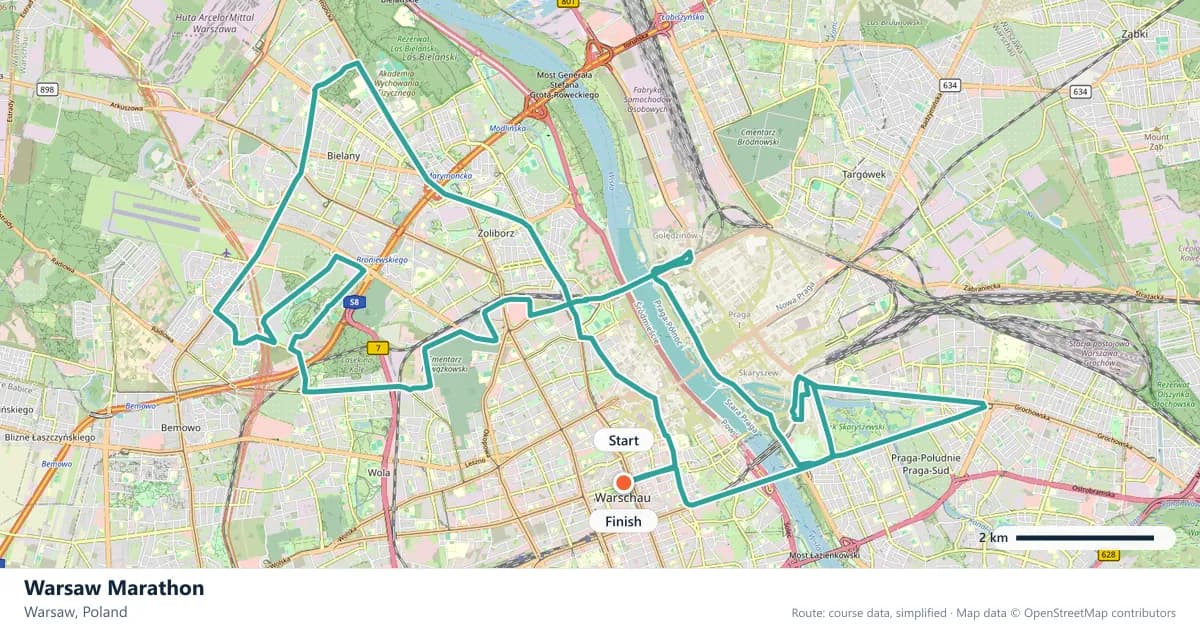
Interactive map
The trace follows the organizer's published course, simplified for the screen: the orange dot is the start, the dark dot the finish. Scroll to zoom, drag to pan.
What is the Warsaw Marathon course like?
A late-September marathon that crosses the Vistula and loops through the rebuilt old town and the royal parks. Fast, mostly flat and one of central Europe's biggest fields.
- Next edition
- 26 September 2027
- Elevation gain
- 105 m
- Profile
- Undulating
- First run
- —
Course guide
Warsaw's old town is a reconstruction, which is part of what makes running through it remarkable. The city was rebuilt after the Second World War, and the old town was reconstructed with such care that it holds UNESCO World Heritage status. The 2027 edition is scheduled for 26 September, and the marathon uses that rebuilt centre, crosses the Vistula and loops through the royal parks.
The course is fast and mostly flat, though it is undulating in the technical sense, with about 105 metres of climbing. It holds a World Athletics Label, and it attracts one of central Europe's biggest fields. A large event on a quick course makes Warsaw an attractive late-season race.
It is quick enough for a personal best and forgiving enough for a debut. The big-city atmosphere can carry a first-timer through the final third, and the field size is the main complication: a busy start and plenty of runners.
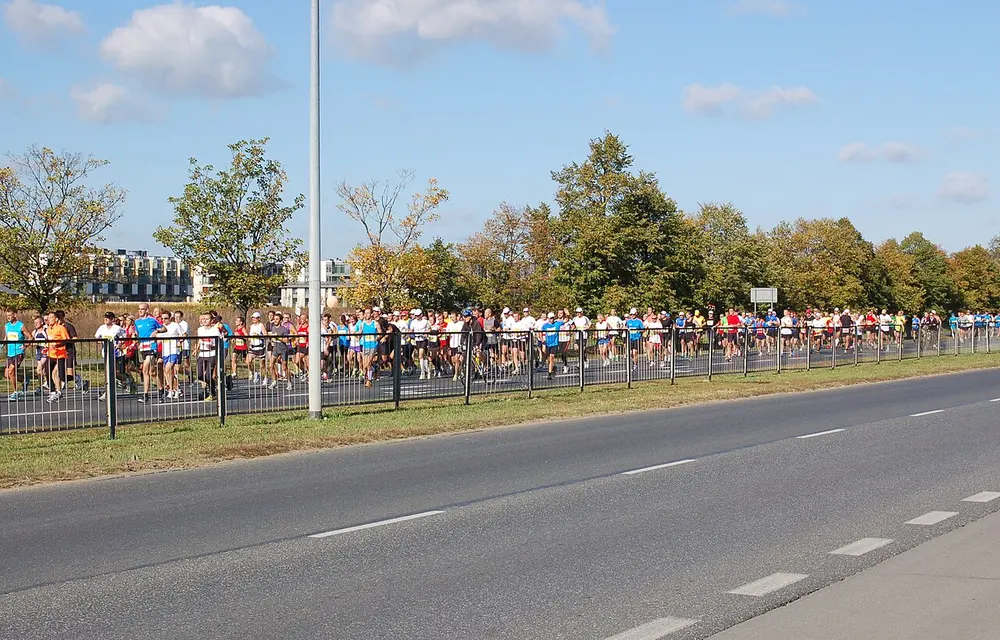
Marathon Warsaw 2012. Photo: Wistula / Wikimedia Commons, CC BY-SA 3.0.
The course
The route crosses the Vistula and works through the rebuilt old town before looping through the royal parks. The river crossing and the park sections give the race its shape, linking the historic centre with the open ground on the other side.
The profile is mostly flat, with 105 metres of climbing in short rises rather than a sustained ascent. The undulating classification is a fair warning that the course is not perfectly level, but the overall impression is of a fast city marathon.
The old town is the most enclosed part of the route. The streets are narrower, the surface changes, and the turns come more often than on the wide roads elsewhere. That is not where the race is won, but the field can bunch and an impatient runner can lose rhythm.
The Vistula crossing
The Vistula is the defining geographical fact of Warsaw, and the marathon uses it. The bridges are a landmark as well as a crossing, and they mark the transition between one part of the city and another. On a clear September morning, the river opens up the skyline.
The crossing is also a pacing trap. Bridges draw a surge, especially early, and the openness makes it easy to forget the plan. Let the crossing come and go without chasing it; the second half is a better place to judge what you have left.
The old town and the royal parks
Warsaw's old town is a reconstruction, rebuilt after wartime destruction and now protected as a World Heritage site. The Royal Castle, the market square and the surrounding streets give the race a historic core.
The royal parks provide the counterweight. They are wide, green and open, and they give the marathon a different rhythm from the dense centre. One moment you are threading through rebuilt streets, the next you are in open ground with the city around you.
What a big field changes
One of central Europe's biggest marathons means a crowded start, a lot of runners around you in the first few kilometres, and an atmosphere that feels like a major event. That can be a lift or a complication.
The practical approach is to accept the early congestion rather than fight it. Use the first few kilometres to settle, keep your own space where you can, and do not try to make up time in the crowd. Once the field spreads out, the roads are wide enough to run your own rhythm.
Late September
The race sits at the end of September, when the Polish summer turns into autumn. The air is usually cooler than in August, the light is lower, and the city is back in its working rhythm. For a marathon, those are good conditions: cool enough to race hard without the sharpness of late autumn.
The date shapes the training. A late-September race means the long runs fall in the summer, and the final weeks overlap with shorter days. Plan the build so the peak arrives at the right time rather than at the end of a tired summer.
Debut or personal best
For a first marathon, Warsaw offers a big-city atmosphere, a mostly flat course and enough landmarks to keep the mind occupied. The field is large, which means support and company, but also congestion. Start conservatively and treat the first 10 kilometres as a procession.
For a personal best, the course is a legitimate target. The profile is quick, the field is deep enough to find a group, and late September usually brings reasonable weather. Avoid the early surge and use the flat second half rather than spending everything before it.
Marathon Warsaw 2012 (photo 2). Photo: Wistula / Wikimedia Commons, CC BY-SA 3.0.
Race weekend
Warsaw has the infrastructure of a big city. The centre is walkable, public transport is extensive, and the race is easy to reach from the airport and stations. Stay central if you can: the old town, the river and the park sections are all part of the same compact area.
The city is also a good place to spend an extra day. The rebuilt old town, the Royal Castle and the riverfront give the weekend texture, and the food scene is one of the best in the region.
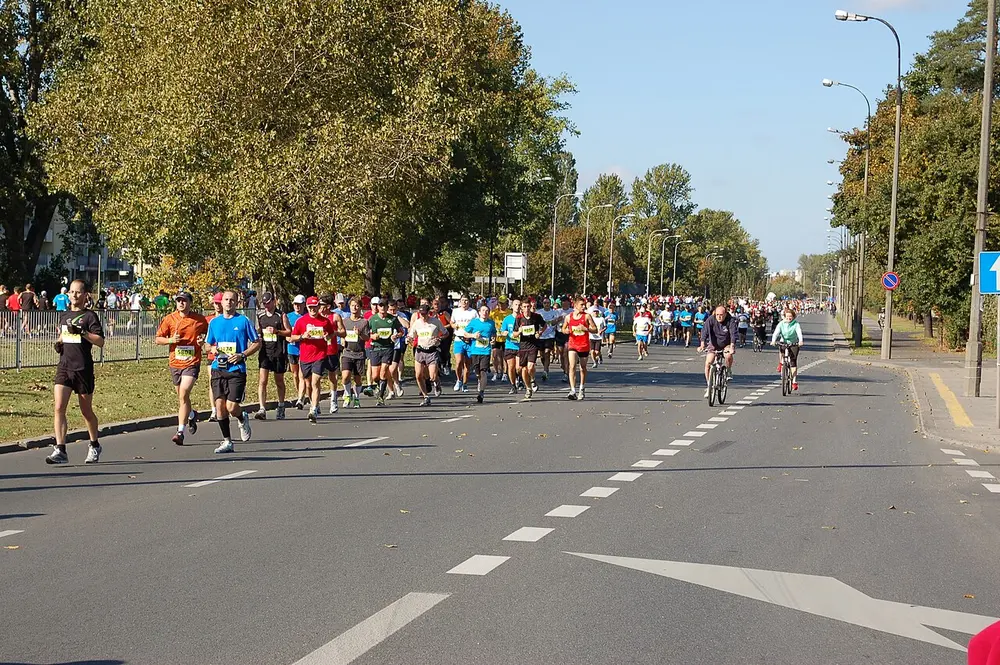
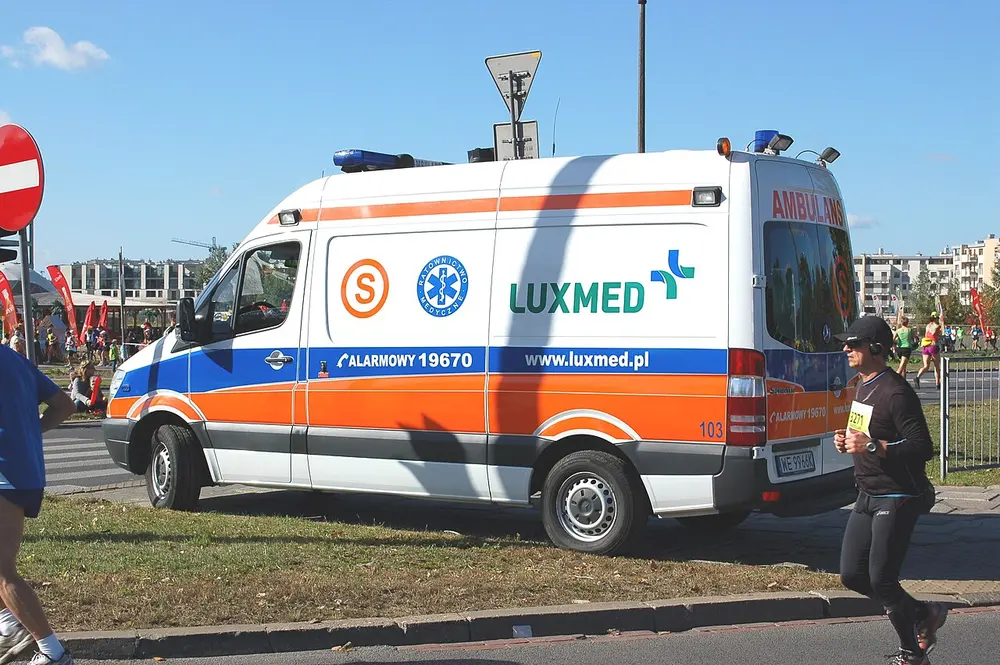
Marathon Warsaw 2012 (photo 3). Photo: Wistula / Wikimedia Commons, CC BY-SA 3.0.
Frequently asked questions
Answers to the questions runners ask before entering, drawn from this race's course guide and the directory's own data — the sources behind them are listed below.
When is the Warsaw Marathon in 2027?
The 2027 edition is scheduled for 26 September 2027. It is a late-September race, held as the Polish summer turns into autumn.
Is the Warsaw Marathon flat or hilly?
The course climbs about 105 metres and is mostly flat, although it is classified as undulating. The rises are short and spread across the route rather than forming a sustained climb.
Is the Warsaw Marathon good for a personal best or a first marathon?
Yes, for either goal. The mostly flat profile and late-September date support a personal-best attempt, while the big-city atmosphere and manageable climbing make it approachable for a first marathon. The large field is the main thing to manage.
Where is the Warsaw Marathon run?
It crosses the Vistula and loops through the rebuilt old town and the royal parks. The route stays within the city.
How big is the field?
The race has one of central Europe's biggest fields. That means a crowded start and plenty of company, but also a need to pace yourself through the early congestion.
Does the Warsaw Marathon hold a World Athletics label?
Yes. It holds a World Athletics Label.
More marathons in Poland
More marathons in Europe
Sources for this page
What each source below is used for on this page, and where to check this race yourself.
- World Athletics — the label calendar and the road-race regulations. Used to check whether the race holds a World Athletics label, and its elite competition details.
- AIMS — the international course-measurement standard behind the 42.195 km distance, and the AIMS race calendar.
- The organizer's own publications — course maps, race handbooks and published results. The date, course character and climbing on this page are compiled from them and re-checked each season.
“A World Athletics Label denotes a full application of the Competition and Technical Rules in, at a minimum, the elite component of the competition. Labels also denote superior standards in event organisation, safety and runner experience, support from public authorities to the event and a financial commitment to anti-doping.”
Where do these facts come from?
Dates, course type, climbing and time limits are compiled from the organizer's publications and re-checked each season; elevation is an estimate of total climbing rather than a survey figure. Always confirm race-day details with the organizer before making plans.
Last reviewed 27 October 2026