
Kraków Marathon
Kraków's market square is one of the largest in Europe, and on race weekend it becomes the point around which the marathon turns.
By Global Marathon Routes editorial team · Last reviewed 27 October 2026
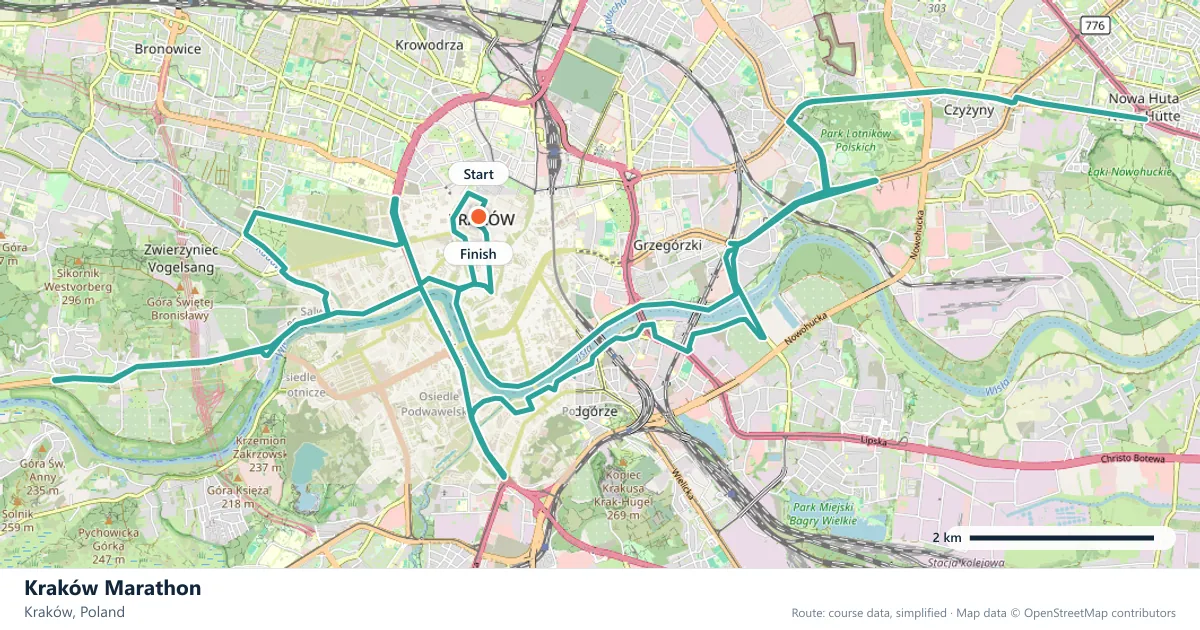
Where does the Kraków Marathon run?
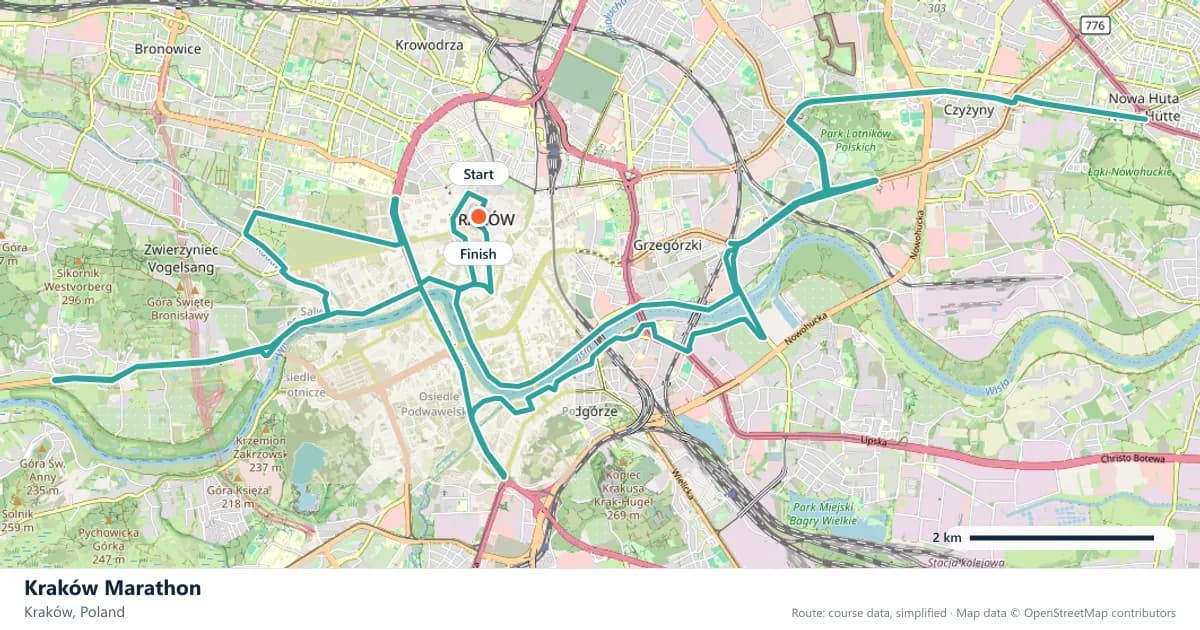
Interactive map
The trace follows the organizer's published course, simplified for the screen: the orange dot is the start, the dark dot the finish. Scroll to zoom, drag to pan.
What is the Kraków Marathon course like?
A spring marathon that circles the old town and follows the Vistula out towards Nowa Huta. Gently rolling, with the castle and the market square framing the course.
- Next edition
- April 2027 (expected)
- Elevation gain
- 120 m
- Profile
- Undulating
- First run
- —
Course guide
Kraków's market square is one of the largest in Europe, and on race weekend it becomes the point around which the marathon turns. The course circles the old town, follows the Vistula out towards Nowa Huta and returns, with the castle and the market square framing much of the running. The next edition is expected in April 2027.
The profile is undulating: about 120 metres of climbing spread through gentle rolls. That is not enough to make it a hill marathon, but enough to break the rhythm and make even pacing harder than it looks. This is a city loop with a historic backdrop, not a record course.
It suits a first marathon. The route stays within the city, the landmarks give it structure, and the rolling profile is manageable for a debutant who starts conservatively. The expected April date makes it a spring target.
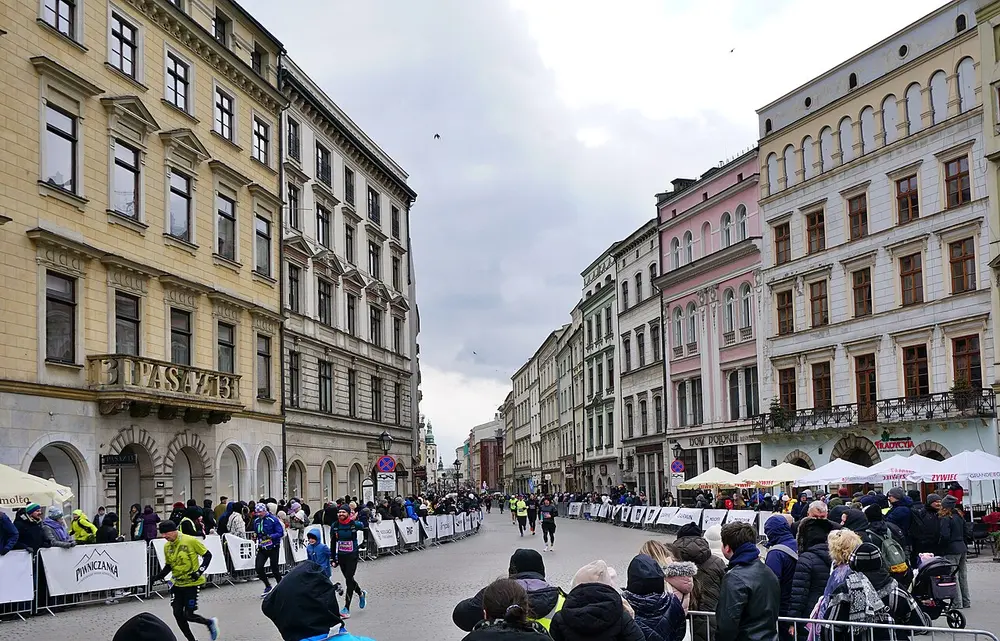
22. Cracovia Marathon, Grodzka Street, Old Town, Kraków, Poland. Photo: Igor123121 / Wikimedia Commons, CC BY-SA 4.0.
The course
The route circles the old town, heads along the Vistula towards Nowa Huta and returns. The castle and market square provide recurring reference points. The profile is gently rolling, with about 120 metres of climbing.
The old-town section is the most enclosed. The streets are narrow in places, the surface changes, and the turns come quickly. That is not where the marathon is decided, but a fast start can be exposed. Run the tight sections smoothly and save your pace for the open roads.
The Vistula section is the opposite: wide and exposed. The river gives the course a natural line, and the outward run towards Nowa Huta gives the race a different landscape. Use it to settle rather than chase; the return to the centre is where the race comes back together.
Circling the old town
Kraków's old town is a UNESCO World Heritage site, and the market square is its heart. The Cloth Hall, St Mary's Basilica and the surrounding streets give the centre density, and Wawel castle sits on its hill above the Vistula.
The course uses that geography without becoming a sightseeing walk. The old town must be navigated, not just admired: the turns, surface and crowds ask for attention. Once the route reaches the river, the space returns.
The Vistula and Nowa Huta
The Vistula is the second anchor. The course follows it towards Nowa Huta, the planned socialist city built around the steelworks after the Second World War. That destination gives the outward section a purpose and a different landscape from the old town.
Nowa Huta is not a pretty detour; it is a piece of history. The district was designed as a model industrial city, with wide avenues and a central square, and gives the marathon a contrast most city courses lack. The return along the river brings the race back to the centre.
Spring in Kraków
April is a good month for a race in southern Poland. The winter has gone, the days are longer, and the city is beginning to fill with visitors. The weather can still be cool, and a spring morning can feel sharp, but those are reasonable conditions for a marathon.
The expected date should be confirmed before travel is booked. April is the target month, not a fixed appointment, and the exact weekend matters for flights and hotels in a city that is popular year-round.
Rolling, not flat
A course with 120 metres of climbing is not flat, but it is not severe. The climbs are short and spread out rather than forming one long ascent. The challenge is cumulative: the small rises keep arriving, and the pace has to be adjusted rather than held.
That makes Kraków a race for effort-based pacing. Pay attention to how the course feels rather than forcing a split.
The weekend
Kraków rewards a longer stay. The old town, the castle and Kazimierz are within reach of the centre, and the café culture gives the weekend a relaxed shape.
Stay in the old town if you can. It puts the market square, the castle and the river within walking distance. Arrive a day early, collect your bib, and walk the opening section before the crowds.
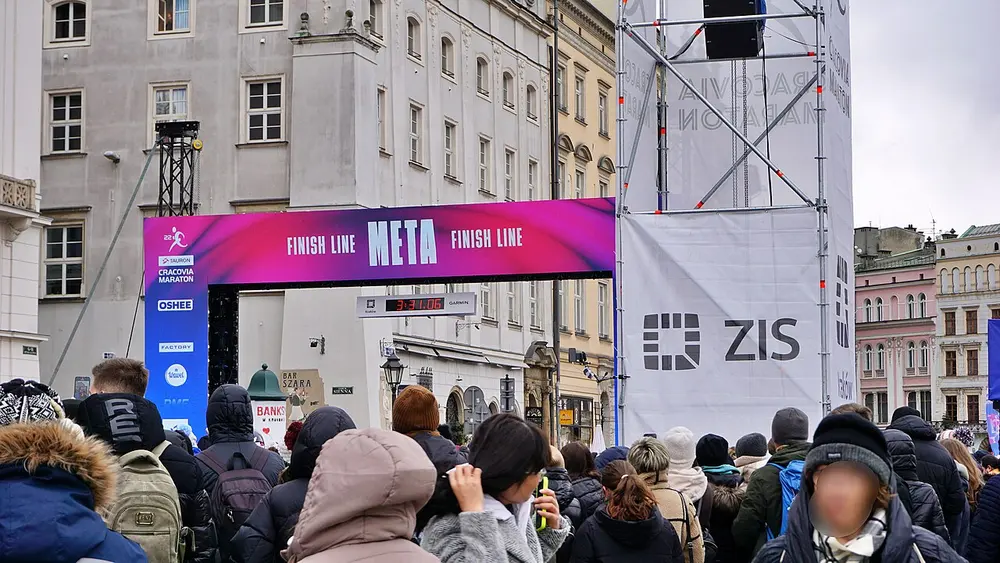
22. Cracovia Marathon, Main Market Square,, Finish, Old Town, Kraków, Poland. Photo: Igor123121 / Wikimedia Commons, CC BY-SA 4.0.
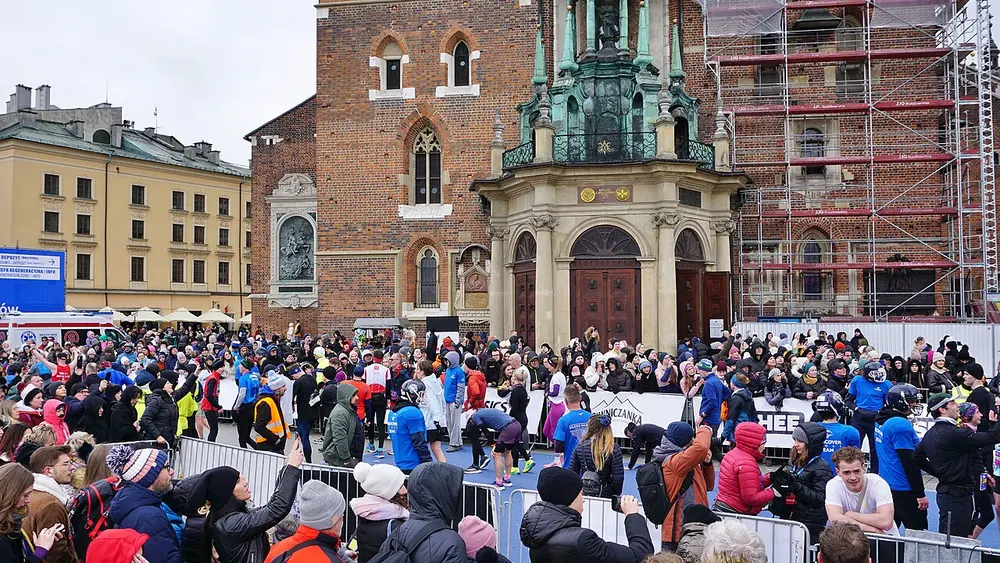
22. Cracovia Marathon, Main Market Square,, Old Town, Kraków, Poland. Photo: Igor123121 / Wikimedia Commons, CC BY-SA 4.0.
Frequently asked questions
Answers to the questions runners ask before entering, drawn from this race's course guide and the directory's own data — the sources behind them are listed below.
When is the Kraków Marathon in 2027?
The next edition is expected in April 2027. The date is provisional rather than confirmed, so check the organiser's information before booking travel.
Is the Kraków Marathon a flat course?
No. It is gently rolling, with about 120 metres of gain across the distance. There is no major climb, but the course is not level and rewards even effort.
Is the Kraków Marathon suitable for a first marathon?
Yes. The city loop, the modest total climbing and the clear landmarks make it approachable for a first marathon. The rolling profile is the main thing to prepare for, along with the expected April date.
Where is the Kraków Marathon run?
It runs on a loop that circles the old town, follows the Vistula towards Nowa Huta and returns. The castle and the market square frame much of the course.
Is the April 2027 date confirmed?
No. April 2027 is the expected month, not a confirmed race date. Wait for the organiser's announcement before committing to specific travel.
What are the landmarks on the course?
The market square and the Wawel castle are the recurring reference points, with the Vistula and Nowa Huta shaping the outward section. The old town is the historic heart of the route.
More marathons in Poland
More marathons in Europe
Sources for this page
What each source below is used for on this page, and where to check this race yourself.
- World Athletics — the label calendar and the road-race regulations. Used to check whether the race holds a World Athletics label, and its elite competition details.
- AIMS — the international course-measurement standard behind the 42.195 km distance, and the AIMS race calendar.
- The organizer's own publications — course maps, race handbooks and published results. The date, course character and climbing on this page are compiled from them and re-checked each season.
Where do these facts come from?
Dates, course type, climbing and time limits are compiled from the organizer's publications and re-checked each season; elevation is an estimate of total climbing rather than a survey figure. Always confirm race-day details with the organizer before making plans.
Last reviewed 27 October 2026